

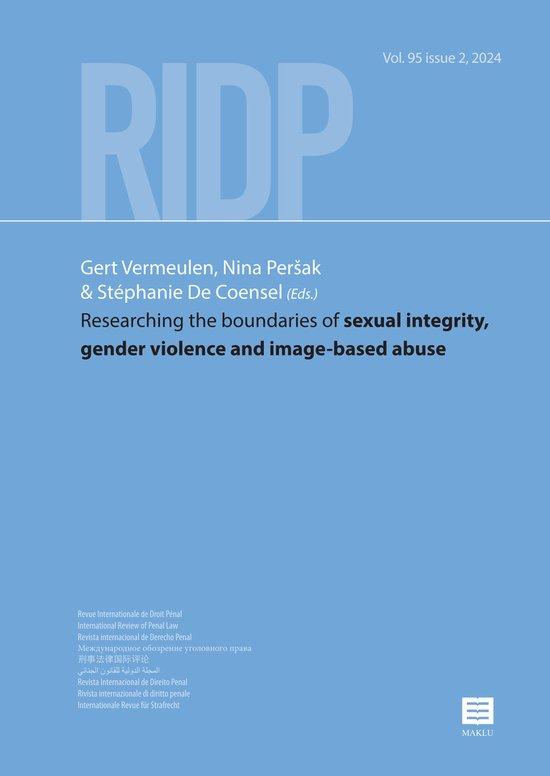
RIDP 95.2 (2024) | Researching the boundaries of sexual integrity, gender violence and image-based abuse
This special issue brings together nineteen topical and innovative papers, researching the boundaries of sexual integrity and affirmative sexual consent, gender violence, and image-based or online sexual abuse, including child sexual abuse material and non-consensual sexual deepfakes. It offers an original and nuanced approach to understanding the important legal elements, various agents and harms of topic-related deviant conduct as well as legislative processes aimed at tackling it. In light of recent societal developments, including changes in societal sensibilities, and recent or on-going legislative amendments at national and supranational levels, research on these topics is timely and much needed.
Gert Vermeulen is Senior Full Professor of European and international criminal law, sexual criminal law and data protection law, Department Chair Criminology, Criminal Law and Social Law, and Director of the Institute for International Research on Criminal Policy (IRCP), all at Ghent University. He is also General Director Publications of the AIDP, and Editor-in-chief of the RIDP.
Nina Peršak is Scientific Director and Senior Research Fellow, Institute for Criminal-Law Ethics and Criminology (Ljubljana), Full Professor of Law, University of Maribor (habilitation), Academic Consultant at the Institute for International Research on Criminal Policy (IRCP), Ghent University, and Co-Editor-in-Chief of the RIDP.
Stéphanie De Coensel is an FWO Postdoctoral Researcher and Visiting Professor in Advanced Criminal Law at the Institute for International Research on Criminal Policy (IRCP), Ghent University, and Editorial Secretary of the RIDP.
RIDP 95.2 (2024) | Researching the boundaries of sexual integrity, gender violence and image-based abuse
This special issue brings together nineteen topical and innovative papers, researching the boundaries of sexual integrity and affirmative sexual consent, gender violence, and image-based or online sexual abuse, including child sexual abuse material and non-consensual sexual deepfakes. It offers an original and nuanced approach to understanding the important legal elements, various agents and harms of topic-related deviant conduct as well as legislative processes aimed at tackling it. In light of recent societal developments, including changes in societal sensibilities, and recent or on-going legislative amendments at national and supranational levels, research on these topics is timely and much needed.
Gert Vermeulen is Senior Full Professor of European and international criminal law, sexual criminal law and data protection law, Department Chair Criminology, Criminal Law and Social Law, and Director of the Institute for International Research on Criminal Policy (IRCP), all at Ghent University. He is also General Director Publications of the AIDP, and Editor-in-chief of the RIDP.
Nina Peršak is Scientific Director and Senior Research Fellow, Institute for Criminal-Law Ethics and Criminology (Ljubljana), Full Professor of Law, University of Maribor (habilitation), Academic Consultant at the Institute for International Research on Criminal Policy (IRCP), Ghent University, and Co-Editor-in-Chief of the RIDP.
Stéphanie De Coensel is an FWO Postdoctoral Researcher and Visiting Professor in Advanced Criminal Law at the Institute for International Research on Criminal Policy (IRCP), Ghent University, and Editorial Secretary of the RIDP.


Ondernemingsvermogen. Uitgebreid 2de, herziene uitgave
Ondernemingsvermogen. Uitgebreid 2de, herziene uitgave
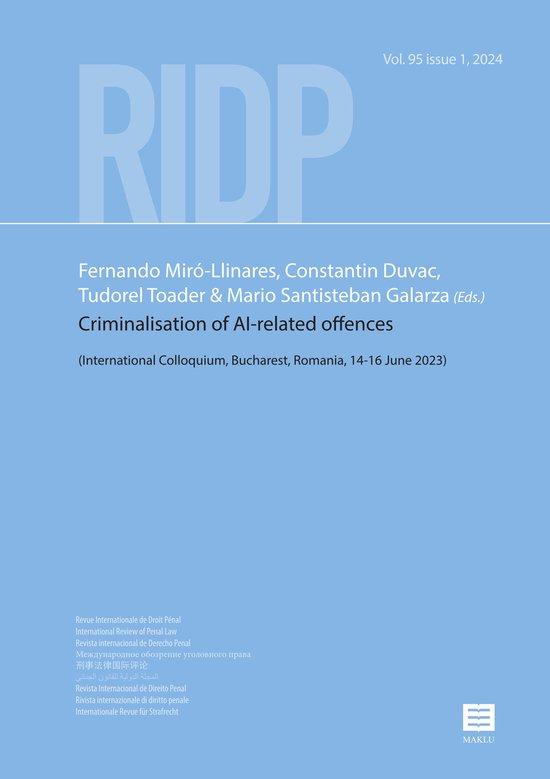
RIDP 95.1 (2024) | Criminalisation of AI-related offences – (International Colloquium, Bucharest, Romania, 14th-16th June 2023)
RIDP 95.1 (2024) | Criminalisation of AI-related offences – (International Colloquium, Bucharest, Romania, 14th-16th June 2023)
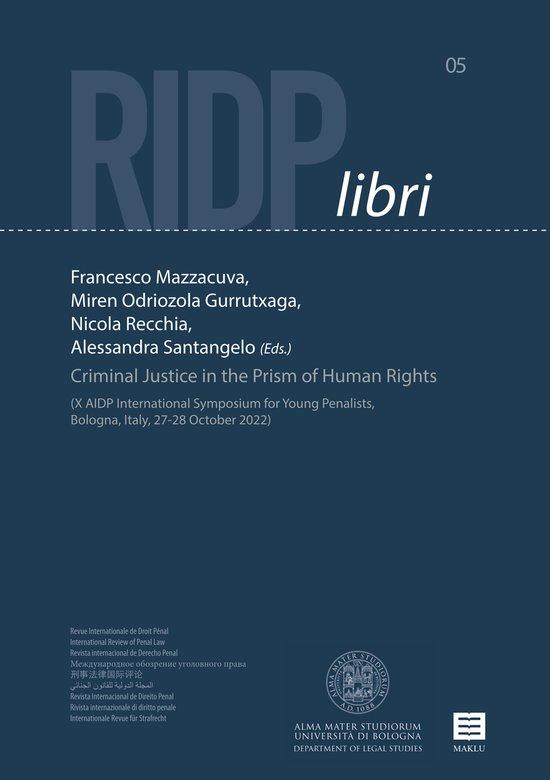
Criminal Justice in the Prism of Human Rights – (X AIDP International Symposium for Young Penalists, Bologna, Italy, 27-28 October 2022) [RIDP Libri 5]
Criminal law occupies a central role in the “prism” of human rights, given the relevant impact of trial and punishment on the personal sphere of individuals, which may be instrumentalised in the name of security claims for political purposes. It is no coincidence that during the Age of Enlightenment the main fundamental guarantees of criminal law were enshrined in human rights declarations, with an approach now widely accepted at an international level. In fact, the “dialogue” between national and supranational Courts in this domain has been a key element in contemporary times in the development of criminal law, leading not only to the implementation of fundamental guarantees – even through the redefinition of their field of application – but also to the promotion of criminalisation in order to protect certain human rights.
This volume builds upon the contributions to the X AIDP Symposium for Young Penalists, which was held on 27 and 28 October 2022 at the Department of Legal Studies of the University of Bologna. During five panels moderated by experts, young academics from eleven different countries discussed the current role of human rights in criminal justice.
Francesco Mazzacuva is Associate Professor in Criminal Law at the University of Parma, where he was PhD graduate in 2012 and postdoctoral research fellow from 2014 to 2016, when he was appointed ordinary magistrate, serving as a judge at the Court of Modena until 2019. He coordinated the activities of the Young Penalists of the Italian group of the AIDP since 2015 and, at the 20th World Congress of the AIDP held in Rome in November 2019, he was elected President of the Young Penalists Committee.
Miren Odriozola Gurrutxaga is Lecturer in Criminal Law at the University of the Basque Country, where she obtained her PhD in Law in 2015. She is also a member of the Basque Institute of Criminology since 2015. Since the 20th World Congress of the AIDP in November 2019, she is a member of the Young Penalists Committee.
Nicola Recchia is Senior Researcher in Criminal Law at the University of Trieste. In 2017 he obtained a Ph.D. in Criminal Law from the Ludwig-Maximilians University of Munich and the University of Ferrara. He has then worked as a Post-doc researcher at the University of Ferrara in 2017 and at the Goethe-University Frankfurt am Main from 2018 to 2022. Since the 20th World Congress of the AIDP in November 2019, he is member of the Young Penalists Committee.
Alessandra Santangelo is Research Fellow in Criminal Law at the University of Bologna, where she obtained her Ph.D. in Legal Science in 2020. Since then, she has been working as a Post-doc researcher for national and international projects, being Technical Coordinator of a DG Justice Programme. In 2013, she obtained an LLM, with specialisation in EU Law, from King’s College London.
Criminal Justice in the Prism of Human Rights – (X AIDP International Symposium for Young Penalists, Bologna, Italy, 27-28 October 2022) [RIDP Libri 5]
Criminal law occupies a central role in the “prism” of human rights, given the relevant impact of trial and punishment on the personal sphere of individuals, which may be instrumentalised in the name of security claims for political purposes. It is no coincidence that during the Age of Enlightenment the main fundamental guarantees of criminal law were enshrined in human rights declarations, with an approach now widely accepted at an international level. In fact, the “dialogue” between national and supranational Courts in this domain has been a key element in contemporary times in the development of criminal law, leading not only to the implementation of fundamental guarantees – even through the redefinition of their field of application – but also to the promotion of criminalisation in order to protect certain human rights.
This volume builds upon the contributions to the X AIDP Symposium for Young Penalists, which was held on 27 and 28 October 2022 at the Department of Legal Studies of the University of Bologna. During five panels moderated by experts, young academics from eleven different countries discussed the current role of human rights in criminal justice.
Francesco Mazzacuva is Associate Professor in Criminal Law at the University of Parma, where he was PhD graduate in 2012 and postdoctoral research fellow from 2014 to 2016, when he was appointed ordinary magistrate, serving as a judge at the Court of Modena until 2019. He coordinated the activities of the Young Penalists of the Italian group of the AIDP since 2015 and, at the 20th World Congress of the AIDP held in Rome in November 2019, he was elected President of the Young Penalists Committee.
Miren Odriozola Gurrutxaga is Lecturer in Criminal Law at the University of the Basque Country, where she obtained her PhD in Law in 2015. She is also a member of the Basque Institute of Criminology since 2015. Since the 20th World Congress of the AIDP in November 2019, she is a member of the Young Penalists Committee.
Nicola Recchia is Senior Researcher in Criminal Law at the University of Trieste. In 2017 he obtained a Ph.D. in Criminal Law from the Ludwig-Maximilians University of Munich and the University of Ferrara. He has then worked as a Post-doc researcher at the University of Ferrara in 2017 and at the Goethe-University Frankfurt am Main from 2018 to 2022. Since the 20th World Congress of the AIDP in November 2019, he is member of the Young Penalists Committee.
Alessandra Santangelo is Research Fellow in Criminal Law at the University of Bologna, where she obtained her Ph.D. in Legal Science in 2020. Since then, she has been working as a Post-doc researcher for national and international projects, being Technical Coordinator of a DG Justice Programme. In 2013, she obtained an LLM, with specialisation in EU Law, from King’s College London.