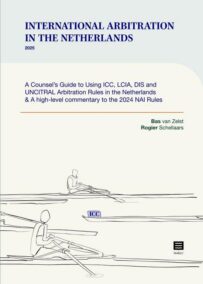

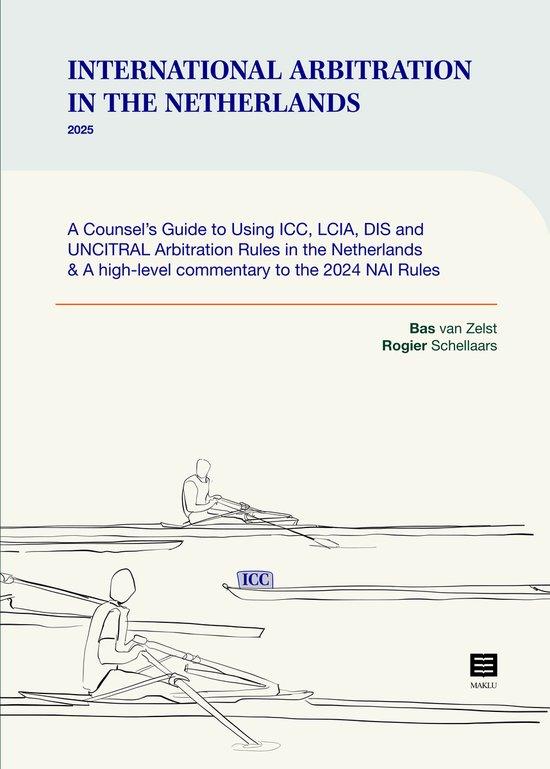
International Arbitration in the Netherlands. A Counsel’s Guide to Using ICC, LCIA, DIS and UNCITRAL Arbitration Rules in the Netherlands
This book charts Dutch arbitration law for users of international arbitration rules who find themselves in Dutch waters. It also includes a chapter on the new NAI Arbitration Rules, designed for non-Dutch users.
International Arbitration in the Netherlands. A Counsel’s Guide to Using ICC, LCIA, DIS and UNCITRAL Arbitration Rules in the Netherlands
This book charts Dutch arbitration law for users of international arbitration rules who find themselves in Dutch waters. It also includes a chapter on the new NAI Arbitration Rules, designed for non-Dutch users.
Waardering van economische schade – Évaluation des dommages économiques (Reeks ICCI 2024-2)
In de complexe wereld van het bedrijfsleven waarin risico’s zich voordoen en geschillen soms niet te vermijden zijn, staat het belang voor de praktijk van een goed onderbouwde begroting van economische schade buiten kijf.
De schadebegroting gebeurt in functie van een juridisch kader, dat trouwens recent werd gewijzigd door de invoering van Boeken 5 en 6 van het Burgerlijk Wetboek. De rechtsregels gaan niet in op het eigenlijke proces van de schadevaststelling. Dit is ook begrijpelijk gezien de hoeveelheid aan situaties waarin er sprake is van economische schade: de onrechtmatige beëindiging van handelsbesprekingen, foutieve professionele adviezen, oneerlijke concurrentie, calamiteiten van diverse aard, enz.
Van de deskundige wordt verwacht dat hij de rechtsregels toepast op een concrete situatie. Hiervoor zijn bedrijfsrevisoren goed geplaatst: als onafhankelijke en objectieve deskundige zetten zij hun gespecialiseerde kennis en analytische vaardigheden in om schadeclaims te kwantificeren en te onderbouwen. De expertise en methodologische aanpak van de bedrijfsrevisoren zijn hierbij van toegevoegde waarde. Of het nu gaat om inkomstenverlies, waardevermindering van activa of de gevolgen van contractbreuk, de bedrijfsrevisor wordt geconfronteerd met een breed scala aan fi nanciële en economische vraagstukken die nauwkeurige en transparante analyses vereisen.
Onderhavige publicatie beoogt de verschillende facetten van de compensatie van economische schade te verkennen op basis van het nieuwe juridische kader. Na een algemene inleiding (hoofdstuk 1) en een uitgebreide presentatie van de nieuwe wettelijke bepalingen (hoofdstuk 2), worden de verschillende methodieken van de begroting van economische schade geanalyseerd en worden verschillende voorbeelden uit de praktijk uiteengezet (hoofdstuk 3). Hoofdstuk 4 bespreekt het kader van de bedrijfsrevisor als deskundige voor de waardering van economische schade, om vervolgens de publicatie te eindigen met de ervaring van Nederland wat betreft de waardering van economische schade (hoofdstuk 5).
Dans le monde complexe des affaires, où les risques surviennent et les litiges sont parfois inévitables, l’importance pour la pratique d’une évaluation bien fondée des dommages économiques est incontestable.
L’évaluation des dommages repose sur un cadre juridique, qui a d’ailleurs été récemment modifié par l’introduction des Livres 5 et 6 du Code civil. Les règles juridiques n’abordent pas le processus de constatation des dommages. Cela se comprend au vu de la multitude de situations dans lesquelles il est question de dommages économiques : rupture abusive de négociations commerciales, conseils professionnels erronés, concurrence déloyale, calamités diverses, etc.
L’expert est censé appliquer les règles de droit à une situation concrète. Les réviseurs d’entreprises sont bien placés pour cela : en tant qu’experts indépendants et objectifs, ils utilisent leurs connaissances spécialisées et leurs compétences analytiques pour quantifier et étayer les dommages. L’expertise et l’approche méthodologique des réviseurs d’entreprises constituent une véritable valeur ajoutée. Qu’il s’agisse de pertes de revenus, de dépréciation d’actifs ou des conséquences d’une rupture de contrat, le réviseur d’entreprises est confronté à un large éventail de questions financières et économiques qui nécessitent des analyses précises et transparentes.
Le présent ouvrage vise à explorer les différentes facettes de la compensation des dommages économiques purs en s’appuyant sur le nouveau cadre juridique. Après une introduction générale (chapitre 1er), ainsi qu’une présentation détaillée des nouvelles dispositions légales (chapitre 2), les différentes méthodologies d’évaluation des dommages économiques sont analysées et plusieurs exemples concrets issus de la pratique sont présentés (chapitre 3). Le chapitre 4 examine le cadre du réviseur d’entreprises en tant qu’expert en matière d’évaluation des dommages économiques et l’ouvrage se conclut par l’expérience des Pays-Bas concernant l’évaluation des dommages économiques (chapitre 5).
Waardering van economische schade – Évaluation des dommages économiques (Reeks ICCI 2024-2)
In de complexe wereld van het bedrijfsleven waarin risico’s zich voordoen en geschillen soms niet te vermijden zijn, staat het belang voor de praktijk van een goed onderbouwde begroting van economische schade buiten kijf.
De schadebegroting gebeurt in functie van een juridisch kader, dat trouwens recent werd gewijzigd door de invoering van Boeken 5 en 6 van het Burgerlijk Wetboek. De rechtsregels gaan niet in op het eigenlijke proces van de schadevaststelling. Dit is ook begrijpelijk gezien de hoeveelheid aan situaties waarin er sprake is van economische schade: de onrechtmatige beëindiging van handelsbesprekingen, foutieve professionele adviezen, oneerlijke concurrentie, calamiteiten van diverse aard, enz.
Van de deskundige wordt verwacht dat hij de rechtsregels toepast op een concrete situatie. Hiervoor zijn bedrijfsrevisoren goed geplaatst: als onafhankelijke en objectieve deskundige zetten zij hun gespecialiseerde kennis en analytische vaardigheden in om schadeclaims te kwantificeren en te onderbouwen. De expertise en methodologische aanpak van de bedrijfsrevisoren zijn hierbij van toegevoegde waarde. Of het nu gaat om inkomstenverlies, waardevermindering van activa of de gevolgen van contractbreuk, de bedrijfsrevisor wordt geconfronteerd met een breed scala aan fi nanciële en economische vraagstukken die nauwkeurige en transparante analyses vereisen.
Onderhavige publicatie beoogt de verschillende facetten van de compensatie van economische schade te verkennen op basis van het nieuwe juridische kader. Na een algemene inleiding (hoofdstuk 1) en een uitgebreide presentatie van de nieuwe wettelijke bepalingen (hoofdstuk 2), worden de verschillende methodieken van de begroting van economische schade geanalyseerd en worden verschillende voorbeelden uit de praktijk uiteengezet (hoofdstuk 3). Hoofdstuk 4 bespreekt het kader van de bedrijfsrevisor als deskundige voor de waardering van economische schade, om vervolgens de publicatie te eindigen met de ervaring van Nederland wat betreft de waardering van economische schade (hoofdstuk 5).
Dans le monde complexe des affaires, où les risques surviennent et les litiges sont parfois inévitables, l’importance pour la pratique d’une évaluation bien fondée des dommages économiques est incontestable.
L’évaluation des dommages repose sur un cadre juridique, qui a d’ailleurs été récemment modifié par l’introduction des Livres 5 et 6 du Code civil. Les règles juridiques n’abordent pas le processus de constatation des dommages. Cela se comprend au vu de la multitude de situations dans lesquelles il est question de dommages économiques : rupture abusive de négociations commerciales, conseils professionnels erronés, concurrence déloyale, calamités diverses, etc.
L’expert est censé appliquer les règles de droit à une situation concrète. Les réviseurs d’entreprises sont bien placés pour cela : en tant qu’experts indépendants et objectifs, ils utilisent leurs connaissances spécialisées et leurs compétences analytiques pour quantifier et étayer les dommages. L’expertise et l’approche méthodologique des réviseurs d’entreprises constituent une véritable valeur ajoutée. Qu’il s’agisse de pertes de revenus, de dépréciation d’actifs ou des conséquences d’une rupture de contrat, le réviseur d’entreprises est confronté à un large éventail de questions financières et économiques qui nécessitent des analyses précises et transparentes.
Le présent ouvrage vise à explorer les différentes facettes de la compensation des dommages économiques purs en s’appuyant sur le nouveau cadre juridique. Après une introduction générale (chapitre 1er), ainsi qu’une présentation détaillée des nouvelles dispositions légales (chapitre 2), les différentes méthodologies d’évaluation des dommages économiques sont analysées et plusieurs exemples concrets issus de la pratique sont présentés (chapitre 3). Le chapitre 4 examine le cadre du réviseur d’entreprises en tant qu’expert en matière d’évaluation des dommages économiques et l’ouvrage se conclut par l’expérience des Pays-Bas concernant l’évaluation des dommages économiques (chapitre 5).
RIDP 95.2 (2024) | Researching the boundaries of sexual integrity, gender violence and image-based abuse
This special issue brings together nineteen topical and innovative papers, researching the boundaries of sexual integrity and affirmative sexual consent, gender violence, and image-based or online sexual abuse, including child sexual abuse material and non-consensual sexual deepfakes. It offers an original and nuanced approach to understanding the important legal elements, various agents and harms of topic-related deviant conduct as well as legislative processes aimed at tackling it. In light of recent societal developments, including changes in societal sensibilities, and recent or on-going legislative amendments at national and supranational levels, research on these topics is timely and much needed.
Gert Vermeulen is Senior Full Professor of European and international criminal law, sexual criminal law and data protection law, Department Chair Criminology, Criminal Law and Social Law, and Director of the Institute for International Research on Criminal Policy (IRCP), all at Ghent University. He is also General Director Publications of the AIDP, and Editor-in-chief of the RIDP.
Nina Peršak is Scientific Director and Senior Research Fellow, Institute for Criminal-Law Ethics and Criminology (Ljubljana), Full Professor of Law, University of Maribor (habilitation), Academic Consultant at the Institute for International Research on Criminal Policy (IRCP), Ghent University, and Co-Editor-in-Chief of the RIDP.
Stéphanie De Coensel is an FWO Postdoctoral Researcher and Visiting Professor in Advanced Criminal Law at the Institute for International Research on Criminal Policy (IRCP), Ghent University, and Editorial Secretary of the RIDP.
RIDP 95.2 (2024) | Researching the boundaries of sexual integrity, gender violence and image-based abuse
This special issue brings together nineteen topical and innovative papers, researching the boundaries of sexual integrity and affirmative sexual consent, gender violence, and image-based or online sexual abuse, including child sexual abuse material and non-consensual sexual deepfakes. It offers an original and nuanced approach to understanding the important legal elements, various agents and harms of topic-related deviant conduct as well as legislative processes aimed at tackling it. In light of recent societal developments, including changes in societal sensibilities, and recent or on-going legislative amendments at national and supranational levels, research on these topics is timely and much needed.
Gert Vermeulen is Senior Full Professor of European and international criminal law, sexual criminal law and data protection law, Department Chair Criminology, Criminal Law and Social Law, and Director of the Institute for International Research on Criminal Policy (IRCP), all at Ghent University. He is also General Director Publications of the AIDP, and Editor-in-chief of the RIDP.
Nina Peršak is Scientific Director and Senior Research Fellow, Institute for Criminal-Law Ethics and Criminology (Ljubljana), Full Professor of Law, University of Maribor (habilitation), Academic Consultant at the Institute for International Research on Criminal Policy (IRCP), Ghent University, and Co-Editor-in-Chief of the RIDP.
Stéphanie De Coensel is an FWO Postdoctoral Researcher and Visiting Professor in Advanced Criminal Law at the Institute for International Research on Criminal Policy (IRCP), Ghent University, and Editorial Secretary of the RIDP.


Ondernemingsvermogen. Uitgebreid 2de, herziene uitgave
Ondernemingsvermogen. Uitgebreid 2de, herziene uitgave
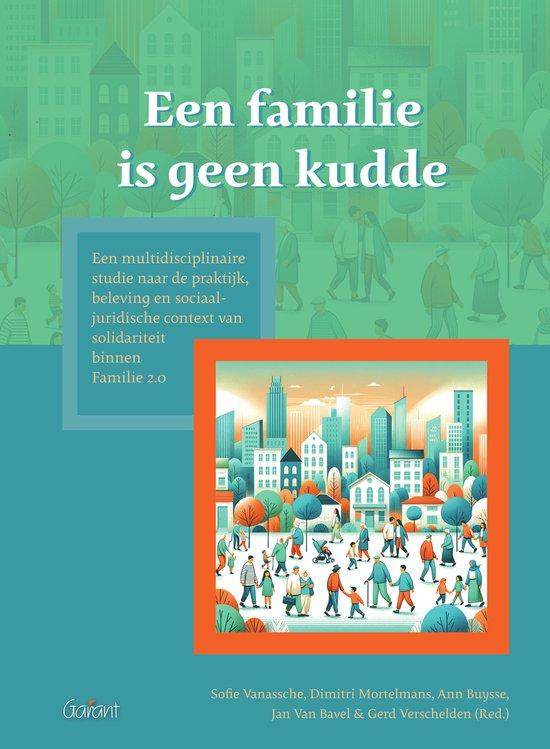
Een familie is geen kudde. Een multidisciplinaire studie naar de praktijk, beleving en sociaaljuridische context van solidariteit binnen Familie 2.0
Binnen het SBO-project Family Solidarity 2.0 onderzochten we vier jaar lang de normen, verwachtingen en billijkheid van solidariteit in diverse familievormen. We gebruikten hierbij het concept ‘Familie 2.0’ om te verwijzen naar de grote diversiteit aan gezinsvormen die vandaag bestaat, en waarbij bloedverwantschap en wettelijke verbintenissen niet langer de enige of dominante criteria voor integratie en lidmaatschap vormen.
Hoewel de traditionele familie die gebaseerd is op bloedverwantschap en wettelijk bevestigde afstamming niet per se verouderd is, kan het niet langer als allesomvattend model dienen waarrond onze samenleving is georganiseerd. Hierdoor ontstond de nood aan het bestuderen van casussen die de diversiteit van Familie 2.0 vertegenwoordigen. Binnen ons project brachten we in kaart hoe complexe en diverse Families 2.0 functioneren, hoe leden van Familie 2.0 onderling steun uitwisselen, hoe ze dit ervaren, en waar dit in spanning staat met het huidige sociaal-juridische kader.
Dit boek bundelt de eerste resultaten uit de verschillende deelstudies van ons project. Ze illustreren onder andere de rijkheid en complexiteit van solidariteitsbanden binnen families: op microniveau (tussen familieleden), op mesoniveau (binnen families en organisaties die werken met families) en op macroniveau (ons wettelijk en normatief kader).
Een familie is geen kudde. Een multidisciplinaire studie naar de praktijk, beleving en sociaaljuridische context van solidariteit binnen Familie 2.0
Binnen het SBO-project Family Solidarity 2.0 onderzochten we vier jaar lang de normen, verwachtingen en billijkheid van solidariteit in diverse familievormen. We gebruikten hierbij het concept ‘Familie 2.0’ om te verwijzen naar de grote diversiteit aan gezinsvormen die vandaag bestaat, en waarbij bloedverwantschap en wettelijke verbintenissen niet langer de enige of dominante criteria voor integratie en lidmaatschap vormen.
Hoewel de traditionele familie die gebaseerd is op bloedverwantschap en wettelijk bevestigde afstamming niet per se verouderd is, kan het niet langer als allesomvattend model dienen waarrond onze samenleving is georganiseerd. Hierdoor ontstond de nood aan het bestuderen van casussen die de diversiteit van Familie 2.0 vertegenwoordigen. Binnen ons project brachten we in kaart hoe complexe en diverse Families 2.0 functioneren, hoe leden van Familie 2.0 onderling steun uitwisselen, hoe ze dit ervaren, en waar dit in spanning staat met het huidige sociaal-juridische kader.
Dit boek bundelt de eerste resultaten uit de verschillende deelstudies van ons project. Ze illustreren onder andere de rijkheid en complexiteit van solidariteitsbanden binnen families: op microniveau (tussen familieleden), op mesoniveau (binnen families en organisaties die werken met families) en op macroniveau (ons wettelijk en normatief kader).
RIDP 95.1 (2024) | Criminalisation of AI-related offences – (International Colloquium, Bucharest, Romania, 14th-16th June 2023)
RIDP 95.1 (2024) | Criminalisation of AI-related offences – (International Colloquium, Bucharest, Romania, 14th-16th June 2023)
Sensoa Vlaggensysteem – Reageren op (grensoverschrijdend) gedrag van kinderen en jongeren
Het Sensoa Vlaggensysteem helpt om seksueel gedrag van kinderen en jongeren eerlijk te beoordelen en er gepast op te reageren. Maar je kan het Vlaggensysteem ook gebruiken om met kinderen en jongeren het gesprek aan te gaan over welk seksueel gedrag wel en niet oké is.
Centraal in het Sensoa Vlaggensysteem staan zes criteria voor gezond seksueel gedrag. Die bieden begeleiders, kinderen en jongeren houvast bij het beoordelen van seksueel gedrag, en dus ook bij de reactie daarop. Bovendien kunnen die criteria een leidraad vormen voor het eigen seksueel gedrag.
In dit boek wordt het Vlaggensysteem uitgelegd en onderbouwd. Er is ook een hoofdstuk gewijd aan begeleiderscompetenties en er staan cases in om met het team aan de slag te gaan rond seksueel (grensoverschrijdend) gedrag.
In hoofdstuk zes van dit boek zijn 43 kaarten opgenomen waarop concrete situaties staan afgebeeld van seksueel gedrag van kinderen en jongeren. Elke situatie wordt beoordeeld aan de hand van zes criteria voor gezond seksueel gedrag. Op basis van die beoordeling wordt een pedagogische reactie gesuggereerd.
Sensoa Vlaggensysteem – Reageren op (grensoverschrijdend) gedrag van kinderen en jongeren
Het Sensoa Vlaggensysteem helpt om seksueel gedrag van kinderen en jongeren eerlijk te beoordelen en er gepast op te reageren. Maar je kan het Vlaggensysteem ook gebruiken om met kinderen en jongeren het gesprek aan te gaan over welk seksueel gedrag wel en niet oké is.
Centraal in het Sensoa Vlaggensysteem staan zes criteria voor gezond seksueel gedrag. Die bieden begeleiders, kinderen en jongeren houvast bij het beoordelen van seksueel gedrag, en dus ook bij de reactie daarop. Bovendien kunnen die criteria een leidraad vormen voor het eigen seksueel gedrag.
In dit boek wordt het Vlaggensysteem uitgelegd en onderbouwd. Er is ook een hoofdstuk gewijd aan begeleiderscompetenties en er staan cases in om met het team aan de slag te gaan rond seksueel (grensoverschrijdend) gedrag.
In hoofdstuk zes van dit boek zijn 43 kaarten opgenomen waarop concrete situaties staan afgebeeld van seksueel gedrag van kinderen en jongeren. Elke situatie wordt beoordeeld aan de hand van zes criteria voor gezond seksueel gedrag. Op basis van die beoordeling wordt een pedagogische reactie gesuggereerd.
Criminal Justice in the Prism of Human Rights – (X AIDP International Symposium for Young Penalists, Bologna, Italy, 27-28 October 2022) [RIDP Libri 5]
Criminal law occupies a central role in the “prism” of human rights, given the relevant impact of trial and punishment on the personal sphere of individuals, which may be instrumentalised in the name of security claims for political purposes. It is no coincidence that during the Age of Enlightenment the main fundamental guarantees of criminal law were enshrined in human rights declarations, with an approach now widely accepted at an international level. In fact, the “dialogue” between national and supranational Courts in this domain has been a key element in contemporary times in the development of criminal law, leading not only to the implementation of fundamental guarantees – even through the redefinition of their field of application – but also to the promotion of criminalisation in order to protect certain human rights.
This volume builds upon the contributions to the X AIDP Symposium for Young Penalists, which was held on 27 and 28 October 2022 at the Department of Legal Studies of the University of Bologna. During five panels moderated by experts, young academics from eleven different countries discussed the current role of human rights in criminal justice.
Francesco Mazzacuva is Associate Professor in Criminal Law at the University of Parma, where he was PhD graduate in 2012 and postdoctoral research fellow from 2014 to 2016, when he was appointed ordinary magistrate, serving as a judge at the Court of Modena until 2019. He coordinated the activities of the Young Penalists of the Italian group of the AIDP since 2015 and, at the 20th World Congress of the AIDP held in Rome in November 2019, he was elected President of the Young Penalists Committee.
Miren Odriozola Gurrutxaga is Lecturer in Criminal Law at the University of the Basque Country, where she obtained her PhD in Law in 2015. She is also a member of the Basque Institute of Criminology since 2015. Since the 20th World Congress of the AIDP in November 2019, she is a member of the Young Penalists Committee.
Nicola Recchia is Senior Researcher in Criminal Law at the University of Trieste. In 2017 he obtained a Ph.D. in Criminal Law from the Ludwig-Maximilians University of Munich and the University of Ferrara. He has then worked as a Post-doc researcher at the University of Ferrara in 2017 and at the Goethe-University Frankfurt am Main from 2018 to 2022. Since the 20th World Congress of the AIDP in November 2019, he is member of the Young Penalists Committee.
Alessandra Santangelo is Research Fellow in Criminal Law at the University of Bologna, where she obtained her Ph.D. in Legal Science in 2020. Since then, she has been working as a Post-doc researcher for national and international projects, being Technical Coordinator of a DG Justice Programme. In 2013, she obtained an LLM, with specialisation in EU Law, from King’s College London.
Criminal Justice in the Prism of Human Rights – (X AIDP International Symposium for Young Penalists, Bologna, Italy, 27-28 October 2022) [RIDP Libri 5]
Criminal law occupies a central role in the “prism” of human rights, given the relevant impact of trial and punishment on the personal sphere of individuals, which may be instrumentalised in the name of security claims for political purposes. It is no coincidence that during the Age of Enlightenment the main fundamental guarantees of criminal law were enshrined in human rights declarations, with an approach now widely accepted at an international level. In fact, the “dialogue” between national and supranational Courts in this domain has been a key element in contemporary times in the development of criminal law, leading not only to the implementation of fundamental guarantees – even through the redefinition of their field of application – but also to the promotion of criminalisation in order to protect certain human rights.
This volume builds upon the contributions to the X AIDP Symposium for Young Penalists, which was held on 27 and 28 October 2022 at the Department of Legal Studies of the University of Bologna. During five panels moderated by experts, young academics from eleven different countries discussed the current role of human rights in criminal justice.
Francesco Mazzacuva is Associate Professor in Criminal Law at the University of Parma, where he was PhD graduate in 2012 and postdoctoral research fellow from 2014 to 2016, when he was appointed ordinary magistrate, serving as a judge at the Court of Modena until 2019. He coordinated the activities of the Young Penalists of the Italian group of the AIDP since 2015 and, at the 20th World Congress of the AIDP held in Rome in November 2019, he was elected President of the Young Penalists Committee.
Miren Odriozola Gurrutxaga is Lecturer in Criminal Law at the University of the Basque Country, where she obtained her PhD in Law in 2015. She is also a member of the Basque Institute of Criminology since 2015. Since the 20th World Congress of the AIDP in November 2019, she is a member of the Young Penalists Committee.
Nicola Recchia is Senior Researcher in Criminal Law at the University of Trieste. In 2017 he obtained a Ph.D. in Criminal Law from the Ludwig-Maximilians University of Munich and the University of Ferrara. He has then worked as a Post-doc researcher at the University of Ferrara in 2017 and at the Goethe-University Frankfurt am Main from 2018 to 2022. Since the 20th World Congress of the AIDP in November 2019, he is member of the Young Penalists Committee.
Alessandra Santangelo is Research Fellow in Criminal Law at the University of Bologna, where she obtained her Ph.D. in Legal Science in 2020. Since then, she has been working as a Post-doc researcher for national and international projects, being Technical Coordinator of a DG Justice Programme. In 2013, she obtained an LLM, with specialisation in EU Law, from King’s College London.