
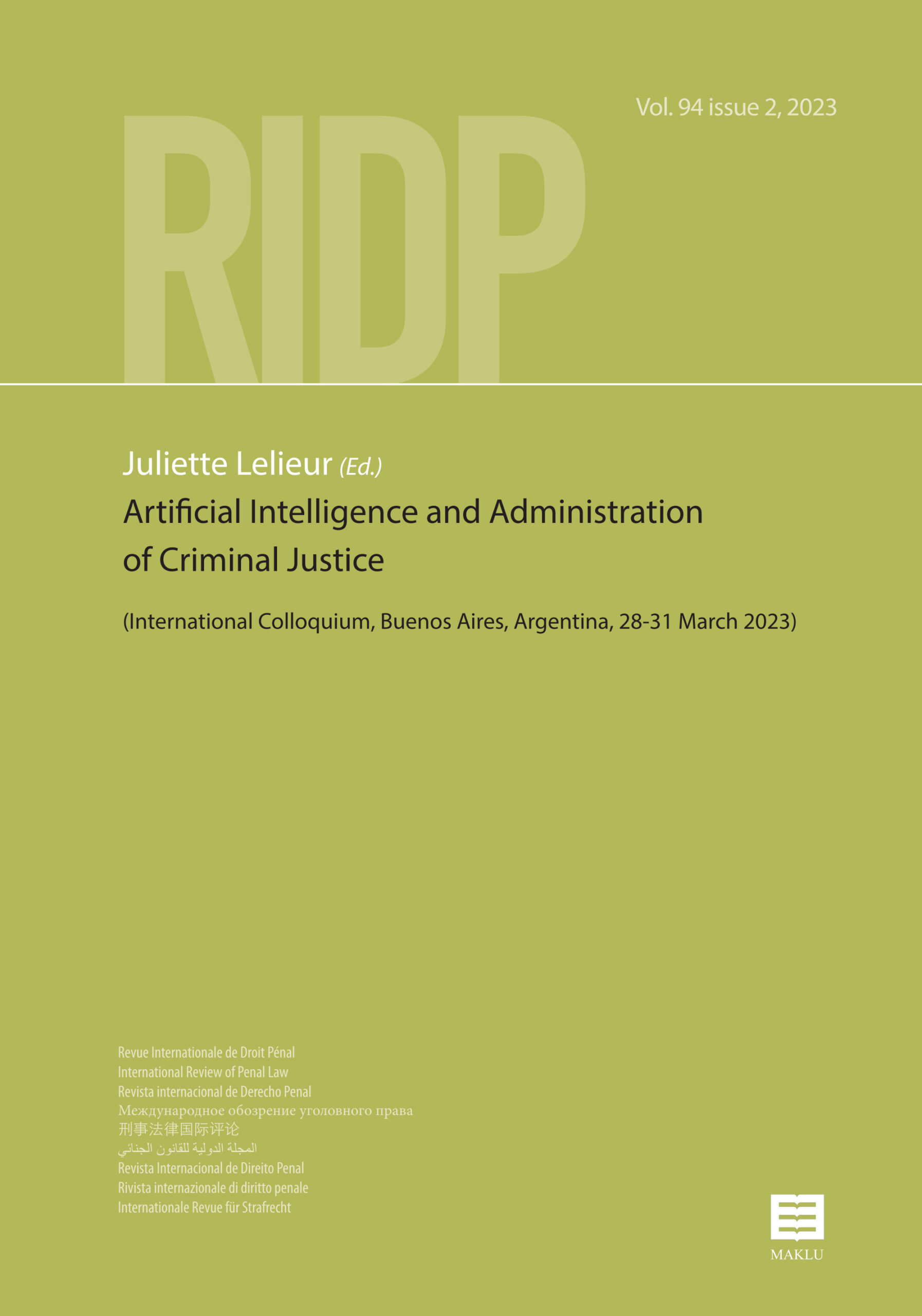
RIDP 94.2 (2023) Artificial Intelligence and Administration of Criminal Justice
Artificial Intelligence systems are used today in several parts of the world to support the administration of criminal justice. The most widespread example concerns “predictive policing”, which aims at foretelling crime before it happens and improving its detection. AI allows geospatial as well as person-based policing and is involved in preventing and uncovering economic crimes such as fraud and money laundering.
Especially in the context of crime mapping – or hot-spot analysis –, its efficiency has been questioned. As its compliance with human rights is also critically debated, some countries have renounced or ceased to rely on it. Another kind of general surveillance of human activity has however emerged with the performance of machine learning in facial recognition technology.
In contrast, the use of risk assessment tools based on AI by judicial authorities to forecast recidivism has remained limited to a few countries. Nevertheless, a new aspect of so-called “predictive justice” is currently arising, not to foretell the forthcoming behavior of a suspected or condemned person, but surprisingly the decision of judicial bodies themselves, based largely on their former decisions. Legal quantitative analysis is a new achievement, due to AI but raises serious concerns. It may radically change the role of judges and lawyers in the course of criminal justice. Not only does it put several human rights in tension but also does it challenge the very meaning of human intervention in implementing criminal law.
The final intrusion of AI into the administration of criminal justice, addressed here, concerns evidence matters. AI tools help investigation authorities gather and correlate large volumes of data and improve the exploitation of manifold sorts of digital information. It also produces statistical evaluations that may be valuable for forensic purposes, particularly to identify persons based on facial recognition, vocal recognition, and probabilistic genotyping. Whether these results are admissible in courts, and to what conditions – including technical reliability and fair trial issues – they may be proffered as evidence, is an unsolved question for now.
This volume reviews the various uses of AI in the different stages of the criminal process from a country-comparative approach. It addresses the fundamental questions that this new technology raises when confronted with the guarantees of due process, fair trial, and other relevant human rights. It also presents the 32 resolutions that a team of twenty professors of criminal law, representing various legal traditions and parts of the world, have agreed upon to ensure that the use of AI is in line with the essential principles of criminal procedural law and with a fair justice system.
Juliette Lelieur is a Professor of Criminal Law at the University of Strasbourg, France.
RIDP 94.2 (2023) Artificial Intelligence and Administration of Criminal Justice
Artificial Intelligence systems are used today in several parts of the world to support the administration of criminal justice. The most widespread example concerns “predictive policing”, which aims at foretelling crime before it happens and improving its detection. AI allows geospatial as well as person-based policing and is involved in preventing and uncovering economic crimes such as fraud and money laundering.
Especially in the context of crime mapping – or hot-spot analysis –, its efficiency has been questioned. As its compliance with human rights is also critically debated, some countries have renounced or ceased to rely on it. Another kind of general surveillance of human activity has however emerged with the performance of machine learning in facial recognition technology.
In contrast, the use of risk assessment tools based on AI by judicial authorities to forecast recidivism has remained limited to a few countries. Nevertheless, a new aspect of so-called “predictive justice” is currently arising, not to foretell the forthcoming behavior of a suspected or condemned person, but surprisingly the decision of judicial bodies themselves, based largely on their former decisions. Legal quantitative analysis is a new achievement, due to AI but raises serious concerns. It may radically change the role of judges and lawyers in the course of criminal justice. Not only does it put several human rights in tension but also does it challenge the very meaning of human intervention in implementing criminal law.
The final intrusion of AI into the administration of criminal justice, addressed here, concerns evidence matters. AI tools help investigation authorities gather and correlate large volumes of data and improve the exploitation of manifold sorts of digital information. It also produces statistical evaluations that may be valuable for forensic purposes, particularly to identify persons based on facial recognition, vocal recognition, and probabilistic genotyping. Whether these results are admissible in courts, and to what conditions – including technical reliability and fair trial issues – they may be proffered as evidence, is an unsolved question for now.
This volume reviews the various uses of AI in the different stages of the criminal process from a country-comparative approach. It addresses the fundamental questions that this new technology raises when confronted with the guarantees of due process, fair trial, and other relevant human rights. It also presents the 32 resolutions that a team of twenty professors of criminal law, representing various legal traditions and parts of the world, have agreed upon to ensure that the use of AI is in line with the essential principles of criminal procedural law and with a fair justice system.
Juliette Lelieur is a Professor of Criminal Law at the University of Strasbourg, France.

Your move – Think like the enemy to protect your organization (Series Counterplay nr. 1)
Counterplay is a proactive security concept that complements your existing security plan and tackles your security challenges in a different way. Counterplay radically chooses the criminal perspective. Looking through the eyes of the enemy to better protect yourself. Not by tracking down or attacking potential enemies, but by pro-actively subverting as many attack strategies as possible. You are thinking ahead in a game of chess with the enemy.
With plenty of practical examples and useful tips, Counterplay translates its ideas into viable methods tailored to any organization. People are put at the heart of the approach, because human action is crucial in any security policy. People can be your weakest link, but with the right guidance and tools they become your strongest asset.
Counterplay is for anyone who wants to work on security in the workplace. For security professionals who want to add new security insights to their organization. For employees of emergency services, security personnel of museums and other institutions, but also for hospitality teams of organizations and events. You will learn to observe proactively, to look critically at your own (security) resources, and to design effective barriers in an accessible way.
Kim Covent is an advisor with the Ghent local police and has over 14 years of experience in communications and policy at the local level. As an international speaker, she presents and educates on observation techniques, nonverbal communication, and proactive security. She uses gamification and action learning in spotting and understanding deviant behavior and criminal attacks.
Wesley De Smet, CPP, is department head of Facility Management at the Ghent Museum of Fine Arts. He is an expert in museum security and crisis management and previously worked as a safety & welfare consultant, prevention advisor and emergency planning officer in various government agencies. He speaks at national and international forums and serves on the board of ASIS International Benelux Chapter.
Your move – Think like the enemy to protect your organization (Series Counterplay nr. 1)
Counterplay is a proactive security concept that complements your existing security plan and tackles your security challenges in a different way. Counterplay radically chooses the criminal perspective. Looking through the eyes of the enemy to better protect yourself. Not by tracking down or attacking potential enemies, but by pro-actively subverting as many attack strategies as possible. You are thinking ahead in a game of chess with the enemy.
With plenty of practical examples and useful tips, Counterplay translates its ideas into viable methods tailored to any organization. People are put at the heart of the approach, because human action is crucial in any security policy. People can be your weakest link, but with the right guidance and tools they become your strongest asset.
Counterplay is for anyone who wants to work on security in the workplace. For security professionals who want to add new security insights to their organization. For employees of emergency services, security personnel of museums and other institutions, but also for hospitality teams of organizations and events. You will learn to observe proactively, to look critically at your own (security) resources, and to design effective barriers in an accessible way.
Kim Covent is an advisor with the Ghent local police and has over 14 years of experience in communications and policy at the local level. As an international speaker, she presents and educates on observation techniques, nonverbal communication, and proactive security. She uses gamification and action learning in spotting and understanding deviant behavior and criminal attacks.
Wesley De Smet, CPP, is department head of Facility Management at the Ghent Museum of Fine Arts. He is an expert in museum security and crisis management and previously worked as a safety & welfare consultant, prevention advisor and emergency planning officer in various government agencies. He speaks at national and international forums and serves on the board of ASIS International Benelux Chapter.
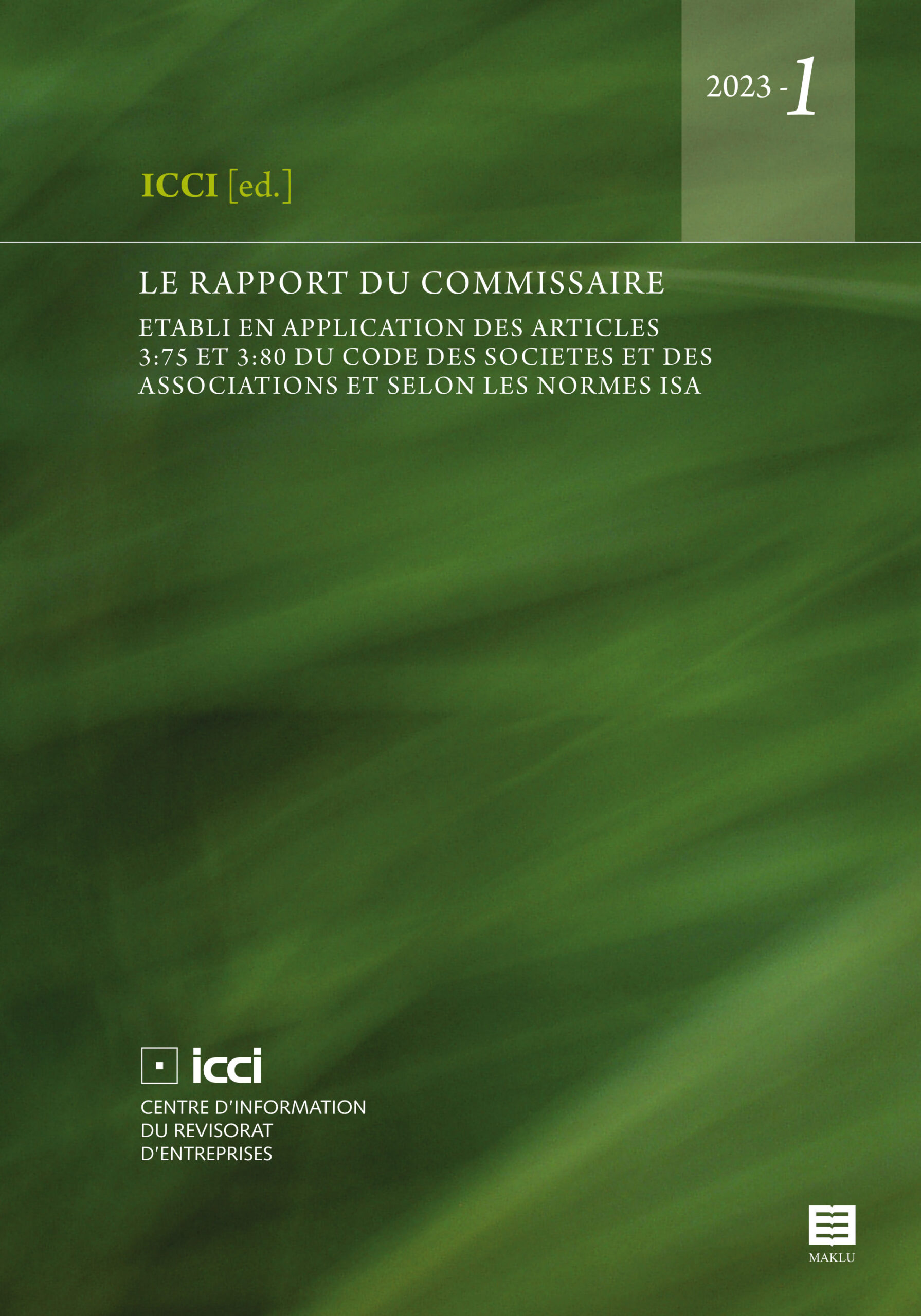
Le rapport du commissaire. Établi en application des articles 3:75 et 3:80 du Code des sociétés et des associations et selon les normes ISA (ICCI 2023-1)
La publication Le rapport du commissaire établi en application des articles 3:75 et 3:80 du Code des sociétés et des associations et selon les normes ISA traite quasi exclusivement des rapports émis en vertu de la loi en tant que commissaire ou réviseur dentreprises désigné (ci-après communément dénommé le « commissaire ») chargé du contrôle des comptes annuels ou consolidés eff ectué conformément aux normes ISA.
Cee édition tient compte des textes législatifs, réglementaires et normatifs, ainsi que des traductions françaises et néerlandaises des normes ISA applicables en Belgique au 31 décembre 2022. Cest ainsi quil tient compte de lentrée en vigueur du Code des sociétés et des associations et également de la version révisée 2020 de la norme complémentaire aux normes ISA applicables en Belgique (en cours de révision). La version actuelle de la publication peut être utilisée pour les comptes annuels clôturés après le 31 décembre 2022.
Le premier chapitre de la publication traite de la structure du rapport du commissaire, en tenant compte des exigences à la fois des normes ISA et du contexte légal et normatif belge. Le deuxième chapitre parcourt les diff érentes situations auxquelles le commissaire peut être confronté dès sa nomination par lassemblée générale. Dans ce chapitre, des exemples concrets de rapports sur les comptes annuels sont présentés suivant diff érents thèmes en tenant compte des circonstances indiquées au début de chaque exemple. Le commissaire doit prendre en considération, dans son rapport sur dautres obligations légales et réglementaires, les conséquences dune opinion modifi ée exprimée dans son rapport sur les comptes annuels (consolidés) (première partie du rapport) et la seconde partie du rapport devra, dans la plupart des cas, être adaptée (troisième chapitre). Le quatrième chapitre rappelle le contexte législatif relatif à lintervention du réviseur dentreprises auprès du conseil dentreprise et donne un exemple de rapport pouvant être adressé au conseil dentreprise dune succursale. Ensuite, la publication examine les conséquences dune décision de dissolution sur le rapport du commissaire, notamment quelles sont les règles dévaluation applicables, tant avant quaprès lacte notarié (cinquième chapitre). La publication fournit également au sixième chapitre un exemple de rapport de carence destiné à lassemblée générale que le commissaire doit éme re dès quil constate que lassemblée générale ne délibère pas sur les comptes annuels dans les six mois après la date de clôture de lexercice. Enfin, les modèles de rapports de commissaire en néerlandais et en français, annexés à la norme complémentaire (version révisée 2020) aux normes ISA applicables en Belgique, sont repris (septième chapitre).
Les auteurs ont saisi loccasion pour peaufi ner et compléter certains aspects de la publication. Ainsi, de manière concise, certains aspects relatifs à la rectifi cation des comptes annuels, sont développés dans diff érents scénarios, ainsi quun arbre de décision succinct relatif à lidentifi cation au cours de lexercice N dune anomalie signifi cative impactant lexercice N-1. En outre, des types de rapports du commissaire reprenant les formulations standards lorsque le commissaire exprime une opinion modifi ée sont mis à disposition.
Le rapport du commissaire. Établi en application des articles 3:75 et 3:80 du Code des sociétés et des associations et selon les normes ISA (ICCI 2023-1)
La publication Le rapport du commissaire établi en application des articles 3:75 et 3:80 du Code des sociétés et des associations et selon les normes ISA traite quasi exclusivement des rapports émis en vertu de la loi en tant que commissaire ou réviseur dentreprises désigné (ci-après communément dénommé le « commissaire ») chargé du contrôle des comptes annuels ou consolidés eff ectué conformément aux normes ISA.
Cee édition tient compte des textes législatifs, réglementaires et normatifs, ainsi que des traductions françaises et néerlandaises des normes ISA applicables en Belgique au 31 décembre 2022. Cest ainsi quil tient compte de lentrée en vigueur du Code des sociétés et des associations et également de la version révisée 2020 de la norme complémentaire aux normes ISA applicables en Belgique (en cours de révision). La version actuelle de la publication peut être utilisée pour les comptes annuels clôturés après le 31 décembre 2022.
Le premier chapitre de la publication traite de la structure du rapport du commissaire, en tenant compte des exigences à la fois des normes ISA et du contexte légal et normatif belge. Le deuxième chapitre parcourt les diff érentes situations auxquelles le commissaire peut être confronté dès sa nomination par lassemblée générale. Dans ce chapitre, des exemples concrets de rapports sur les comptes annuels sont présentés suivant diff érents thèmes en tenant compte des circonstances indiquées au début de chaque exemple. Le commissaire doit prendre en considération, dans son rapport sur dautres obligations légales et réglementaires, les conséquences dune opinion modifi ée exprimée dans son rapport sur les comptes annuels (consolidés) (première partie du rapport) et la seconde partie du rapport devra, dans la plupart des cas, être adaptée (troisième chapitre). Le quatrième chapitre rappelle le contexte législatif relatif à lintervention du réviseur dentreprises auprès du conseil dentreprise et donne un exemple de rapport pouvant être adressé au conseil dentreprise dune succursale. Ensuite, la publication examine les conséquences dune décision de dissolution sur le rapport du commissaire, notamment quelles sont les règles dévaluation applicables, tant avant quaprès lacte notarié (cinquième chapitre). La publication fournit également au sixième chapitre un exemple de rapport de carence destiné à lassemblée générale que le commissaire doit éme re dès quil constate que lassemblée générale ne délibère pas sur les comptes annuels dans les six mois après la date de clôture de lexercice. Enfin, les modèles de rapports de commissaire en néerlandais et en français, annexés à la norme complémentaire (version révisée 2020) aux normes ISA applicables en Belgique, sont repris (septième chapitre).
Les auteurs ont saisi loccasion pour peaufi ner et compléter certains aspects de la publication. Ainsi, de manière concise, certains aspects relatifs à la rectifi cation des comptes annuels, sont développés dans diff érents scénarios, ainsi quun arbre de décision succinct relatif à lidentifi cation au cours de lexercice N dune anomalie signifi cative impactant lexercice N-1. En outre, des types de rapports du commissaire reprenant les formulations standards lorsque le commissaire exprime une opinion modifi ée sont mis à disposition.
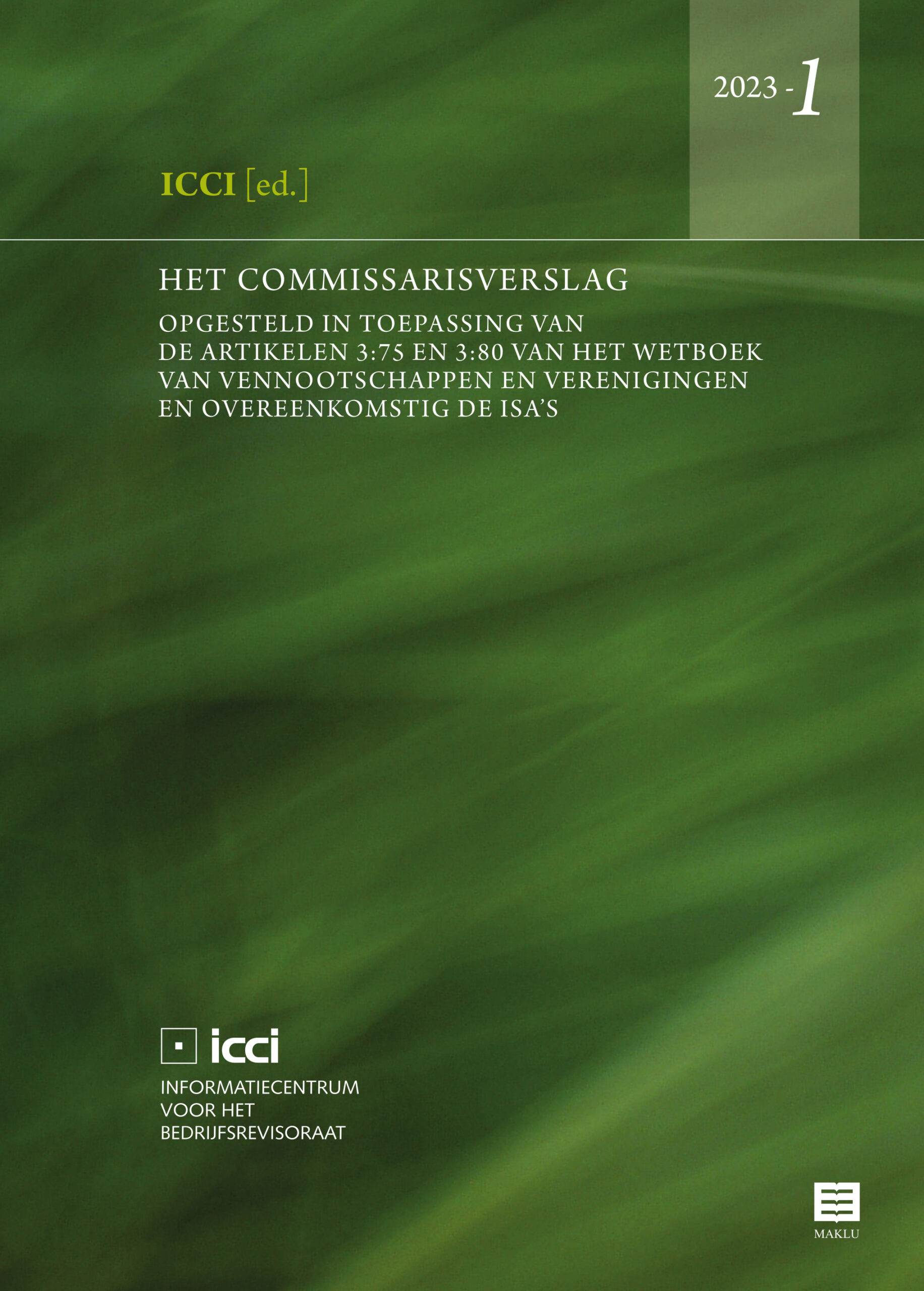
Het commissarisverslag. – Opgesteld in toepassing van de artikelen 3:75 en 3:80 van het Wetboek van vennootschappen en verenigingen en overeenkomstig de ISA’s (ICCI 2023-1)
Deze editie houdt rekening met de wet- en regelgeving en de normen, alsook met de vertaling van de in België van toepassing zijnde ISA’s naar het Nederlands en het Frans, bijgewerkt tot 31 december 2022. Zo wordt rekening gehouden met de inwerkingtreding van het Wetboek van vennootschappen en verenigingen, alsook met de herziene versie 2020 van de bijkomende norm bij de in België van toepassing zijnde ISA’s (wordt momenteel herzien). De huidige versie van de publicatie kan worden gebruikt voor jaarrekeningen afgesloten na 31 december 2022.
Het eerste hoofdstuk van de publicatie bespreekt de structuur van het commissarisverslag, rekening houdend met de vereisten van zowel de ISA’s als de Belgische wettelijke en normatieve context. Het tweede hoofdstuk overloopt de verschillende situaties waarmee de commissaris vanaf zijn benoeming door de algemene vergadering kan geconfronteerd worden. In dit hoofdstuk worden concrete voorbeelden van verslagen over de jaarrekening verstrekt volgens diverse thema’s rekening houdend met de omstandigheden die worden opgegeven bij het begin van elk voorbeeld. In zijn verslag betreffende overige door wet- en regelgeving gestelde eisen moet de commissaris rekening houden met de gevolgen van een aangepast oordeel tot uitdrukking gebracht in zijn verslag over de (geconsolideerde) jaarrekening (eerste deel) en het tweede deel van het verslag zal, in het merendeel van de gevallen, moeten worden aangepast (derde hoofdstuk). In het vierde hoofdstuk wordt de wettelijke context met betrekking tot de tussenkomst van de bedrijfsrevisor bij de ondernemingsraad in herinnering gebracht en wordt een voorbeeldverslag verstrekt dat aan de ondernemingsraad van een bijkantoor kan worden gericht. Vervolgens wordt nagegaan wat de gevolgen zijn van een beslissing tot ontbinding op het commissarisverslag, onder meer wat de toepasselijke waarderingsregels zijn, en dit zowel voor als na de notariële akte (vijfde hoofdstuk). De publicatie bevat in het zesde hoofdstuk tevens een voorbeeld van verslag van niet-bevinding bestemd voor de algemene vergadering dat de commissaris zodra hij vaststelt dat de algemene vergadering niet binnen zes maanden na de afsluitingsdatum van het boekjaar over de jaarrekening beraadslaagt. Ten slotte worden de modelverslagen in het Nederlands en het Frans, die aan de bijkomende norm (herziene versie 2020) bij de in België van toepassing zijnde ISA’s werden gehecht, ter beschikking gesteld (zevende hoofdstuk).
De auteurs hebben van de gelegenheid gebruik gemaakt om bepaalde elementen te verfijnen en aan te vullen. Zo worden op bondige wijze bepaalde aspecten met betrekking tot de correctie van de jaarrekening verder uitgewerkt in verschillende scenario’s, alsook een samenvattende beslissingsboom weergegeven met betrekking tot de ontdekking van in de loop van boekjaar N van een afwijking van materieel belang die een impact heeft op boekjaar N-1. Tevens worden typeverslagen van de commissaris met de standaardformuleringen in het geval dat de commissaris een aangepast oordeel tot uitdrukking brengt ter beschikking gesteld.
Het commissarisverslag. – Opgesteld in toepassing van de artikelen 3:75 en 3:80 van het Wetboek van vennootschappen en verenigingen en overeenkomstig de ISA’s (ICCI 2023-1)
Deze editie houdt rekening met de wet- en regelgeving en de normen, alsook met de vertaling van de in België van toepassing zijnde ISA’s naar het Nederlands en het Frans, bijgewerkt tot 31 december 2022. Zo wordt rekening gehouden met de inwerkingtreding van het Wetboek van vennootschappen en verenigingen, alsook met de herziene versie 2020 van de bijkomende norm bij de in België van toepassing zijnde ISA’s (wordt momenteel herzien). De huidige versie van de publicatie kan worden gebruikt voor jaarrekeningen afgesloten na 31 december 2022.
Het eerste hoofdstuk van de publicatie bespreekt de structuur van het commissarisverslag, rekening houdend met de vereisten van zowel de ISA’s als de Belgische wettelijke en normatieve context. Het tweede hoofdstuk overloopt de verschillende situaties waarmee de commissaris vanaf zijn benoeming door de algemene vergadering kan geconfronteerd worden. In dit hoofdstuk worden concrete voorbeelden van verslagen over de jaarrekening verstrekt volgens diverse thema’s rekening houdend met de omstandigheden die worden opgegeven bij het begin van elk voorbeeld. In zijn verslag betreffende overige door wet- en regelgeving gestelde eisen moet de commissaris rekening houden met de gevolgen van een aangepast oordeel tot uitdrukking gebracht in zijn verslag over de (geconsolideerde) jaarrekening (eerste deel) en het tweede deel van het verslag zal, in het merendeel van de gevallen, moeten worden aangepast (derde hoofdstuk). In het vierde hoofdstuk wordt de wettelijke context met betrekking tot de tussenkomst van de bedrijfsrevisor bij de ondernemingsraad in herinnering gebracht en wordt een voorbeeldverslag verstrekt dat aan de ondernemingsraad van een bijkantoor kan worden gericht. Vervolgens wordt nagegaan wat de gevolgen zijn van een beslissing tot ontbinding op het commissarisverslag, onder meer wat de toepasselijke waarderingsregels zijn, en dit zowel voor als na de notariële akte (vijfde hoofdstuk). De publicatie bevat in het zesde hoofdstuk tevens een voorbeeld van verslag van niet-bevinding bestemd voor de algemene vergadering dat de commissaris zodra hij vaststelt dat de algemene vergadering niet binnen zes maanden na de afsluitingsdatum van het boekjaar over de jaarrekening beraadslaagt. Ten slotte worden de modelverslagen in het Nederlands en het Frans, die aan de bijkomende norm (herziene versie 2020) bij de in België van toepassing zijnde ISA’s werden gehecht, ter beschikking gesteld (zevende hoofdstuk).
De auteurs hebben van de gelegenheid gebruik gemaakt om bepaalde elementen te verfijnen en aan te vullen. Zo worden op bondige wijze bepaalde aspecten met betrekking tot de correctie van de jaarrekening verder uitgewerkt in verschillende scenario’s, alsook een samenvattende beslissingsboom weergegeven met betrekking tot de ontdekking van in de loop van boekjaar N van een afwijking van materieel belang die een impact heeft op boekjaar N-1. Tevens worden typeverslagen van de commissaris met de standaardformuleringen in het geval dat de commissaris een aangepast oordeel tot uitdrukking brengt ter beschikking gesteld.
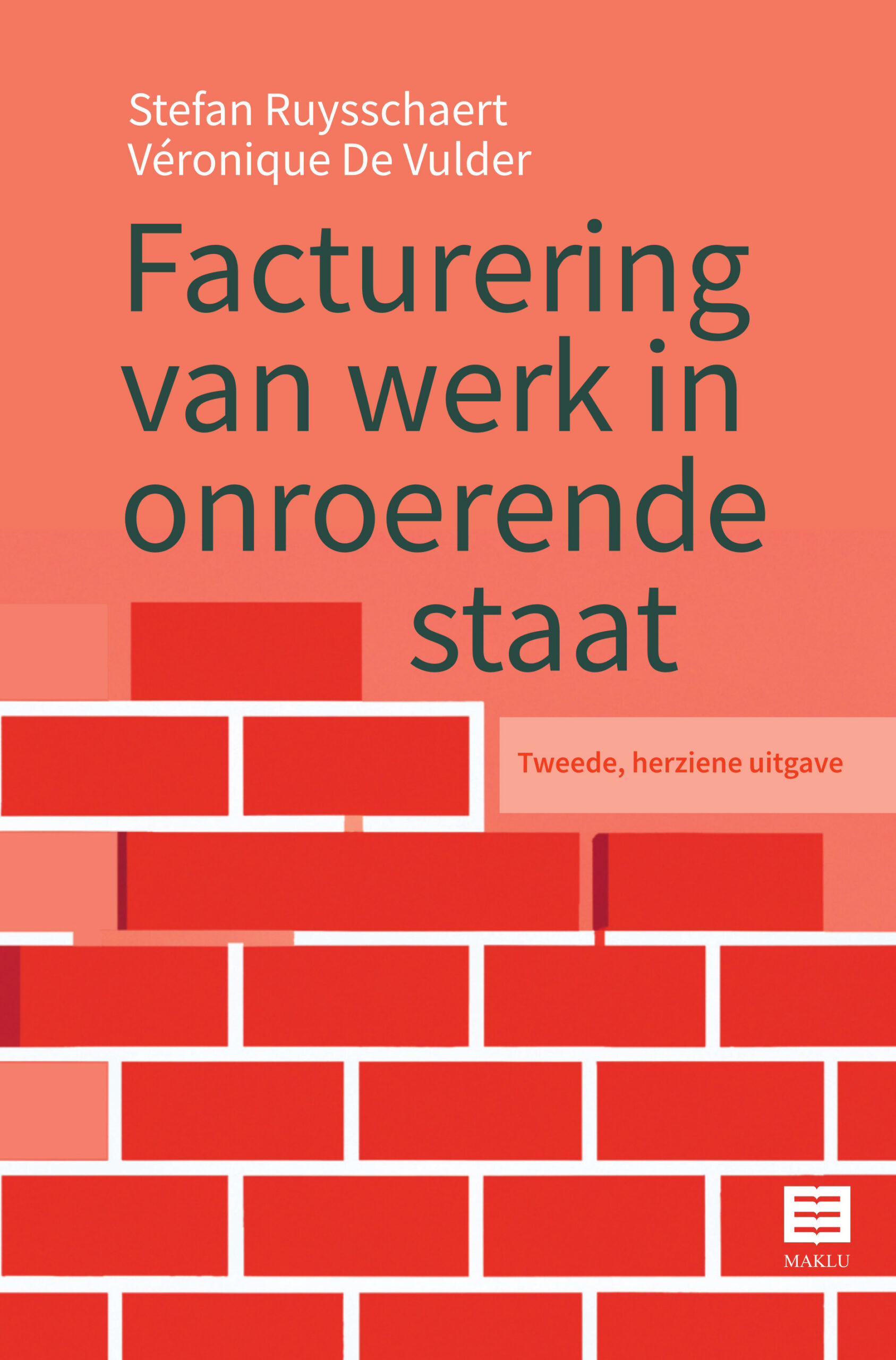
Facturering van werk in onroerende staat – Tweede, herziene uitgave
Ook het zelf verricht werk in onroerende staat komt aan bod.
De benadering is zeer praktisch: hoe moet er gefactureerd worden, welk btw-tarief is van toepassing en hoe moet het werk in onroerende staat gerapporteerd worden?
Facturering van werk in onroerende staat – Tweede, herziene uitgave
Ook het zelf verricht werk in onroerende staat komt aan bod.
De benadering is zeer praktisch: hoe moet er gefactureerd worden, welk btw-tarief is van toepassing en hoe moet het werk in onroerende staat gerapporteerd worden?
Cross-border transfers of personal data from the EU to China. Navigating legal requirements and challenges in practice
In recent years, the rapid development and adoption of technologies and the expansion of the digital economy have gone hand in hand with the processing of vast amounts of personal data. Cross-border data flows can bring many benefits to businesses and citizens but are at the same time accompanied by concerns and risks. This dissertation focuses on cross-border data flows from the EU to China and aims to provide a comprehensive and systematic legal assessment and empirical study of EU citizens’ data protection rights in this process.
This research asks how the right to data protection of EU citizens is and should be ensured when personal data are transferred from the EU to China. This research contributes to navigating the legal requirements and challenges in practice, as well as providing recommendations on the policymaking level.
Dr. Yueming Zhang joined the research group Law & Technology at Ghent University as a doctoral researcher in 2019. She obtained her PhD degree from Ghent University in 2023. Her research focuses on privacy, data protection, and cross-border data transfers.
Cross-border transfers of personal data from the EU to China. Navigating legal requirements and challenges in practice
In recent years, the rapid development and adoption of technologies and the expansion of the digital economy have gone hand in hand with the processing of vast amounts of personal data. Cross-border data flows can bring many benefits to businesses and citizens but are at the same time accompanied by concerns and risks. This dissertation focuses on cross-border data flows from the EU to China and aims to provide a comprehensive and systematic legal assessment and empirical study of EU citizens’ data protection rights in this process.
This research asks how the right to data protection of EU citizens is and should be ensured when personal data are transferred from the EU to China. This research contributes to navigating the legal requirements and challenges in practice, as well as providing recommendations on the policymaking level.
Dr. Yueming Zhang joined the research group Law & Technology at Ghent University as a doctoral researcher in 2019. She obtained her PhD degree from Ghent University in 2023. Her research focuses on privacy, data protection, and cross-border data transfers.

Is detentie het verkeerde medicijn? De sleutel naar een humaner gevangeniswezen
‘De graad van beschaving van een land kan men afleiden uit de wijze waarop men omgaat met misdaad en uit de wijze waarop men omgaat met daders’ (Churchill)
Toen Leo Nardus na een keurig leven in vrijheid in de gevangenis terechtkwam, werd hij geconfronteerd met negatieve opvattingen en stigmatisering van de gedetineerde. Deze ervaring zette hem ertoe aan om een boek te schrijven dat de lezer inzicht biedt en een lans breekt voor de medemens buiten de vrije samenleving.
Door niet enkel zijn persoonlijke bevindingen te vernoemen, maar ook getuigenissen van cipiers, vrijwilligers, medegedetineerden, inclusief hun familie, doet hij een poging om de lezer op een neutrale, inzichtelijke, actieve en kritische manier te betrekken bij het gevangeniswezen. Zonder té veel vingerwijzingen, maar enkel en alleen door middel van objectieve vaststellingen die eveneens een gefundeerde wetenschappelijke inhoud hebben, wil de auteur de lezer confronteren met de realiteit van detentie.
Leo Nardus behandelt uiteenlopende onderwerpen zoals internering, forensische zorg, radicalisering, de rol van de advocaat, de cipier, de aalmoezenier, de chronische overbevolking, de hoge zelfmoordcijfers, de drugproblematiek, stakingen, corona binnen de gevangenis, het Scandinavische gevangenismodel, enzovoort. Op die manier wil hij een beter beeld schetsen naar de maatschappij toe opdat er meer transparantie, beter nog, een brug kan ontstaan tussen ‘de burger’ en het geheimzinnige, onbekende en té donkere gebeuren in de beschimmelde gevangeniskelders….
De auteur schenkt extra aandacht aan de gezondheidstoestand van de gedetineerde in de ruimste zin van het woord en benadrukt het belang van preventie. Opvoeding speelt namelijk een cruciale rol in het al dan niet ontwikkelen van delinquent gedrag. Niet zelden was de afwezigheid van een ‘geborgen ouderlijk nest’ in combinatie met andere factoren de aanzet tot het plegen van criminaliteit. Ten slotte suggereert hij alternatieven en geeft hij opties die kunnen bijdragen aan een humaner detentielandschap.
Is detentie het verkeerde medicijn? De sleutel naar een humaner gevangeniswezen
‘De graad van beschaving van een land kan men afleiden uit de wijze waarop men omgaat met misdaad en uit de wijze waarop men omgaat met daders’ (Churchill)
Toen Leo Nardus na een keurig leven in vrijheid in de gevangenis terechtkwam, werd hij geconfronteerd met negatieve opvattingen en stigmatisering van de gedetineerde. Deze ervaring zette hem ertoe aan om een boek te schrijven dat de lezer inzicht biedt en een lans breekt voor de medemens buiten de vrije samenleving.
Door niet enkel zijn persoonlijke bevindingen te vernoemen, maar ook getuigenissen van cipiers, vrijwilligers, medegedetineerden, inclusief hun familie, doet hij een poging om de lezer op een neutrale, inzichtelijke, actieve en kritische manier te betrekken bij het gevangeniswezen. Zonder té veel vingerwijzingen, maar enkel en alleen door middel van objectieve vaststellingen die eveneens een gefundeerde wetenschappelijke inhoud hebben, wil de auteur de lezer confronteren met de realiteit van detentie.
Leo Nardus behandelt uiteenlopende onderwerpen zoals internering, forensische zorg, radicalisering, de rol van de advocaat, de cipier, de aalmoezenier, de chronische overbevolking, de hoge zelfmoordcijfers, de drugproblematiek, stakingen, corona binnen de gevangenis, het Scandinavische gevangenismodel, enzovoort. Op die manier wil hij een beter beeld schetsen naar de maatschappij toe opdat er meer transparantie, beter nog, een brug kan ontstaan tussen ‘de burger’ en het geheimzinnige, onbekende en té donkere gebeuren in de beschimmelde gevangeniskelders….
De auteur schenkt extra aandacht aan de gezondheidstoestand van de gedetineerde in de ruimste zin van het woord en benadrukt het belang van preventie. Opvoeding speelt namelijk een cruciale rol in het al dan niet ontwikkelen van delinquent gedrag. Niet zelden was de afwezigheid van een ‘geborgen ouderlijk nest’ in combinatie met andere factoren de aanzet tot het plegen van criminaliteit. Ten slotte suggereert hij alternatieven en geeft hij opties die kunnen bijdragen aan een humaner detentielandschap.

Het Masterbudget. Een essentiële planningstool voor de onderneming (Bijzondere reeks Beroepsvereniging voor Boekhoudkundige Beroepen nr. 3)
Dr. Jacques Van Der Elst is doctor in business administration (Newport University CA, State approved, 1994), master in financieel management van ondernemingen, master in accountancy, gediplomeerde in de boekhoudkundige expertise, gegradueerde in de boekhouding en gewezen IAB-accountant. Hij bekleedde meerdere financiële directiefuncties in grote ondernemingen en was gerechtsdeskundige bij diverse Rechtbanken van Koophandel. Dr. J. Van Der Elst doceerde zowel op academisch - als hogeschoolniveau vakken zoals statistiek, financiële wiskunde, financieel management, financiële analyse, beleggingsleer, bedrijfseconomie en cost accounting. Meer dan 20 jaar is de auteur ook IAB-jurylid geweest van de eindexamencommissies. Zijn vele publicaties situeren zich in de domeinen van de toegepaste wiskunde, het financieel management, de bedrijfseconomie en de accountancy.
Het Masterbudget. Een essentiële planningstool voor de onderneming (Bijzondere reeks Beroepsvereniging voor Boekhoudkundige Beroepen nr. 3)
Dr. Jacques Van Der Elst is doctor in business administration (Newport University CA, State approved, 1994), master in financieel management van ondernemingen, master in accountancy, gediplomeerde in de boekhoudkundige expertise, gegradueerde in de boekhouding en gewezen IAB-accountant. Hij bekleedde meerdere financiële directiefuncties in grote ondernemingen en was gerechtsdeskundige bij diverse Rechtbanken van Koophandel. Dr. J. Van Der Elst doceerde zowel op academisch - als hogeschoolniveau vakken zoals statistiek, financiële wiskunde, financieel management, financiële analyse, beleggingsleer, bedrijfseconomie en cost accounting. Meer dan 20 jaar is de auteur ook IAB-jurylid geweest van de eindexamencommissies. Zijn vele publicaties situeren zich in de domeinen van de toegepaste wiskunde, het financieel management, de bedrijfseconomie en de accountancy.
Europees Internationaal Rivierenrecht – 2e, volledig herziene uitgave – 2 volumes
“Het voorliggende werk is monumentaal, niet enkel in omvang maar vooral naar inhoud. Mij is geen andere wetenschappelijke bijdrage bekend die op een zodanig alomvattende wijze het rivierenrecht situeert en analyseert en er eveneens in slaagt om het op een bevattende wijze te duiden. Dr. Marc De Decker etaleert op een meesterlijke manier zijn uitgebreide historische en juridische kennis van het Europese rivierenrecht en voert de lezer mee op een intrigerende tocht naar de schepping van een juridisch systeem waarmee bijna iedereen wordt geconfronteerd maar wat weinigen werkelijk kunnen bevatten.
De verschillende grote ontwikkelingen die stapsgewijs tot stand zijn gekomen, van de Franse revolutie over het Congres van Wenen, het verdrag van Parijs van 1856 naar de grote verkeersconferenties in de 20ste eeuw, worden met meer dan een vaardige hand beschreven en geanalyseerd. Bijzonder boeiend is het plaatsen van het Europese rivierenrecht binnen het grotere kader van het internationaal publiek recht. Fundamentele aspecten zoals de vrijheid van scheepvaart en de institutionalisering van het rivierenrecht worden grondig behandeld en geven zonder meer een grote meerwaarde aan dit boek. Het toetsen van de materie tegenover het recht van de Europese Unie en tegenover andere dan scheepvaartgebruiken van de waterwegen vervolledigt de aanpak van de auteur waarmee het voorliggende werk een bijna alomvattend beeld geeft van het Europese rivierenrecht.
Dit boek verdient veel aandacht. Niet enkel academici maar eveneens praktijkjuristen en diegenen die elke dag met watergebonden vervoer worden geconfronteerd, zullen baat vinden bij het gebruiken van dit werk.
Een absolute aanrader!” (Prof. Dr. E. Somers in het voorwoord)
Marc De Decker (1961) is advocaat aan de balie te Antwerpen, gespecialiseerd in transportrecht en auteur van verschillende publicaties over scheepvaartrecht. Hij is voorzitter van de Federatie Belgische Binnenvaart/Fédération de la batellerie belge en gastprofessor aan de Universiteit Gent voor het vak “European International River Law” in de opleiding “Master of Science in Maritime Sciences”. De eerste editie van het boek “Europees Internationaal Rivierenrecht” werd in 2015 bekroond met de prijs Fondation François Génicot Stichting.
Europees Internationaal Rivierenrecht – 2e, volledig herziene uitgave – 2 volumes
“Het voorliggende werk is monumentaal, niet enkel in omvang maar vooral naar inhoud. Mij is geen andere wetenschappelijke bijdrage bekend die op een zodanig alomvattende wijze het rivierenrecht situeert en analyseert en er eveneens in slaagt om het op een bevattende wijze te duiden. Dr. Marc De Decker etaleert op een meesterlijke manier zijn uitgebreide historische en juridische kennis van het Europese rivierenrecht en voert de lezer mee op een intrigerende tocht naar de schepping van een juridisch systeem waarmee bijna iedereen wordt geconfronteerd maar wat weinigen werkelijk kunnen bevatten.
De verschillende grote ontwikkelingen die stapsgewijs tot stand zijn gekomen, van de Franse revolutie over het Congres van Wenen, het verdrag van Parijs van 1856 naar de grote verkeersconferenties in de 20ste eeuw, worden met meer dan een vaardige hand beschreven en geanalyseerd. Bijzonder boeiend is het plaatsen van het Europese rivierenrecht binnen het grotere kader van het internationaal publiek recht. Fundamentele aspecten zoals de vrijheid van scheepvaart en de institutionalisering van het rivierenrecht worden grondig behandeld en geven zonder meer een grote meerwaarde aan dit boek. Het toetsen van de materie tegenover het recht van de Europese Unie en tegenover andere dan scheepvaartgebruiken van de waterwegen vervolledigt de aanpak van de auteur waarmee het voorliggende werk een bijna alomvattend beeld geeft van het Europese rivierenrecht.
Dit boek verdient veel aandacht. Niet enkel academici maar eveneens praktijkjuristen en diegenen die elke dag met watergebonden vervoer worden geconfronteerd, zullen baat vinden bij het gebruiken van dit werk.
Een absolute aanrader!” (Prof. Dr. E. Somers in het voorwoord)
Marc De Decker (1961) is advocaat aan de balie te Antwerpen, gespecialiseerd in transportrecht en auteur van verschillende publicaties over scheepvaartrecht. Hij is voorzitter van de Federatie Belgische Binnenvaart/Fédération de la batellerie belge en gastprofessor aan de Universiteit Gent voor het vak “European International River Law” in de opleiding “Master of Science in Maritime Sciences”. De eerste editie van het boek “Europees Internationaal Rivierenrecht” werd in 2015 bekroond met de prijs Fondation François Génicot Stichting.
RIDP 94.1 (2023) – Traditional Criminal Law Categories and AI: Crisis or Palingenesis?
The study of the intersections between technology and crime is a well-established topic for criminal lawyers, gaining increasing significance over time. Initially, in the risk society, and even more so today, in the algorithmic society, the challenges posed by Artificial Intelligence (AI) bring new complexities to light. AI systems are increasingly involved in perpetrating various kinds of harms. They can serve as new tools for committing crimes or directly cause serious harms to fundamental human rights and other relevant legal goods, such as life, physical and moral integrity, privacy, and public order. The specific features of autonomy, opacity, and unpredictability in AI systems, which make them different from other technologies, might challenge responsibility attribution theory. Consequently, as we encounter situations that are no longer entirely “human”, criminal law must address whether the existing laws at national and international levels provide adequate protection.
The starting point to assess the adequacy of criminal laws and policies is to evaluate the potential collision points that may arise when regulating AI-related crimes within the traditional categories of the general part of criminal law. For instance, when decision-making processes and task execution are delegated to artificial agents, what constitutes the actus reus? If the crime committed by the AI system differs from the one intended by the criminal agent, should the agent still be held liable? Furthermore, the unpredictability of AI might challenge the principle of culpability in cases of negligence-based crimes. Additionally, the degree of separation between the human agent’s conduct and the harm caused by the functioning of an AI system may affect the proof of the causality chain and the guilt of the operator.
This volume aims to address these critical questions and to provide a first recommendation, based on an international analysis of the topic. It brings together contributions from national rapporteurs of various countries who collaborated with the general rapporteur in the works of Section I (criminal law - general part) for the upcoming AIDP international congress of 2024.
Lorenzo Picotti is Full Professor in Criminal Law at the University of Verona, Italy.
Beatrice Panattoni is Postdoc Researcher in Criminal Law at the University of Verona, Italy.
RIDP 94.1 (2023) – Traditional Criminal Law Categories and AI: Crisis or Palingenesis?
The study of the intersections between technology and crime is a well-established topic for criminal lawyers, gaining increasing significance over time. Initially, in the risk society, and even more so today, in the algorithmic society, the challenges posed by Artificial Intelligence (AI) bring new complexities to light. AI systems are increasingly involved in perpetrating various kinds of harms. They can serve as new tools for committing crimes or directly cause serious harms to fundamental human rights and other relevant legal goods, such as life, physical and moral integrity, privacy, and public order. The specific features of autonomy, opacity, and unpredictability in AI systems, which make them different from other technologies, might challenge responsibility attribution theory. Consequently, as we encounter situations that are no longer entirely “human”, criminal law must address whether the existing laws at national and international levels provide adequate protection.
The starting point to assess the adequacy of criminal laws and policies is to evaluate the potential collision points that may arise when regulating AI-related crimes within the traditional categories of the general part of criminal law. For instance, when decision-making processes and task execution are delegated to artificial agents, what constitutes the actus reus? If the crime committed by the AI system differs from the one intended by the criminal agent, should the agent still be held liable? Furthermore, the unpredictability of AI might challenge the principle of culpability in cases of negligence-based crimes. Additionally, the degree of separation between the human agent’s conduct and the harm caused by the functioning of an AI system may affect the proof of the causality chain and the guilt of the operator.
This volume aims to address these critical questions and to provide a first recommendation, based on an international analysis of the topic. It brings together contributions from national rapporteurs of various countries who collaborated with the general rapporteur in the works of Section I (criminal law - general part) for the upcoming AIDP international congress of 2024.
Lorenzo Picotti is Full Professor in Criminal Law at the University of Verona, Italy.
Beatrice Panattoni is Postdoc Researcher in Criminal Law at the University of Verona, Italy.
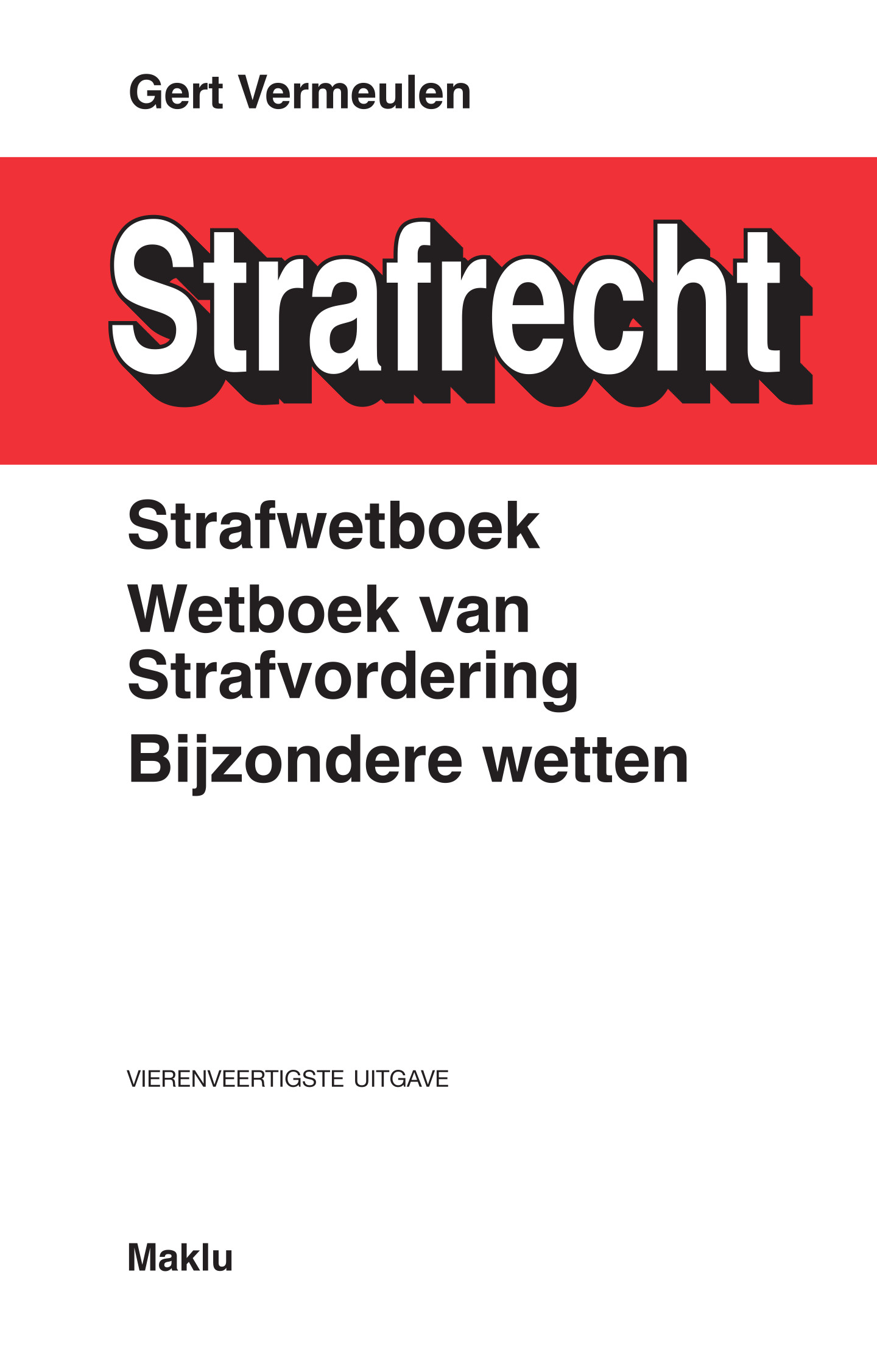
Wetboek Strafrecht – Strafwetboek, Wetboek van Strafvordering, Bijzondere wetten 44ste bijgewerkte druk (Volledig bijgewerkt tot 1 augustus 2023)
Een uitgebreid herwerkt alfabetisch trefwoordenregister maakt het geheel bovendien erg gebruiksvriendelijk. Alle teksten zijn bijgewerkt tot 1 augustus 2023.
Gert Vermeulen is gewoon hoogleraar (internationaal en Europees) strafrecht aan de Universiteit Gent en directeur van het Institute for International Research on Criminal Policy (IRCP) en van het Knowledge and Research Platform Privacy, Information Exchange, Law Enforcement and Surveillance(PIXLES). Hij voert internationaal relevant wetenschappelijk onderzoek op het brede terrein van het strafrechtelijk beleid.
Wetboek Strafrecht – Strafwetboek, Wetboek van Strafvordering, Bijzondere wetten 44ste bijgewerkte druk (Volledig bijgewerkt tot 1 augustus 2023)
Een uitgebreid herwerkt alfabetisch trefwoordenregister maakt het geheel bovendien erg gebruiksvriendelijk. Alle teksten zijn bijgewerkt tot 1 augustus 2023.
Gert Vermeulen is gewoon hoogleraar (internationaal en Europees) strafrecht aan de Universiteit Gent en directeur van het Institute for International Research on Criminal Policy (IRCP) en van het Knowledge and Research Platform Privacy, Information Exchange, Law Enforcement and Surveillance(PIXLES). Hij voert internationaal relevant wetenschappelijk onderzoek op het brede terrein van het strafrechtelijk beleid.