Prosecuting Corporations for Violations of International Criminal Law: Jurisdictional Issues – RIDP 2017 Vol. 88 Issue 2
This issue is the third milestone on the way to the 20th AIDP World Congress
dedicated to ‘Criminal Justice and Corporate Business’. It covers the General
Report based on all Country Reports submitted for the International Colloquium
Section IV at the University of Basel on 2-4 June 2017: The volume contains a
special report on Corporate Criminal Responsibility for Human Rights Violations.
Jurisdiction and Reparations’ and national reports of Australia, Finland, France,
Germany, Italy, the Netherlands, Russia, Switzerland and the United States. It also
includes the resolution adopted by the participants of the Basel colloquium. Other
national reports (Austria, Brazil, China, Spain, Sweden) that have been submitted
for the Section IV are published in the eRIDP.
This volume offers a detailed synopsis of jurisdictional problems and possible
solutions for viable corporate criminal liability. It illustrates the broad challenges
raised by targeting corporations for allegedly causing harm in third countries
with regard to territory and sovereignty in the age of globalisation. As the UN
Guiding Principles on Business and Human Rights of 2011 oblige countries to
establish a legal framework ensuring that corporations respect internationally
protected legal interests and basic human rights when doing business abroad, it
will have consequences for jurisdictional rules. States shall provide a remedy for
victims of alleged human rights violations by corporate groups, as well as crimes
alleged to have occurred in their supply chains if certain conditions are met. Of
particular interest is the establishment of the link between substantive law and
the application of territorial jurisdiction. Also addressed is the need for potential
enhancement of traditional jurisdictional rules.
Sabine Gless holds a Chair for Criminal Law and Criminal Procedure at the
University of Basel (Switzerland).
Sylwia Broniszewska-Emdin is a legal counsel and a PhD candidate at the
University of Basel, Faculty of Law.
Prosecuting Corporations for Violations of International Criminal Law: Jurisdictional Issues – RIDP 2017 Vol. 88 Issue 2
This issue is the third milestone on the way to the 20th AIDP World Congress
dedicated to ‘Criminal Justice and Corporate Business’. It covers the General
Report based on all Country Reports submitted for the International Colloquium
Section IV at the University of Basel on 2-4 June 2017: The volume contains a
special report on Corporate Criminal Responsibility for Human Rights Violations.
Jurisdiction and Reparations’ and national reports of Australia, Finland, France,
Germany, Italy, the Netherlands, Russia, Switzerland and the United States. It also
includes the resolution adopted by the participants of the Basel colloquium. Other
national reports (Austria, Brazil, China, Spain, Sweden) that have been submitted
for the Section IV are published in the eRIDP.
This volume offers a detailed synopsis of jurisdictional problems and possible
solutions for viable corporate criminal liability. It illustrates the broad challenges
raised by targeting corporations for allegedly causing harm in third countries
with regard to territory and sovereignty in the age of globalisation. As the UN
Guiding Principles on Business and Human Rights of 2011 oblige countries to
establish a legal framework ensuring that corporations respect internationally
protected legal interests and basic human rights when doing business abroad, it
will have consequences for jurisdictional rules. States shall provide a remedy for
victims of alleged human rights violations by corporate groups, as well as crimes
alleged to have occurred in their supply chains if certain conditions are met. Of
particular interest is the establishment of the link between substantive law and
the application of territorial jurisdiction. Also addressed is the need for potential
enhancement of traditional jurisdictional rules.
Sabine Gless holds a Chair for Criminal Law and Criminal Procedure at the
University of Basel (Switzerland).
Sylwia Broniszewska-Emdin is a legal counsel and a PhD candidate at the
University of Basel, Faculty of Law.

Bijdragecalculatie en optimaal ondernemingsrendement
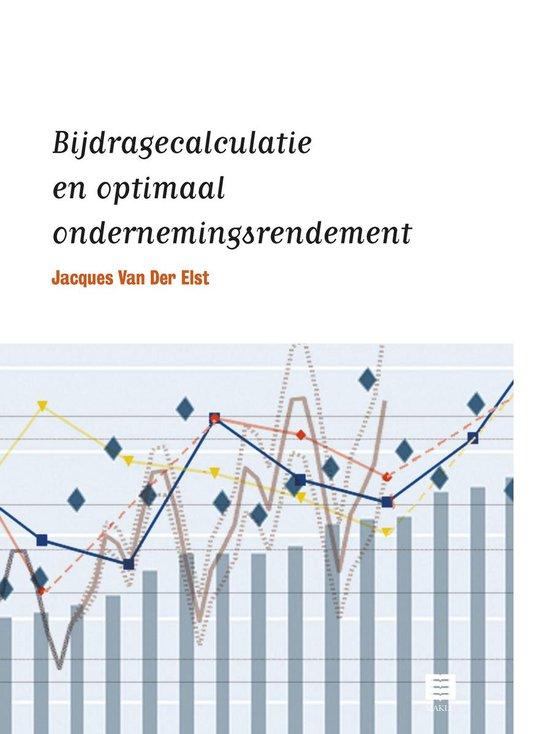
Centraal in dit werk staat de behandeling van hoe de techniek van contributiecalculatie ons kan helpen bij het vinden van een te vervaardigen productmix die de winstgevendheid optimaliseert. Hierbij moet bij toepassing van deze techniek altijd rekening worden gehouden met de al of niet aanwezigheid van schaarstefactoren die kunnen optreden bij de productie of verkoop van goederen.
Bij meerdere schaarstefactoren wordt voor het vinden van de optimale oplossing een beroep gedaan op een bekende wiskundige techniek: lineaire programmering. Deze techniek wordt uitgevoerd met Oplosser van Excel. Ten slotte verwerken we het optimaal gevonden contributieresultaat in de operationele rendementsberekening en schenken we aandacht aan de mogelijke invloed die het optimaal productmixresultaat kan hebben op het niveau van de constante kosten, de operationele investeringen en het operationeel rendement. Het werk is bestemd voor het bedrijfsleven, managementconsultants, accountants en het economisch hoger onderwijs.
Dr. Jacques Van Der Elst is doctor in business administration, master in financieel management, master in accountancy, gediplomeerde in de boekhoudkundige expertise en gegradueerde in de boekhouding. Hij bekleedde meerdere financiële directiefuncties in grote bedrijven. Hij werkte ook jarenlang als partner in een managementvennootschap die belangrijke investeringsfondsen beheerde. Hij was als accountant gerechtsdeskundige bij diverse Rechtbanken van Koophandel.
J. Van Der Elst doceerde zowel op academisch- als hogeschoolniveau vakken zoals statistiek, financiële wiskunde, financieel management, financiële analyse, beleggingsleer, bedrijfseconomie en cost accounting.
Hij schreef meer dan 31 publicaties die zich situeren in de domeinen van de toegepaste wiskunde, het financieel management, de bedrijfseconomie en de accountancy. Hij was meer dan 20 jaar lid van de eindexamencommissies van het Instituut van de Accountants en Belastingconsulenten.
Bijdragecalculatie en optimaal ondernemingsrendement
Centraal in dit werk staat de behandeling van hoe de techniek van contributiecalculatie ons kan helpen bij het vinden van een te vervaardigen productmix die de winstgevendheid optimaliseert. Hierbij moet bij toepassing van deze techniek altijd rekening worden gehouden met de al of niet aanwezigheid van schaarstefactoren die kunnen optreden bij de productie of verkoop van goederen.
Bij meerdere schaarstefactoren wordt voor het vinden van de optimale oplossing een beroep gedaan op een bekende wiskundige techniek: lineaire programmering. Deze techniek wordt uitgevoerd met Oplosser van Excel. Ten slotte verwerken we het optimaal gevonden contributieresultaat in de operationele rendementsberekening en schenken we aandacht aan de mogelijke invloed die het optimaal productmixresultaat kan hebben op het niveau van de constante kosten, de operationele investeringen en het operationeel rendement. Het werk is bestemd voor het bedrijfsleven, managementconsultants, accountants en het economisch hoger onderwijs.
Dr. Jacques Van Der Elst is doctor in business administration, master in financieel management, master in accountancy, gediplomeerde in de boekhoudkundige expertise en gegradueerde in de boekhouding. Hij bekleedde meerdere financiële directiefuncties in grote bedrijven. Hij werkte ook jarenlang als partner in een managementvennootschap die belangrijke investeringsfondsen beheerde. Hij was als accountant gerechtsdeskundige bij diverse Rechtbanken van Koophandel.
J. Van Der Elst doceerde zowel op academisch- als hogeschoolniveau vakken zoals statistiek, financiële wiskunde, financieel management, financiële analyse, beleggingsleer, bedrijfseconomie en cost accounting.
Hij schreef meer dan 31 publicaties die zich situeren in de domeinen van de toegepaste wiskunde, het financieel management, de bedrijfseconomie en de accountancy. Hij was meer dan 20 jaar lid van de eindexamencommissies van het Instituut van de Accountants en Belastingconsulenten.
European Journal of Policing Studies – Jaargang – 5/2 (dec 2017) – Observing the observers
Contents:
Aims and scope
Antoinette Verhage, Lieselot Bisschop, Dominique
Boels & Wim Hardyns
Articles
Exploring Criminal Investigation Practices
The Benefits of Analysing Police-Generated
Investigation Data
Heidi Fischer Bjelland & Johanne Yttri Dahl
Is Police Culture Echoed in Southern Europe?
The Case of Novice Police Constables in Cyprus
Angelo G Constantinou
Too big to fail, too powerful to jail? A
convenience perspective by private internal
investigations
Petter Gottschalk
Wasting opportunities – prevention of illicit
cross-border waste trafficking
Iina Sahramäki, Serena Favarin, Shanna
Mehlbaum, Ernesto Savona, Toine Spapens &
Terhi Kankaanranta
European Journal of Policing Studies – Jaargang – 5/2 (dec 2017) – Observing the observers
Contents:
Aims and scope
Antoinette Verhage, Lieselot Bisschop, Dominique
Boels & Wim Hardyns
Articles
Exploring Criminal Investigation Practices
The Benefits of Analysing Police-Generated
Investigation Data
Heidi Fischer Bjelland & Johanne Yttri Dahl
Is Police Culture Echoed in Southern Europe?
The Case of Novice Police Constables in Cyprus
Angelo G Constantinou
Too big to fail, too powerful to jail? A
convenience perspective by private internal
investigations
Petter Gottschalk
Wasting opportunities – prevention of illicit
cross-border waste trafficking
Iina Sahramäki, Serena Favarin, Shanna
Mehlbaum, Ernesto Savona, Toine Spapens &
Terhi Kankaanranta
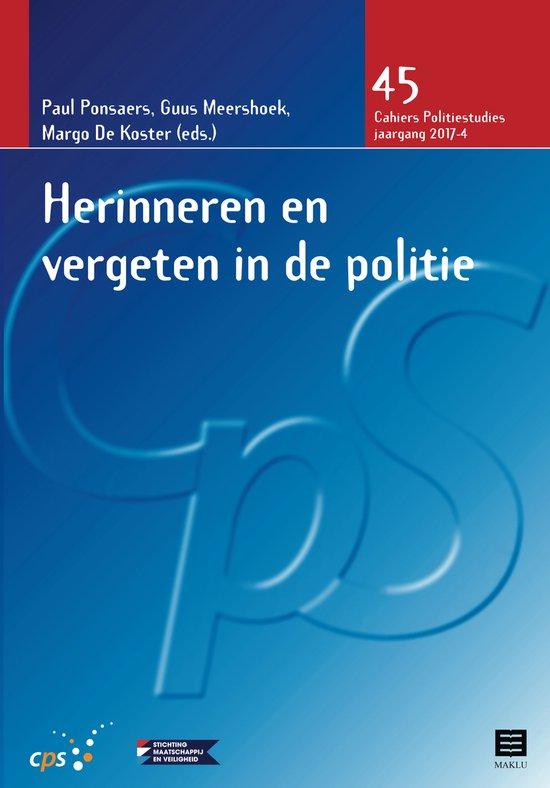
Herinneren en vergeten in de politie – Cahiers Politiestudies CPS nr. 45 / 2017-4
Herinneren en vergeten in de politie – Cahiers Politiestudies CPS nr. 45 / 2017-4
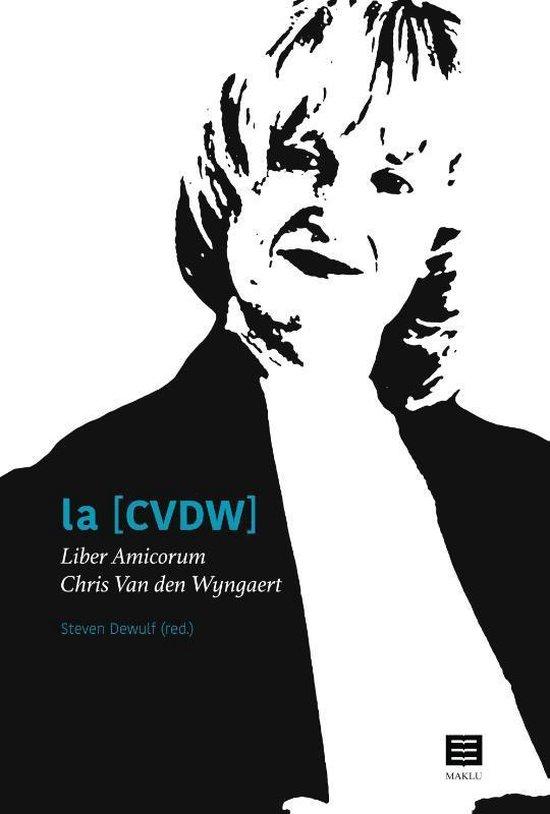
la (CVDW). Liber Amicorum Chris Van den Wyngaert
iN 2017 neemt Chris Van den Wyngaert als buitengewoon hoogleraar afscheid van de Universiteit Antwerpen. Naar aanleiding van haar emeritaat bieden haar collega's en vrienden haar dit Liber Amicorum aan. De onderwerpen van de bijdragen reflecteren de diverse juridische domeinen waarin Chris Van den Wyngaert binnen en buiten de academische wereld haar sporen verdiende. Zij getuigen ook van de grote waardering die in de ruime academische en gerechtelijke wereld voor haar en voor haar werk leeft.
la (CVDW). Liber Amicorum Chris Van den Wyngaert
iN 2017 neemt Chris Van den Wyngaert als buitengewoon hoogleraar afscheid van de Universiteit Antwerpen. Naar aanleiding van haar emeritaat bieden haar collega's en vrienden haar dit Liber Amicorum aan. De onderwerpen van de bijdragen reflecteren de diverse juridische domeinen waarin Chris Van den Wyngaert binnen en buiten de academische wereld haar sporen verdiende. Zij getuigen ook van de grote waardering die in de ruime academische en gerechtelijke wereld voor haar en voor haar werk leeft.
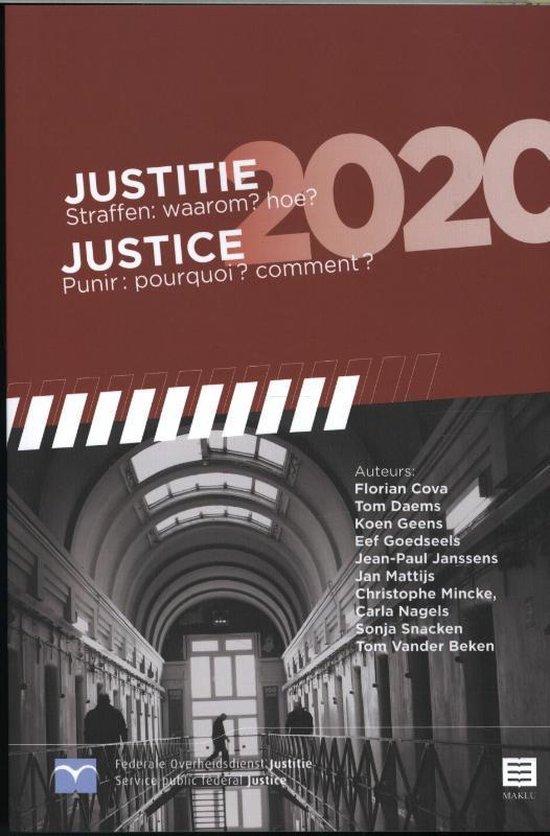
Justitie 2020. Straffen: waarom? hoe?/ Justice 2020. Punir: pourquoi? Comment?
Na de reflectiedag van 24 september 2015 rond Justitie 2020 heeft de federale
overheidsdienst Justitie op 3 maart 2016 een tweede dag georganiseerd,
ditmaal rond de zin, het doel, de diversifi ëring en de uitvoering van stra en.
Dit werk verzamelt de bijdragen aan die dag.
Vooraanstaande wetenschappers gaan dieper in op een aantal van de
cruciale vragen die de straf stelt voor justitie en de rechtzoekende. Plaats
voor de straf in de hedendaagse samenleving? Zingevingen van de straf?
Doelstellingen? Functies? Bijzondere vaststellingen, specifi eke moeilijkheden
en benaderingen in bepaalde domeinen zoals de jeugdbescherming of de
witteboordcriminaliteit? Mogelijke toekomstscenario’s voor het strafbeleid?
A la suite de sa journée de réfl exion du 24 septembre 2015 consacrée à la Justice
à l’horizon 2020, le service public fédéral Justice a organisé, le 3 mars 2016,
une seconde journée, portant cette fois sur le sens, la fi nalité, la diversifi cation
et l’exécution des peines. Le présent ouvrage en réunit les contributions.
Des scientifi ques réputés abordent quelques-unes des questions cruciales que
la peine pose aujourd’hui à la justice et au justiciable. Quelle place pour la
peine dans la société actuelle? Quel sens lui donne-t-on? Quels objectifs?
Quelles fonctions? Quels constats particuliers, quelles di cultés et approches
spécifi ques dans certains domaines comme la protection de la jeunesse ou la
criminalité en col blanc? Quels scénarios de futurs possibles peut-on tracer
pour la politique pénale?
Justitie 2020. Straffen: waarom? hoe?/ Justice 2020. Punir: pourquoi? Comment?
Na de reflectiedag van 24 september 2015 rond Justitie 2020 heeft de federale
overheidsdienst Justitie op 3 maart 2016 een tweede dag georganiseerd,
ditmaal rond de zin, het doel, de diversifi ëring en de uitvoering van stra en.
Dit werk verzamelt de bijdragen aan die dag.
Vooraanstaande wetenschappers gaan dieper in op een aantal van de
cruciale vragen die de straf stelt voor justitie en de rechtzoekende. Plaats
voor de straf in de hedendaagse samenleving? Zingevingen van de straf?
Doelstellingen? Functies? Bijzondere vaststellingen, specifi eke moeilijkheden
en benaderingen in bepaalde domeinen zoals de jeugdbescherming of de
witteboordcriminaliteit? Mogelijke toekomstscenario’s voor het strafbeleid?
A la suite de sa journée de réfl exion du 24 septembre 2015 consacrée à la Justice
à l’horizon 2020, le service public fédéral Justice a organisé, le 3 mars 2016,
une seconde journée, portant cette fois sur le sens, la fi nalité, la diversifi cation
et l’exécution des peines. Le présent ouvrage en réunit les contributions.
Des scientifi ques réputés abordent quelques-unes des questions cruciales que
la peine pose aujourd’hui à la justice et au justiciable. Quelle place pour la
peine dans la société actuelle? Quel sens lui donne-t-on? Quels objectifs?
Quelles fonctions? Quels constats particuliers, quelles di cultés et approches
spécifi ques dans certains domaines comme la protection de la jeunesse ou la
criminalité en col blanc? Quels scénarios de futurs possibles peut-on tracer
pour la politique pénale?