

Filter
Geen voorraad
Placeholder Image
Quick View
Toevoegen aan winkelwagenBekijk winkelwagen
Geen voorraad
Placeholder Image
Quick View
Geen voorraad
Quick View
Toevoegen aan winkelwagenBekijk winkelwagen

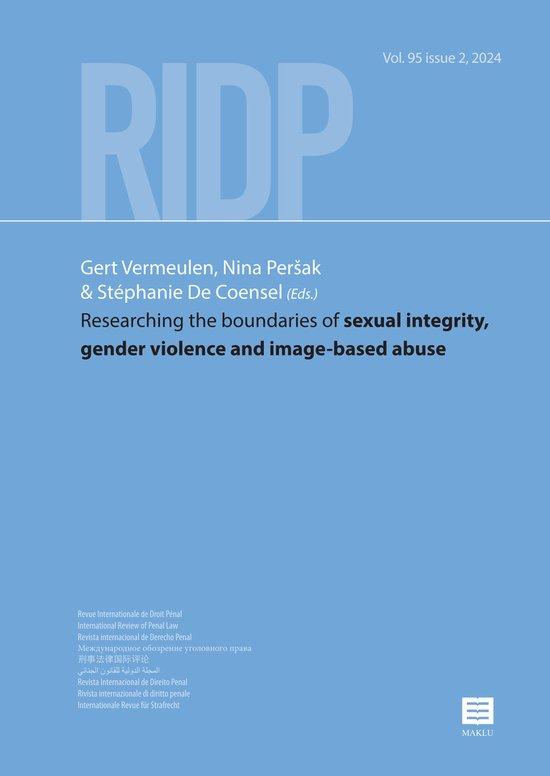
RIDP 95.2 (2024) | Researching the boundaries of sexual integrity, gender violence and image-based abuse

 70,00

This special issue brings together nineteen topical and innovative papers, researching the boundaries of sexual integrity and affirmative sexual consent, gender violence, and image-based or online sexual abuse, including child sexual abuse material and non-consensual sexual deepfakes. It offers an original and nuanced approach to understanding the important legal elements, various agents and harms of topic-related deviant conduct as well as legislative processes aimed at tackling it. In light of recent societal developments, including changes in societal sensibilities, and recent or on-going legislative amendments at national and supranational levels, research on these topics is timely and much needed.

Gert Vermeulen is Senior Full Professor of European and international criminal law, sexual criminal law and data protection law, Department Chair Criminology, Criminal Law and Social Law, and Director of the Institute for International Research on Criminal Policy (IRCP), all at Ghent University. He is also General Director Publications of the AIDP, and Editor-in-chief of the RIDP.

Nina Peršak is Scientific Director and Senior Research Fellow, Institute for Criminal-Law Ethics and Criminology (Ljubljana), Full Professor of Law, University of Maribor (habilitation), Academic Consultant at the Institute for International Research on Criminal Policy (IRCP), Ghent University, and Co-Editor-in-Chief of the RIDP.

Stéphanie De Coensel is an FWO Postdoctoral Researcher and Visiting Professor in Advanced Criminal Law at the Institute for International Research on Criminal Policy (IRCP), Ghent University, and Editorial Secretary of the RIDP.


Geen voorraad
Quick View

RIDP 95.2 (2024) | Researching the boundaries of sexual integrity, gender violence and image-based abuse

 70,00

This special issue brings together nineteen topical and innovative papers, researching the boundaries of sexual integrity and affirmative sexual consent, gender violence, and image-based or online sexual abuse, including child sexual abuse material and non-consensual sexual deepfakes. It offers an original and nuanced approach to understanding the important legal elements, various agents and harms of topic-related deviant conduct as well as legislative processes aimed at tackling it. In light of recent societal developments, including changes in societal sensibilities, and recent or on-going legislative amendments at national and supranational levels, research on these topics is timely and much needed.

Gert Vermeulen is Senior Full Professor of European and international criminal law, sexual criminal law and data protection law, Department Chair Criminology, Criminal Law and Social Law, and Director of the Institute for International Research on Criminal Policy (IRCP), all at Ghent University. He is also General Director Publications of the AIDP, and Editor-in-chief of the RIDP.

Nina Peršak is Scientific Director and Senior Research Fellow, Institute for Criminal-Law Ethics and Criminology (Ljubljana), Full Professor of Law, University of Maribor (habilitation), Academic Consultant at the Institute for International Research on Criminal Policy (IRCP), Ghent University, and Co-Editor-in-Chief of the RIDP.

Stéphanie De Coensel is an FWO Postdoctoral Researcher and Visiting Professor in Advanced Criminal Law at the Institute for International Research on Criminal Policy (IRCP), Ghent University, and Editorial Secretary of the RIDP.


Toevoegen aan winkelwagenBekijk winkelwagen
Ondernemingsvermogen. Uitgebreid 2de, herziene uitgaveOndernemingsvermogen. Uitgebreid 2de, herziene uitgave
Quick View
Toevoegen aan winkelwagenBekijk winkelwagen

Ondernemingsvermogen. Uitgebreid 2de, herziene uitgave

 44,00
Dit werk is geschreven voor het bedrijfsleven en het economisch universitair en hoger onderwijs. In het boek worden eerst de kenmerken en de vermogenskost van verschillende vermogensbronnen besproken evenals diverse vermogensstructuurtheorieën die verband houden met het vinden van de optimale vermogensstructuur. De behandelde vraagstukken zijn praktisch van aard en worden op een toegankelijke wijze aangepakt. Voor de oplossing van de probleemstellingen wordt hoofdzakelijk een beroep gedaan op de wiskundige lineaire programmeringstechniek. Voor de toepassing van deze techniek gebruiken we de Oplosser-applicatie van Excel. Dr. Jacques Van Der Elst is doctor in business administration (Newport University CA, State approved, 1994), master in financieel management van ondernemingen, master in accountancy, gediplomeerde in de boekhoudkundige expertise, gegradueerde in de boekhouding en gewezen IAB-accountant. Hij bekleedde meerdere financiële directiefuncties in grote ondernemingen en was gerechtsdeskundige bij diverse Rechtbanken van Koophandel. Dr. J. Van Der Elst doceerde zowel op academisch als hogeschoolniveau vakken zoals statistiek, financiële wiskunde, financieel management, financiële analyse, beleggingsleer, bedrijfseconomie en cost accounting. Meer dan 20 jaar is de auteur ook IAB-jurylid geweest van de eindexamencommissies. Zijn publicaties, thans drieënvijftig in totaal, situeren zich in de domeinen van de toegepaste wiskunde, het financieel management, de bedrijfseconomie en de accountancy.  
Ondernemingsvermogen. Uitgebreid 2de, herziene uitgaveOndernemingsvermogen. Uitgebreid 2de, herziene uitgave
Quick View

Ondernemingsvermogen. Uitgebreid 2de, herziene uitgave

 44,00
Dit werk is geschreven voor het bedrijfsleven en het economisch universitair en hoger onderwijs. In het boek worden eerst de kenmerken en de vermogenskost van verschillende vermogensbronnen besproken evenals diverse vermogensstructuurtheorieën die verband houden met het vinden van de optimale vermogensstructuur. De behandelde vraagstukken zijn praktisch van aard en worden op een toegankelijke wijze aangepakt. Voor de oplossing van de probleemstellingen wordt hoofdzakelijk een beroep gedaan op de wiskundige lineaire programmeringstechniek. Voor de toepassing van deze techniek gebruiken we de Oplosser-applicatie van Excel. Dr. Jacques Van Der Elst is doctor in business administration (Newport University CA, State approved, 1994), master in financieel management van ondernemingen, master in accountancy, gediplomeerde in de boekhoudkundige expertise, gegradueerde in de boekhouding en gewezen IAB-accountant. Hij bekleedde meerdere financiële directiefuncties in grote ondernemingen en was gerechtsdeskundige bij diverse Rechtbanken van Koophandel. Dr. J. Van Der Elst doceerde zowel op academisch als hogeschoolniveau vakken zoals statistiek, financiële wiskunde, financieel management, financiële analyse, beleggingsleer, bedrijfseconomie en cost accounting. Meer dan 20 jaar is de auteur ook IAB-jurylid geweest van de eindexamencommissies. Zijn publicaties, thans drieënvijftig in totaal, situeren zich in de domeinen van de toegepaste wiskunde, het financieel management, de bedrijfseconomie en de accountancy.  
Toevoegen aan winkelwagenBekijk winkelwagen
Quick View
Toevoegen aan winkelwagenBekijk winkelwagen

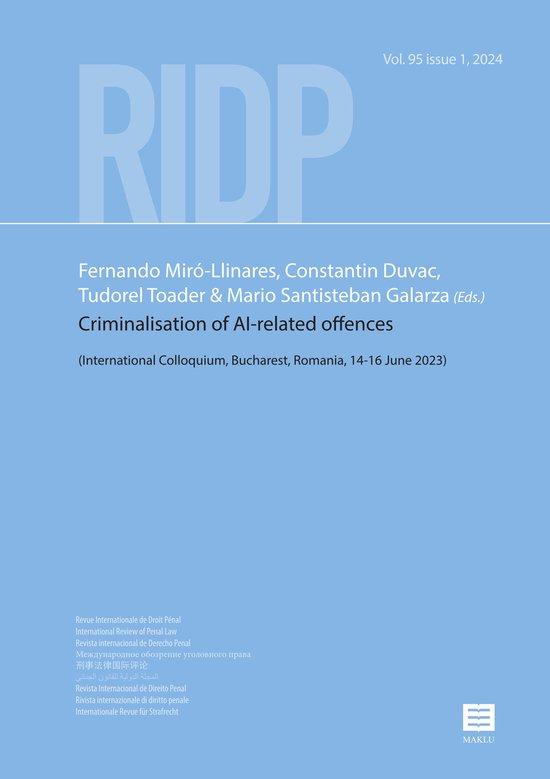
RIDP 95.1 (2024) | Criminalisation of AI-related offences – (International Colloquium, Bucharest, Romania, 14th-16th June 2023)

 70,00
Artificial Intelligence is already widely used in many sectors of society. The advent of this technology, and the harms that it may create to interests worthy of protection by criminal law, questions whether the special part of criminal codes is suitable for addressing the challenges that this technology creates. Therefore, it is relevant to reflect on the necessity to amend the special part of the criminal code, integrating AI-related offences. This encompasses offences whose criminalisation responds to the alleged new needs of criminal law intervention related to the risks and harms arising from the development of AI systems. Indeed, AI harms and risks might demand new forms of criminalisation, and current offences might be amended to adequately respond to the new ways of affecting already protected interests. Additionally, the inclusion of new relevant interests related to AI could be considered. This criminalisation process has already started in some states. Extra criminal regulation, which can have relevant implications on criminal law, has been enacted as well. Legislators cannot overlook the criminalisation techniques and grounds to legitimise criminal intervention. To that end, transversal and rich reflections are required to inform this legislative process. This RIDP issue attempts to address these relevant questions, proving the insights of AIDP academics on the topic of the criminalisation of AI-related offences. It brings together contributions from national rapporteurs of various countries, who collaborated in the works of Section II for the upcoming AIDP XXIst International Congress of Penal Law 2024 on Artificial Intelligence and Criminal law. Furthermore, it gathers the work of some AIDP experts in the form of “special reports” that cover some particularly relevant topics regarding AI-related offences (AI and cybercrime, disinformation and deep fakes, AI and privacy and financial crimes). Fernando Miró-Llinares is Professor of Criminal law and Criminology and Director of the Crimina Center for Crime prevention at University Miguel Hernández of Elche. Constantin Duvac is Professor of Criminal law and Forensics at Bucharest University of Economic Studies and the president of the Romanian National Group of the AIDP. Tudorel Toader is Professor of Criminal law at Alexandru Ioan Cuza University of Iasi and the vice-president of the Romanian National Group of the AIDP. Mario Santisteban Galarza is Postdoctoral Researcher at the Crimina Center for Crime prevention at University Miguel Hernández of Elche.  
Quick View

RIDP 95.1 (2024) | Criminalisation of AI-related offences – (International Colloquium, Bucharest, Romania, 14th-16th June 2023)

 70,00
Artificial Intelligence is already widely used in many sectors of society. The advent of this technology, and the harms that it may create to interests worthy of protection by criminal law, questions whether the special part of criminal codes is suitable for addressing the challenges that this technology creates. Therefore, it is relevant to reflect on the necessity to amend the special part of the criminal code, integrating AI-related offences. This encompasses offences whose criminalisation responds to the alleged new needs of criminal law intervention related to the risks and harms arising from the development of AI systems. Indeed, AI harms and risks might demand new forms of criminalisation, and current offences might be amended to adequately respond to the new ways of affecting already protected interests. Additionally, the inclusion of new relevant interests related to AI could be considered. This criminalisation process has already started in some states. Extra criminal regulation, which can have relevant implications on criminal law, has been enacted as well. Legislators cannot overlook the criminalisation techniques and grounds to legitimise criminal intervention. To that end, transversal and rich reflections are required to inform this legislative process. This RIDP issue attempts to address these relevant questions, proving the insights of AIDP academics on the topic of the criminalisation of AI-related offences. It brings together contributions from national rapporteurs of various countries, who collaborated in the works of Section II for the upcoming AIDP XXIst International Congress of Penal Law 2024 on Artificial Intelligence and Criminal law. Furthermore, it gathers the work of some AIDP experts in the form of “special reports” that cover some particularly relevant topics regarding AI-related offences (AI and cybercrime, disinformation and deep fakes, AI and privacy and financial crimes). Fernando Miró-Llinares is Professor of Criminal law and Criminology and Director of the Crimina Center for Crime prevention at University Miguel Hernández of Elche. Constantin Duvac is Professor of Criminal law and Forensics at Bucharest University of Economic Studies and the president of the Romanian National Group of the AIDP. Tudorel Toader is Professor of Criminal law at Alexandru Ioan Cuza University of Iasi and the vice-president of the Romanian National Group of the AIDP. Mario Santisteban Galarza is Postdoctoral Researcher at the Crimina Center for Crime prevention at University Miguel Hernández of Elche.  
Toevoegen aan winkelwagenBekijk winkelwagen
    11
    Uw winkelwagen
    ×