
Golf en btw
€ 29,95
Golfverenigingen kunnen commercieel uitgebaat worden, maar zijn ook vaak instellingen zonder winstoogmerk. Wanneer is er btw verschuldigd?
Dit boek behandelt de btw-aspecten van de golfsport. Het Hof van Justitie sprak zich in een aantal belangrijke arresten uit over de voorwaarden voor vrijstelling van golf als sport.
Hoe zit het met de inkomsten uit gebruik van het golfterrein, verhuur van golfballen en clubs, verhuur van golfkarren, verkoop van golfclubs en het houden van golftoernooien en -evenementen waarvoor de golfclub inschrijvingsgeld heeft ontvangen?
Geldt de vrijstelling ook voor niet-leden die komen golfen? En wat bij enkel gebruik van de driving range?
Wat als er evenementen (eetfestijnen, toernooien, benefietavonden, …) worden georganiseerd door de golfvereniging voor het verkrijgen van financiële middelen?
En wat als de exploitatie van een golfterrein gebeurt door een autonoom gemeentebedrijf? Hebben toegekende subsidies recht op het recht op aftrek van de golfvereniging? Hoe moet het recht op aftrek van de btw van zo’n golfclub worden bepaald?
Stefan Ruysschaert is werkzaam bij de centrale diensten van de FOD Financiën als Adviseur. Hij is docent btw en auteur van talrijke bijdragen op fiscaal vlak in toonaangevende tijdschriften en boeken. Hij is o.a. redactielid van Fiscalnet en het Tijdschrift Huur. Hij doceert het vak btw aan de faculteit Economische Wetenschappen van de UGent en is gastdocent aan de Hogeschool Gent en de Fiscale Hogeschool.
Dit boek behandelt de btw-aspecten van de golfsport. Het Hof van Justitie sprak zich in een aantal belangrijke arresten uit over de voorwaarden voor vrijstelling van golf als sport.
Hoe zit het met de inkomsten uit gebruik van het golfterrein, verhuur van golfballen en clubs, verhuur van golfkarren, verkoop van golfclubs en het houden van golftoernooien en -evenementen waarvoor de golfclub inschrijvingsgeld heeft ontvangen?
Geldt de vrijstelling ook voor niet-leden die komen golfen? En wat bij enkel gebruik van de driving range?
Wat als er evenementen (eetfestijnen, toernooien, benefietavonden, …) worden georganiseerd door de golfvereniging voor het verkrijgen van financiële middelen?
En wat als de exploitatie van een golfterrein gebeurt door een autonoom gemeentebedrijf? Hebben toegekende subsidies recht op het recht op aftrek van de golfvereniging? Hoe moet het recht op aftrek van de btw van zo’n golfclub worden bepaald?
Stefan Ruysschaert is werkzaam bij de centrale diensten van de FOD Financiën als Adviseur. Hij is docent btw en auteur van talrijke bijdragen op fiscaal vlak in toonaangevende tijdschriften en boeken. Hij is o.a. redactielid van Fiscalnet en het Tijdschrift Huur. Hij doceert het vak btw aan de faculteit Economische Wetenschappen van de UGent en is gastdocent aan de Hogeschool Gent en de Fiscale Hogeschool.
Golf en btw
€ 29,95
Golfverenigingen kunnen commercieel uitgebaat worden, maar zijn ook vaak instellingen zonder winstoogmerk. Wanneer is er btw verschuldigd?
Dit boek behandelt de btw-aspecten van de golfsport. Het Hof van Justitie sprak zich in een aantal belangrijke arresten uit over de voorwaarden voor vrijstelling van golf als sport.
Hoe zit het met de inkomsten uit gebruik van het golfterrein, verhuur van golfballen en clubs, verhuur van golfkarren, verkoop van golfclubs en het houden van golftoernooien en -evenementen waarvoor de golfclub inschrijvingsgeld heeft ontvangen?
Geldt de vrijstelling ook voor niet-leden die komen golfen? En wat bij enkel gebruik van de driving range?
Wat als er evenementen (eetfestijnen, toernooien, benefietavonden, …) worden georganiseerd door de golfvereniging voor het verkrijgen van financiële middelen?
En wat als de exploitatie van een golfterrein gebeurt door een autonoom gemeentebedrijf? Hebben toegekende subsidies recht op het recht op aftrek van de golfvereniging? Hoe moet het recht op aftrek van de btw van zo’n golfclub worden bepaald?
Stefan Ruysschaert is werkzaam bij de centrale diensten van de FOD Financiën als Adviseur. Hij is docent btw en auteur van talrijke bijdragen op fiscaal vlak in toonaangevende tijdschriften en boeken. Hij is o.a. redactielid van Fiscalnet en het Tijdschrift Huur. Hij doceert het vak btw aan de faculteit Economische Wetenschappen van de UGent en is gastdocent aan de Hogeschool Gent en de Fiscale Hogeschool.
Dit boek behandelt de btw-aspecten van de golfsport. Het Hof van Justitie sprak zich in een aantal belangrijke arresten uit over de voorwaarden voor vrijstelling van golf als sport.
Hoe zit het met de inkomsten uit gebruik van het golfterrein, verhuur van golfballen en clubs, verhuur van golfkarren, verkoop van golfclubs en het houden van golftoernooien en -evenementen waarvoor de golfclub inschrijvingsgeld heeft ontvangen?
Geldt de vrijstelling ook voor niet-leden die komen golfen? En wat bij enkel gebruik van de driving range?
Wat als er evenementen (eetfestijnen, toernooien, benefietavonden, …) worden georganiseerd door de golfvereniging voor het verkrijgen van financiële middelen?
En wat als de exploitatie van een golfterrein gebeurt door een autonoom gemeentebedrijf? Hebben toegekende subsidies recht op het recht op aftrek van de golfvereniging? Hoe moet het recht op aftrek van de btw van zo’n golfclub worden bepaald?
Stefan Ruysschaert is werkzaam bij de centrale diensten van de FOD Financiën als Adviseur. Hij is docent btw en auteur van talrijke bijdragen op fiscaal vlak in toonaangevende tijdschriften en boeken. Hij is o.a. redactielid van Fiscalnet en het Tijdschrift Huur. Hij doceert het vak btw aan de faculteit Economische Wetenschappen van de UGent en is gastdocent aan de Hogeschool Gent en de Fiscale Hogeschool.
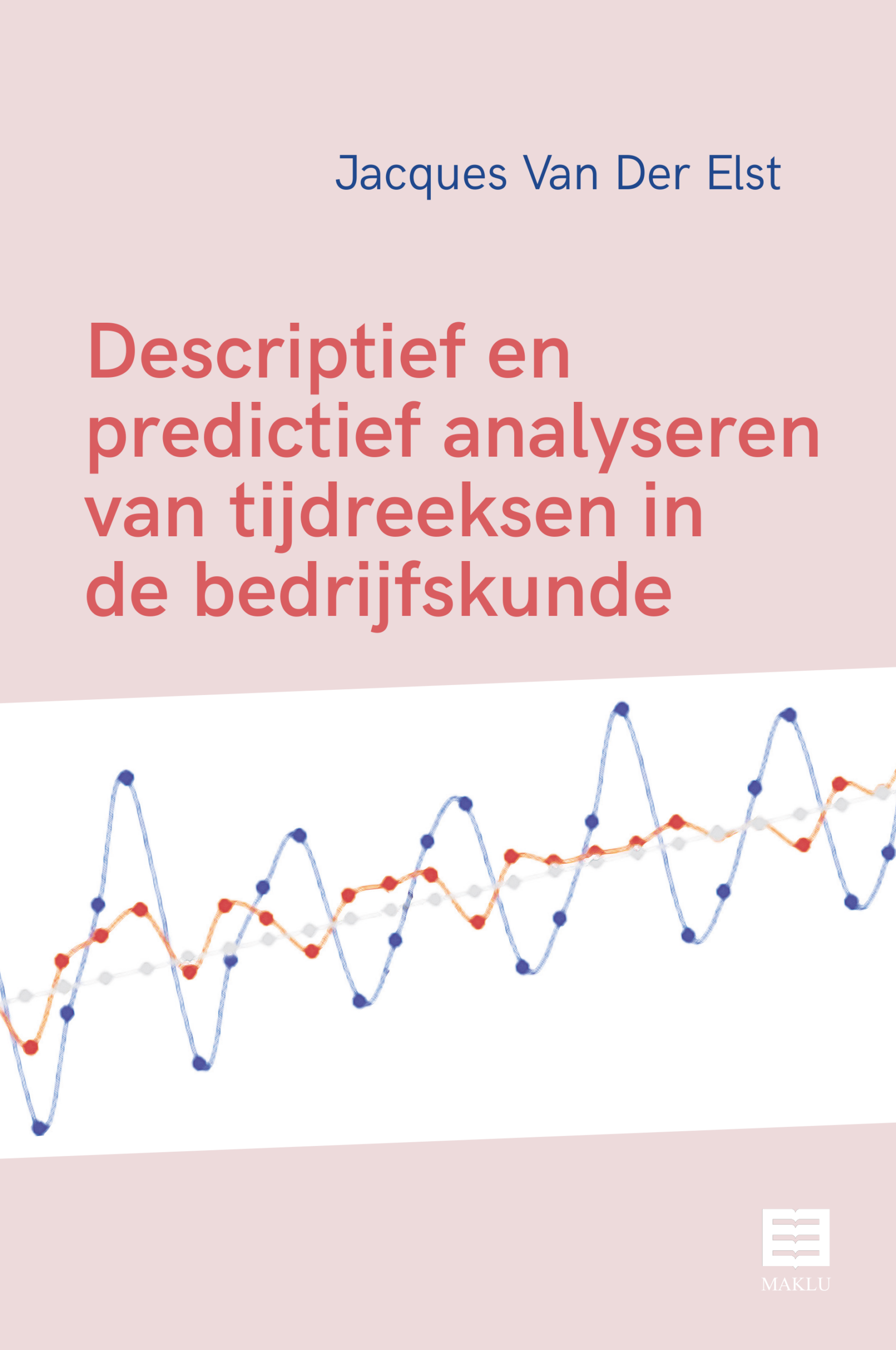
Descriptief en predictief analyseren van tijdreeksen in de bedrijfskunde
€ 39,00
Tijdreeksanalyse is een statistische techniek die in de bedrijfskunde wordt gebruikt om tijdreeksgegevens van bedrijfsactiviteiten te beschrijven, te ontleden en te voorspellen.
In Deel I behandelen we de descriptieve analyse van een tijdreeks. Deel II heeft betrekking op de predictieve analyse ervan en sluit af met een uitgewerkt tijdreeks-analysevraagstuk.
Het werk kan gebruikt worden in de volgende sectoren: bedrijfskundig hoger onderwijs, bedrijfsleven en economische overheidsdiensten.
dr. Jacques Van Der Elst is doctor in business administration (Newport-CA, State approved university, 1994), master in accountancy, master in financieel management van ondernemingen, gediplomeerde in de boekhoudkundige expertise en gegradueerde in de boekhouding.
Hij bekleedde meerdere financiële directiefuncties in grote ondernemingen en was als accountant gerechtsdeskundige bij diverse Rechtbanken van Koophandel.
J. Van Der Elst doceerde zowel op academisch- als hogeschool-niveau en gaf vakken zoals statistiek, financiële wiskunde, financieel management, financiële analyse, beleggingsleer, bedrijfseconomie en cost accounting.
De auteur was ook lid van het Instituut van de Accountants en Belastingconsulenten (IAB). Meer dan 20 jaar is hij bij het IAB jurylid geweest van de eindexamencommissies.
Zijn vele publicaties situeren zich in de domeinen van de toegepas-te wiskunde, het financieel management, de bedrijfseconomie en de accountancy.
In Deel I behandelen we de descriptieve analyse van een tijdreeks. Deel II heeft betrekking op de predictieve analyse ervan en sluit af met een uitgewerkt tijdreeks-analysevraagstuk.
Het werk kan gebruikt worden in de volgende sectoren: bedrijfskundig hoger onderwijs, bedrijfsleven en economische overheidsdiensten.
dr. Jacques Van Der Elst is doctor in business administration (Newport-CA, State approved university, 1994), master in accountancy, master in financieel management van ondernemingen, gediplomeerde in de boekhoudkundige expertise en gegradueerde in de boekhouding.
Hij bekleedde meerdere financiële directiefuncties in grote ondernemingen en was als accountant gerechtsdeskundige bij diverse Rechtbanken van Koophandel.
J. Van Der Elst doceerde zowel op academisch- als hogeschool-niveau en gaf vakken zoals statistiek, financiële wiskunde, financieel management, financiële analyse, beleggingsleer, bedrijfseconomie en cost accounting.
De auteur was ook lid van het Instituut van de Accountants en Belastingconsulenten (IAB). Meer dan 20 jaar is hij bij het IAB jurylid geweest van de eindexamencommissies.
Zijn vele publicaties situeren zich in de domeinen van de toegepas-te wiskunde, het financieel management, de bedrijfseconomie en de accountancy.
Descriptief en predictief analyseren van tijdreeksen in de bedrijfskunde
€ 39,00
Tijdreeksanalyse is een statistische techniek die in de bedrijfskunde wordt gebruikt om tijdreeksgegevens van bedrijfsactiviteiten te beschrijven, te ontleden en te voorspellen.
In Deel I behandelen we de descriptieve analyse van een tijdreeks. Deel II heeft betrekking op de predictieve analyse ervan en sluit af met een uitgewerkt tijdreeks-analysevraagstuk.
Het werk kan gebruikt worden in de volgende sectoren: bedrijfskundig hoger onderwijs, bedrijfsleven en economische overheidsdiensten.
dr. Jacques Van Der Elst is doctor in business administration (Newport-CA, State approved university, 1994), master in accountancy, master in financieel management van ondernemingen, gediplomeerde in de boekhoudkundige expertise en gegradueerde in de boekhouding.
Hij bekleedde meerdere financiële directiefuncties in grote ondernemingen en was als accountant gerechtsdeskundige bij diverse Rechtbanken van Koophandel.
J. Van Der Elst doceerde zowel op academisch- als hogeschool-niveau en gaf vakken zoals statistiek, financiële wiskunde, financieel management, financiële analyse, beleggingsleer, bedrijfseconomie en cost accounting.
De auteur was ook lid van het Instituut van de Accountants en Belastingconsulenten (IAB). Meer dan 20 jaar is hij bij het IAB jurylid geweest van de eindexamencommissies.
Zijn vele publicaties situeren zich in de domeinen van de toegepas-te wiskunde, het financieel management, de bedrijfseconomie en de accountancy.
In Deel I behandelen we de descriptieve analyse van een tijdreeks. Deel II heeft betrekking op de predictieve analyse ervan en sluit af met een uitgewerkt tijdreeks-analysevraagstuk.
Het werk kan gebruikt worden in de volgende sectoren: bedrijfskundig hoger onderwijs, bedrijfsleven en economische overheidsdiensten.
dr. Jacques Van Der Elst is doctor in business administration (Newport-CA, State approved university, 1994), master in accountancy, master in financieel management van ondernemingen, gediplomeerde in de boekhoudkundige expertise en gegradueerde in de boekhouding.
Hij bekleedde meerdere financiële directiefuncties in grote ondernemingen en was als accountant gerechtsdeskundige bij diverse Rechtbanken van Koophandel.
J. Van Der Elst doceerde zowel op academisch- als hogeschool-niveau en gaf vakken zoals statistiek, financiële wiskunde, financieel management, financiële analyse, beleggingsleer, bedrijfseconomie en cost accounting.
De auteur was ook lid van het Instituut van de Accountants en Belastingconsulenten (IAB). Meer dan 20 jaar is hij bij het IAB jurylid geweest van de eindexamencommissies.
Zijn vele publicaties situeren zich in de domeinen van de toegepas-te wiskunde, het financieel management, de bedrijfseconomie en de accountancy.

De sterrenchef
€ 24,00
In een sterrenzaak gaat een en ander mis. De sterrenchef droomt van een derde ster maar heeft zijn concurrenten en een belangrijke recensent tegen. Zijn restaurant draait op volle toeren maar de financiering ervan lijkt een dubieuze zaak. Chef Sergio Blumer is geniaal maar geraakt door de stress van de strijd om een derde ster verslaafd aan cocaïne.
Ondertussen schrijft souschef Anthony Griglio aan een kookboek over scampigerechten en droomt hij ooit een eigen restaurant te kunnen beginnen.
Een nabijgelegen Italiaans restaurant lijkt een dekmantel voor het witwassen van drugsgeld te zijn. De eigenaar van dit restaurant lijkt echter banden met slachthuizen en voedingsbedrijven te hebben. Daarnaast heeft hij goede contacten met culinaire gidsen.
In de kookclub die door tien mannen werd opgericht, gebeuren vreemde dingen. Elke maand kookt topchef Sergio Blumer het lievelingsgerecht van één van de leden. Een aantal leden wordt ernstig ziek en ze sterven aan een hartstilstand. Toch blijven de leden van de kookclub bijeenkomen tot er slechts vier leden overblijven.
Als een belastinginspecteur op mysterieuze wijze verdwijnt begint ook de politie zich met het reilen en zeilen van het sterrenrestaurant te bemoeien.
Ondertussen schrijft souschef Anthony Griglio aan een kookboek over scampigerechten en droomt hij ooit een eigen restaurant te kunnen beginnen.
Een nabijgelegen Italiaans restaurant lijkt een dekmantel voor het witwassen van drugsgeld te zijn. De eigenaar van dit restaurant lijkt echter banden met slachthuizen en voedingsbedrijven te hebben. Daarnaast heeft hij goede contacten met culinaire gidsen.
In de kookclub die door tien mannen werd opgericht, gebeuren vreemde dingen. Elke maand kookt topchef Sergio Blumer het lievelingsgerecht van één van de leden. Een aantal leden wordt ernstig ziek en ze sterven aan een hartstilstand. Toch blijven de leden van de kookclub bijeenkomen tot er slechts vier leden overblijven.
Als een belastinginspecteur op mysterieuze wijze verdwijnt begint ook de politie zich met het reilen en zeilen van het sterrenrestaurant te bemoeien.
De sterrenchef
€ 24,00
In een sterrenzaak gaat een en ander mis. De sterrenchef droomt van een derde ster maar heeft zijn concurrenten en een belangrijke recensent tegen. Zijn restaurant draait op volle toeren maar de financiering ervan lijkt een dubieuze zaak. Chef Sergio Blumer is geniaal maar geraakt door de stress van de strijd om een derde ster verslaafd aan cocaïne.
Ondertussen schrijft souschef Anthony Griglio aan een kookboek over scampigerechten en droomt hij ooit een eigen restaurant te kunnen beginnen.
Een nabijgelegen Italiaans restaurant lijkt een dekmantel voor het witwassen van drugsgeld te zijn. De eigenaar van dit restaurant lijkt echter banden met slachthuizen en voedingsbedrijven te hebben. Daarnaast heeft hij goede contacten met culinaire gidsen.
In de kookclub die door tien mannen werd opgericht, gebeuren vreemde dingen. Elke maand kookt topchef Sergio Blumer het lievelingsgerecht van één van de leden. Een aantal leden wordt ernstig ziek en ze sterven aan een hartstilstand. Toch blijven de leden van de kookclub bijeenkomen tot er slechts vier leden overblijven.
Als een belastinginspecteur op mysterieuze wijze verdwijnt begint ook de politie zich met het reilen en zeilen van het sterrenrestaurant te bemoeien.
Ondertussen schrijft souschef Anthony Griglio aan een kookboek over scampigerechten en droomt hij ooit een eigen restaurant te kunnen beginnen.
Een nabijgelegen Italiaans restaurant lijkt een dekmantel voor het witwassen van drugsgeld te zijn. De eigenaar van dit restaurant lijkt echter banden met slachthuizen en voedingsbedrijven te hebben. Daarnaast heeft hij goede contacten met culinaire gidsen.
In de kookclub die door tien mannen werd opgericht, gebeuren vreemde dingen. Elke maand kookt topchef Sergio Blumer het lievelingsgerecht van één van de leden. Een aantal leden wordt ernstig ziek en ze sterven aan een hartstilstand. Toch blijven de leden van de kookclub bijeenkomen tot er slechts vier leden overblijven.
Als een belastinginspecteur op mysterieuze wijze verdwijnt begint ook de politie zich met het reilen en zeilen van het sterrenrestaurant te bemoeien.
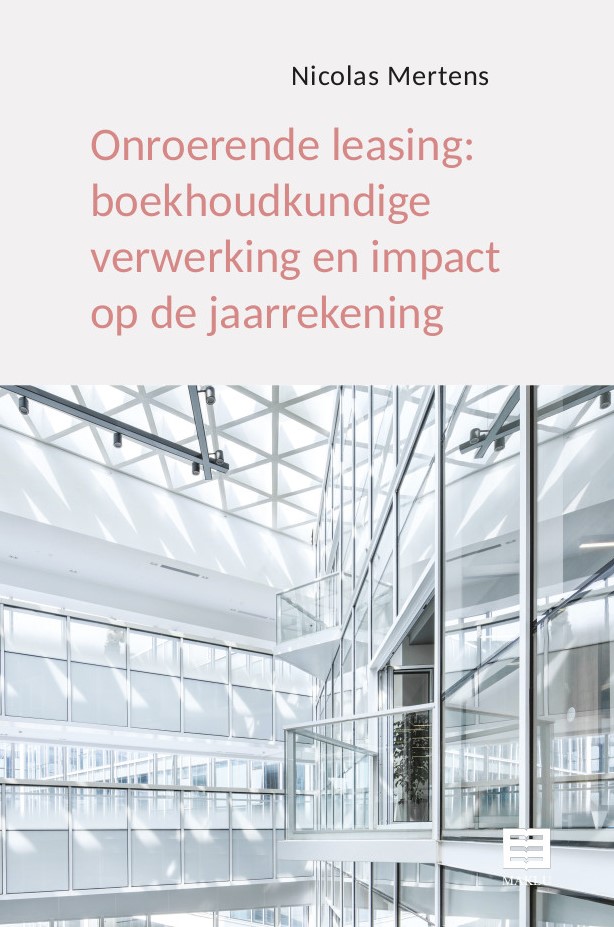
Onroerende leasing: boekhoudkundige verwerking en impact op de jaarrekening
€ 35,00
Dit boek wordt reeds lang verwacht in de praktijk en analyseert de
boekhoudkundige verwerking van onroerende leasing en haar impact
op de jaarrekening.
Onroerende leasing kan mét btw of zonder btw. De onroerende leasing kan geactiveerd worden of via de resultatenrekening verwerkt worden. Het onderscheid tussen operationele en financiële leasing wordt vanuit de praktijk toegelicht. De boekingen bij aanvang, tijdens het gebruik van het bedrijfsmiddel en bij het einde van het contract worden toegelicht en uitgewerkt met praktische voorbeelden.
Dit handboek is dan ook een praktisch werkinstrument voor ieder die met onroerende leasing te maken heeft.
Nicolas Mertens behaalde intussen twee masters in de toegepaste economie aan de UGent, corporate finance en accountancy. Hij specialiseerde zich in de financiële, fiscale en boekhoudkundige aspecten van onroerende leasing. De waardering van ondernemingen en hun overname behoort tot zijn interessesfeer. Hij specialiseert verder via een opleiding aan de Vlerick Management School.
Onroerende leasing kan mét btw of zonder btw. De onroerende leasing kan geactiveerd worden of via de resultatenrekening verwerkt worden. Het onderscheid tussen operationele en financiële leasing wordt vanuit de praktijk toegelicht. De boekingen bij aanvang, tijdens het gebruik van het bedrijfsmiddel en bij het einde van het contract worden toegelicht en uitgewerkt met praktische voorbeelden.
Dit handboek is dan ook een praktisch werkinstrument voor ieder die met onroerende leasing te maken heeft.
Nicolas Mertens behaalde intussen twee masters in de toegepaste economie aan de UGent, corporate finance en accountancy. Hij specialiseerde zich in de financiële, fiscale en boekhoudkundige aspecten van onroerende leasing. De waardering van ondernemingen en hun overname behoort tot zijn interessesfeer. Hij specialiseert verder via een opleiding aan de Vlerick Management School.
Onroerende leasing: boekhoudkundige verwerking en impact op de jaarrekening
€ 35,00
Dit boek wordt reeds lang verwacht in de praktijk en analyseert de
boekhoudkundige verwerking van onroerende leasing en haar impact
op de jaarrekening.
Onroerende leasing kan mét btw of zonder btw. De onroerende leasing kan geactiveerd worden of via de resultatenrekening verwerkt worden. Het onderscheid tussen operationele en financiële leasing wordt vanuit de praktijk toegelicht. De boekingen bij aanvang, tijdens het gebruik van het bedrijfsmiddel en bij het einde van het contract worden toegelicht en uitgewerkt met praktische voorbeelden.
Dit handboek is dan ook een praktisch werkinstrument voor ieder die met onroerende leasing te maken heeft.
Nicolas Mertens behaalde intussen twee masters in de toegepaste economie aan de UGent, corporate finance en accountancy. Hij specialiseerde zich in de financiële, fiscale en boekhoudkundige aspecten van onroerende leasing. De waardering van ondernemingen en hun overname behoort tot zijn interessesfeer. Hij specialiseert verder via een opleiding aan de Vlerick Management School.
Onroerende leasing kan mét btw of zonder btw. De onroerende leasing kan geactiveerd worden of via de resultatenrekening verwerkt worden. Het onderscheid tussen operationele en financiële leasing wordt vanuit de praktijk toegelicht. De boekingen bij aanvang, tijdens het gebruik van het bedrijfsmiddel en bij het einde van het contract worden toegelicht en uitgewerkt met praktische voorbeelden.
Dit handboek is dan ook een praktisch werkinstrument voor ieder die met onroerende leasing te maken heeft.
Nicolas Mertens behaalde intussen twee masters in de toegepaste economie aan de UGent, corporate finance en accountancy. Hij specialiseerde zich in de financiële, fiscale en boekhoudkundige aspecten van onroerende leasing. De waardering van ondernemingen en hun overname behoort tot zijn interessesfeer. Hij specialiseert verder via een opleiding aan de Vlerick Management School.
Geen voorraad
RIDP2021 Vol.92 / Subscription – Revue Internationale de Droit Penal / IP-only
€ 217,80
This subscription gives you online acces to the two issues of RIDP Vol.92/2021 based on your IP-address (for institutions).
On the first issue:
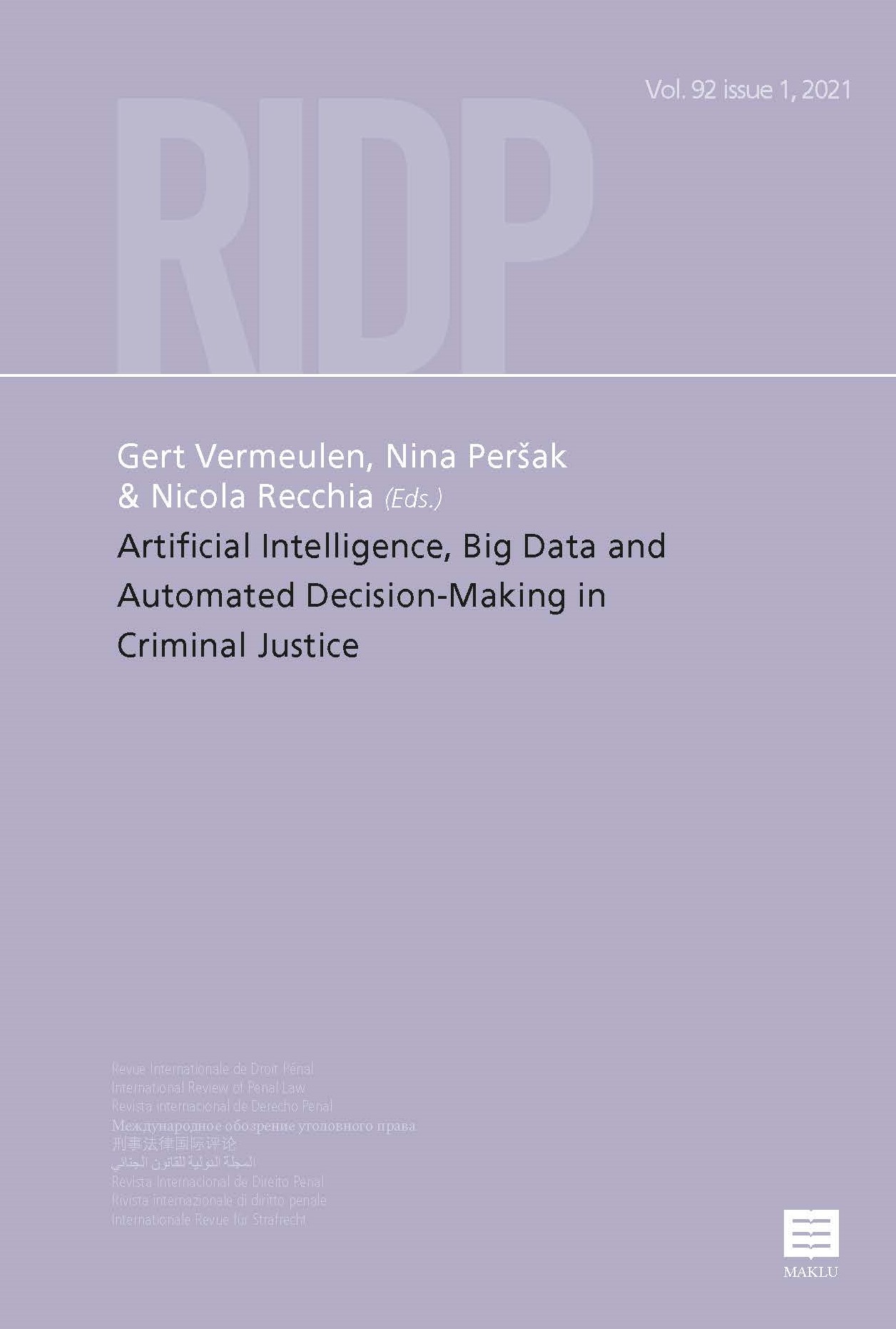
Artificial intelligence (AI) is impacting our everyday lives in a myriad of ways. The use of algorithms, AI agents and big data techniques also creates unprecedented opportunities for the prevention, investigation, detection or prosecution of criminal offences and the efficiency of the criminal justice system. Equally, however, the rapid increase of AI and big data in criminal justice raises a plethora of criminological, ethical, legal and technological questions and concerns, eg about enhanced surveillance and control in a pre-crime society and the risk of bias or even manipulation in (automated) decision-making. In view of the stakes involved, the need for regulation of AI and its alignment with human rights, democracy and the rule of law standards has been amply recognised, both globally and regionally. The lawfulness, social acceptance and overall legitimacy of AI, big data and automated decision-making in criminal justice will depend on a range of factors, including (algorithmic) transparency, trustworthiness, non-discrimination, accountability, responsibility, effective over-sight, data protection, due process, fair trial, access to justice, effective redress and remedy. Addressing these issues and raising awareness on AI systems’ capabilities and limitations within criminal justice is needed to be better prepared for the future that is now upon us.
This special issue on ‘Artificial intelligence, big data and automated decision-making in criminal justice’ comprises topical and innovative papers on the above issues, centred around AI and big data in predictive detection and policing, liability issues and jurisdictional challenges prompted by crimes involving AI, and AI-assisted and automated actuarial justice or adjudication of criminal cases.
On the second Issue:
To be published
If you'd like to subscribe to this publication from abroad please send an email to: info@maklu.be/info@maklu.nl
On the first issue:
Artificial intelligence (AI) is impacting our everyday lives in a myriad of ways. The use of algorithms, AI agents and big data techniques also creates unprecedented opportunities for the prevention, investigation, detection or prosecution of criminal offences and the efficiency of the criminal justice system. Equally, however, the rapid increase of AI and big data in criminal justice raises a plethora of criminological, ethical, legal and technological questions and concerns, eg about enhanced surveillance and control in a pre-crime society and the risk of bias or even manipulation in (automated) decision-making. In view of the stakes involved, the need for regulation of AI and its alignment with human rights, democracy and the rule of law standards has been amply recognised, both globally and regionally. The lawfulness, social acceptance and overall legitimacy of AI, big data and automated decision-making in criminal justice will depend on a range of factors, including (algorithmic) transparency, trustworthiness, non-discrimination, accountability, responsibility, effective over-sight, data protection, due process, fair trial, access to justice, effective redress and remedy. Addressing these issues and raising awareness on AI systems’ capabilities and limitations within criminal justice is needed to be better prepared for the future that is now upon us.
This special issue on ‘Artificial intelligence, big data and automated decision-making in criminal justice’ comprises topical and innovative papers on the above issues, centred around AI and big data in predictive detection and policing, liability issues and jurisdictional challenges prompted by crimes involving AI, and AI-assisted and automated actuarial justice or adjudication of criminal cases.
On the second Issue:
To be published
If you'd like to subscribe to this publication from abroad please send an email to: info@maklu.be/info@maklu.nl
Geen voorraad
RIDP2021 Vol.92 / Subscription – Revue Internationale de Droit Penal / IP-only
€ 217,80
This subscription gives you online acces to the two issues of RIDP Vol.92/2021 based on your IP-address (for institutions).
On the first issue:
Artificial intelligence (AI) is impacting our everyday lives in a myriad of ways. The use of algorithms, AI agents and big data techniques also creates unprecedented opportunities for the prevention, investigation, detection or prosecution of criminal offences and the efficiency of the criminal justice system. Equally, however, the rapid increase of AI and big data in criminal justice raises a plethora of criminological, ethical, legal and technological questions and concerns, eg about enhanced surveillance and control in a pre-crime society and the risk of bias or even manipulation in (automated) decision-making. In view of the stakes involved, the need for regulation of AI and its alignment with human rights, democracy and the rule of law standards has been amply recognised, both globally and regionally. The lawfulness, social acceptance and overall legitimacy of AI, big data and automated decision-making in criminal justice will depend on a range of factors, including (algorithmic) transparency, trustworthiness, non-discrimination, accountability, responsibility, effective over-sight, data protection, due process, fair trial, access to justice, effective redress and remedy. Addressing these issues and raising awareness on AI systems’ capabilities and limitations within criminal justice is needed to be better prepared for the future that is now upon us.
This special issue on ‘Artificial intelligence, big data and automated decision-making in criminal justice’ comprises topical and innovative papers on the above issues, centred around AI and big data in predictive detection and policing, liability issues and jurisdictional challenges prompted by crimes involving AI, and AI-assisted and automated actuarial justice or adjudication of criminal cases.
On the second Issue:
To be published
If you'd like to subscribe to this publication from abroad please send an email to: info@maklu.be/info@maklu.nl
On the first issue:
Artificial intelligence (AI) is impacting our everyday lives in a myriad of ways. The use of algorithms, AI agents and big data techniques also creates unprecedented opportunities for the prevention, investigation, detection or prosecution of criminal offences and the efficiency of the criminal justice system. Equally, however, the rapid increase of AI and big data in criminal justice raises a plethora of criminological, ethical, legal and technological questions and concerns, eg about enhanced surveillance and control in a pre-crime society and the risk of bias or even manipulation in (automated) decision-making. In view of the stakes involved, the need for regulation of AI and its alignment with human rights, democracy and the rule of law standards has been amply recognised, both globally and regionally. The lawfulness, social acceptance and overall legitimacy of AI, big data and automated decision-making in criminal justice will depend on a range of factors, including (algorithmic) transparency, trustworthiness, non-discrimination, accountability, responsibility, effective over-sight, data protection, due process, fair trial, access to justice, effective redress and remedy. Addressing these issues and raising awareness on AI systems’ capabilities and limitations within criminal justice is needed to be better prepared for the future that is now upon us.
This special issue on ‘Artificial intelligence, big data and automated decision-making in criminal justice’ comprises topical and innovative papers on the above issues, centred around AI and big data in predictive detection and policing, liability issues and jurisdictional challenges prompted by crimes involving AI, and AI-assisted and automated actuarial justice or adjudication of criminal cases.
On the second Issue:
To be published
If you'd like to subscribe to this publication from abroad please send an email to: info@maklu.be/info@maklu.nl
Geen voorraad
RIDP2021 Vol.92 / Subscription – Revue Internationale de Droit Penal / 2 Issues + Password
€ 85,00
This subscription gives you the two issues of RIDP Vol.92/2021 in print and online acces to these issues with on a password login.
On the first issue:
Artificial intelligence (AI) is impacting our everyday lives in a myriad of ways. The use of algorithms, AI agents and big data techniques also creates unprecedented opportunities for the prevention, investigation, detection or prosecution of criminal offences and the efficiency of the criminal justice system. Equally, however, the rapid increase of AI and big data in criminal justice raises a plethora of criminological, ethical, legal and technological questions and concerns, eg about enhanced surveillance and control in a pre-crime society and the risk of bias or even manipulation in (automated) decision-making. In view of the stakes involved, the need for regulation of AI and its alignment with human rights, democracy and the rule of law standards has been amply recognised, both globally and regionally. The lawfulness, social acceptance and overall legitimacy of AI, big data and automated decision-making in criminal justice will depend on a range of factors, including (algorithmic) transparency, trustworthiness, non-discrimination, accountability, responsibility, effective over-sight, data protection, due process, fair trial, access to justice, effective redress and remedy. Addressing these issues and raising awareness on AI systems’ capabilities and limitations within criminal justice is needed to be better prepared for the future that is now upon us.
This special issue on ‘Artificial intelligence, big data and automated decision-making in criminal justice’ comprises topical and innovative papers on the above issues, centred around AI and big data in predictive detection and policing, liability issues and jurisdictional challenges prompted by crimes involving AI, and AI-assisted and automated actuarial justice or adjudication of criminal cases.
On the second Issue:
To be published
Artificial intelligence (AI) is impacting our everyday lives in a myriad of ways. The use of algorithms, AI agents and big data techniques also creates unprecedented opportunities for the prevention, investigation, detection or prosecution of criminal offences and the efficiency of the criminal justice system. Equally, however, the rapid increase of AI and big data in criminal justice raises a plethora of criminological, ethical, legal and technological questions and concerns, eg about enhanced surveillance and control in a pre-crime society and the risk of bias or even manipulation in (automated) decision-making. In view of the stakes involved, the need for regulation of AI and its alignment with human rights, democracy and the rule of law standards has been amply recognised, both globally and regionally. The lawfulness, social acceptance and overall legitimacy of AI, big data and automated decision-making in criminal justice will depend on a range of factors, including (algorithmic) transparency, trustworthiness, non-discrimination, accountability, responsibility, effective over-sight, data protection, due process, fair trial, access to justice, effective redress and remedy. Addressing these issues and raising awareness on AI systems’ capabilities and limitations within criminal justice is needed to be better prepared for the future that is now upon us.
This special issue on ‘Artificial intelligence, big data and automated decision-making in criminal justice’ comprises topical and innovative papers on the above issues, centred around AI and big data in predictive detection and policing, liability issues and jurisdictional challenges prompted by crimes involving AI, and AI-assisted and automated actuarial justice or adjudication of criminal cases.
On the second Issue:
To be published
Geen voorraad
RIDP2021 Vol.92 / Subscription – Revue Internationale de Droit Penal / 2 Issues + Password
€ 85,00
This subscription gives you the two issues of RIDP Vol.92/2021 in print and online acces to these issues with on a password login.
On the first issue:
Artificial intelligence (AI) is impacting our everyday lives in a myriad of ways. The use of algorithms, AI agents and big data techniques also creates unprecedented opportunities for the prevention, investigation, detection or prosecution of criminal offences and the efficiency of the criminal justice system. Equally, however, the rapid increase of AI and big data in criminal justice raises a plethora of criminological, ethical, legal and technological questions and concerns, eg about enhanced surveillance and control in a pre-crime society and the risk of bias or even manipulation in (automated) decision-making. In view of the stakes involved, the need for regulation of AI and its alignment with human rights, democracy and the rule of law standards has been amply recognised, both globally and regionally. The lawfulness, social acceptance and overall legitimacy of AI, big data and automated decision-making in criminal justice will depend on a range of factors, including (algorithmic) transparency, trustworthiness, non-discrimination, accountability, responsibility, effective over-sight, data protection, due process, fair trial, access to justice, effective redress and remedy. Addressing these issues and raising awareness on AI systems’ capabilities and limitations within criminal justice is needed to be better prepared for the future that is now upon us.
This special issue on ‘Artificial intelligence, big data and automated decision-making in criminal justice’ comprises topical and innovative papers on the above issues, centred around AI and big data in predictive detection and policing, liability issues and jurisdictional challenges prompted by crimes involving AI, and AI-assisted and automated actuarial justice or adjudication of criminal cases.
On the second Issue:
To be published
Artificial intelligence (AI) is impacting our everyday lives in a myriad of ways. The use of algorithms, AI agents and big data techniques also creates unprecedented opportunities for the prevention, investigation, detection or prosecution of criminal offences and the efficiency of the criminal justice system. Equally, however, the rapid increase of AI and big data in criminal justice raises a plethora of criminological, ethical, legal and technological questions and concerns, eg about enhanced surveillance and control in a pre-crime society and the risk of bias or even manipulation in (automated) decision-making. In view of the stakes involved, the need for regulation of AI and its alignment with human rights, democracy and the rule of law standards has been amply recognised, both globally and regionally. The lawfulness, social acceptance and overall legitimacy of AI, big data and automated decision-making in criminal justice will depend on a range of factors, including (algorithmic) transparency, trustworthiness, non-discrimination, accountability, responsibility, effective over-sight, data protection, due process, fair trial, access to justice, effective redress and remedy. Addressing these issues and raising awareness on AI systems’ capabilities and limitations within criminal justice is needed to be better prepared for the future that is now upon us.
This special issue on ‘Artificial intelligence, big data and automated decision-making in criminal justice’ comprises topical and innovative papers on the above issues, centred around AI and big data in predictive detection and policing, liability issues and jurisdictional challenges prompted by crimes involving AI, and AI-assisted and automated actuarial justice or adjudication of criminal cases.
On the second Issue:
To be published
Geen voorraad
RIDP2021 Vol.92 / Subscription – Revue Internationale de Droit Penal / 2 Issues + IP
€ 180,00
This subscription gives you the two issues of RIDP Vol.92/2021 in print and online acces to these based on your IP-address (for institutions).
On the first issue:
Artificial intelligence (AI) is impacting our everyday lives in a myriad of ways. The use of algorithms, AI agents and big data techniques also creates unprecedented opportunities for the prevention, investigation, detection or prosecution of criminal offences and the efficiency of the criminal justice system. Equally, however, the rapid increase of AI and big data in criminal justice raises a plethora of criminological, ethical, legal and technological questions and concerns, eg about enhanced surveillance and control in a pre-crime society and the risk of bias or even manipulation in (automated) decision-making. In view of the stakes involved, the need for regulation of AI and its alignment with human rights, democracy and the rule of law standards has been amply recognised, both globally and regionally. The lawfulness, social acceptance and overall legitimacy of AI, big data and automated decision-making in criminal justice will depend on a range of factors, including (algorithmic) transparency, trustworthiness, non-discrimination, accountability, responsibility, effective over-sight, data protection, due process, fair trial, access to justice, effective redress and remedy. Addressing these issues and raising awareness on AI systems’ capabilities and limitations within criminal justice is needed to be better prepared for the future that is now upon us.
This special issue on ‘Artificial intelligence, big data and automated decision-making in criminal justice’ comprises topical and innovative papers on the above issues, centred around AI and big data in predictive detection and policing, liability issues and jurisdictional challenges prompted by crimes involving AI, and AI-assisted and automated actuarial justice or adjudication of criminal cases.
On the second Issue:
To be published
On the first issue:
Artificial intelligence (AI) is impacting our everyday lives in a myriad of ways. The use of algorithms, AI agents and big data techniques also creates unprecedented opportunities for the prevention, investigation, detection or prosecution of criminal offences and the efficiency of the criminal justice system. Equally, however, the rapid increase of AI and big data in criminal justice raises a plethora of criminological, ethical, legal and technological questions and concerns, eg about enhanced surveillance and control in a pre-crime society and the risk of bias or even manipulation in (automated) decision-making. In view of the stakes involved, the need for regulation of AI and its alignment with human rights, democracy and the rule of law standards has been amply recognised, both globally and regionally. The lawfulness, social acceptance and overall legitimacy of AI, big data and automated decision-making in criminal justice will depend on a range of factors, including (algorithmic) transparency, trustworthiness, non-discrimination, accountability, responsibility, effective over-sight, data protection, due process, fair trial, access to justice, effective redress and remedy. Addressing these issues and raising awareness on AI systems’ capabilities and limitations within criminal justice is needed to be better prepared for the future that is now upon us.
This special issue on ‘Artificial intelligence, big data and automated decision-making in criminal justice’ comprises topical and innovative papers on the above issues, centred around AI and big data in predictive detection and policing, liability issues and jurisdictional challenges prompted by crimes involving AI, and AI-assisted and automated actuarial justice or adjudication of criminal cases.
On the second Issue:
To be published
Geen voorraad
RIDP2021 Vol.92 / Subscription – Revue Internationale de Droit Penal / 2 Issues + IP
€ 180,00
This subscription gives you the two issues of RIDP Vol.92/2021 in print and online acces to these based on your IP-address (for institutions).
On the first issue:
Artificial intelligence (AI) is impacting our everyday lives in a myriad of ways. The use of algorithms, AI agents and big data techniques also creates unprecedented opportunities for the prevention, investigation, detection or prosecution of criminal offences and the efficiency of the criminal justice system. Equally, however, the rapid increase of AI and big data in criminal justice raises a plethora of criminological, ethical, legal and technological questions and concerns, eg about enhanced surveillance and control in a pre-crime society and the risk of bias or even manipulation in (automated) decision-making. In view of the stakes involved, the need for regulation of AI and its alignment with human rights, democracy and the rule of law standards has been amply recognised, both globally and regionally. The lawfulness, social acceptance and overall legitimacy of AI, big data and automated decision-making in criminal justice will depend on a range of factors, including (algorithmic) transparency, trustworthiness, non-discrimination, accountability, responsibility, effective over-sight, data protection, due process, fair trial, access to justice, effective redress and remedy. Addressing these issues and raising awareness on AI systems’ capabilities and limitations within criminal justice is needed to be better prepared for the future that is now upon us.
This special issue on ‘Artificial intelligence, big data and automated decision-making in criminal justice’ comprises topical and innovative papers on the above issues, centred around AI and big data in predictive detection and policing, liability issues and jurisdictional challenges prompted by crimes involving AI, and AI-assisted and automated actuarial justice or adjudication of criminal cases.
On the second Issue:
To be published
On the first issue:
Artificial intelligence (AI) is impacting our everyday lives in a myriad of ways. The use of algorithms, AI agents and big data techniques also creates unprecedented opportunities for the prevention, investigation, detection or prosecution of criminal offences and the efficiency of the criminal justice system. Equally, however, the rapid increase of AI and big data in criminal justice raises a plethora of criminological, ethical, legal and technological questions and concerns, eg about enhanced surveillance and control in a pre-crime society and the risk of bias or even manipulation in (automated) decision-making. In view of the stakes involved, the need for regulation of AI and its alignment with human rights, democracy and the rule of law standards has been amply recognised, both globally and regionally. The lawfulness, social acceptance and overall legitimacy of AI, big data and automated decision-making in criminal justice will depend on a range of factors, including (algorithmic) transparency, trustworthiness, non-discrimination, accountability, responsibility, effective over-sight, data protection, due process, fair trial, access to justice, effective redress and remedy. Addressing these issues and raising awareness on AI systems’ capabilities and limitations within criminal justice is needed to be better prepared for the future that is now upon us.
This special issue on ‘Artificial intelligence, big data and automated decision-making in criminal justice’ comprises topical and innovative papers on the above issues, centred around AI and big data in predictive detection and policing, liability issues and jurisdictional challenges prompted by crimes involving AI, and AI-assisted and automated actuarial justice or adjudication of criminal cases.
On the second Issue:
To be published
Geen voorraad
Ondernemingsrecht – 2e herziene druk
€ 65,00
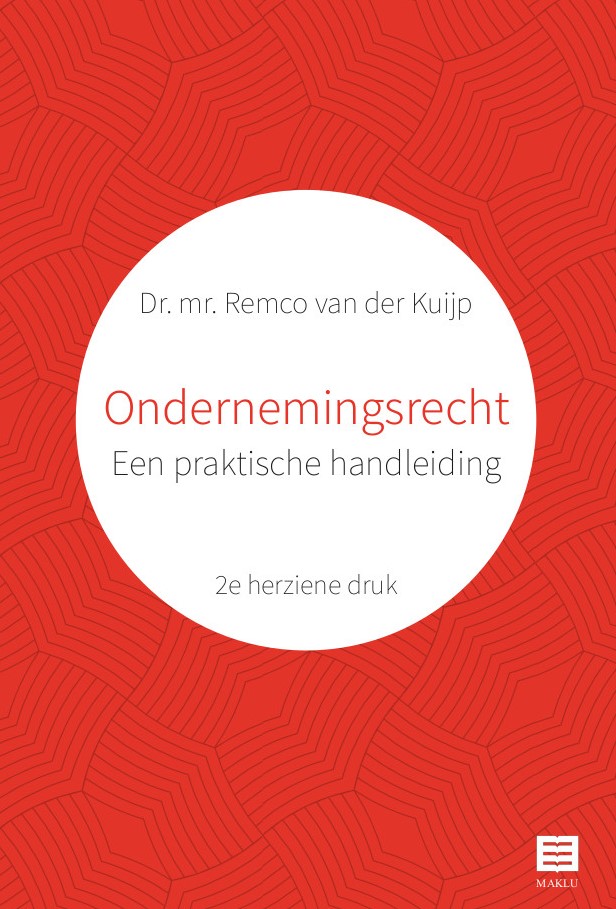
Dit boek vormt een praktische handleiding voor het ondernemingsrecht. Diverse rechtsvormen (NV/BV, vereniging, stichting, coöperatie en de personenvennootschappen - maatschap, VOF en CV) worden besproken, alsmede de aandachtspunten die bij de oprichting een rol spelen.
De auteur gaat dieper in op aandelen en kapitaal, het bestuur, uitvoerende en niet uitvoerende bestuurders, de raad van commissarissen en de algemene vergadering van aandeelhouders. Daarnaast wordt ook gekeken naar specifieke onderwerpen zoals corporate governance, het structuurregime, geschillenregeling, het recht van enquête, de herstructurering en sanering van vennootschappen, statutenwijziging, omzetting, ontbinding, vereffening en de financiële verslaggeving. Ten slotte worden de wijzigingen besproken inzake de Wet Bestuur en Toezicht Rechtspersonen 2021.
Dit boek biedt een handleiding voor iedereen die met het ondernemingsrecht in aanraking komt. De nadruk ligt dan ook op de praktijk, zonder daarbij de theorie uit het oog te verliezen. Waar mogelijk worden voorbeelden gegeven uit de economische actualiteit of uitspraken van rechters gebruikt om te laten zien hoe een wettekst praktisch gezien werkt.
Dr. mr. Remco van der Kuijp is notaris. Hij houdt zich met name bezig met ondernemingsrecht (o.a. bedrijfsopvolging), familierecht en estate-planning. Daarnaast treedt hij regelmatig op als docent en spreker o.a. bij de Erasmus School of Accounting & Assurance (ESAA).
De auteur gaat dieper in op aandelen en kapitaal, het bestuur, uitvoerende en niet uitvoerende bestuurders, de raad van commissarissen en de algemene vergadering van aandeelhouders. Daarnaast wordt ook gekeken naar specifieke onderwerpen zoals corporate governance, het structuurregime, geschillenregeling, het recht van enquête, de herstructurering en sanering van vennootschappen, statutenwijziging, omzetting, ontbinding, vereffening en de financiële verslaggeving. Ten slotte worden de wijzigingen besproken inzake de Wet Bestuur en Toezicht Rechtspersonen 2021.
Dit boek biedt een handleiding voor iedereen die met het ondernemingsrecht in aanraking komt. De nadruk ligt dan ook op de praktijk, zonder daarbij de theorie uit het oog te verliezen. Waar mogelijk worden voorbeelden gegeven uit de economische actualiteit of uitspraken van rechters gebruikt om te laten zien hoe een wettekst praktisch gezien werkt.
Dr. mr. Remco van der Kuijp is notaris. Hij houdt zich met name bezig met ondernemingsrecht (o.a. bedrijfsopvolging), familierecht en estate-planning. Daarnaast treedt hij regelmatig op als docent en spreker o.a. bij de Erasmus School of Accounting & Assurance (ESAA).
Geen voorraad
Ondernemingsrecht – 2e herziene druk
€ 65,00
Dit boek vormt een praktische handleiding voor het ondernemingsrecht. Diverse rechtsvormen (NV/BV, vereniging, stichting, coöperatie en de personenvennootschappen - maatschap, VOF en CV) worden besproken, alsmede de aandachtspunten die bij de oprichting een rol spelen.
De auteur gaat dieper in op aandelen en kapitaal, het bestuur, uitvoerende en niet uitvoerende bestuurders, de raad van commissarissen en de algemene vergadering van aandeelhouders. Daarnaast wordt ook gekeken naar specifieke onderwerpen zoals corporate governance, het structuurregime, geschillenregeling, het recht van enquête, de herstructurering en sanering van vennootschappen, statutenwijziging, omzetting, ontbinding, vereffening en de financiële verslaggeving. Ten slotte worden de wijzigingen besproken inzake de Wet Bestuur en Toezicht Rechtspersonen 2021.
Dit boek biedt een handleiding voor iedereen die met het ondernemingsrecht in aanraking komt. De nadruk ligt dan ook op de praktijk, zonder daarbij de theorie uit het oog te verliezen. Waar mogelijk worden voorbeelden gegeven uit de economische actualiteit of uitspraken van rechters gebruikt om te laten zien hoe een wettekst praktisch gezien werkt.
Dr. mr. Remco van der Kuijp is notaris. Hij houdt zich met name bezig met ondernemingsrecht (o.a. bedrijfsopvolging), familierecht en estate-planning. Daarnaast treedt hij regelmatig op als docent en spreker o.a. bij de Erasmus School of Accounting & Assurance (ESAA).
De auteur gaat dieper in op aandelen en kapitaal, het bestuur, uitvoerende en niet uitvoerende bestuurders, de raad van commissarissen en de algemene vergadering van aandeelhouders. Daarnaast wordt ook gekeken naar specifieke onderwerpen zoals corporate governance, het structuurregime, geschillenregeling, het recht van enquête, de herstructurering en sanering van vennootschappen, statutenwijziging, omzetting, ontbinding, vereffening en de financiële verslaggeving. Ten slotte worden de wijzigingen besproken inzake de Wet Bestuur en Toezicht Rechtspersonen 2021.
Dit boek biedt een handleiding voor iedereen die met het ondernemingsrecht in aanraking komt. De nadruk ligt dan ook op de praktijk, zonder daarbij de theorie uit het oog te verliezen. Waar mogelijk worden voorbeelden gegeven uit de economische actualiteit of uitspraken van rechters gebruikt om te laten zien hoe een wettekst praktisch gezien werkt.
Dr. mr. Remco van der Kuijp is notaris. Hij houdt zich met name bezig met ondernemingsrecht (o.a. bedrijfsopvolging), familierecht en estate-planning. Daarnaast treedt hij regelmatig op als docent en spreker o.a. bij de Erasmus School of Accounting & Assurance (ESAA).

Legal aspects of the video-game industry
€ 35,00
Passionate about video gaming and the legal profession, childhood friends Younes
Sebbarh, Gilles Leyssen and Camille Degrave were able to pool a group of specialised
lawyers who were willing to contribute to this guide on the legal aspects of the videogame
industry.
With seven specific chapters, this book tries to provide a first answer to the most important legal questions that might arise in the lifecycle of a video-game company. These insights are intended to be applicable irrespective of your jurisdiction, illustrated by real-life situations and easy to read for individuals without a legal background.
The promotors and authors of this book have the following backgrounds:
Younes Sebbarh is a corporate lawyer at Baker McKenzie and is specialised in security offerings, listings and other capital market transactions (including ongoing reporting obligations of listed companies), as well as public and private mergers and acquisitions.
Gilles Leyssen is a corporate lawyer at EY Law and is specialised in restructurings and private mergers and acquisitions for both international and national clients, as well as funding rounds for start- and scale-ups.
Camille Degrave is a corporate lawyer at Crowell & Moring and is specialised in restructurings and private mergers and acquisitions for both international and national clients, as well as funding rounds for start- and scale-ups.
Sarah De Wulf is an IT-lawyer at Stibbe and is specialised in e-commerce, e-communications law, data protection, digitization, new technologies as well as the intellectual property aspects of the aforementioned specialisations.
Michaël De Vroey is an intellectual property lawyer at Baker McKenzie and is specialised in all contentious and non-contentious aspects of intellectual property law, including trademarks, copyrights, designs, patents, trade secrets and related issues.
Margo Allaerts is an intellectual property lawyer at Baker McKenzie and is specialised in the full spectrum of intellectual property rights (trademarks, copyright, designs, patents, designs, customs seizures), digital media and commercial dispute resolution.
Malik Baba is a dispute resolution lawyer at Stibbe and is specialised in domestic and cross-border litigation as well as in arbitration, with expertise in various areas of law such as obligations and torts, contracts, distribution, banking, insolvency and security.
Maxime Nuyts is a corporate finance lawyer at Ashurst and is specialised in Belgian and cross-border transactional finance, debt restructuring and debt capital markets.
Joëlle Simons is a tax manager at EY and is specialised in customer tax transparency for financial institutions, as well as US withholding tax.
Arnaud Flamand is a corporate lawyer at Baker McKenzie and is specialised in security offerings, listings and other capital market transactions (including ongoing reporting obligations of listed companies), as well as public and private mergers and acquisitions.
This book is not intended to delve deeply into the details of every complex legal issue that may possibly arise. Always seek professional legal advice if you encounter legal issues.
Enjoy!
With seven specific chapters, this book tries to provide a first answer to the most important legal questions that might arise in the lifecycle of a video-game company. These insights are intended to be applicable irrespective of your jurisdiction, illustrated by real-life situations and easy to read for individuals without a legal background.
The promotors and authors of this book have the following backgrounds:
Younes Sebbarh is a corporate lawyer at Baker McKenzie and is specialised in security offerings, listings and other capital market transactions (including ongoing reporting obligations of listed companies), as well as public and private mergers and acquisitions.
Gilles Leyssen is a corporate lawyer at EY Law and is specialised in restructurings and private mergers and acquisitions for both international and national clients, as well as funding rounds for start- and scale-ups.
Camille Degrave is a corporate lawyer at Crowell & Moring and is specialised in restructurings and private mergers and acquisitions for both international and national clients, as well as funding rounds for start- and scale-ups.
Sarah De Wulf is an IT-lawyer at Stibbe and is specialised in e-commerce, e-communications law, data protection, digitization, new technologies as well as the intellectual property aspects of the aforementioned specialisations.
Michaël De Vroey is an intellectual property lawyer at Baker McKenzie and is specialised in all contentious and non-contentious aspects of intellectual property law, including trademarks, copyrights, designs, patents, trade secrets and related issues.
Margo Allaerts is an intellectual property lawyer at Baker McKenzie and is specialised in the full spectrum of intellectual property rights (trademarks, copyright, designs, patents, designs, customs seizures), digital media and commercial dispute resolution.
Malik Baba is a dispute resolution lawyer at Stibbe and is specialised in domestic and cross-border litigation as well as in arbitration, with expertise in various areas of law such as obligations and torts, contracts, distribution, banking, insolvency and security.
Maxime Nuyts is a corporate finance lawyer at Ashurst and is specialised in Belgian and cross-border transactional finance, debt restructuring and debt capital markets.
Joëlle Simons is a tax manager at EY and is specialised in customer tax transparency for financial institutions, as well as US withholding tax.
Arnaud Flamand is a corporate lawyer at Baker McKenzie and is specialised in security offerings, listings and other capital market transactions (including ongoing reporting obligations of listed companies), as well as public and private mergers and acquisitions.
This book is not intended to delve deeply into the details of every complex legal issue that may possibly arise. Always seek professional legal advice if you encounter legal issues.
Enjoy!
Legal aspects of the video-game industry
€ 35,00
Passionate about video gaming and the legal profession, childhood friends Younes
Sebbarh, Gilles Leyssen and Camille Degrave were able to pool a group of specialised
lawyers who were willing to contribute to this guide on the legal aspects of the videogame
industry.
With seven specific chapters, this book tries to provide a first answer to the most important legal questions that might arise in the lifecycle of a video-game company. These insights are intended to be applicable irrespective of your jurisdiction, illustrated by real-life situations and easy to read for individuals without a legal background.
The promotors and authors of this book have the following backgrounds:
Younes Sebbarh is a corporate lawyer at Baker McKenzie and is specialised in security offerings, listings and other capital market transactions (including ongoing reporting obligations of listed companies), as well as public and private mergers and acquisitions.
Gilles Leyssen is a corporate lawyer at EY Law and is specialised in restructurings and private mergers and acquisitions for both international and national clients, as well as funding rounds for start- and scale-ups.
Camille Degrave is a corporate lawyer at Crowell & Moring and is specialised in restructurings and private mergers and acquisitions for both international and national clients, as well as funding rounds for start- and scale-ups.
Sarah De Wulf is an IT-lawyer at Stibbe and is specialised in e-commerce, e-communications law, data protection, digitization, new technologies as well as the intellectual property aspects of the aforementioned specialisations.
Michaël De Vroey is an intellectual property lawyer at Baker McKenzie and is specialised in all contentious and non-contentious aspects of intellectual property law, including trademarks, copyrights, designs, patents, trade secrets and related issues.
Margo Allaerts is an intellectual property lawyer at Baker McKenzie and is specialised in the full spectrum of intellectual property rights (trademarks, copyright, designs, patents, designs, customs seizures), digital media and commercial dispute resolution.
Malik Baba is a dispute resolution lawyer at Stibbe and is specialised in domestic and cross-border litigation as well as in arbitration, with expertise in various areas of law such as obligations and torts, contracts, distribution, banking, insolvency and security.
Maxime Nuyts is a corporate finance lawyer at Ashurst and is specialised in Belgian and cross-border transactional finance, debt restructuring and debt capital markets.
Joëlle Simons is a tax manager at EY and is specialised in customer tax transparency for financial institutions, as well as US withholding tax.
Arnaud Flamand is a corporate lawyer at Baker McKenzie and is specialised in security offerings, listings and other capital market transactions (including ongoing reporting obligations of listed companies), as well as public and private mergers and acquisitions.
This book is not intended to delve deeply into the details of every complex legal issue that may possibly arise. Always seek professional legal advice if you encounter legal issues.
Enjoy!
With seven specific chapters, this book tries to provide a first answer to the most important legal questions that might arise in the lifecycle of a video-game company. These insights are intended to be applicable irrespective of your jurisdiction, illustrated by real-life situations and easy to read for individuals without a legal background.
The promotors and authors of this book have the following backgrounds:
Younes Sebbarh is a corporate lawyer at Baker McKenzie and is specialised in security offerings, listings and other capital market transactions (including ongoing reporting obligations of listed companies), as well as public and private mergers and acquisitions.
Gilles Leyssen is a corporate lawyer at EY Law and is specialised in restructurings and private mergers and acquisitions for both international and national clients, as well as funding rounds for start- and scale-ups.
Camille Degrave is a corporate lawyer at Crowell & Moring and is specialised in restructurings and private mergers and acquisitions for both international and national clients, as well as funding rounds for start- and scale-ups.
Sarah De Wulf is an IT-lawyer at Stibbe and is specialised in e-commerce, e-communications law, data protection, digitization, new technologies as well as the intellectual property aspects of the aforementioned specialisations.
Michaël De Vroey is an intellectual property lawyer at Baker McKenzie and is specialised in all contentious and non-contentious aspects of intellectual property law, including trademarks, copyrights, designs, patents, trade secrets and related issues.
Margo Allaerts is an intellectual property lawyer at Baker McKenzie and is specialised in the full spectrum of intellectual property rights (trademarks, copyright, designs, patents, designs, customs seizures), digital media and commercial dispute resolution.
Malik Baba is a dispute resolution lawyer at Stibbe and is specialised in domestic and cross-border litigation as well as in arbitration, with expertise in various areas of law such as obligations and torts, contracts, distribution, banking, insolvency and security.
Maxime Nuyts is a corporate finance lawyer at Ashurst and is specialised in Belgian and cross-border transactional finance, debt restructuring and debt capital markets.
Joëlle Simons is a tax manager at EY and is specialised in customer tax transparency for financial institutions, as well as US withholding tax.
Arnaud Flamand is a corporate lawyer at Baker McKenzie and is specialised in security offerings, listings and other capital market transactions (including ongoing reporting obligations of listed companies), as well as public and private mergers and acquisitions.
This book is not intended to delve deeply into the details of every complex legal issue that may possibly arise. Always seek professional legal advice if you encounter legal issues.
Enjoy!
RIDP2020Vol91/iss2-Criminal justice and corporate business
€ 70,00
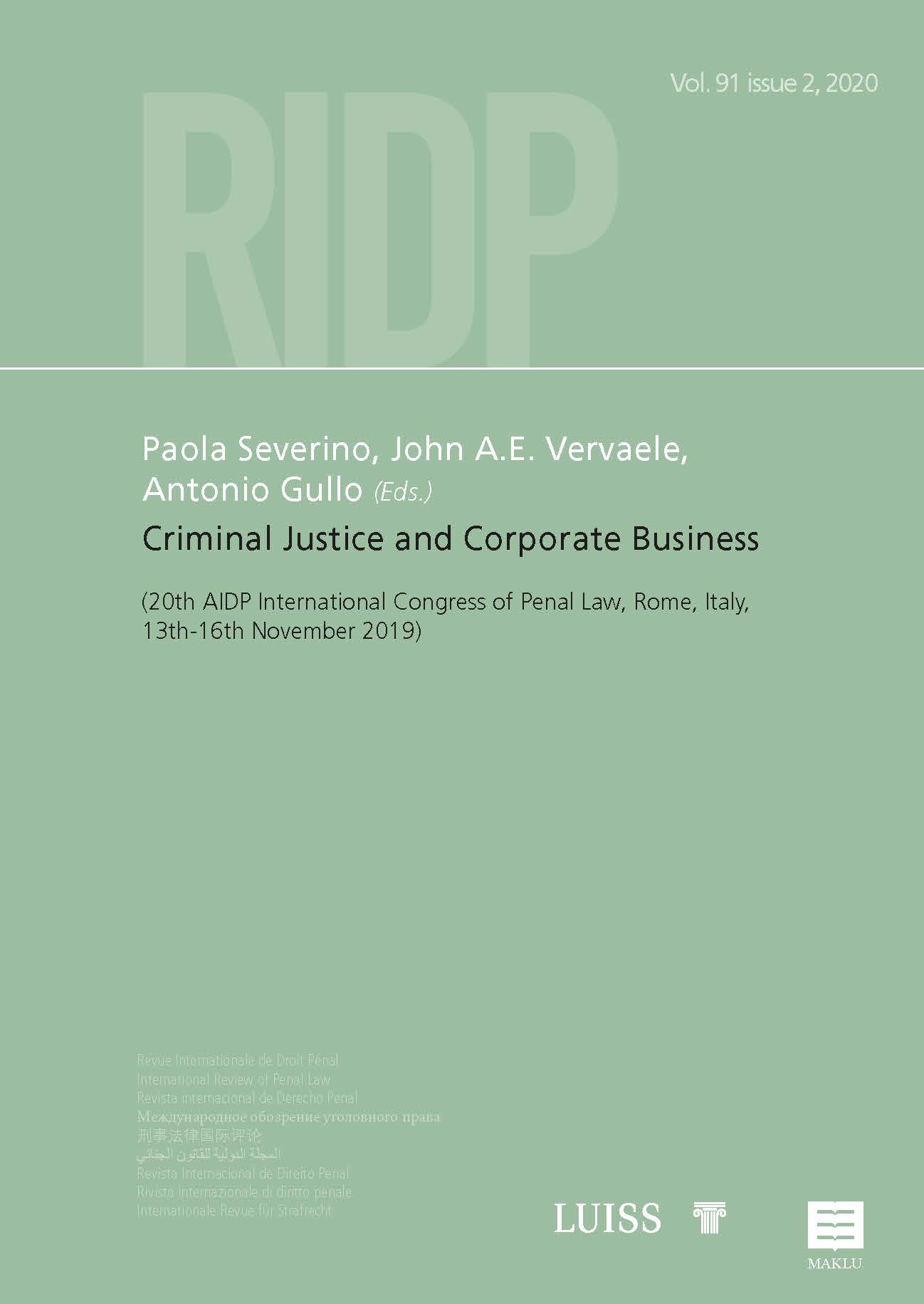
This issue puts together the proceedings of the AIDP XX International Congress of Penal Law ‘Criminal Justice and Corporate Business’ held on 13th-16th November 2019, organised by the Italian National Group in collaboration with Luiss Guido Carli University. The Congress was the opportunity for over six hundred representatives of the AIDP national groups from all over the world to convene in Rome, Italy – a place that was last home to this meeting crucial for the life of the Association fifty years ago – to finalise the work of the International Colloquia.
As the title explains, the 2019 International Congress has focused on the relationship between criminal justice and corporate business, reflecting the work of the AIDP over the past five years on individual liability for business involvement in international crimes, food regulation and criminal law, the interplay between administrative and criminal enforcement, the prosecution of corporations for violations of international law and related jurisdictional issues.
The volume is divided into thematic sections and collects the major contributions to the XX International Congress, dealing with issues concerning corruption, financial markets and the role of criminal law; economic crime and the role of new technologies; corporate liability, business integrity and human rights protection; new perspectives related to the criminal justice and corporate business landscape. It also contains the resolutions adopted across the four International Colloquia preceding the XX international Congress.
The articles published in this issue testify to the lively and cross-cutting debate that took place during the numerous plenary and parallel sessions of the Congress and that involved representatives of academia, institutions, governments, the judiciary, and the corporate community.
Paola Severino is Vice President of the AIDP and President of the Italian AIDP National Group; Professor of Criminal Law and Vice President, Luiss University, Rome.
John A. E. Vervaele is President of the AIDP; Professor of economic and European criminal law, Utrecht Law School/ The Netherlands; Professor of European criminal law, College of Europe, Bruges/Belgium.
Antonio Gullo is Secretary General of the Italian AIDP National Group and Member of the AIDP Scientific Committee; Full Professor of Criminal Law at Luiss University, Rome.
As the title explains, the 2019 International Congress has focused on the relationship between criminal justice and corporate business, reflecting the work of the AIDP over the past five years on individual liability for business involvement in international crimes, food regulation and criminal law, the interplay between administrative and criminal enforcement, the prosecution of corporations for violations of international law and related jurisdictional issues.
The volume is divided into thematic sections and collects the major contributions to the XX International Congress, dealing with issues concerning corruption, financial markets and the role of criminal law; economic crime and the role of new technologies; corporate liability, business integrity and human rights protection; new perspectives related to the criminal justice and corporate business landscape. It also contains the resolutions adopted across the four International Colloquia preceding the XX international Congress.
The articles published in this issue testify to the lively and cross-cutting debate that took place during the numerous plenary and parallel sessions of the Congress and that involved representatives of academia, institutions, governments, the judiciary, and the corporate community.
Paola Severino is Vice President of the AIDP and President of the Italian AIDP National Group; Professor of Criminal Law and Vice President, Luiss University, Rome.
John A. E. Vervaele is President of the AIDP; Professor of economic and European criminal law, Utrecht Law School/ The Netherlands; Professor of European criminal law, College of Europe, Bruges/Belgium.
Antonio Gullo is Secretary General of the Italian AIDP National Group and Member of the AIDP Scientific Committee; Full Professor of Criminal Law at Luiss University, Rome.
RIDP2020Vol91/iss2-Criminal justice and corporate business
€ 70,00
This issue puts together the proceedings of the AIDP XX International Congress of Penal Law ‘Criminal Justice and Corporate Business’ held on 13th-16th November 2019, organised by the Italian National Group in collaboration with Luiss Guido Carli University. The Congress was the opportunity for over six hundred representatives of the AIDP national groups from all over the world to convene in Rome, Italy – a place that was last home to this meeting crucial for the life of the Association fifty years ago – to finalise the work of the International Colloquia.
As the title explains, the 2019 International Congress has focused on the relationship between criminal justice and corporate business, reflecting the work of the AIDP over the past five years on individual liability for business involvement in international crimes, food regulation and criminal law, the interplay between administrative and criminal enforcement, the prosecution of corporations for violations of international law and related jurisdictional issues.
The volume is divided into thematic sections and collects the major contributions to the XX International Congress, dealing with issues concerning corruption, financial markets and the role of criminal law; economic crime and the role of new technologies; corporate liability, business integrity and human rights protection; new perspectives related to the criminal justice and corporate business landscape. It also contains the resolutions adopted across the four International Colloquia preceding the XX international Congress.
The articles published in this issue testify to the lively and cross-cutting debate that took place during the numerous plenary and parallel sessions of the Congress and that involved representatives of academia, institutions, governments, the judiciary, and the corporate community.
Paola Severino is Vice President of the AIDP and President of the Italian AIDP National Group; Professor of Criminal Law and Vice President, Luiss University, Rome.
John A. E. Vervaele is President of the AIDP; Professor of economic and European criminal law, Utrecht Law School/ The Netherlands; Professor of European criminal law, College of Europe, Bruges/Belgium.
Antonio Gullo is Secretary General of the Italian AIDP National Group and Member of the AIDP Scientific Committee; Full Professor of Criminal Law at Luiss University, Rome.
As the title explains, the 2019 International Congress has focused on the relationship between criminal justice and corporate business, reflecting the work of the AIDP over the past five years on individual liability for business involvement in international crimes, food regulation and criminal law, the interplay between administrative and criminal enforcement, the prosecution of corporations for violations of international law and related jurisdictional issues.
The volume is divided into thematic sections and collects the major contributions to the XX International Congress, dealing with issues concerning corruption, financial markets and the role of criminal law; economic crime and the role of new technologies; corporate liability, business integrity and human rights protection; new perspectives related to the criminal justice and corporate business landscape. It also contains the resolutions adopted across the four International Colloquia preceding the XX international Congress.
The articles published in this issue testify to the lively and cross-cutting debate that took place during the numerous plenary and parallel sessions of the Congress and that involved representatives of academia, institutions, governments, the judiciary, and the corporate community.
Paola Severino is Vice President of the AIDP and President of the Italian AIDP National Group; Professor of Criminal Law and Vice President, Luiss University, Rome.
John A. E. Vervaele is President of the AIDP; Professor of economic and European criminal law, Utrecht Law School/ The Netherlands; Professor of European criminal law, College of Europe, Bruges/Belgium.
Antonio Gullo is Secretary General of the Italian AIDP National Group and Member of the AIDP Scientific Committee; Full Professor of Criminal Law at Luiss University, Rome.
Belgisch belastingrecht in hoofdlijnen, 26ste druk, studentenuitgave in 1 volume
€ 75,00
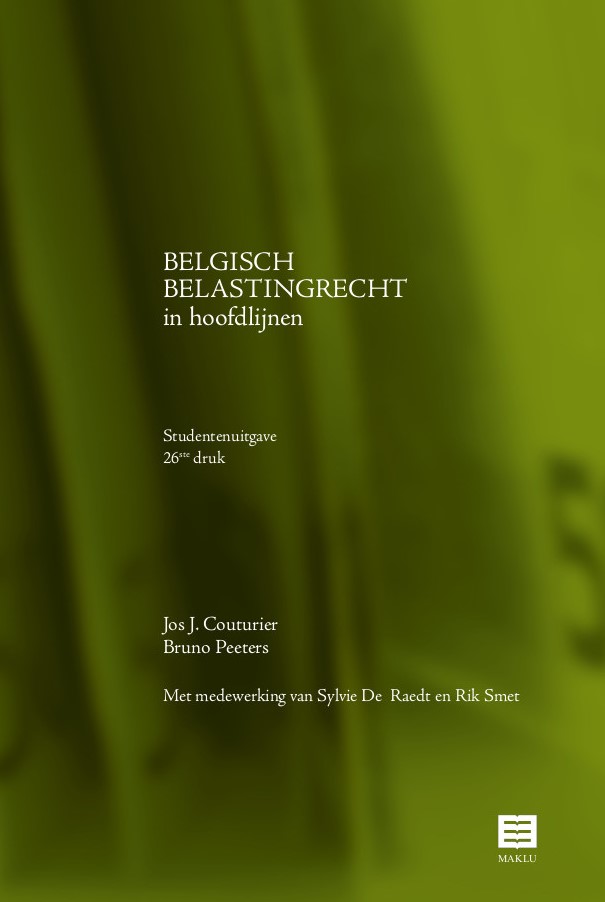
Dit handboek wil aan de lezer een actueel beeld geven van de krachtlijnen van het Belgisch belastingrecht. Het is in de eerste plaats opgevat als een leidraad bij de studie van het belastingrecht, en kan ook na de studies als referentiewerk dienen.
De tekst is evenwichtig voorzien van referenties. De verwijzingen in voetnoot zijn zoveel mogelijk beperkt gehouden tot verwijzingen naar de rechtspraak, zowel naar basisarresten die de draagwijdte van de besproken rechtsregelen fundamenteel beïnvloeden als naar rechtspraak ter illustratie en ter verduidelijking van de behandelde materie. Referenties naar de doctrine worden in de regel opgenomen in de literatuurselecties die elk hoofdstuk of een onderdeel ervan voorafgaan.
In het boek wordt vrij getrouw de structuur van de verschillende fiscale wetboeken gevolgd. De bedoeling is immers om de lezer ook vertrouwd te maken met het gebruik van deze wetboeken zodat hij steeds zijn weg kan terugvinden in het snel evoluerende belastingrecht.
De stof is bijgehouden tot het Belgisch Staatsblad van 1 januari 2021.
Prof. Dr. Jos J. Couturier (†) is emeritus gewoon hoogleraar aan de faculteit rechten van de Universiteit Antwerpen.
Prof. Dr. Bruno Peeters is gewoon hoogleraar aan de faculteit rechten van de Universiteit Antwerpen.
De tekst is evenwichtig voorzien van referenties. De verwijzingen in voetnoot zijn zoveel mogelijk beperkt gehouden tot verwijzingen naar de rechtspraak, zowel naar basisarresten die de draagwijdte van de besproken rechtsregelen fundamenteel beïnvloeden als naar rechtspraak ter illustratie en ter verduidelijking van de behandelde materie. Referenties naar de doctrine worden in de regel opgenomen in de literatuurselecties die elk hoofdstuk of een onderdeel ervan voorafgaan.
In het boek wordt vrij getrouw de structuur van de verschillende fiscale wetboeken gevolgd. De bedoeling is immers om de lezer ook vertrouwd te maken met het gebruik van deze wetboeken zodat hij steeds zijn weg kan terugvinden in het snel evoluerende belastingrecht.
De stof is bijgehouden tot het Belgisch Staatsblad van 1 januari 2021.
Prof. Dr. Jos J. Couturier (†) is emeritus gewoon hoogleraar aan de faculteit rechten van de Universiteit Antwerpen.
Prof. Dr. Bruno Peeters is gewoon hoogleraar aan de faculteit rechten van de Universiteit Antwerpen.
Belgisch belastingrecht in hoofdlijnen, 26ste druk, studentenuitgave in 1 volume
€ 75,00
Dit handboek wil aan de lezer een actueel beeld geven van de krachtlijnen van het Belgisch belastingrecht. Het is in de eerste plaats opgevat als een leidraad bij de studie van het belastingrecht, en kan ook na de studies als referentiewerk dienen.
De tekst is evenwichtig voorzien van referenties. De verwijzingen in voetnoot zijn zoveel mogelijk beperkt gehouden tot verwijzingen naar de rechtspraak, zowel naar basisarresten die de draagwijdte van de besproken rechtsregelen fundamenteel beïnvloeden als naar rechtspraak ter illustratie en ter verduidelijking van de behandelde materie. Referenties naar de doctrine worden in de regel opgenomen in de literatuurselecties die elk hoofdstuk of een onderdeel ervan voorafgaan.
In het boek wordt vrij getrouw de structuur van de verschillende fiscale wetboeken gevolgd. De bedoeling is immers om de lezer ook vertrouwd te maken met het gebruik van deze wetboeken zodat hij steeds zijn weg kan terugvinden in het snel evoluerende belastingrecht.
De stof is bijgehouden tot het Belgisch Staatsblad van 1 januari 2021.
Prof. Dr. Jos J. Couturier (†) is emeritus gewoon hoogleraar aan de faculteit rechten van de Universiteit Antwerpen.
Prof. Dr. Bruno Peeters is gewoon hoogleraar aan de faculteit rechten van de Universiteit Antwerpen.
De tekst is evenwichtig voorzien van referenties. De verwijzingen in voetnoot zijn zoveel mogelijk beperkt gehouden tot verwijzingen naar de rechtspraak, zowel naar basisarresten die de draagwijdte van de besproken rechtsregelen fundamenteel beïnvloeden als naar rechtspraak ter illustratie en ter verduidelijking van de behandelde materie. Referenties naar de doctrine worden in de regel opgenomen in de literatuurselecties die elk hoofdstuk of een onderdeel ervan voorafgaan.
In het boek wordt vrij getrouw de structuur van de verschillende fiscale wetboeken gevolgd. De bedoeling is immers om de lezer ook vertrouwd te maken met het gebruik van deze wetboeken zodat hij steeds zijn weg kan terugvinden in het snel evoluerende belastingrecht.
De stof is bijgehouden tot het Belgisch Staatsblad van 1 januari 2021.
Prof. Dr. Jos J. Couturier (†) is emeritus gewoon hoogleraar aan de faculteit rechten van de Universiteit Antwerpen.
Prof. Dr. Bruno Peeters is gewoon hoogleraar aan de faculteit rechten van de Universiteit Antwerpen.
Geen voorraad