

Pivot Politics. Changing cultural identities in early state formation processes
€ 17,02
Boek informatie
ISBN 13
9789055890071
Auteur(s)
Martin van Bakel, Renee Hagesteijn, Pieter van de Velde (eds)
NUR
-
Gerelateerde producten
Income and wealth inequality in the Netherlands 16th-20th century
€ 29,50
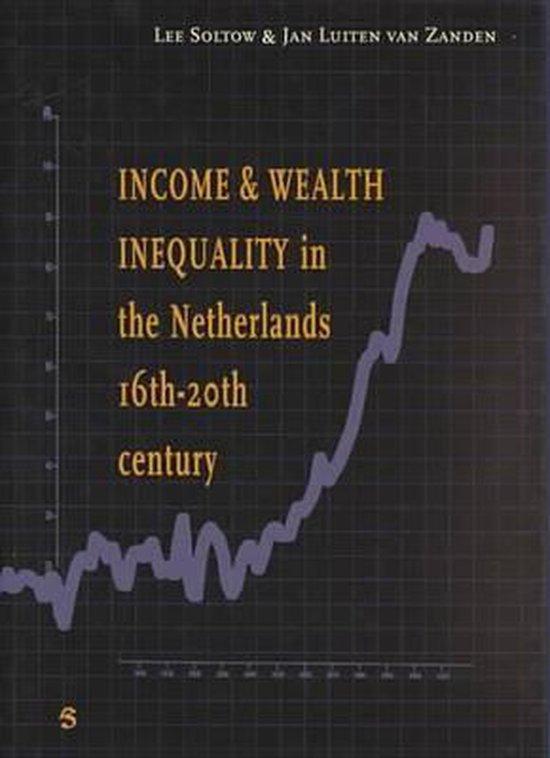
The ''new inequality'' of the 1980''s and 1990''s has recently given rise to a lively debate about the relationship between economic growth and income distribution. This debate is the background of the study by Lee Soltow an Jan Luiten van Zanden, who, staying close to the sources, have mapped in some detail the long-term development of income and wealth inequality in the Netherlands between c. 1500 and the present.
Their starting point is the hypothesis of Simon Kuznets that income inequality increased during the first phase of modern economic growth, but that in the second phase, which begins in most Western countries around the turn of the twentieth century, a marked levelling out of income differences followed. The development of inequality during the Golden Age, when growth resulted in a marked increase in inequality seems to confirm this idea. However, the analysis of the connection between growth and inequality in the nineteenth and twentieth century leads them to question the Kuznets hypothesis.
Lee Soltow is professor of Economics at Ohio University (Athens).
Among his publications on the subject are: ''Distribution of wealth and income in the United States in 1978'' (1989) and ''Men and wealth in the United States 1850-1870'' (1975).
Jan Luiten van Zanden is professor of Economic and Social History at Utrecht University (the Netherlands).
Among his publications on the subject are: ''The economic history of the Netherlands 1914-1955: a small open economy in the ''long'' twentieth century'' (1998). ''The economic development of the Netherlands since 1870'' (1996) and ''The rise and decline of Holland''s economy: merchant capitalism and the labour market'' (1993).
Income and wealth inequality in the Netherlands 16th-20th century
€ 29,50
The ''new inequality'' of the 1980''s and 1990''s has recently given rise to a lively debate about the relationship between economic growth and income distribution. This debate is the background of the study by Lee Soltow an Jan Luiten van Zanden, who, staying close to the sources, have mapped in some detail the long-term development of income and wealth inequality in the Netherlands between c. 1500 and the present.
Their starting point is the hypothesis of Simon Kuznets that income inequality increased during the first phase of modern economic growth, but that in the second phase, which begins in most Western countries around the turn of the twentieth century, a marked levelling out of income differences followed. The development of inequality during the Golden Age, when growth resulted in a marked increase in inequality seems to confirm this idea. However, the analysis of the connection between growth and inequality in the nineteenth and twentieth century leads them to question the Kuznets hypothesis.
Lee Soltow is professor of Economics at Ohio University (Athens).
Among his publications on the subject are: ''Distribution of wealth and income in the United States in 1978'' (1989) and ''Men and wealth in the United States 1850-1870'' (1975).
Jan Luiten van Zanden is professor of Economic and Social History at Utrecht University (the Netherlands).
Among his publications on the subject are: ''The economic history of the Netherlands 1914-1955: a small open economy in the ''long'' twentieth century'' (1998). ''The economic development of the Netherlands since 1870'' (1996) and ''The rise and decline of Holland''s economy: merchant capitalism and the labour market'' (1993).
Geen voorraad
Multiculturalisme in Canada, Australië en de Verenigde Staten. Ideologie en beleid, 1950-2000.
€ 20,00
Canada, Australië en de Verenigde Staten zijn de kenmerkende voorbeelden van immigratielanden. De nieuwkomers kwamen overal vandaan en moesten samenleven. Hans Vermeulen en Boris Slijper zijn nagegaan hoe de verschillende regeringen en beleidsmakers in die landen zijn omgegaan met al die verschillende achtergronden en hoe ze het proces hebben proberen te beïnvloeden en in een gewenste richting te sturen.
Deze studie plaatst de discussie in Nederland en West-Epa over assimilatie en erkenning van culturele diversiteit in een zo gewenst breder perspectief.
Hans Vermeulen en Boris Slijper zijn beiden verbonden aan het Instituut voor Migratie- en Etnische Sudies (IMES) van de Universiteit van Amsterdam.
Hans Vermeulen en Boris Slijper zijn beiden verbonden aan het Instituut voor Migratie- en Etnische Sudies (IMES) van de Universiteit van Amsterdam.
Geen voorraad
Multiculturalisme in Canada, Australië en de Verenigde Staten. Ideologie en beleid, 1950-2000.
€ 20,00
Canada, Australië en de Verenigde Staten zijn de kenmerkende voorbeelden van immigratielanden. De nieuwkomers kwamen overal vandaan en moesten samenleven. Hans Vermeulen en Boris Slijper zijn nagegaan hoe de verschillende regeringen en beleidsmakers in die landen zijn omgegaan met al die verschillende achtergronden en hoe ze het proces hebben proberen te beïnvloeden en in een gewenste richting te sturen.
Deze studie plaatst de discussie in Nederland en West-Epa over assimilatie en erkenning van culturele diversiteit in een zo gewenst breder perspectief.
Hans Vermeulen en Boris Slijper zijn beiden verbonden aan het Instituut voor Migratie- en Etnische Sudies (IMES) van de Universiteit van Amsterdam.
Hans Vermeulen en Boris Slijper zijn beiden verbonden aan het Instituut voor Migratie- en Etnische Sudies (IMES) van de Universiteit van Amsterdam.
Ziekenwerk. Een kleine sociologie van alledaags ziekenleven
€ 13,50
Hij is al jarenlang hoogleraar Medische Sociologie en dan wordt op een dag bij hem darmkanker geconstateerd. Na de geweldige emotionele schok ondergaat hij de bij het ziektebeeld passende medische behandeling. Gaandeweg dat medische traject beseft hij tot zijn verbijstering dat er dingen gebeuren waarover hij in de vakliteratuur zo nooit eerder gelezen had. Dit overkwam Gerhard Nijhof, hoogleraar Medische Sociologie aan de Universiteit van Amsterdam.
Toen hij zich dit realiseerde ging hij tijdens zijn ziekbed en zijn revalidatie in een schrift bijhouden wat hem overkwam, wat hij constateerde en waar dat niet spoorde met zijn kennis van zijn vakliteratuur.
Deze voortdurende verbinding van een observatie of een persoonlijke ervaring met een afstandelijk wetenschappelijk verwoord thema maakt dit boek tot een indringend verslag van een ‘alledaags’ leven van een zieke.
Aanbevolen voor iedereen die werkzaam is in de gezondheidszorg, diegenen die in de directe omgeving te maken heeft met langdurige (ernstig) zieken en voor geïnteresseerden in de medische sociologie.
Gerhard Nijhof is hoogleraar Medische Sociologie aan de Universiteit van Amsterdam.
Ziekenwerk. Een kleine sociologie van alledaags ziekenleven
€ 13,50
Hij is al jarenlang hoogleraar Medische Sociologie en dan wordt op een dag bij hem darmkanker geconstateerd. Na de geweldige emotionele schok ondergaat hij de bij het ziektebeeld passende medische behandeling. Gaandeweg dat medische traject beseft hij tot zijn verbijstering dat er dingen gebeuren waarover hij in de vakliteratuur zo nooit eerder gelezen had. Dit overkwam Gerhard Nijhof, hoogleraar Medische Sociologie aan de Universiteit van Amsterdam.
Toen hij zich dit realiseerde ging hij tijdens zijn ziekbed en zijn revalidatie in een schrift bijhouden wat hem overkwam, wat hij constateerde en waar dat niet spoorde met zijn kennis van zijn vakliteratuur.
Deze voortdurende verbinding van een observatie of een persoonlijke ervaring met een afstandelijk wetenschappelijk verwoord thema maakt dit boek tot een indringend verslag van een ‘alledaags’ leven van een zieke.
Aanbevolen voor iedereen die werkzaam is in de gezondheidszorg, diegenen die in de directe omgeving te maken heeft met langdurige (ernstig) zieken en voor geïnteresseerden in de medische sociologie.
Gerhard Nijhof is hoogleraar Medische Sociologie aan de Universiteit van Amsterdam.

Bridges & Watersheds. A narrative analysis of watermanagement in England, Wales and the Netherlands
€ 22,50
What is good water management, if we take scarcity of water, combined with climate change, the rise of sea level and a growing world population into account? Can water management be privatized? Or should the role and the position of the nation state even be strengthened to protect the environment and the citizens? Dicke has conducted a narrative analysis of water management in England, Wales and the Netherlands. Hundred years ago, water used to be a national public good. The nation state was pivotal in water management. Nowadays, water is considered to be part of a global water system. This view transforms water from a national to a global public good. As a result, the nation state is not the only actor, which has a say in the management of this global public good. This transformation places the public private divide once again at the center of attention.
The present debate about privatization, both in England and in the Netherlands, is incomplete. It does not take all dimensions of the public private divide into account. Dicke suggests that both visibility (transparency) and collectivity (water belongs to us all) should be considered. The issue is not whether water management is provided by a nation state or not. The issue should be whether the dimensions of collectivity and visibility are well balanced. This can only be achieved through a restoration of the link between water and society.
Willemijn Dicke is assistant professor at Delft University of Technology at the Department of Public Management Organisation & Management.
Bridges & Watersheds. A narrative analysis of watermanagement in England, Wales and the Netherlands
€ 22,50
What is good water management, if we take scarcity of water, combined with climate change, the rise of sea level and a growing world population into account? Can water management be privatized? Or should the role and the position of the nation state even be strengthened to protect the environment and the citizens? Dicke has conducted a narrative analysis of water management in England, Wales and the Netherlands. Hundred years ago, water used to be a national public good. The nation state was pivotal in water management. Nowadays, water is considered to be part of a global water system. This view transforms water from a national to a global public good. As a result, the nation state is not the only actor, which has a say in the management of this global public good. This transformation places the public private divide once again at the center of attention.
The present debate about privatization, both in England and in the Netherlands, is incomplete. It does not take all dimensions of the public private divide into account. Dicke suggests that both visibility (transparency) and collectivity (water belongs to us all) should be considered. The issue is not whether water management is provided by a nation state or not. The issue should be whether the dimensions of collectivity and visibility are well balanced. This can only be achieved through a restoration of the link between water and society.
Willemijn Dicke is assistant professor at Delft University of Technology at the Department of Public Management Organisation & Management.