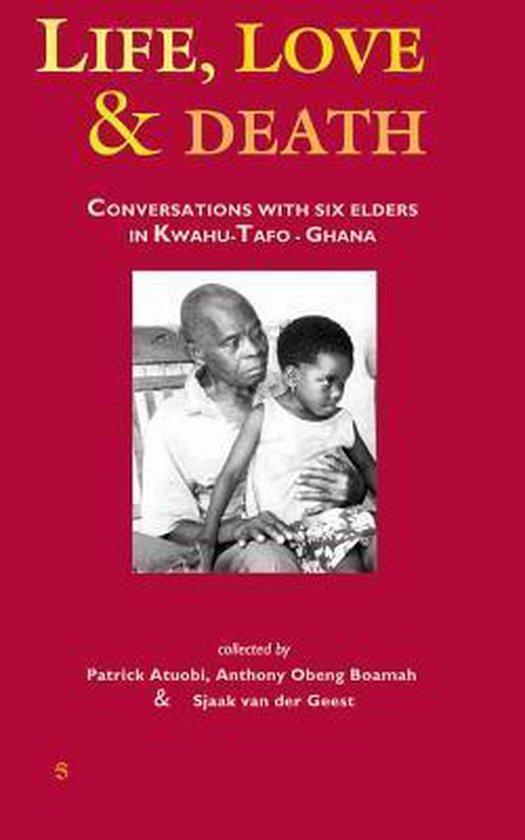
Life, love and death. Conversations with six elders in Kwahu-Tafo – Ghana
€ 7,50
This book records the wisdom of six elders in Kwahu-Tafo, a rural town in the South of Ghana. It brings to the fore the beauty of old age.
This book records the wisdom of six elders in Kwahu-Tafo, a rural town in the South of Ghana. It brings to the fore the beauty of old age.
Boek informatie
ISBN 13
9789055892617
Aantal pagina's
36
Auteur(s)
P. Atuobi, A. Obeng & S. van der Geest
NUR
761 - Culturele antropologie
Gerelateerde producten
Geen voorraad
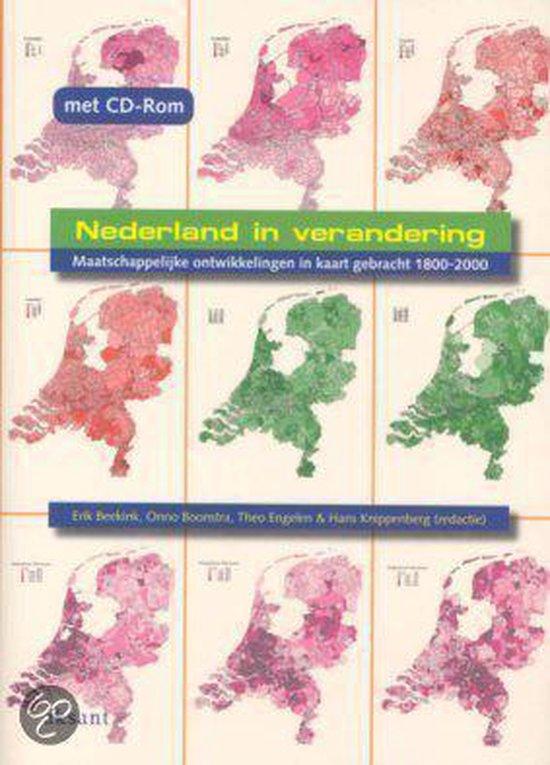
Nederland in verandering
€ 20,00
In de 19e en de 20e eeuw onderging Nederland grote veranderingen die op kaarten inzichtelijk gemaakt kunnen worden. In dit boek zijn politieke, religieuze, economische en demografische verschuivingen op gemeenteniveau in overzichtelijke kaarten in beeld gebracht en in de tekst toegelicht, met als resultaat een gedetailleerde atlas van de sociale geschiedenis van twee eeuwen Nederland.
Dit is nu mogelijk doordat in de Historische Databank Nederlandse Gemeenten (HDNG) een grote hoeveelheid gegevens vanaf het begin van de statistische periode (1795) op gemeentelijk niveau digitaal zijn ontsloten. Deze publicatie is een voorbeeld van de vele mogelijkheden die de HDNG kan bieden. Achterin het boek is een cd-rom bijgesloten met daarop de data, zodat men eigen selecties kan maken.
Dit is nu mogelijk doordat in de Historische Databank Nederlandse Gemeenten (HDNG) een grote hoeveelheid gegevens vanaf het begin van de statistische periode (1795) op gemeentelijk niveau digitaal zijn ontsloten. Deze publicatie is een voorbeeld van de vele mogelijkheden die de HDNG kan bieden. Achterin het boek is een cd-rom bijgesloten met daarop de data, zodat men eigen selecties kan maken.
Geen voorraad
Nederland in verandering
€ 20,00
In de 19e en de 20e eeuw onderging Nederland grote veranderingen die op kaarten inzichtelijk gemaakt kunnen worden. In dit boek zijn politieke, religieuze, economische en demografische verschuivingen op gemeenteniveau in overzichtelijke kaarten in beeld gebracht en in de tekst toegelicht, met als resultaat een gedetailleerde atlas van de sociale geschiedenis van twee eeuwen Nederland.
Dit is nu mogelijk doordat in de Historische Databank Nederlandse Gemeenten (HDNG) een grote hoeveelheid gegevens vanaf het begin van de statistische periode (1795) op gemeentelijk niveau digitaal zijn ontsloten. Deze publicatie is een voorbeeld van de vele mogelijkheden die de HDNG kan bieden. Achterin het boek is een cd-rom bijgesloten met daarop de data, zodat men eigen selecties kan maken.
Dit is nu mogelijk doordat in de Historische Databank Nederlandse Gemeenten (HDNG) een grote hoeveelheid gegevens vanaf het begin van de statistische periode (1795) op gemeentelijk niveau digitaal zijn ontsloten. Deze publicatie is een voorbeeld van de vele mogelijkheden die de HDNG kan bieden. Achterin het boek is een cd-rom bijgesloten met daarop de data, zodat men eigen selecties kan maken.
Applied Health Research. Anthropology of Health Care
€ 28,00
There is increasing recognition that socio-economic and cultural factors are prime determinants of health and health care. What factors contribute to the acceptance of community health financing or a vaccination program? What are the needs of the growing group of elderly people or psychatric patients? What social and cultural factors should be taken into account to operationalize all ambitious plans to improve reproductive health care? These are only some of the questions health professionals and health planners are confronted with.
Anthropological research can be a tremendous support to health programmes, by giving insights in the perspective of recipients and providers of health programmes and health care, and also by providing managers and implementors of these programmes with mechanisms and strategies that could lead to a reorientation of health care programmes and policies towards the actual needs of the target group.
The need for training in anthropology of health and health care has been expressed by social scientists involved in multi-disciplinary health research projects, and public health staff at different levels, who are involved in providing health education and primary health care and who - in implementing the health programmes - are confronted with difficulties related to the socio-cultural context in which they work.
It is for this reason that the International Course in Anthropology of Health and Health Care has been developed. This course has been designed for research officers of public health institutes, coordinators of community health care programmes, project staff, responsible for the implementation of various health programmes, public health professionals, social science lecturers at universities, and junior social scientists, who intend to specialize in Anthropology of Health and Health Care.
The course takes a multi-disciplinary approach and focuses on a number of important problem areas and issues, such as vaccination, reproductive health and AIDS, equity and community health financing, self-care and the use and distribution of pharmaceuticals.
The manual in its earlier editions has been used since years for teaching in the field of applied medical anthropology and public health in academic institutions worldwide.
Applied Health Research. Anthropology of Health Care
€ 28,00
There is increasing recognition that socio-economic and cultural factors are prime determinants of health and health care. What factors contribute to the acceptance of community health financing or a vaccination program? What are the needs of the growing group of elderly people or psychatric patients? What social and cultural factors should be taken into account to operationalize all ambitious plans to improve reproductive health care? These are only some of the questions health professionals and health planners are confronted with.
Anthropological research can be a tremendous support to health programmes, by giving insights in the perspective of recipients and providers of health programmes and health care, and also by providing managers and implementors of these programmes with mechanisms and strategies that could lead to a reorientation of health care programmes and policies towards the actual needs of the target group.
The need for training in anthropology of health and health care has been expressed by social scientists involved in multi-disciplinary health research projects, and public health staff at different levels, who are involved in providing health education and primary health care and who - in implementing the health programmes - are confronted with difficulties related to the socio-cultural context in which they work.
It is for this reason that the International Course in Anthropology of Health and Health Care has been developed. This course has been designed for research officers of public health institutes, coordinators of community health care programmes, project staff, responsible for the implementation of various health programmes, public health professionals, social science lecturers at universities, and junior social scientists, who intend to specialize in Anthropology of Health and Health Care.
The course takes a multi-disciplinary approach and focuses on a number of important problem areas and issues, such as vaccination, reproductive health and AIDS, equity and community health financing, self-care and the use and distribution of pharmaceuticals.
The manual in its earlier editions has been used since years for teaching in the field of applied medical anthropology and public health in academic institutions worldwide.
Geen voorraad

Geen voorraad
Bridges & Watersheds. A narrative analysis of watermanagement in England, Wales and the Netherlands
€ 22,50
What is good water management, if we take scarcity of water, combined with climate change, the rise of sea level and a growing world population into account? Can water management be privatized? Or should the role and the position of the nation state even be strengthened to protect the environment and the citizens? Dicke has conducted a narrative analysis of water management in England, Wales and the Netherlands. Hundred years ago, water used to be a national public good. The nation state was pivotal in water management. Nowadays, water is considered to be part of a global water system. This view transforms water from a national to a global public good. As a result, the nation state is not the only actor, which has a say in the management of this global public good. This transformation places the public private divide once again at the center of attention.
The present debate about privatization, both in England and in the Netherlands, is incomplete. It does not take all dimensions of the public private divide into account. Dicke suggests that both visibility (transparency) and collectivity (water belongs to us all) should be considered. The issue is not whether water management is provided by a nation state or not. The issue should be whether the dimensions of collectivity and visibility are well balanced. This can only be achieved through a restoration of the link between water and society.
Willemijn Dicke is assistant professor at Delft University of Technology at the Department of Public Management Organisation & Management.
Bridges & Watersheds. A narrative analysis of watermanagement in England, Wales and the Netherlands
€ 22,50
What is good water management, if we take scarcity of water, combined with climate change, the rise of sea level and a growing world population into account? Can water management be privatized? Or should the role and the position of the nation state even be strengthened to protect the environment and the citizens? Dicke has conducted a narrative analysis of water management in England, Wales and the Netherlands. Hundred years ago, water used to be a national public good. The nation state was pivotal in water management. Nowadays, water is considered to be part of a global water system. This view transforms water from a national to a global public good. As a result, the nation state is not the only actor, which has a say in the management of this global public good. This transformation places the public private divide once again at the center of attention.
The present debate about privatization, both in England and in the Netherlands, is incomplete. It does not take all dimensions of the public private divide into account. Dicke suggests that both visibility (transparency) and collectivity (water belongs to us all) should be considered. The issue is not whether water management is provided by a nation state or not. The issue should be whether the dimensions of collectivity and visibility are well balanced. This can only be achieved through a restoration of the link between water and society.
Willemijn Dicke is assistant professor at Delft University of Technology at the Department of Public Management Organisation & Management.