

Aantrekkelijke politiek? Jongeren en popularisering van politiek
€ 22,50
Op voorraad
Aanvullende informatie
| Gewicht | 0,016 kg |
|---|---|
| Afmetingen | 22,5 × 15,1 × 1,6 cm |
Boek informatie
ISBN 13
9789055892662
Aantal pagina's
256
Auteur(s)
Chris Aalberts
NUR
754 - Politicologie
Gerelateerde producten
Geen voorraad
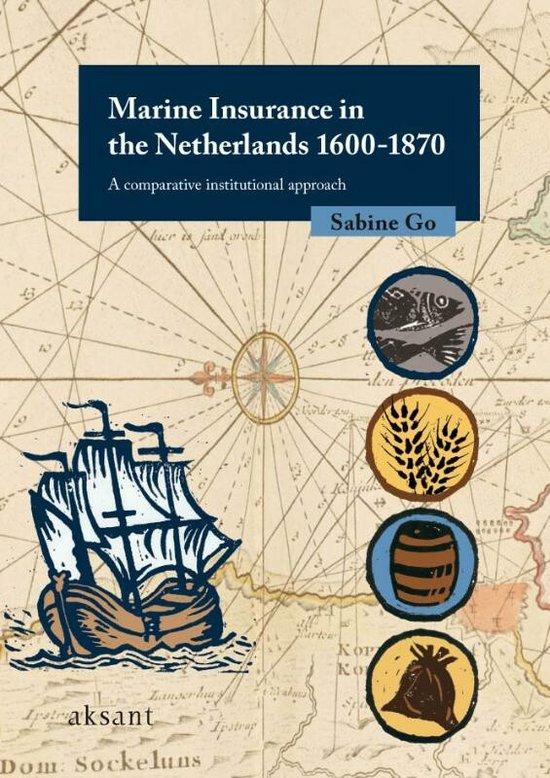
Marine Insurance in the Netherlands 1600-1870. A comparative institutional approach
€ 39,90
Marine insurance has been of great importance to the expansion of long distance trade and economic growth in the early modern period, in particular for seafaring nations such as the Dutch Republic. The Amsterdam market became Europe's leading insurance market and within the Republic other insurance systems also emerged. Little is known about the differing institutional frameworks governing these industries and the interaction between the institutions and the actors in the industry. This study will examine the development of marine insurance in the Netherlands in Amsterdam, Rotterdam and the province of Groningen from c. 1600 to 1870 from an institutional point of view. It will examine how the behaviour of authorities, insurers, underwriters and brokers was affected by the formal and informal constraints of the industry and how in turn their conduct has influenced the institutional framework and induced institutional change. A comparative institutional analysis will be made of three insurance systems in the Netherlands, each with its own distinctive characteristics. The interaction between institutions and actors will be studied in relation to the effects of technological innovations and international geo-political changes. By examining developments over a period of two and half centuries the path of long-term institutional change becomes discernable.
Geen voorraad
Marine Insurance in the Netherlands 1600-1870. A comparative institutional approach
€ 39,90
Marine insurance has been of great importance to the expansion of long distance trade and economic growth in the early modern period, in particular for seafaring nations such as the Dutch Republic. The Amsterdam market became Europe's leading insurance market and within the Republic other insurance systems also emerged. Little is known about the differing institutional frameworks governing these industries and the interaction between the institutions and the actors in the industry. This study will examine the development of marine insurance in the Netherlands in Amsterdam, Rotterdam and the province of Groningen from c. 1600 to 1870 from an institutional point of view. It will examine how the behaviour of authorities, insurers, underwriters and brokers was affected by the formal and informal constraints of the industry and how in turn their conduct has influenced the institutional framework and induced institutional change. A comparative institutional analysis will be made of three insurance systems in the Netherlands, each with its own distinctive characteristics. The interaction between institutions and actors will be studied in relation to the effects of technological innovations and international geo-political changes. By examining developments over a period of two and half centuries the path of long-term institutional change becomes discernable.
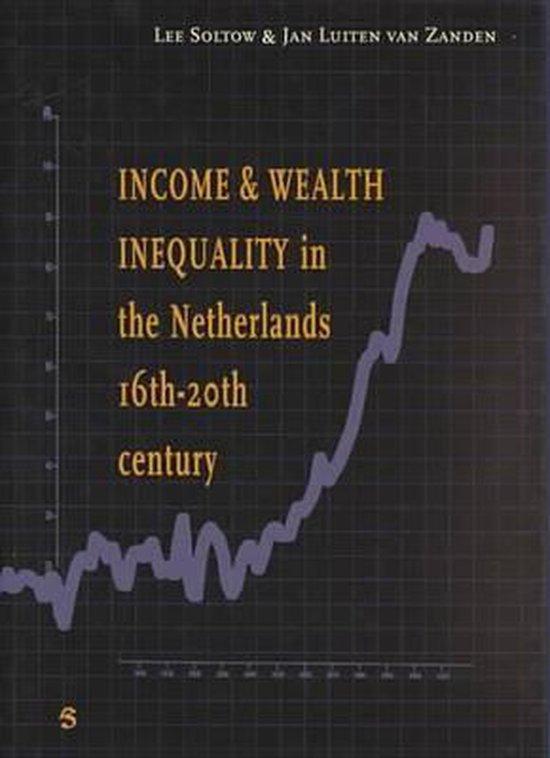
Income and wealth inequality in the Netherlands 16th-20th century
€ 29,50
The ''new inequality'' of the 1980''s and 1990''s has recently given rise to a lively debate about the relationship between economic growth and income distribution. This debate is the background of the study by Lee Soltow an Jan Luiten van Zanden, who, staying close to the sources, have mapped in some detail the long-term development of income and wealth inequality in the Netherlands between c. 1500 and the present.
Their starting point is the hypothesis of Simon Kuznets that income inequality increased during the first phase of modern economic growth, but that in the second phase, which begins in most Western countries around the turn of the twentieth century, a marked levelling out of income differences followed. The development of inequality during the Golden Age, when growth resulted in a marked increase in inequality seems to confirm this idea. However, the analysis of the connection between growth and inequality in the nineteenth and twentieth century leads them to question the Kuznets hypothesis.
Lee Soltow is professor of Economics at Ohio University (Athens).
Among his publications on the subject are: ''Distribution of wealth and income in the United States in 1978'' (1989) and ''Men and wealth in the United States 1850-1870'' (1975).
Jan Luiten van Zanden is professor of Economic and Social History at Utrecht University (the Netherlands).
Among his publications on the subject are: ''The economic history of the Netherlands 1914-1955: a small open economy in the ''long'' twentieth century'' (1998). ''The economic development of the Netherlands since 1870'' (1996) and ''The rise and decline of Holland''s economy: merchant capitalism and the labour market'' (1993).
Income and wealth inequality in the Netherlands 16th-20th century
€ 29,50
The ''new inequality'' of the 1980''s and 1990''s has recently given rise to a lively debate about the relationship between economic growth and income distribution. This debate is the background of the study by Lee Soltow an Jan Luiten van Zanden, who, staying close to the sources, have mapped in some detail the long-term development of income and wealth inequality in the Netherlands between c. 1500 and the present.
Their starting point is the hypothesis of Simon Kuznets that income inequality increased during the first phase of modern economic growth, but that in the second phase, which begins in most Western countries around the turn of the twentieth century, a marked levelling out of income differences followed. The development of inequality during the Golden Age, when growth resulted in a marked increase in inequality seems to confirm this idea. However, the analysis of the connection between growth and inequality in the nineteenth and twentieth century leads them to question the Kuznets hypothesis.
Lee Soltow is professor of Economics at Ohio University (Athens).
Among his publications on the subject are: ''Distribution of wealth and income in the United States in 1978'' (1989) and ''Men and wealth in the United States 1850-1870'' (1975).
Jan Luiten van Zanden is professor of Economic and Social History at Utrecht University (the Netherlands).
Among his publications on the subject are: ''The economic history of the Netherlands 1914-1955: a small open economy in the ''long'' twentieth century'' (1998). ''The economic development of the Netherlands since 1870'' (1996) and ''The rise and decline of Holland''s economy: merchant capitalism and the labour market'' (1993).
De kern van de politiek
€ 15,50
Politiek handelen gebeurt op allerlei niveau’s. Op nationaal niveau bij regeringen en parlementen, tussen burgers en partijen, over beleid en de uitkomsten daarvan. Maar politiek handelen bestaat ook in bedrijven, in kerken, in verenigingen en clubs. Politiek handelen gebeurt overal waar voor groepen mensen gemeenschappelijke zaken moeten worden geregeld wanneer er geen overeenstemming is over welke zaken dat zijn of wat er dan precies zou moeten worden afgesproken.
Volgens Cees van der Eijk is conflict en samenwerking de motor van alle politiek handelen. Soms is dat openlijk zichtbaar, maar vaak ook niet.
Aan de hand van een aantal kernvragen en kernbegrippen laat hij zien hoe men inzicht in politiek handelen kan krijgen. Die kernbegrippen en kernvragen zijn in allerlei situaties toepasbaar: voor de politiek in een land, in een bedrijf, in een vakbond, in een sportvereniging, in een milieuorganisatie, of waar dan ook.
In dit boek gaat het dus om de kern, om de essentie van ‘politiek’ en van het ‘politieke’.Dat maakt dit boekje tot verplichte kost voor eenieder die zich met politiek handelen op welk niveau dan ook bezighoudt.
Cees van der Eijk is hoogleraar Algemene Politicologie aan de Faculteit der Maatschappij- en Gedragswetenschappen van de Universiteit van Amsterdam.
De kern van de politiek
€ 15,50
Politiek handelen gebeurt op allerlei niveau’s. Op nationaal niveau bij regeringen en parlementen, tussen burgers en partijen, over beleid en de uitkomsten daarvan. Maar politiek handelen bestaat ook in bedrijven, in kerken, in verenigingen en clubs. Politiek handelen gebeurt overal waar voor groepen mensen gemeenschappelijke zaken moeten worden geregeld wanneer er geen overeenstemming is over welke zaken dat zijn of wat er dan precies zou moeten worden afgesproken.
Volgens Cees van der Eijk is conflict en samenwerking de motor van alle politiek handelen. Soms is dat openlijk zichtbaar, maar vaak ook niet.
Aan de hand van een aantal kernvragen en kernbegrippen laat hij zien hoe men inzicht in politiek handelen kan krijgen. Die kernbegrippen en kernvragen zijn in allerlei situaties toepasbaar: voor de politiek in een land, in een bedrijf, in een vakbond, in een sportvereniging, in een milieuorganisatie, of waar dan ook.
In dit boek gaat het dus om de kern, om de essentie van ‘politiek’ en van het ‘politieke’.Dat maakt dit boekje tot verplichte kost voor eenieder die zich met politiek handelen op welk niveau dan ook bezighoudt.
Cees van der Eijk is hoogleraar Algemene Politicologie aan de Faculteit der Maatschappij- en Gedragswetenschappen van de Universiteit van Amsterdam.

Bridges & Watersheds. A narrative analysis of watermanagement in England, Wales and the Netherlands
€ 22,50
What is good water management, if we take scarcity of water, combined with climate change, the rise of sea level and a growing world population into account? Can water management be privatized? Or should the role and the position of the nation state even be strengthened to protect the environment and the citizens? Dicke has conducted a narrative analysis of water management in England, Wales and the Netherlands. Hundred years ago, water used to be a national public good. The nation state was pivotal in water management. Nowadays, water is considered to be part of a global water system. This view transforms water from a national to a global public good. As a result, the nation state is not the only actor, which has a say in the management of this global public good. This transformation places the public private divide once again at the center of attention.
The present debate about privatization, both in England and in the Netherlands, is incomplete. It does not take all dimensions of the public private divide into account. Dicke suggests that both visibility (transparency) and collectivity (water belongs to us all) should be considered. The issue is not whether water management is provided by a nation state or not. The issue should be whether the dimensions of collectivity and visibility are well balanced. This can only be achieved through a restoration of the link between water and society.
Willemijn Dicke is assistant professor at Delft University of Technology at the Department of Public Management Organisation & Management.
Bridges & Watersheds. A narrative analysis of watermanagement in England, Wales and the Netherlands
€ 22,50
What is good water management, if we take scarcity of water, combined with climate change, the rise of sea level and a growing world population into account? Can water management be privatized? Or should the role and the position of the nation state even be strengthened to protect the environment and the citizens? Dicke has conducted a narrative analysis of water management in England, Wales and the Netherlands. Hundred years ago, water used to be a national public good. The nation state was pivotal in water management. Nowadays, water is considered to be part of a global water system. This view transforms water from a national to a global public good. As a result, the nation state is not the only actor, which has a say in the management of this global public good. This transformation places the public private divide once again at the center of attention.
The present debate about privatization, both in England and in the Netherlands, is incomplete. It does not take all dimensions of the public private divide into account. Dicke suggests that both visibility (transparency) and collectivity (water belongs to us all) should be considered. The issue is not whether water management is provided by a nation state or not. The issue should be whether the dimensions of collectivity and visibility are well balanced. This can only be achieved through a restoration of the link between water and society.
Willemijn Dicke is assistant professor at Delft University of Technology at the Department of Public Management Organisation & Management.