
Aantrekkelijke politiek? Jongeren en popularisering van politiek
€ 22,50
Op voorraad
Aanvullende informatie
| Gewicht | 0,016 kg |
|---|---|
| Afmetingen | 22,5 × 15,1 × 1,6 cm |
Boek informatie
ISBN 13
9789055892662
Aantal pagina's
256
Auteur(s)
Chris Aalberts
NUR
754 - Politicologie
Gerelateerde producten
Geen voorraad
Marine Insurance in the Netherlands 1600-1870. A comparative institutional approach
€ 39,90
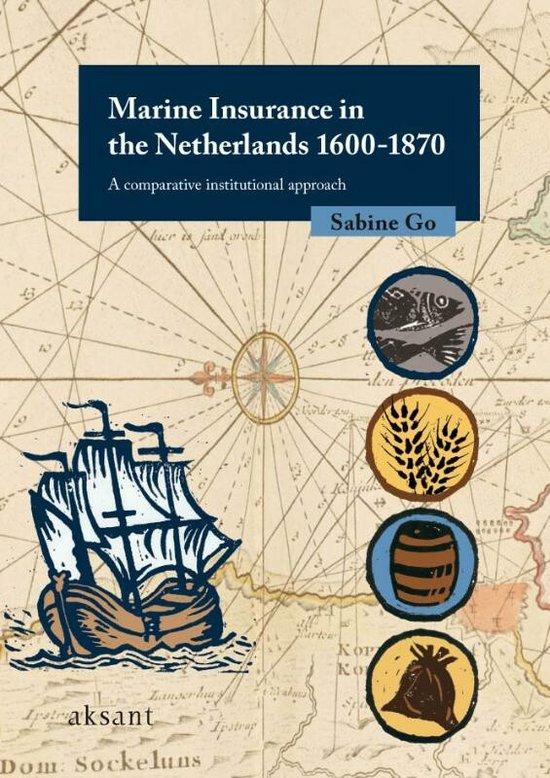
Marine insurance has been of great importance to the expansion of long distance trade and economic growth in the early modern period, in particular for seafaring nations such as the Dutch Republic. The Amsterdam market became Europe's leading insurance market and within the Republic other insurance systems also emerged. Little is known about the differing institutional frameworks governing these industries and the interaction between the institutions and the actors in the industry. This study will examine the development of marine insurance in the Netherlands in Amsterdam, Rotterdam and the province of Groningen from c. 1600 to 1870 from an institutional point of view. It will examine how the behaviour of authorities, insurers, underwriters and brokers was affected by the formal and informal constraints of the industry and how in turn their conduct has influenced the institutional framework and induced institutional change. A comparative institutional analysis will be made of three insurance systems in the Netherlands, each with its own distinctive characteristics. The interaction between institutions and actors will be studied in relation to the effects of technological innovations and international geo-political changes. By examining developments over a period of two and half centuries the path of long-term institutional change becomes discernable.
Geen voorraad
Marine Insurance in the Netherlands 1600-1870. A comparative institutional approach
€ 39,90
Marine insurance has been of great importance to the expansion of long distance trade and economic growth in the early modern period, in particular for seafaring nations such as the Dutch Republic. The Amsterdam market became Europe's leading insurance market and within the Republic other insurance systems also emerged. Little is known about the differing institutional frameworks governing these industries and the interaction between the institutions and the actors in the industry. This study will examine the development of marine insurance in the Netherlands in Amsterdam, Rotterdam and the province of Groningen from c. 1600 to 1870 from an institutional point of view. It will examine how the behaviour of authorities, insurers, underwriters and brokers was affected by the formal and informal constraints of the industry and how in turn their conduct has influenced the institutional framework and induced institutional change. A comparative institutional analysis will be made of three insurance systems in the Netherlands, each with its own distinctive characteristics. The interaction between institutions and actors will be studied in relation to the effects of technological innovations and international geo-political changes. By examining developments over a period of two and half centuries the path of long-term institutional change becomes discernable.

Mass media advertising: information or wallpaper?
€ 17,00
For most consumers, advertising is less important than advertisers might think. Advertising appears to function as ''wallpaper'', something in the background that is hardly noticed. The advertiser, however, wants the consumer to use his advertisement as a piece of information, for example, when standing in front of a shelf thinking what kind of detergent is ''best'' or ''cheapest''. Mass mediated advertising campaigns should therefore at least function as a reminder when making all kinds of choices concerning brands, products or services.
This book describes consumers'' use of advertising. The question to be answered is: "How and why do people use advertising?". Are they searching for information or simply watching commercials because they are funny? Are they avoiding ads because they find them irritating? And to what extent is (claimed) advertising use related to remembering having seen specific ads? The five studies in this book use different methods and research designs for addressing these questions, to understand and explain advertising use. These include: a meta-analysis of more than 50 studies on advertising, several in-depth interviews, a nation-wide telephone survey with follow-up by mail, an experiment, and a face-to-face survey.
Edith Smit is Associate Professor at the University of Amsterdam, Department of Communication, and The Amsterdam School of Communications Research ASCoR. She is also Deputy Director of SWOCC, the Dutch Foundation for Fundamental Research on Commercial Communication.
Mass media advertising: information or wallpaper?
€ 17,00
For most consumers, advertising is less important than advertisers might think. Advertising appears to function as ''wallpaper'', something in the background that is hardly noticed. The advertiser, however, wants the consumer to use his advertisement as a piece of information, for example, when standing in front of a shelf thinking what kind of detergent is ''best'' or ''cheapest''. Mass mediated advertising campaigns should therefore at least function as a reminder when making all kinds of choices concerning brands, products or services.
This book describes consumers'' use of advertising. The question to be answered is: "How and why do people use advertising?". Are they searching for information or simply watching commercials because they are funny? Are they avoiding ads because they find them irritating? And to what extent is (claimed) advertising use related to remembering having seen specific ads? The five studies in this book use different methods and research designs for addressing these questions, to understand and explain advertising use. These include: a meta-analysis of more than 50 studies on advertising, several in-depth interviews, a nation-wide telephone survey with follow-up by mail, an experiment, and a face-to-face survey.
Edith Smit is Associate Professor at the University of Amsterdam, Department of Communication, and The Amsterdam School of Communications Research ASCoR. She is also Deputy Director of SWOCC, the Dutch Foundation for Fundamental Research on Commercial Communication.
Income and wealth inequality in the Netherlands 16th-20th century
€ 29,50
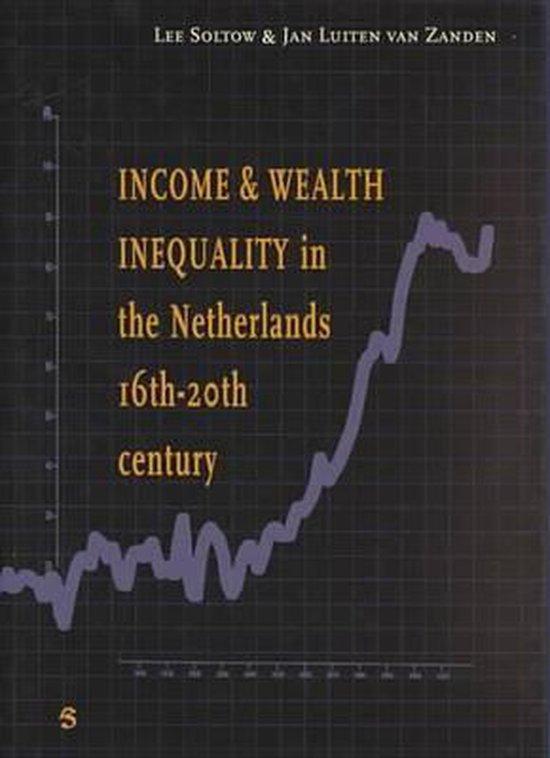
The ''new inequality'' of the 1980''s and 1990''s has recently given rise to a lively debate about the relationship between economic growth and income distribution. This debate is the background of the study by Lee Soltow an Jan Luiten van Zanden, who, staying close to the sources, have mapped in some detail the long-term development of income and wealth inequality in the Netherlands between c. 1500 and the present.
Their starting point is the hypothesis of Simon Kuznets that income inequality increased during the first phase of modern economic growth, but that in the second phase, which begins in most Western countries around the turn of the twentieth century, a marked levelling out of income differences followed. The development of inequality during the Golden Age, when growth resulted in a marked increase in inequality seems to confirm this idea. However, the analysis of the connection between growth and inequality in the nineteenth and twentieth century leads them to question the Kuznets hypothesis.
Lee Soltow is professor of Economics at Ohio University (Athens).
Among his publications on the subject are: ''Distribution of wealth and income in the United States in 1978'' (1989) and ''Men and wealth in the United States 1850-1870'' (1975).
Jan Luiten van Zanden is professor of Economic and Social History at Utrecht University (the Netherlands).
Among his publications on the subject are: ''The economic history of the Netherlands 1914-1955: a small open economy in the ''long'' twentieth century'' (1998). ''The economic development of the Netherlands since 1870'' (1996) and ''The rise and decline of Holland''s economy: merchant capitalism and the labour market'' (1993).
Income and wealth inequality in the Netherlands 16th-20th century
€ 29,50
The ''new inequality'' of the 1980''s and 1990''s has recently given rise to a lively debate about the relationship between economic growth and income distribution. This debate is the background of the study by Lee Soltow an Jan Luiten van Zanden, who, staying close to the sources, have mapped in some detail the long-term development of income and wealth inequality in the Netherlands between c. 1500 and the present.
Their starting point is the hypothesis of Simon Kuznets that income inequality increased during the first phase of modern economic growth, but that in the second phase, which begins in most Western countries around the turn of the twentieth century, a marked levelling out of income differences followed. The development of inequality during the Golden Age, when growth resulted in a marked increase in inequality seems to confirm this idea. However, the analysis of the connection between growth and inequality in the nineteenth and twentieth century leads them to question the Kuznets hypothesis.
Lee Soltow is professor of Economics at Ohio University (Athens).
Among his publications on the subject are: ''Distribution of wealth and income in the United States in 1978'' (1989) and ''Men and wealth in the United States 1850-1870'' (1975).
Jan Luiten van Zanden is professor of Economic and Social History at Utrecht University (the Netherlands).
Among his publications on the subject are: ''The economic history of the Netherlands 1914-1955: a small open economy in the ''long'' twentieth century'' (1998). ''The economic development of the Netherlands since 1870'' (1996) and ''The rise and decline of Holland''s economy: merchant capitalism and the labour market'' (1993).
Geen voorraad
Nederland in verandering
€ 20,00
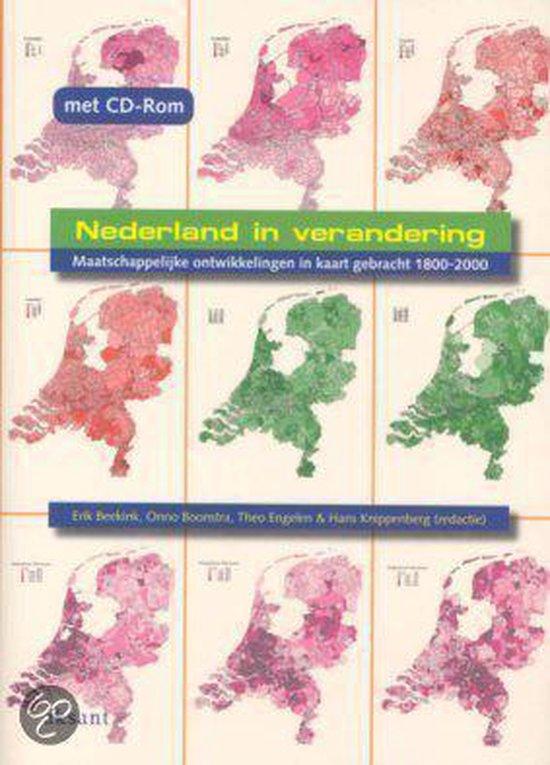
In de 19e en de 20e eeuw onderging Nederland grote veranderingen die op kaarten inzichtelijk gemaakt kunnen worden. In dit boek zijn politieke, religieuze, economische en demografische verschuivingen op gemeenteniveau in overzichtelijke kaarten in beeld gebracht en in de tekst toegelicht, met als resultaat een gedetailleerde atlas van de sociale geschiedenis van twee eeuwen Nederland.
Dit is nu mogelijk doordat in de Historische Databank Nederlandse Gemeenten (HDNG) een grote hoeveelheid gegevens vanaf het begin van de statistische periode (1795) op gemeentelijk niveau digitaal zijn ontsloten. Deze publicatie is een voorbeeld van de vele mogelijkheden die de HDNG kan bieden. Achterin het boek is een cd-rom bijgesloten met daarop de data, zodat men eigen selecties kan maken.
Dit is nu mogelijk doordat in de Historische Databank Nederlandse Gemeenten (HDNG) een grote hoeveelheid gegevens vanaf het begin van de statistische periode (1795) op gemeentelijk niveau digitaal zijn ontsloten. Deze publicatie is een voorbeeld van de vele mogelijkheden die de HDNG kan bieden. Achterin het boek is een cd-rom bijgesloten met daarop de data, zodat men eigen selecties kan maken.
Geen voorraad
Nederland in verandering
€ 20,00
In de 19e en de 20e eeuw onderging Nederland grote veranderingen die op kaarten inzichtelijk gemaakt kunnen worden. In dit boek zijn politieke, religieuze, economische en demografische verschuivingen op gemeenteniveau in overzichtelijke kaarten in beeld gebracht en in de tekst toegelicht, met als resultaat een gedetailleerde atlas van de sociale geschiedenis van twee eeuwen Nederland.
Dit is nu mogelijk doordat in de Historische Databank Nederlandse Gemeenten (HDNG) een grote hoeveelheid gegevens vanaf het begin van de statistische periode (1795) op gemeentelijk niveau digitaal zijn ontsloten. Deze publicatie is een voorbeeld van de vele mogelijkheden die de HDNG kan bieden. Achterin het boek is een cd-rom bijgesloten met daarop de data, zodat men eigen selecties kan maken.
Dit is nu mogelijk doordat in de Historische Databank Nederlandse Gemeenten (HDNG) een grote hoeveelheid gegevens vanaf het begin van de statistische periode (1795) op gemeentelijk niveau digitaal zijn ontsloten. Deze publicatie is een voorbeeld van de vele mogelijkheden die de HDNG kan bieden. Achterin het boek is een cd-rom bijgesloten met daarop de data, zodat men eigen selecties kan maken.