
RIDP2021 Vol.92 / Subscription – Revue Internationale de Droit Penal / IP-only
On the first issue:
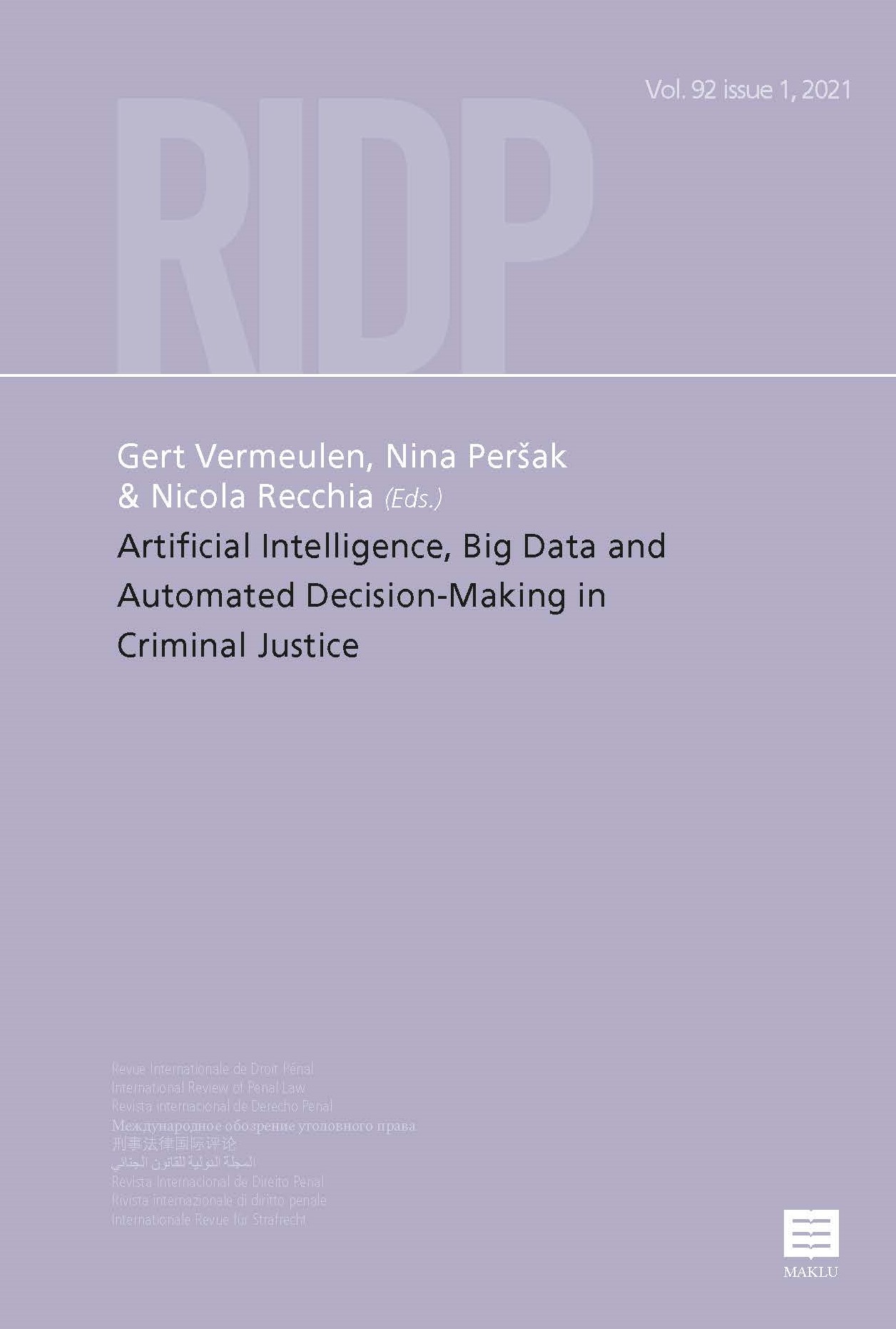
Artificial intelligence (AI) is impacting our everyday lives in a myriad of ways. The use of algorithms, AI agents and big data techniques also creates unprecedented opportunities for the prevention, investigation, detection or prosecution of criminal offences and the efficiency of the criminal justice system. Equally, however, the rapid increase of AI and big data in criminal justice raises a plethora of criminological, ethical, legal and technological questions and concerns, eg about enhanced surveillance and control in a pre-crime society and the risk of bias or even manipulation in (automated) decision-making. In view of the stakes involved, the need for regulation of AI and its alignment with human rights, democracy and the rule of law standards has been amply recognised, both globally and regionally. The lawfulness, social acceptance and overall legitimacy of AI, big data and automated decision-making in criminal justice will depend on a range of factors, including (algorithmic) transparency, trustworthiness, non-discrimination, accountability, responsibility, effective over-sight, data protection, due process, fair trial, access to justice, effective redress and remedy. Addressing these issues and raising awareness on AI systems’ capabilities and limitations within criminal justice is needed to be better prepared for the future that is now upon us.
This special issue on ‘Artificial intelligence, big data and automated decision-making in criminal justice’ comprises topical and innovative papers on the above issues, centred around AI and big data in predictive detection and policing, liability issues and jurisdictional challenges prompted by crimes involving AI, and AI-assisted and automated actuarial justice or adjudication of criminal cases.
On the second Issue:
To be published
If you'd like to subscribe to this publication from abroad please send an email to: info@maklu.be/info@maklu.nl
RIDP2021 Vol.92 / Subscription – Revue Internationale de Droit Penal / IP-only
On the first issue:
Artificial intelligence (AI) is impacting our everyday lives in a myriad of ways. The use of algorithms, AI agents and big data techniques also creates unprecedented opportunities for the prevention, investigation, detection or prosecution of criminal offences and the efficiency of the criminal justice system. Equally, however, the rapid increase of AI and big data in criminal justice raises a plethora of criminological, ethical, legal and technological questions and concerns, eg about enhanced surveillance and control in a pre-crime society and the risk of bias or even manipulation in (automated) decision-making. In view of the stakes involved, the need for regulation of AI and its alignment with human rights, democracy and the rule of law standards has been amply recognised, both globally and regionally. The lawfulness, social acceptance and overall legitimacy of AI, big data and automated decision-making in criminal justice will depend on a range of factors, including (algorithmic) transparency, trustworthiness, non-discrimination, accountability, responsibility, effective over-sight, data protection, due process, fair trial, access to justice, effective redress and remedy. Addressing these issues and raising awareness on AI systems’ capabilities and limitations within criminal justice is needed to be better prepared for the future that is now upon us.
This special issue on ‘Artificial intelligence, big data and automated decision-making in criminal justice’ comprises topical and innovative papers on the above issues, centred around AI and big data in predictive detection and policing, liability issues and jurisdictional challenges prompted by crimes involving AI, and AI-assisted and automated actuarial justice or adjudication of criminal cases.
On the second Issue:
To be published
If you'd like to subscribe to this publication from abroad please send an email to: info@maklu.be/info@maklu.nl
RIDP 95.2 (2024) | Researching the boundaries of sexual integrity, gender violence and image-based abuse
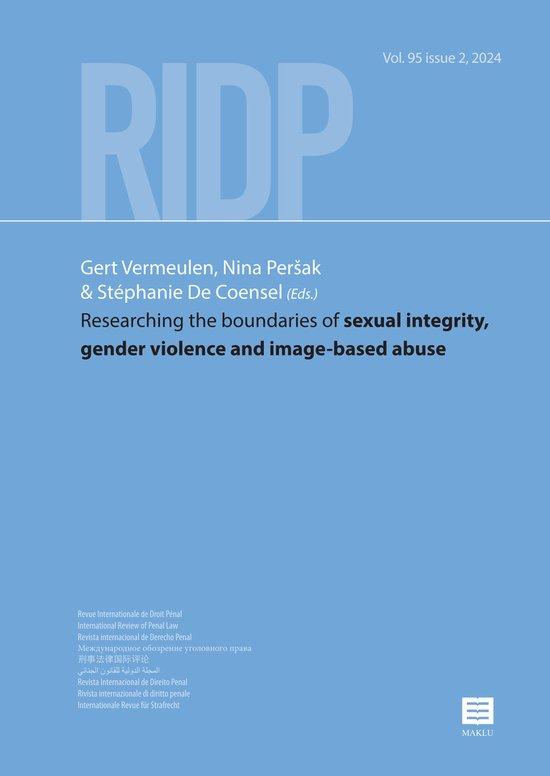
This special issue brings together nineteen topical and innovative papers, researching the boundaries of sexual integrity and affirmative sexual consent, gender violence, and image-based or online sexual abuse, including child sexual abuse material and non-consensual sexual deepfakes. It offers an original and nuanced approach to understanding the important legal elements, various agents and harms of topic-related deviant conduct as well as legislative processes aimed at tackling it. In light of recent societal developments, including changes in societal sensibilities, and recent or on-going legislative amendments at national and supranational levels, research on these topics is timely and much needed.
Gert Vermeulen is Senior Full Professor of European and international criminal law, sexual criminal law and data protection law, Department Chair Criminology, Criminal Law and Social Law, and Director of the Institute for International Research on Criminal Policy (IRCP), all at Ghent University. He is also General Director Publications of the AIDP, and Editor-in-chief of the RIDP.
Nina Peršak is Scientific Director and Senior Research Fellow, Institute for Criminal-Law Ethics and Criminology (Ljubljana), Full Professor of Law, University of Maribor (habilitation), Academic Consultant at the Institute for International Research on Criminal Policy (IRCP), Ghent University, and Co-Editor-in-Chief of the RIDP.
Stéphanie De Coensel is an FWO Postdoctoral Researcher and Visiting Professor in Advanced Criminal Law at the Institute for International Research on Criminal Policy (IRCP), Ghent University, and Editorial Secretary of the RIDP.
RIDP 95.2 (2024) | Researching the boundaries of sexual integrity, gender violence and image-based abuse
This special issue brings together nineteen topical and innovative papers, researching the boundaries of sexual integrity and affirmative sexual consent, gender violence, and image-based or online sexual abuse, including child sexual abuse material and non-consensual sexual deepfakes. It offers an original and nuanced approach to understanding the important legal elements, various agents and harms of topic-related deviant conduct as well as legislative processes aimed at tackling it. In light of recent societal developments, including changes in societal sensibilities, and recent or on-going legislative amendments at national and supranational levels, research on these topics is timely and much needed.
Gert Vermeulen is Senior Full Professor of European and international criminal law, sexual criminal law and data protection law, Department Chair Criminology, Criminal Law and Social Law, and Director of the Institute for International Research on Criminal Policy (IRCP), all at Ghent University. He is also General Director Publications of the AIDP, and Editor-in-chief of the RIDP.
Nina Peršak is Scientific Director and Senior Research Fellow, Institute for Criminal-Law Ethics and Criminology (Ljubljana), Full Professor of Law, University of Maribor (habilitation), Academic Consultant at the Institute for International Research on Criminal Policy (IRCP), Ghent University, and Co-Editor-in-Chief of the RIDP.
Stéphanie De Coensel is an FWO Postdoctoral Researcher and Visiting Professor in Advanced Criminal Law at the Institute for International Research on Criminal Policy (IRCP), Ghent University, and Editorial Secretary of the RIDP.