
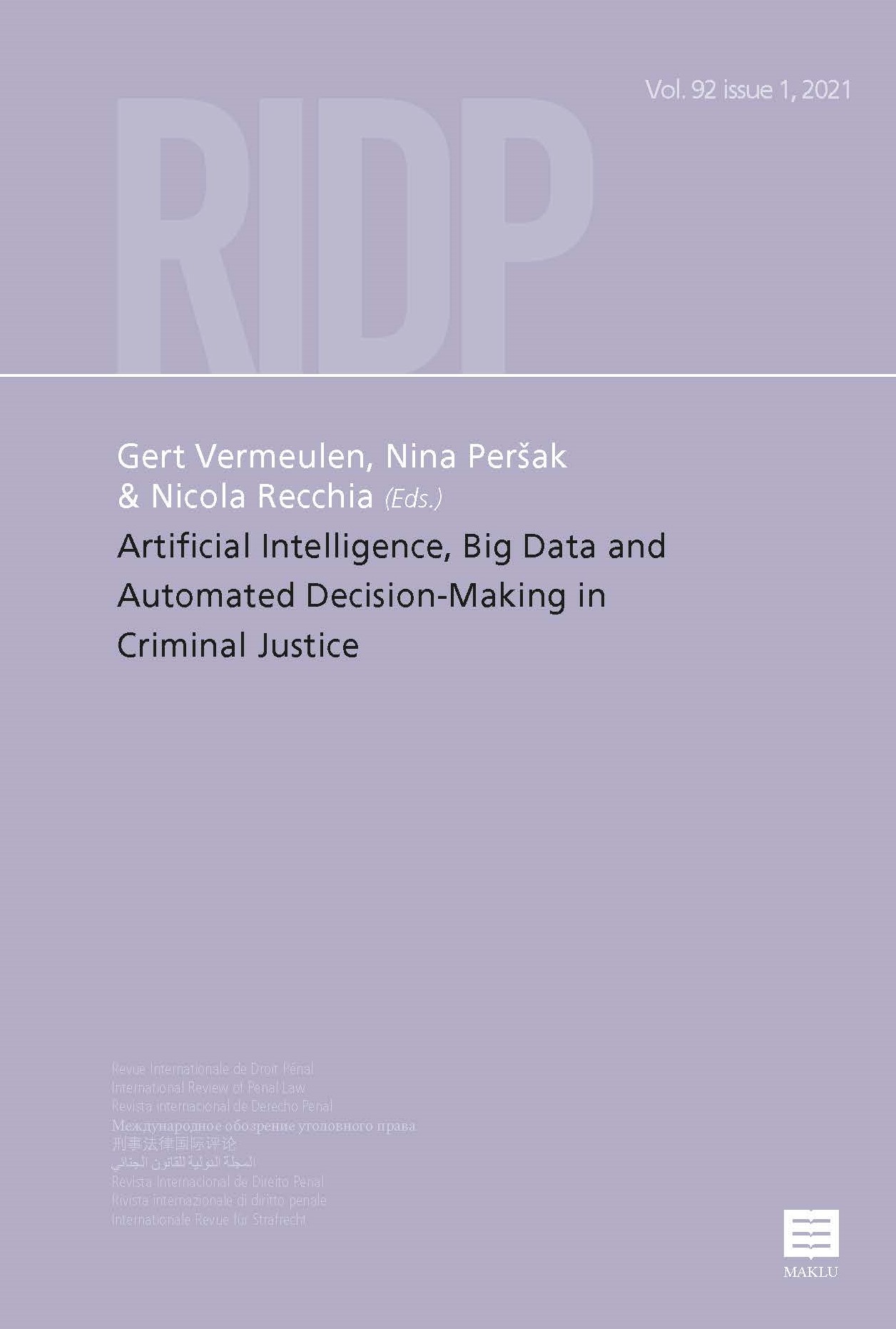
RIDP2021 Vol.92 / Subscription – Revue Internationale de Droit Penal / 2 Issues + Password
Artificial intelligence (AI) is impacting our everyday lives in a myriad of ways. The use of algorithms, AI agents and big data techniques also creates unprecedented opportunities for the prevention, investigation, detection or prosecution of criminal offences and the efficiency of the criminal justice system. Equally, however, the rapid increase of AI and big data in criminal justice raises a plethora of criminological, ethical, legal and technological questions and concerns, eg about enhanced surveillance and control in a pre-crime society and the risk of bias or even manipulation in (automated) decision-making. In view of the stakes involved, the need for regulation of AI and its alignment with human rights, democracy and the rule of law standards has been amply recognised, both globally and regionally. The lawfulness, social acceptance and overall legitimacy of AI, big data and automated decision-making in criminal justice will depend on a range of factors, including (algorithmic) transparency, trustworthiness, non-discrimination, accountability, responsibility, effective over-sight, data protection, due process, fair trial, access to justice, effective redress and remedy. Addressing these issues and raising awareness on AI systems’ capabilities and limitations within criminal justice is needed to be better prepared for the future that is now upon us.
This special issue on ‘Artificial intelligence, big data and automated decision-making in criminal justice’ comprises topical and innovative papers on the above issues, centred around AI and big data in predictive detection and policing, liability issues and jurisdictional challenges prompted by crimes involving AI, and AI-assisted and automated actuarial justice or adjudication of criminal cases.
On the second Issue:
To be published
RIDP2021 Vol.92 / Subscription – Revue Internationale de Droit Penal / 2 Issues + Password
Artificial intelligence (AI) is impacting our everyday lives in a myriad of ways. The use of algorithms, AI agents and big data techniques also creates unprecedented opportunities for the prevention, investigation, detection or prosecution of criminal offences and the efficiency of the criminal justice system. Equally, however, the rapid increase of AI and big data in criminal justice raises a plethora of criminological, ethical, legal and technological questions and concerns, eg about enhanced surveillance and control in a pre-crime society and the risk of bias or even manipulation in (automated) decision-making. In view of the stakes involved, the need for regulation of AI and its alignment with human rights, democracy and the rule of law standards has been amply recognised, both globally and regionally. The lawfulness, social acceptance and overall legitimacy of AI, big data and automated decision-making in criminal justice will depend on a range of factors, including (algorithmic) transparency, trustworthiness, non-discrimination, accountability, responsibility, effective over-sight, data protection, due process, fair trial, access to justice, effective redress and remedy. Addressing these issues and raising awareness on AI systems’ capabilities and limitations within criminal justice is needed to be better prepared for the future that is now upon us.
This special issue on ‘Artificial intelligence, big data and automated decision-making in criminal justice’ comprises topical and innovative papers on the above issues, centred around AI and big data in predictive detection and policing, liability issues and jurisdictional challenges prompted by crimes involving AI, and AI-assisted and automated actuarial justice or adjudication of criminal cases.
On the second Issue:
To be published
RIDP2021 Vol.92 / Subscription – Revue Internationale de Droit Penal / 2 Issues + IP
On the first issue:
Artificial intelligence (AI) is impacting our everyday lives in a myriad of ways. The use of algorithms, AI agents and big data techniques also creates unprecedented opportunities for the prevention, investigation, detection or prosecution of criminal offences and the efficiency of the criminal justice system. Equally, however, the rapid increase of AI and big data in criminal justice raises a plethora of criminological, ethical, legal and technological questions and concerns, eg about enhanced surveillance and control in a pre-crime society and the risk of bias or even manipulation in (automated) decision-making. In view of the stakes involved, the need for regulation of AI and its alignment with human rights, democracy and the rule of law standards has been amply recognised, both globally and regionally. The lawfulness, social acceptance and overall legitimacy of AI, big data and automated decision-making in criminal justice will depend on a range of factors, including (algorithmic) transparency, trustworthiness, non-discrimination, accountability, responsibility, effective over-sight, data protection, due process, fair trial, access to justice, effective redress and remedy. Addressing these issues and raising awareness on AI systems’ capabilities and limitations within criminal justice is needed to be better prepared for the future that is now upon us.
This special issue on ‘Artificial intelligence, big data and automated decision-making in criminal justice’ comprises topical and innovative papers on the above issues, centred around AI and big data in predictive detection and policing, liability issues and jurisdictional challenges prompted by crimes involving AI, and AI-assisted and automated actuarial justice or adjudication of criminal cases.
On the second Issue:
To be published
RIDP2021 Vol.92 / Subscription – Revue Internationale de Droit Penal / 2 Issues + IP
On the first issue:
Artificial intelligence (AI) is impacting our everyday lives in a myriad of ways. The use of algorithms, AI agents and big data techniques also creates unprecedented opportunities for the prevention, investigation, detection or prosecution of criminal offences and the efficiency of the criminal justice system. Equally, however, the rapid increase of AI and big data in criminal justice raises a plethora of criminological, ethical, legal and technological questions and concerns, eg about enhanced surveillance and control in a pre-crime society and the risk of bias or even manipulation in (automated) decision-making. In view of the stakes involved, the need for regulation of AI and its alignment with human rights, democracy and the rule of law standards has been amply recognised, both globally and regionally. The lawfulness, social acceptance and overall legitimacy of AI, big data and automated decision-making in criminal justice will depend on a range of factors, including (algorithmic) transparency, trustworthiness, non-discrimination, accountability, responsibility, effective over-sight, data protection, due process, fair trial, access to justice, effective redress and remedy. Addressing these issues and raising awareness on AI systems’ capabilities and limitations within criminal justice is needed to be better prepared for the future that is now upon us.
This special issue on ‘Artificial intelligence, big data and automated decision-making in criminal justice’ comprises topical and innovative papers on the above issues, centred around AI and big data in predictive detection and policing, liability issues and jurisdictional challenges prompted by crimes involving AI, and AI-assisted and automated actuarial justice or adjudication of criminal cases.
On the second Issue:
To be published
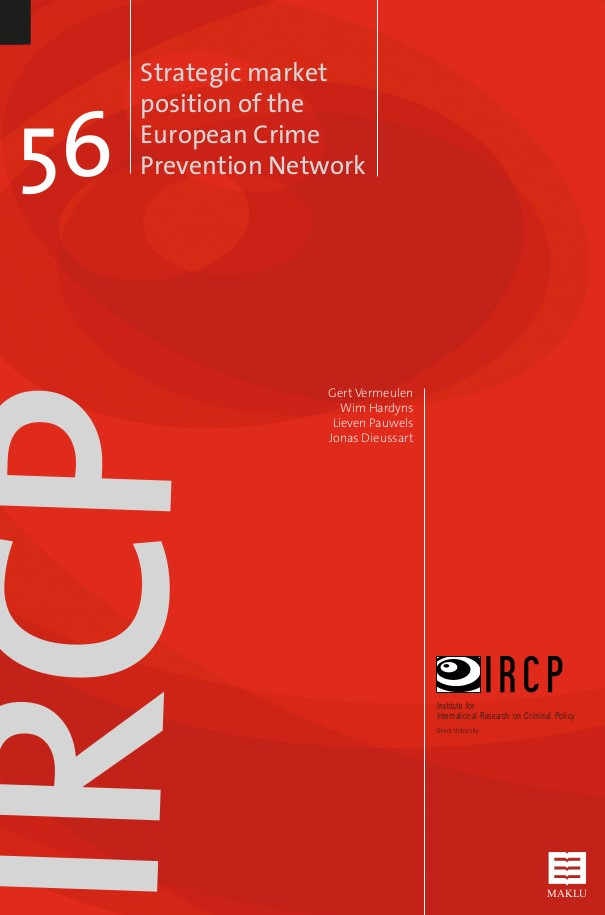
Strategic market position of the European Crime Prevention Network
Whilst the EUCPN proves a well-equipped, versatile and multipurpose network in the EU crime prevention area, consolidation and further boosting are due. Key suggestions are to enhance outputs and visibility, to intensify existing partnerships, to broaden target and beneficiary audiences, including at local levels, to implement practice-oriented, multi-language and multimedia approaches, and to focus on the implementation, monitoring, coordination and evaluation of crime prevention policies or strategies, including through cooperation with academia.
Gert Vermeulen is senior full professor of international and European criminal law at Ghent University and director of the Institute for International Research on Criminal Policy (IRCP) and the Knowledge and Research Platform Privacy, Information Exchange, Law Enforcement and Surveillance (PIXLES).
Wim Hardyns is assistant professor of criminology at Ghent University and member of the Institute for International Research on Criminal Policy (IRCP) and the Knowledge and Research Platform Privacy, Information Exchange, Law Enforcement and Surveillance (PIXLES).
Lieven Pauwels is associate professor of criminology at Ghent University, and director of the Institute for International Research on Criminal Policy (IRCP).
Jonas Dieussaert is researcher at the Institute for International Research on Criminal Policy (IRCP), Ghent University.
Strategic market position of the European Crime Prevention Network
Whilst the EUCPN proves a well-equipped, versatile and multipurpose network in the EU crime prevention area, consolidation and further boosting are due. Key suggestions are to enhance outputs and visibility, to intensify existing partnerships, to broaden target and beneficiary audiences, including at local levels, to implement practice-oriented, multi-language and multimedia approaches, and to focus on the implementation, monitoring, coordination and evaluation of crime prevention policies or strategies, including through cooperation with academia.
Gert Vermeulen is senior full professor of international and European criminal law at Ghent University and director of the Institute for International Research on Criminal Policy (IRCP) and the Knowledge and Research Platform Privacy, Information Exchange, Law Enforcement and Surveillance (PIXLES).
Wim Hardyns is assistant professor of criminology at Ghent University and member of the Institute for International Research on Criminal Policy (IRCP) and the Knowledge and Research Platform Privacy, Information Exchange, Law Enforcement and Surveillance (PIXLES).
Lieven Pauwels is associate professor of criminology at Ghent University, and director of the Institute for International Research on Criminal Policy (IRCP).
Jonas Dieussaert is researcher at the Institute for International Research on Criminal Policy (IRCP), Ghent University.
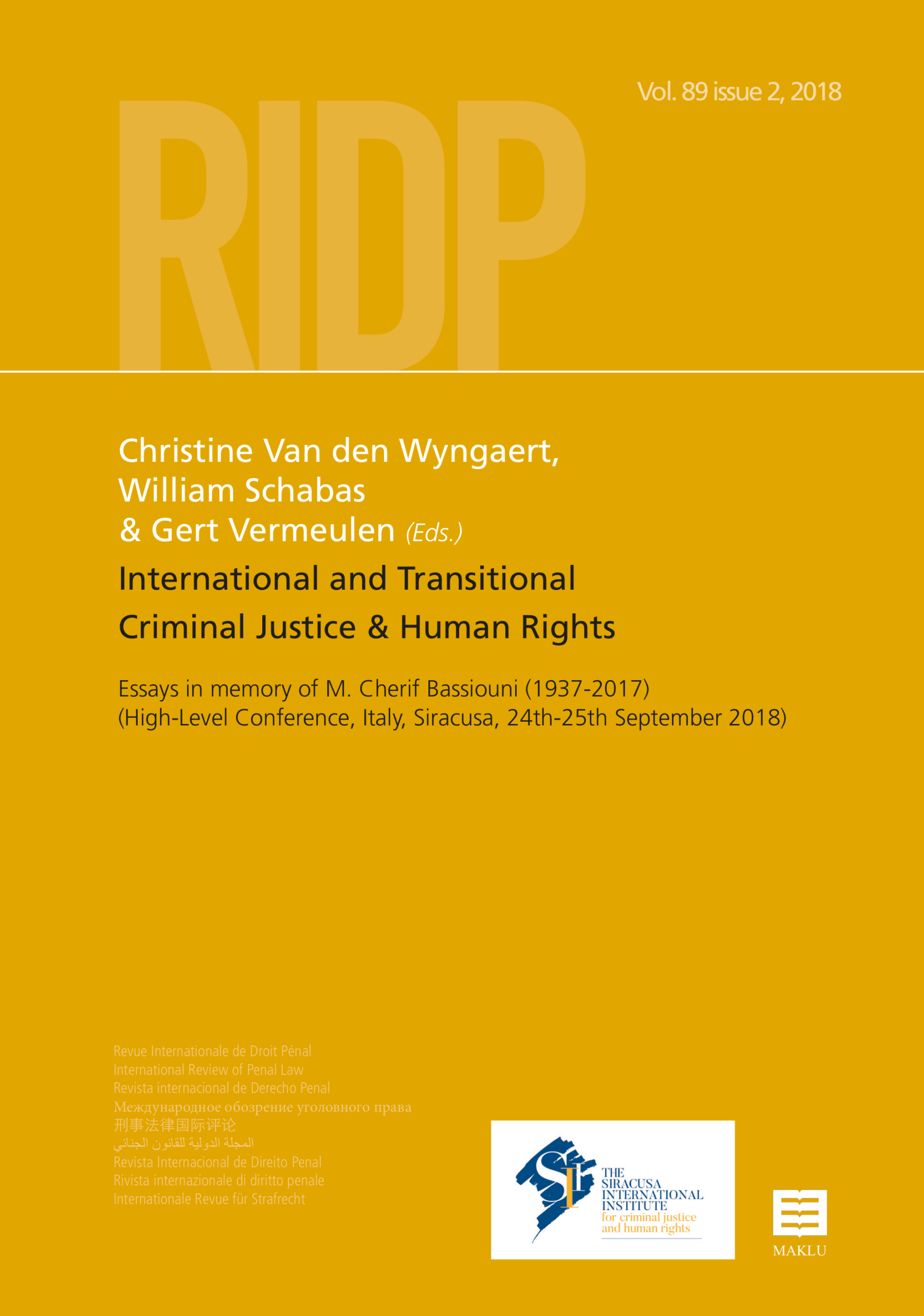
RIDP2018Vol89/issue2- International and Transitional Criminal Justice & Human Rights Essays
Cherif Bassiouni was at the centre of this process from its beginning until his passing, in September 2017, and has been absolutely instrumental in its origins. From the beginning of his career, he brought oxygen to the embers of the post-Second World War initiatives. He linked them to more contemporary issues, such as the struggle against apartheid in South Africa and the campaign for new standards and instruments to address issues such as torture. Through the International Institute for Higher Studies in Criminal Sciences, now renamed the Siracusa International Institute for Criminal Justice and Human Rights, Cherif Bassiouni regularly assembled experts, practitioners, international officials and public intellectuals in the promotion of law and policy. He was also President of the International Association of Penal Law (IAPL-AIDP) for fifteen years.
In September 2018, colleagues and friends of Cherif Bassiouni assembled for a high-level academic conference in Siracusa, organised around themes central in his massive oeuvre: international and transitional criminal justice and human rights. The chapters in this humble volume provide a written record of the conference, in recognition, honour and memory of his legacy.
Christine Van den Wyngaert is Emeritus Professor of Law at the University of Antwerp, Belgium, Judge at the Kosovo Specialist Chambers and former Judge at the International Criminal Court, the International Criminal Tribunal for the Former Yugoslavia and the International Court of Justice (Judge ad hoc).
William Schabas is Professor of International Law at Middlesex University London, UK, and Professor of International Criminal Law and Human Rights at Leiden University, The Netherlands.
Gert Vermeulen is Professor of European and international Criminal Law and Data Protection Law, Director of the Institute for International Research on Criminal Policy (IRCP) and Director of the Knowledge and Research Platform on Privacy, Information Exchange, Law Enforcement and Surveillance (PIXLES) at Ghent University, Belgium. He is also General Director Publications of the AIDP and Editor-in-Chief of the RIDP.
RIDP2018Vol89/issue2- International and Transitional Criminal Justice & Human Rights Essays
Cherif Bassiouni was at the centre of this process from its beginning until his passing, in September 2017, and has been absolutely instrumental in its origins. From the beginning of his career, he brought oxygen to the embers of the post-Second World War initiatives. He linked them to more contemporary issues, such as the struggle against apartheid in South Africa and the campaign for new standards and instruments to address issues such as torture. Through the International Institute for Higher Studies in Criminal Sciences, now renamed the Siracusa International Institute for Criminal Justice and Human Rights, Cherif Bassiouni regularly assembled experts, practitioners, international officials and public intellectuals in the promotion of law and policy. He was also President of the International Association of Penal Law (IAPL-AIDP) for fifteen years.
In September 2018, colleagues and friends of Cherif Bassiouni assembled for a high-level academic conference in Siracusa, organised around themes central in his massive oeuvre: international and transitional criminal justice and human rights. The chapters in this humble volume provide a written record of the conference, in recognition, honour and memory of his legacy.
Christine Van den Wyngaert is Emeritus Professor of Law at the University of Antwerp, Belgium, Judge at the Kosovo Specialist Chambers and former Judge at the International Criminal Court, the International Criminal Tribunal for the Former Yugoslavia and the International Court of Justice (Judge ad hoc).
William Schabas is Professor of International Law at Middlesex University London, UK, and Professor of International Criminal Law and Human Rights at Leiden University, The Netherlands.
Gert Vermeulen is Professor of European and international Criminal Law and Data Protection Law, Director of the Institute for International Research on Criminal Policy (IRCP) and Director of the Knowledge and Research Platform on Privacy, Information Exchange, Law Enforcement and Surveillance (PIXLES) at Ghent University, Belgium. He is also General Director Publications of the AIDP and Editor-in-Chief of the RIDP.

Data Protection and Privacy Under Pressure. Transatlantic tensions,EU Surveillance and big data
Since the Snowden revelations, the adoption in May 2016 of the General
Data Protection Regulation and several ground-breaking judgments of
the Court of Justice of the European Union, data protection and
privacy are high on the agenda of policymakers, industries and the
legal research community.
Against this backdrop, Data Protection and Privacy under Pressure
sheds light on key developments where individuals’ rights to data
protection and privacy are at stake. The book discusses the persistent
transatlantic tensions around various EU-US data transfer mechanisms
and EU jurisdiction claims over non-EU-based companies, both sparked
by milestone court cases. Additionally, it scrutinises the expanding
control or surveillance mechanisms and interconnection of databases in
the areas of migration control, internal security and law enforcement,
and oversight thereon. Finally, it explores current and future legal
challenges related to big data and automated decision-making in the
contexts of policing, pharmaceutics and advertising.
Gert Vermeulen is full professor of international and European criminal
law and director of the Institute for International Research on Criminal
Policy (IRCP) at Ghent University, and privacy commissioner at the
Belgian DPA.
Eva Lievens is assistant professor of law and technology at Ghent
University.
Data Protection and Privacy Under Pressure. Transatlantic tensions,EU Surveillance and big data
Since the Snowden revelations, the adoption in May 2016 of the General
Data Protection Regulation and several ground-breaking judgments of
the Court of Justice of the European Union, data protection and
privacy are high on the agenda of policymakers, industries and the
legal research community.
Against this backdrop, Data Protection and Privacy under Pressure
sheds light on key developments where individuals’ rights to data
protection and privacy are at stake. The book discusses the persistent
transatlantic tensions around various EU-US data transfer mechanisms
and EU jurisdiction claims over non-EU-based companies, both sparked
by milestone court cases. Additionally, it scrutinises the expanding
control or surveillance mechanisms and interconnection of databases in
the areas of migration control, internal security and law enforcement,
and oversight thereon. Finally, it explores current and future legal
challenges related to big data and automated decision-making in the
contexts of policing, pharmaceutics and advertising.
Gert Vermeulen is full professor of international and European criminal
law and director of the Institute for International Research on Criminal
Policy (IRCP) at Ghent University, and privacy commissioner at the
Belgian DPA.
Eva Lievens is assistant professor of law and technology at Ghent
University.
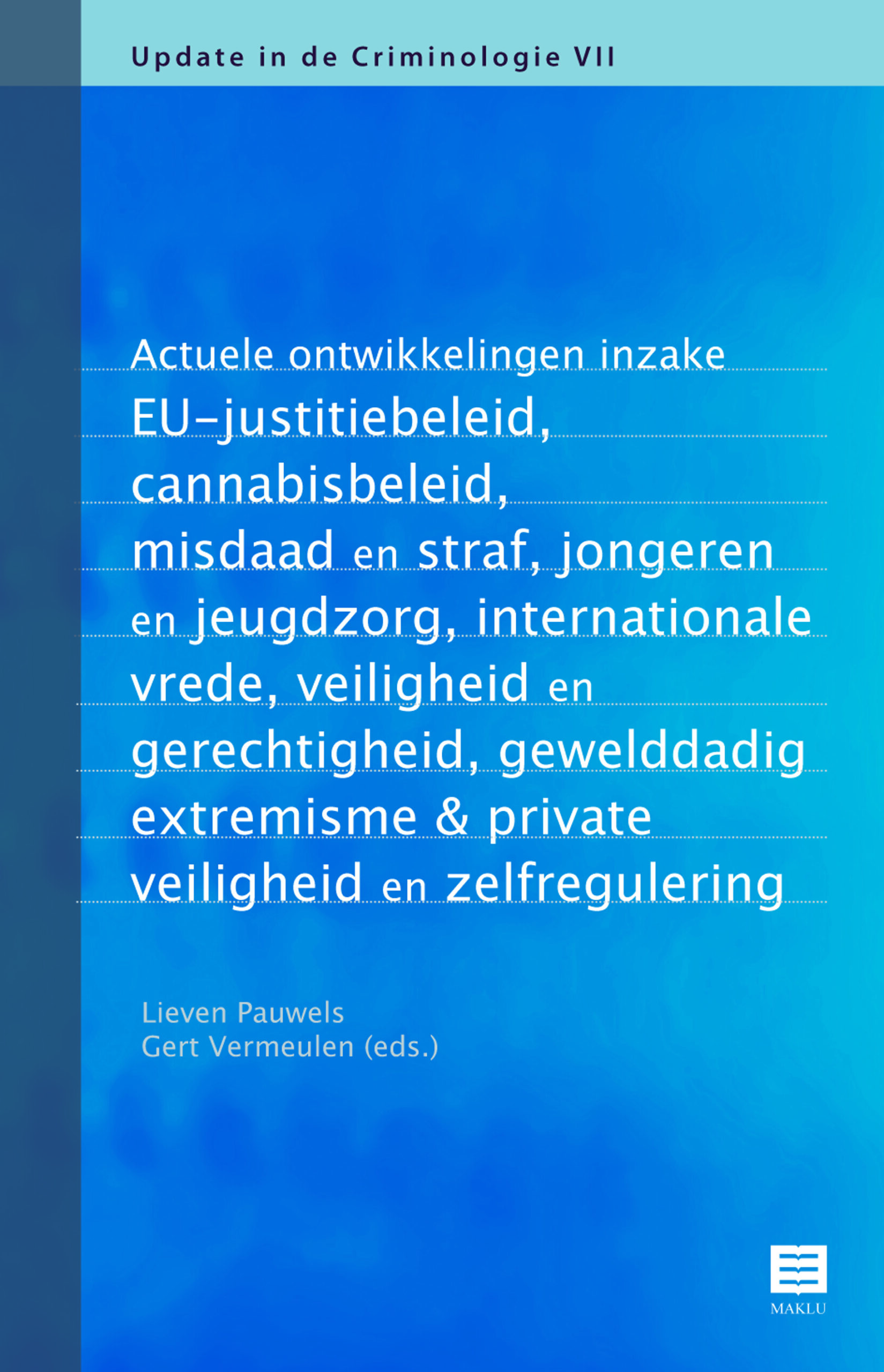
Actuele ontwikkelingen inzake EU-justitiebeleid, cannabisbeleid, misdaad en straf, jongeren en jeugdzorg, internationale vrede, veiligheid en gerechtigheid, gewelddadig extremisme & private veiligheid en zelfregulering
Deze publicatie bevat de bijdragen uit de vormingssessies van de 7de Postuniversitaire Vormingscyclus Update in de Criminologie.
Centraal staan diverse actuele thema''s binnen het domein van het strafrecht en de criminologie. Lesgevers en onderzoekers van de vakgroep Strafrecht en Criminologie van de Universiteit Gent behandelen hierin empirische en theoretische evoluties binnen hun specialisatiegebied.
Actuele ontwikkelingen inzake EU-justitiebeleid, cannabisbeleid, misdaad en straf, jongeren en jeugdzorg, internationale vrede, veiligheid en gerechtigheid, gewelddadig extremisme & private veiligheid en zelfregulering
Deze publicatie bevat de bijdragen uit de vormingssessies van de 7de Postuniversitaire Vormingscyclus Update in de Criminologie.
Centraal staan diverse actuele thema''s binnen het domein van het strafrecht en de criminologie. Lesgevers en onderzoekers van de vakgroep Strafrecht en Criminologie van de Universiteit Gent behandelen hierin empirische en theoretische evoluties binnen hun specialisatiegebied.
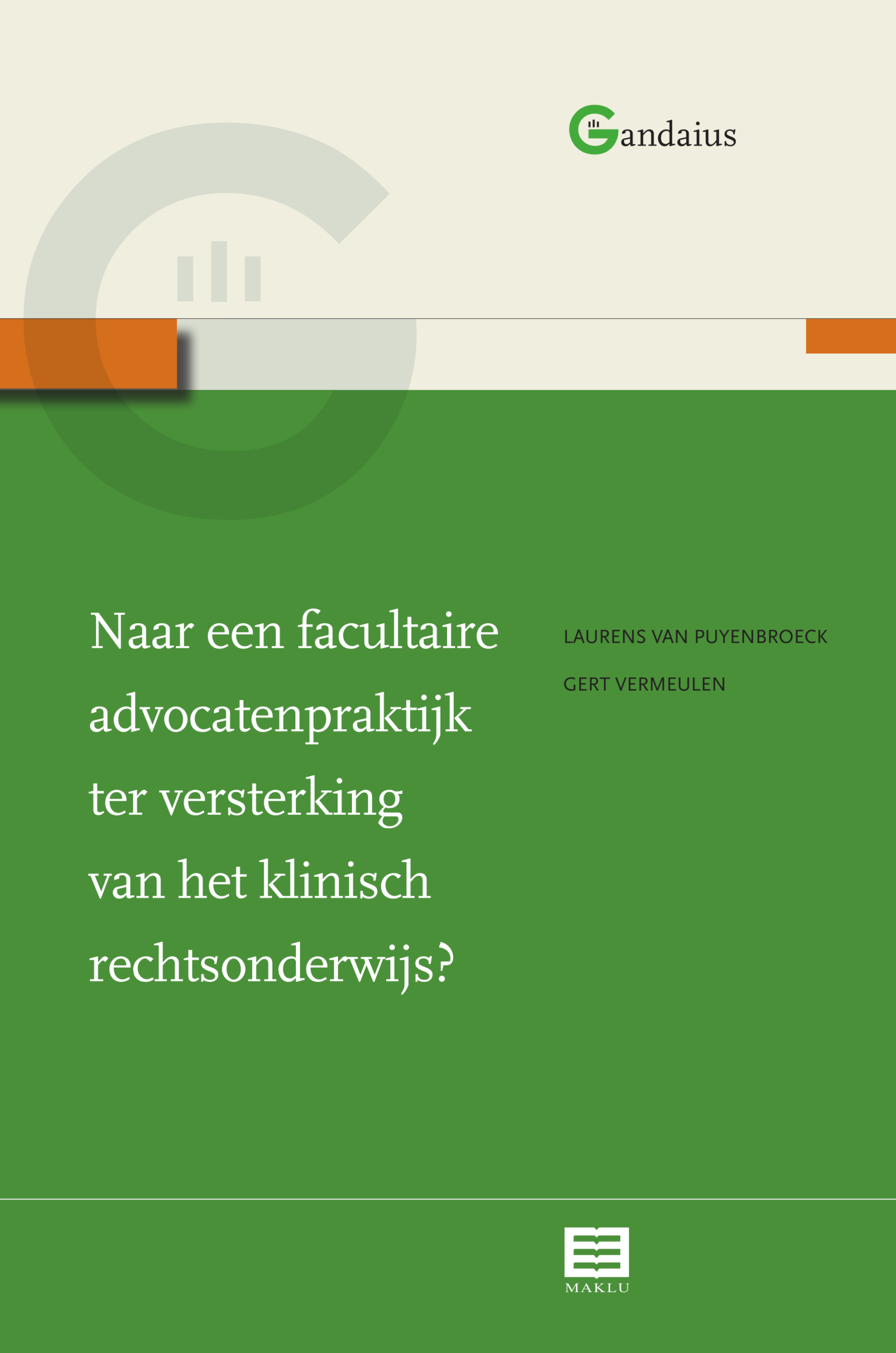
Naar een facultaire advocatenpraktijk ter versterking van het klinisch rechtsonderwijs? Gandaius Monografieën
Deze studie, die in het kader van een facultair onderwijsinnovatieproject werd gevoerd, onderzoekt de haalbaarheid om het klinisch rechtsonderwijs aan de Gentse Faculteit Rechtsgeleerdheid te versterken via het inrichten van een facultaire advocatenpraktijk.
Naar een facultaire advocatenpraktijk ter versterking van het klinisch rechtsonderwijs? Gandaius Monografieën
Deze studie, die in het kader van een facultair onderwijsinnovatieproject werd gevoerd, onderzoekt de haalbaarheid om het klinisch rechtsonderwijs aan de Gentse Faculteit Rechtsgeleerdheid te versterken via het inrichten van een facultaire advocatenpraktijk.
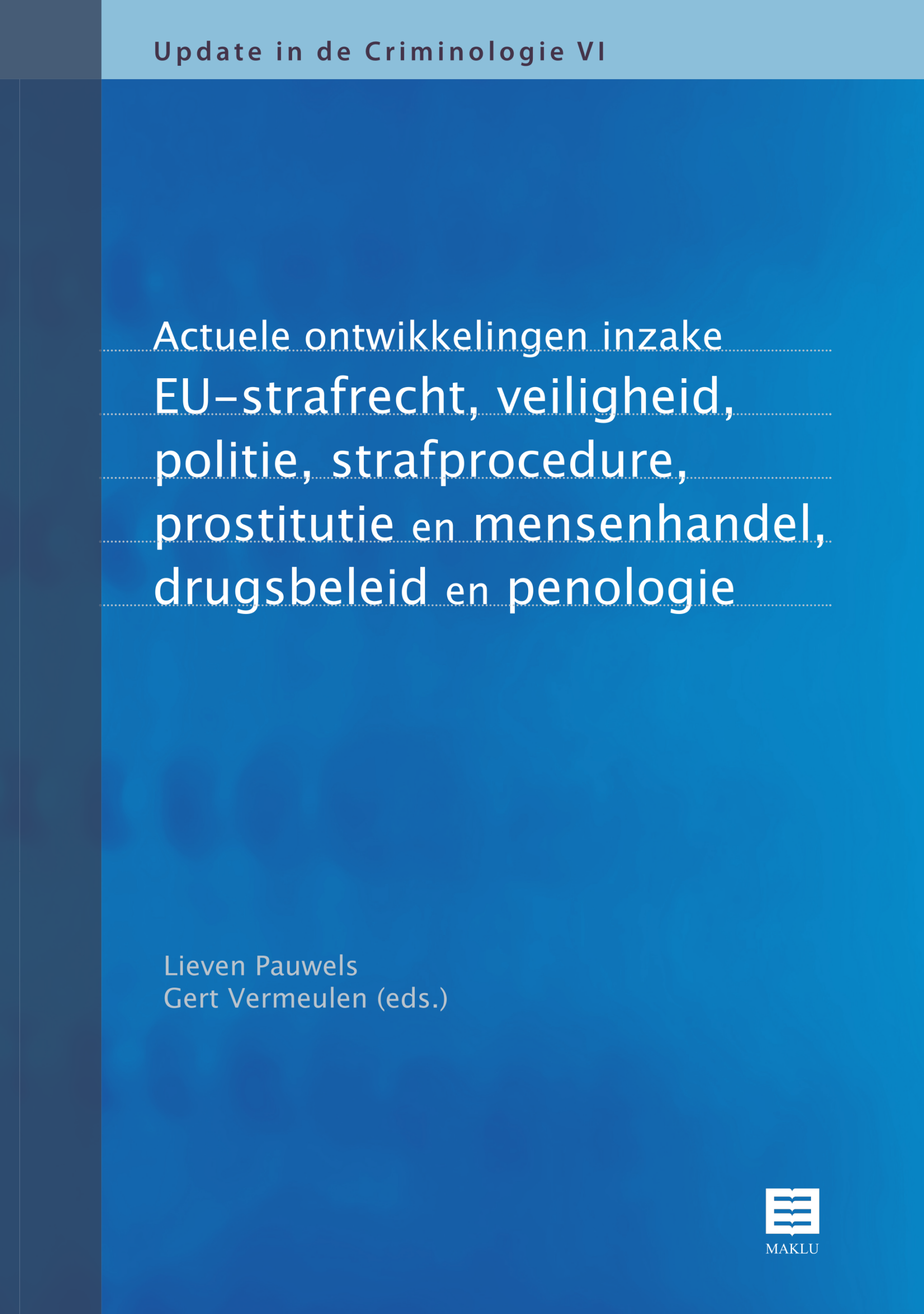
Update in de criminologie VI. Actuele ontwikkelingen inzake EU-strafrecht, veiligheid, politie, strafprocedure, prostitutie en mensenhandel, … (Gandaius Publicaties, VI)
Deze publicatie bevat de bijdragen uit de vormingssessies van de 6de Postuniversitaire Vormingscyclus Update in de Criminologie.
Centraal staan diverse actuele thema''s binnen het domein van het strafrecht en de criminologie. Lesgevers en onderzoekers van vakgroep Strafrecht en Criminologie van de Universiteit Gent behandelen hierin empirische en theoretische evoluties binnen hun specialisatiegebied.
Update in de criminologie VI. Actuele ontwikkelingen inzake EU-strafrecht, veiligheid, politie, strafprocedure, prostitutie en mensenhandel, … (Gandaius Publicaties, VI)
Deze publicatie bevat de bijdragen uit de vormingssessies van de 6de Postuniversitaire Vormingscyclus Update in de Criminologie.
Centraal staan diverse actuele thema''s binnen het domein van het strafrecht en de criminologie. Lesgevers en onderzoekers van vakgroep Strafrecht en Criminologie van de Universiteit Gent behandelen hierin empirische en theoretische evoluties binnen hun specialisatiegebied.
Actualia Strafrecht en Criminologie. Update in de criminologie V (Gandaius Publicaties, V)
Actualia Strafrecht en Criminologie. Update in de criminologie V (Gandaius Publicaties, V)
Eulocs. The EU level offence classification system. A bench-mark for enhanced internal coherence of the EU’s criminal policy (IRCP series, 35)
With this book, EULOCS is bench-marked as a reference index for serving various needs in the broader EU criminal policy area, having the potential to significantly enhance the internal coherence thereof. The proposed reference index, with offence definitions inherent to it, fundamentally addresses the problem created by the organic elaboration and adoption of legal instruments at EU level, making reference to certain offence categories the scope or definition whereof is most often either not clarified or indicated, or left to the discretion of the individual member state(s).
Before elaborating on the creation of EULOCS, the methodology used, its main characteristics and potential further development in the coming years, this book contains a brief overview of the incoherence in the EU JHA field and a reference to the EU study to implement the Action Plan to measure crime and criminal justice, conducted for the European Commission in the course of 2008-2009, in the context of which EULOCS has been created. Most importantly, the full EULOCS with all its complementary variables and context fields has been inserted.
This book is essential reading for EU policy makers, judicial and law enforcement authorities throughout the Union and from a broader international context. It will be particularly appealing also to the research community and anyone involved in or taking an interest in justice and home affairs or criminal policy initiatives in the European Union.
Eulocs. The EU level offence classification system. A bench-mark for enhanced internal coherence of the EU’s criminal policy (IRCP series, 35)
With this book, EULOCS is bench-marked as a reference index for serving various needs in the broader EU criminal policy area, having the potential to significantly enhance the internal coherence thereof. The proposed reference index, with offence definitions inherent to it, fundamentally addresses the problem created by the organic elaboration and adoption of legal instruments at EU level, making reference to certain offence categories the scope or definition whereof is most often either not clarified or indicated, or left to the discretion of the individual member state(s).
Before elaborating on the creation of EULOCS, the methodology used, its main characteristics and potential further development in the coming years, this book contains a brief overview of the incoherence in the EU JHA field and a reference to the EU study to implement the Action Plan to measure crime and criminal justice, conducted for the European Commission in the course of 2008-2009, in the context of which EULOCS has been created. Most importantly, the full EULOCS with all its complementary variables and context fields has been inserted.
This book is essential reading for EU policy makers, judicial and law enforcement authorities throughout the Union and from a broader international context. It will be particularly appealing also to the research community and anyone involved in or taking an interest in justice and home affairs or criminal policy initiatives in the European Union.

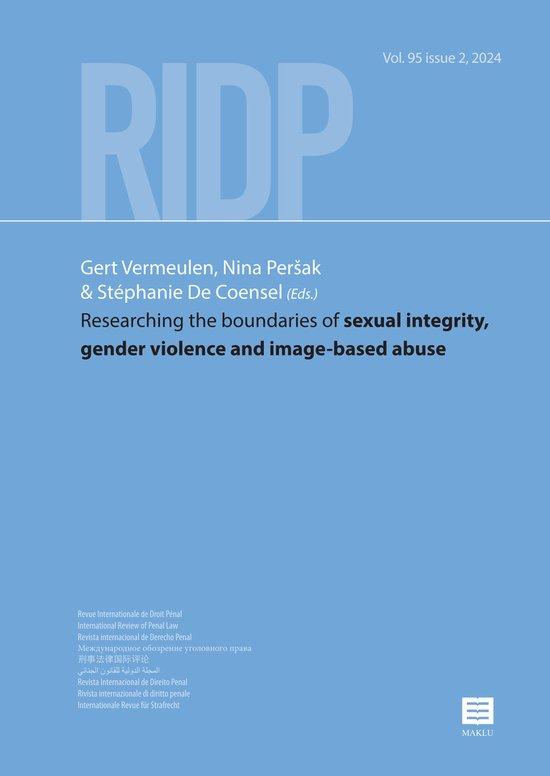
RIDP 95.2 (2024) | Researching the boundaries of sexual integrity, gender violence and image-based abuse
This special issue brings together nineteen topical and innovative papers, researching the boundaries of sexual integrity and affirmative sexual consent, gender violence, and image-based or online sexual abuse, including child sexual abuse material and non-consensual sexual deepfakes. It offers an original and nuanced approach to understanding the important legal elements, various agents and harms of topic-related deviant conduct as well as legislative processes aimed at tackling it. In light of recent societal developments, including changes in societal sensibilities, and recent or on-going legislative amendments at national and supranational levels, research on these topics is timely and much needed.
Gert Vermeulen is Senior Full Professor of European and international criminal law, sexual criminal law and data protection law, Department Chair Criminology, Criminal Law and Social Law, and Director of the Institute for International Research on Criminal Policy (IRCP), all at Ghent University. He is also General Director Publications of the AIDP, and Editor-in-chief of the RIDP.
Nina Peršak is Scientific Director and Senior Research Fellow, Institute for Criminal-Law Ethics and Criminology (Ljubljana), Full Professor of Law, University of Maribor (habilitation), Academic Consultant at the Institute for International Research on Criminal Policy (IRCP), Ghent University, and Co-Editor-in-Chief of the RIDP.
Stéphanie De Coensel is an FWO Postdoctoral Researcher and Visiting Professor in Advanced Criminal Law at the Institute for International Research on Criminal Policy (IRCP), Ghent University, and Editorial Secretary of the RIDP.
RIDP 95.2 (2024) | Researching the boundaries of sexual integrity, gender violence and image-based abuse
This special issue brings together nineteen topical and innovative papers, researching the boundaries of sexual integrity and affirmative sexual consent, gender violence, and image-based or online sexual abuse, including child sexual abuse material and non-consensual sexual deepfakes. It offers an original and nuanced approach to understanding the important legal elements, various agents and harms of topic-related deviant conduct as well as legislative processes aimed at tackling it. In light of recent societal developments, including changes in societal sensibilities, and recent or on-going legislative amendments at national and supranational levels, research on these topics is timely and much needed.
Gert Vermeulen is Senior Full Professor of European and international criminal law, sexual criminal law and data protection law, Department Chair Criminology, Criminal Law and Social Law, and Director of the Institute for International Research on Criminal Policy (IRCP), all at Ghent University. He is also General Director Publications of the AIDP, and Editor-in-chief of the RIDP.
Nina Peršak is Scientific Director and Senior Research Fellow, Institute for Criminal-Law Ethics and Criminology (Ljubljana), Full Professor of Law, University of Maribor (habilitation), Academic Consultant at the Institute for International Research on Criminal Policy (IRCP), Ghent University, and Co-Editor-in-Chief of the RIDP.
Stéphanie De Coensel is an FWO Postdoctoral Researcher and Visiting Professor in Advanced Criminal Law at the Institute for International Research on Criminal Policy (IRCP), Ghent University, and Editorial Secretary of the RIDP.