Totalen winkelwagen
| Subtotaal | € 399,89 |
|---|---|
| Verzending 1 |
De verzendopties worden bij het afrekenen geüpdatet. |
| Totaal | € 404,89 (inclusief € 22,92 btw) |
Je bent misschien ook geïnteresseerd in…
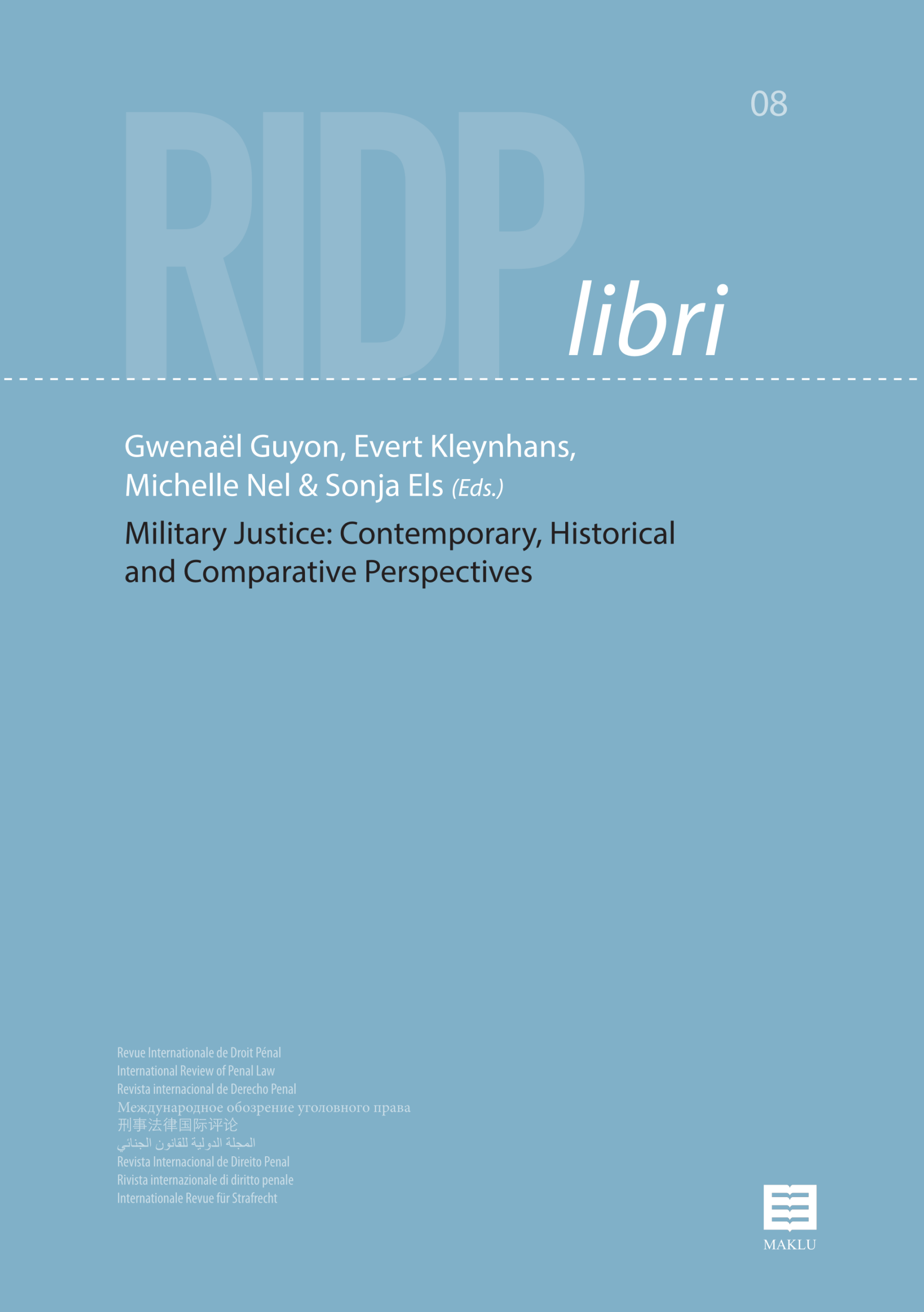
Military Justice: Contemporary, Historical and Comparative Perspectives | RIDP libri 8
Military justice is an essential aspect of a nation’s defence system, rooted in a rich historical context that is intertwined with wider legal, political and social developments. Its importance has increased in the 21st century due to the changing nature of war, the need to protect civilians, the need to deal with misconduct by soldiers and to protect victims. It is essential to understand the historical development of military justice in order to grasp its complex legal and ethical dimensions, and avoid past mistakes.
Military justice serves to address misconduct within the armed forces, and to ensure discipline and compliance with ethical and international standards. Ongoing training in military law is mandatory to prevent illegal actions and foster a culture of respect for legal standards. One of the main objectives of military justice is also to protect civilians during armed conflicts. International humanitarian law, including the Geneva Conventions, requires the protection of non-combatants, and military justice systems help to ensure compliance with these laws. Investigating and prosecuting violations, particularly those that endanger civilians, helps to ensure accountability and maintain the legitimacy of military operations.
In the same way, advances in military technology, such as the use of drones and artificial intelligence, pose new challenges for military justice. Legal frameworks must evolve to take account of legal and ethical implications of these technologies. Additionally, warfare has significantly transformed in recent years, with cyber warfare, private military companies and counter-insurgency operations. Finally, contemporary military operations often involve coalitions of multiple countries, requiring harmonized approaches to military justice to ensure consistency across different legal systems.
The International Military Justice Forum (IMJF) provides a platform for global discussions on military justice, bringing together academics, practitioners, and military personnel. It fosters comparative analysis of international military justice systems and explores their historical and current evolution.
This volume brings together major contributions to the 2nd International Military Justice Forum, which convened on 8 and 9 November 2023 in Stellenbosch, South Africa
Gwenaël Guyon is Associate Professor in Legal History and Comparative Law at Saint-Cyr Coëtquidan Military Academy, seconded from the University Paris Cité, and President of the International Military Justice Forum.
Evert Kleynhans is Associate Professor in Military History at the Faculty of Military Science of Stellenbosch University, and Honorary Researcher at the Centre for War and Diplomacy at Lancaster University.
Michelle Nel is Associate Professor in Military Law at the Faculty of Military Science of Stellenbosch University, and a part-time researcher at the Security Institute for Governance and Leadership in Africa (SIGLA).
Sonja Els is Senior Lecturer in Mercantile Law and Military Law, and Chair of the School for Human Resource Development at the Faculty of Military Science of Stellenbosch University.
Military Justice: Contemporary, Historical and Comparative Perspectives | RIDP libri 8
Military justice is an essential aspect of a nation’s defence system, rooted in a rich historical context that is intertwined with wider legal, political and social developments. Its importance has increased in the 21st century due to the changing nature of war, the need to protect civilians, the need to deal with misconduct by soldiers and to protect victims. It is essential to understand the historical development of military justice in order to grasp its complex legal and ethical dimensions, and avoid past mistakes.
Military justice serves to address misconduct within the armed forces, and to ensure discipline and compliance with ethical and international standards. Ongoing training in military law is mandatory to prevent illegal actions and foster a culture of respect for legal standards. One of the main objectives of military justice is also to protect civilians during armed conflicts. International humanitarian law, including the Geneva Conventions, requires the protection of non-combatants, and military justice systems help to ensure compliance with these laws. Investigating and prosecuting violations, particularly those that endanger civilians, helps to ensure accountability and maintain the legitimacy of military operations.
In the same way, advances in military technology, such as the use of drones and artificial intelligence, pose new challenges for military justice. Legal frameworks must evolve to take account of legal and ethical implications of these technologies. Additionally, warfare has significantly transformed in recent years, with cyber warfare, private military companies and counter-insurgency operations. Finally, contemporary military operations often involve coalitions of multiple countries, requiring harmonized approaches to military justice to ensure consistency across different legal systems.
The International Military Justice Forum (IMJF) provides a platform for global discussions on military justice, bringing together academics, practitioners, and military personnel. It fosters comparative analysis of international military justice systems and explores their historical and current evolution.
This volume brings together major contributions to the 2nd International Military Justice Forum, which convened on 8 and 9 November 2023 in Stellenbosch, South Africa
Gwenaël Guyon is Associate Professor in Legal History and Comparative Law at Saint-Cyr Coëtquidan Military Academy, seconded from the University Paris Cité, and President of the International Military Justice Forum.
Evert Kleynhans is Associate Professor in Military History at the Faculty of Military Science of Stellenbosch University, and Honorary Researcher at the Centre for War and Diplomacy at Lancaster University.
Michelle Nel is Associate Professor in Military Law at the Faculty of Military Science of Stellenbosch University, and a part-time researcher at the Security Institute for Governance and Leadership in Africa (SIGLA).
Sonja Els is Senior Lecturer in Mercantile Law and Military Law, and Chair of the School for Human Resource Development at the Faculty of Military Science of Stellenbosch University.
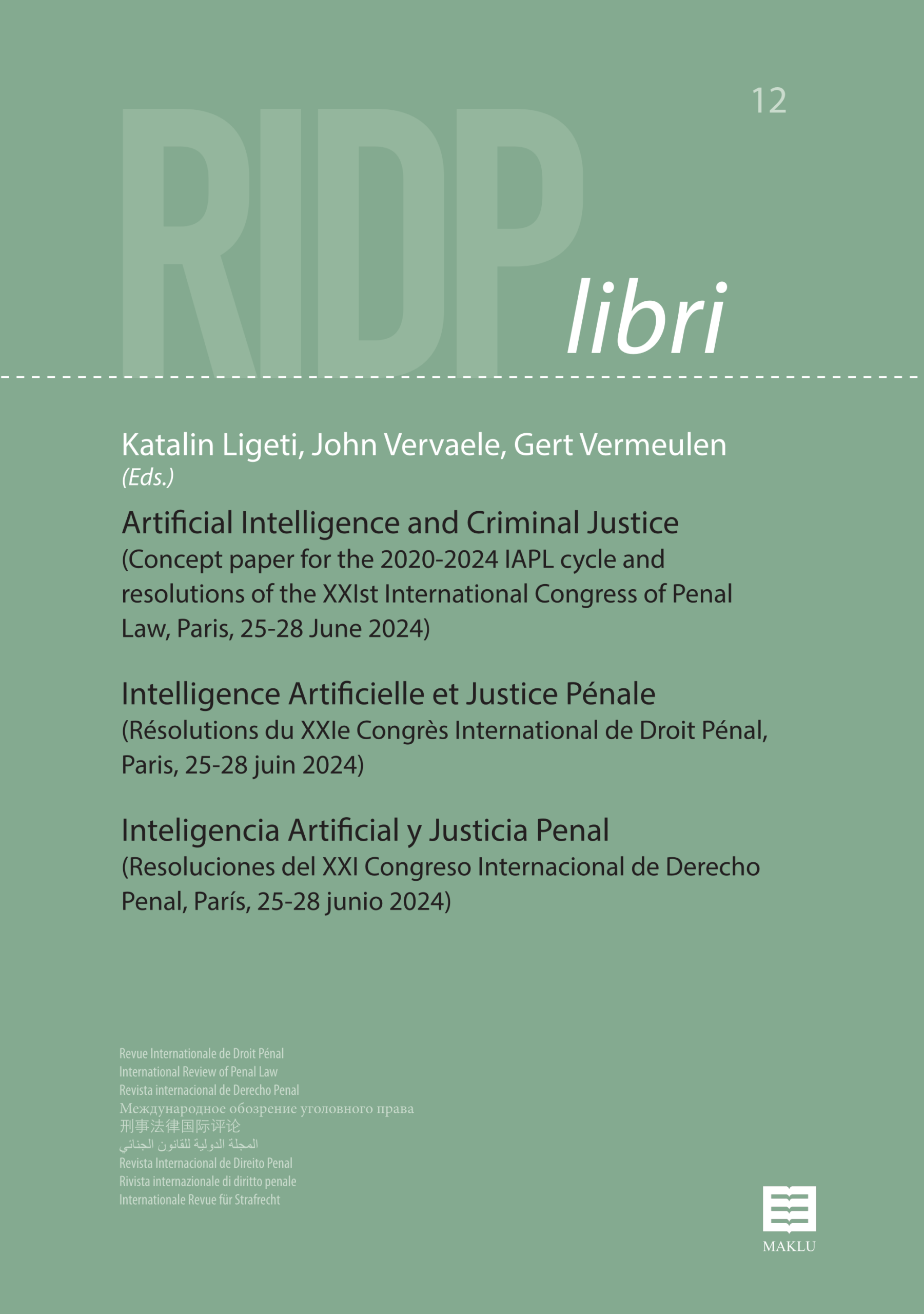
Artificial intelligence and criminal justice (Concept paper for the 2020-2024 IAPL cycle and resolutions of the XXIst International Congress of Penal Law, Paris, 25 – RIDP libri 12
Recognizing the profound impact of AI on criminal justice, the IAPL devoted its 2020-2024 scientific cycle and its concluding XXIst Congress to examining the transformative effects of AI and the legal challenges it poses for both substantive and procedural criminal law. The topic was prepared through a concept paper and explored through four international colloquia, each culminating in the adoption of a set of resolutions addressing a distinct aspect of the criminal justice system. This issue wraps up the cycle, presenting the concept paper (in English) and the trilingual version of the four sets of resolutions.
Au vu de l’impact profond de l’IA sur la justice pénale, l’AIDP a consacré son cycle scientifique 2020-2024 et son XXIe Congrès à l’étude des effets transformateurs de l’IA et des défis juridiques qu’elle pose dans le cadre du droit pénal et de la procédure pénale. Le sujet a été abordé grâce à un document de réflexion initiale et exploré par la suite lors de quatre colloques internationaux, chacun aboutissant à l’adoption d’une série de résolutions portant sur un aspect distinct du système de justice pénale. Ce numéro conclut ce cycle scientifique par la publication du document de réflexion (en anglais) et la version trilingue des quatre séries de résolutions.
Dado el profundo impacto de la IA en la justicia penal, la AIDP dedicó su ciclo científico 2020-2024 y su XXIo Congreso a examinar los efectos transformadores de la IA y los retos jurídicos que plantea tanto para el derecho penal sustantivo como para el procesal. El tema se inició con un documento conceptual y se exploró a través de cuatro coloquios internacionales, cada uno de los cuales culminó con la adopción de un conjunto de resoluciones que abordaban un aspecto distinto del sistema de justicia penal. Este número cierra este ciclo, presentando el documento conceptual (en inglés) y la versión trilingüe de los cuatro conjuntos de resoluciones.
Katalin Ligeti is President of the AIDP/IAPL and Dean of the Faculty of Law, Economics and Finance and Professor of European and International Criminal Law at the University of Luxembourg.
John A.E. Vervaele is Honorary President of the AIDP/IAPL, Emeritus Professor at Utrecht University, The Netherlands, and Professor in European Criminal Law and Human Rights at the College of Europe, Bruges, Belgium
Gert Vermeulen is General Director Publications of the AIDP/IAPL, Editor-in-chief of the RIDP, and Senior Full Professor of European and international criminal law, sexual criminal law, and data protection law at Ghent University, Belgium.
Artificial intelligence and criminal justice (Concept paper for the 2020-2024 IAPL cycle and resolutions of the XXIst International Congress of Penal Law, Paris, 25 – RIDP libri 12
Recognizing the profound impact of AI on criminal justice, the IAPL devoted its 2020-2024 scientific cycle and its concluding XXIst Congress to examining the transformative effects of AI and the legal challenges it poses for both substantive and procedural criminal law. The topic was prepared through a concept paper and explored through four international colloquia, each culminating in the adoption of a set of resolutions addressing a distinct aspect of the criminal justice system. This issue wraps up the cycle, presenting the concept paper (in English) and the trilingual version of the four sets of resolutions.
Au vu de l’impact profond de l’IA sur la justice pénale, l’AIDP a consacré son cycle scientifique 2020-2024 et son XXIe Congrès à l’étude des effets transformateurs de l’IA et des défis juridiques qu’elle pose dans le cadre du droit pénal et de la procédure pénale. Le sujet a été abordé grâce à un document de réflexion initiale et exploré par la suite lors de quatre colloques internationaux, chacun aboutissant à l’adoption d’une série de résolutions portant sur un aspect distinct du système de justice pénale. Ce numéro conclut ce cycle scientifique par la publication du document de réflexion (en anglais) et la version trilingue des quatre séries de résolutions.
Dado el profundo impacto de la IA en la justicia penal, la AIDP dedicó su ciclo científico 2020-2024 y su XXIo Congreso a examinar los efectos transformadores de la IA y los retos jurídicos que plantea tanto para el derecho penal sustantivo como para el procesal. El tema se inició con un documento conceptual y se exploró a través de cuatro coloquios internacionales, cada uno de los cuales culminó con la adopción de un conjunto de resoluciones que abordaban un aspecto distinto del sistema de justicia penal. Este número cierra este ciclo, presentando el documento conceptual (en inglés) y la versión trilingüe de los cuatro conjuntos de resoluciones.
Katalin Ligeti is President of the AIDP/IAPL and Dean of the Faculty of Law, Economics and Finance and Professor of European and International Criminal Law at the University of Luxembourg.
John A.E. Vervaele is Honorary President of the AIDP/IAPL, Emeritus Professor at Utrecht University, The Netherlands, and Professor in European Criminal Law and Human Rights at the College of Europe, Bruges, Belgium
Gert Vermeulen is General Director Publications of the AIDP/IAPL, Editor-in-chief of the RIDP, and Senior Full Professor of European and international criminal law, sexual criminal law, and data protection law at Ghent University, Belgium.