
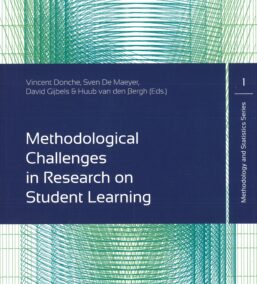
Methodological challenges in research on student learning (Methodology and Statistics Series, nr. 1)
Research on student learning has undergone many changes in the last decade. In particular, the research methodology has advanced in many different ways on the level of complexity of data collection and rigor of data analyses. In the quantitative research perspective, many off-line and online measures and statistical analysis techniques have been further meticulously developed. In the qualitative research perspective, a broader range of data collection tools are applied. Also the use of mixed method data analysis is increasing. Although in some research strands on student learning, the mono method approach of quantitative research is still ‘the golden rule’, in other research strands we notify more methodological creativity in mixing research paradigms and designs which can be very fruitful advancements for further knowledge development. In this book we focus on the domain of research on learning patterns in which these methodological shifts are in rapid evolution. A variety of international research cases illustrating current practices of empirical research, is presented showing how different methods of research on student learning can be applied and be useful for future research. Benefits an boundaries of the research methods are critically discussed and future perspectives are proposed.
Vincent Donche is associate professor of research methods in education at the Faculty of Social Sciences of the University of Antwerp, Belgium and member of the research group EduBROn. His current research interests include cognitive, regulative and affective aspects of student learning, professional learning, academic integration and educational measurement.
Sven De Maeyer is associate professor at the Faculty of Social Sciences of the University of Antwerp, Belgium. His research focuses on methodological and statistical issues in educational research such as: (1) Research on Performance Assessment and Adaptive Comparative Judgment; (2) Research on Instrument and Test development; (3) Self-evaluation instruments for schools; (4) Longitudinal research / Multilevel and mixed effects models / Structural equation models; (5) Combination of applied linguistics and educational research.
David Gijbels is associate professor of learning and instruction at the Faculty of Social Sciences of the University of Antwerp, Belgium. His research focuses on learning and assessment in higher education and on the workplace.
Huub van den Bergh is a professor at the Utrecht Institute of Linguistics of the University of Utrecht, The Netherlands. He has been involved in many studies on reading, writing and teaching, ranging from small scale think-aloud studies to large scale assessments, and from highly controlled experiments to quasi-experimental and field studies.
Methodological challenges in research on student learning (Methodology and Statistics Series, nr. 1)
Research on student learning has undergone many changes in the last decade. In particular, the research methodology has advanced in many different ways on the level of complexity of data collection and rigor of data analyses. In the quantitative research perspective, many off-line and online measures and statistical analysis techniques have been further meticulously developed. In the qualitative research perspective, a broader range of data collection tools are applied. Also the use of mixed method data analysis is increasing. Although in some research strands on student learning, the mono method approach of quantitative research is still ‘the golden rule’, in other research strands we notify more methodological creativity in mixing research paradigms and designs which can be very fruitful advancements for further knowledge development. In this book we focus on the domain of research on learning patterns in which these methodological shifts are in rapid evolution. A variety of international research cases illustrating current practices of empirical research, is presented showing how different methods of research on student learning can be applied and be useful for future research. Benefits an boundaries of the research methods are critically discussed and future perspectives are proposed.
Vincent Donche is associate professor of research methods in education at the Faculty of Social Sciences of the University of Antwerp, Belgium and member of the research group EduBROn. His current research interests include cognitive, regulative and affective aspects of student learning, professional learning, academic integration and educational measurement.
Sven De Maeyer is associate professor at the Faculty of Social Sciences of the University of Antwerp, Belgium. His research focuses on methodological and statistical issues in educational research such as: (1) Research on Performance Assessment and Adaptive Comparative Judgment; (2) Research on Instrument and Test development; (3) Self-evaluation instruments for schools; (4) Longitudinal research / Multilevel and mixed effects models / Structural equation models; (5) Combination of applied linguistics and educational research.
David Gijbels is associate professor of learning and instruction at the Faculty of Social Sciences of the University of Antwerp, Belgium. His research focuses on learning and assessment in higher education and on the workplace.
Huub van den Bergh is a professor at the Utrecht Institute of Linguistics of the University of Utrecht, The Netherlands. He has been involved in many studies on reading, writing and teaching, ranging from small scale think-aloud studies to large scale assessments, and from highly controlled experiments to quasi-experimental and field studies.
Dingske-Handleiding bij het beeldboek
Deze bijhorende Handleiding is vooral bedoeld voor ondersteuners van mensen met een verstandelijke beperking. De stijgende levensverwachting van personen met een verstandelijke beperking in het algemeen en mensen met downsyndroom in het bijzonder, zorgt voor een sterke stijging van het aantal mensen met dementie. Dementie brengt nieuwe uitdagingen en vragen met zich mee voor de hulpverleners, familieleden en de persoon met een beperking zelf. Om hiermee om te gaan is het belangrijk om in een sfeer van open communicatie inzicht te krijgen in wat er precies aan de hand is en wat de toekomst zal brengen. De Handleiding geeft tips en mogelijkheden om het beeldboek ‘op maat’ van personen met een verstandelijke beperking te gebruiken als instrument om hen over het thema ‘dementie’ te informeren en hierover met hen in dialoog te gaan. Ze kan ook ouders, familieleden, leerkrachten en artsen inspireren om dit beeldboek in te zetten in de communicatie over dementie. Sofie Sergeant is orthopedagoge en educatief medewerker bij Vormingscentrum Handicum.
Patrick Verhaest is psycholoog en wetenschappelijk medewerker bij het Expertisecentrum Dementie Vlaanderen.
Dingske-Handleiding bij het beeldboek
Deze bijhorende Handleiding is vooral bedoeld voor ondersteuners van mensen met een verstandelijke beperking. De stijgende levensverwachting van personen met een verstandelijke beperking in het algemeen en mensen met downsyndroom in het bijzonder, zorgt voor een sterke stijging van het aantal mensen met dementie. Dementie brengt nieuwe uitdagingen en vragen met zich mee voor de hulpverleners, familieleden en de persoon met een beperking zelf. Om hiermee om te gaan is het belangrijk om in een sfeer van open communicatie inzicht te krijgen in wat er precies aan de hand is en wat de toekomst zal brengen. De Handleiding geeft tips en mogelijkheden om het beeldboek ‘op maat’ van personen met een verstandelijke beperking te gebruiken als instrument om hen over het thema ‘dementie’ te informeren en hierover met hen in dialoog te gaan. Ze kan ook ouders, familieleden, leerkrachten en artsen inspireren om dit beeldboek in te zetten in de communicatie over dementie. Sofie Sergeant is orthopedagoge en educatief medewerker bij Vormingscentrum Handicum.
Patrick Verhaest is psycholoog en wetenschappelijk medewerker bij het Expertisecentrum Dementie Vlaanderen.
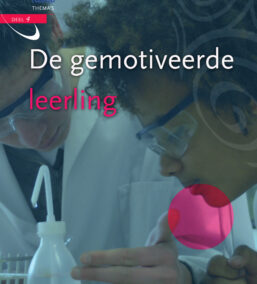
De gemotiveerde leerling (Nivoz-Serie, nr. 4)
Een leraar vertelde ons: “Mijn leerlingen zijn vaak niet gemotiveerd. Ik krijg er geen vat op.” Is motivatie inderdaad zo’n black box? Allerminst, zoals blijkt uit dit vierde deel in de NIVOZ-reeks. In de afgelopen decennia is veel onderzoek verricht, dat ons helpt motivatie en demotivatie bij kinderen te verklaren. Maar ook de leerlingen zelf kunnen ons veel vertellen over wat het onderwijs hen moet bieden om motivatie vast te kunnen houden en uit te bouwen. De gemotiveerde leerling verbindt wetenschappelijke beschouwingen met ervaringen in de klas.
Volg NIVOZ op een reis langs internationaal onderzoek, Nederlandse schoolvoorbeelden en onderwijs op het witte doek. Dit is een boek over intrinsieke motivatie, over flow en over de natuurlijke behoefte van ieder mens om te leren.
Prof. dr. Luc Stevens (1941) is emeritus hoogleraar Orthopedagogiek aan de Universiteit Utrecht en directeur van het NIVOZ. Hij spant zich in voor nieuwe onderwijspraktijk met als kenmerken openheid, kans, dialoog en verbinding. Sinds 2008 is Stevens hoogleraar aan de Open Universiteit. Zijn leerstoel richt zich op het professionaliseren van werkplekleren van docenten met de nadruk op het versterken van pedagogische competenties. Hij benadert het hart van het onderwijs, de leraar-leerlinginteractie, onder andere via de succesvolle NIVOZ-programma’s Pedagogisch leiderschap en Pedagogische tact.
Drs. Geert Bors (1973) werkt als freelance redacteur voor het NIVOZ. Hij deed onderwijservaring op bij middelbare scholen, in het ouderenonderwijs en als juniordocent op UCL in Londen, maar journalistiek bleek een grotere liefde. Geert begon als radiomaker en redacteur van het Nijmeegse universiteitsblad VOX, voor hij koos voor een freelancecarrière in Australië en Denemarken, waar hij schreef voor uiteenlopende media als Zin, Kijk, De Standaard en The Age (AU). Met regelmaat publiceert Geert bij diverse uitgeverijen, o.a. als ghostwriter van Atilla’s Dutch Dream (Nieuw Amsterdam).
NIVOZ-Thema's:
De gemotiveerde leerling (Nivoz-Serie, nr. 4)
Een leraar vertelde ons: “Mijn leerlingen zijn vaak niet gemotiveerd. Ik krijg er geen vat op.” Is motivatie inderdaad zo’n black box? Allerminst, zoals blijkt uit dit vierde deel in de NIVOZ-reeks. In de afgelopen decennia is veel onderzoek verricht, dat ons helpt motivatie en demotivatie bij kinderen te verklaren. Maar ook de leerlingen zelf kunnen ons veel vertellen over wat het onderwijs hen moet bieden om motivatie vast te kunnen houden en uit te bouwen. De gemotiveerde leerling verbindt wetenschappelijke beschouwingen met ervaringen in de klas.
Volg NIVOZ op een reis langs internationaal onderzoek, Nederlandse schoolvoorbeelden en onderwijs op het witte doek. Dit is een boek over intrinsieke motivatie, over flow en over de natuurlijke behoefte van ieder mens om te leren.
Prof. dr. Luc Stevens (1941) is emeritus hoogleraar Orthopedagogiek aan de Universiteit Utrecht en directeur van het NIVOZ. Hij spant zich in voor nieuwe onderwijspraktijk met als kenmerken openheid, kans, dialoog en verbinding. Sinds 2008 is Stevens hoogleraar aan de Open Universiteit. Zijn leerstoel richt zich op het professionaliseren van werkplekleren van docenten met de nadruk op het versterken van pedagogische competenties. Hij benadert het hart van het onderwijs, de leraar-leerlinginteractie, onder andere via de succesvolle NIVOZ-programma’s Pedagogisch leiderschap en Pedagogische tact.
Drs. Geert Bors (1973) werkt als freelance redacteur voor het NIVOZ. Hij deed onderwijservaring op bij middelbare scholen, in het ouderenonderwijs en als juniordocent op UCL in Londen, maar journalistiek bleek een grotere liefde. Geert begon als radiomaker en redacteur van het Nijmeegse universiteitsblad VOX, voor hij koos voor een freelancecarrière in Australië en Denemarken, waar hij schreef voor uiteenlopende media als Zin, Kijk, De Standaard en The Age (AU). Met regelmaat publiceert Geert bij diverse uitgeverijen, o.a. als ghostwriter van Atilla’s Dutch Dream (Nieuw Amsterdam).
NIVOZ-Thema's:
The European School. From post-war idealism to a present-day cultural opportunity.
Since 1953, the year in which the first European School was founded, publications and systematic research on this unique form of international nursery, primary and secondary education have been limited and fragmented leaving it as relatively blank spot in the international education arena.
This book is the first-ever in the almost 60-year history of the European School that removes the obscurity and misconceptions that exist about it in a comprehensive manner.
It describes, analyses and evaluates its position emanating from the main research question: what are the most important causes for its rise, what developments has it seen and what results has it achieved considering the studies and careers of its alumni.
Furthermore, it is critical of some of its practices, makes suggestions for improvements and opens a debate about future developments. It also touches on current internationalisation efforts and structures in secondary and higher education in some European countries.
Currently there are 22 European Schools in 11 countries with at present more than 36,000 holders of the European Baccalaureate Diploma, which is an entry qualification for higher education.
This book is ‘a must read’ for anyone interested and involved in the European Union, the European Schools, (international) education, politics, history, sociology and culture studies. It is also highly illuminating for past, present and future generations of parents, pupils, teachers and governors of the European School or any other educational establishment.
This book contains 5 summaries in total, with Dutch, French, German and Italian as tributes to the founders of this first attempt at European cross-cultural cooperation in the aftermath of WWII.
From 1970 till 1987 Harry van Lingen (°1946) worked as a teacher of English at two grammar schools in the Netherlands and from 1987 till 2002 at the European School of Bergen (NL) and Karlsruhe (DE). During that later period he became fascinated by the historical, social, cultural and educational context and uniqueness of the European School.
The European School. From post-war idealism to a present-day cultural opportunity.
Since 1953, the year in which the first European School was founded, publications and systematic research on this unique form of international nursery, primary and secondary education have been limited and fragmented leaving it as relatively blank spot in the international education arena.
This book is the first-ever in the almost 60-year history of the European School that removes the obscurity and misconceptions that exist about it in a comprehensive manner.
It describes, analyses and evaluates its position emanating from the main research question: what are the most important causes for its rise, what developments has it seen and what results has it achieved considering the studies and careers of its alumni.
Furthermore, it is critical of some of its practices, makes suggestions for improvements and opens a debate about future developments. It also touches on current internationalisation efforts and structures in secondary and higher education in some European countries.
Currently there are 22 European Schools in 11 countries with at present more than 36,000 holders of the European Baccalaureate Diploma, which is an entry qualification for higher education.
This book is ‘a must read’ for anyone interested and involved in the European Union, the European Schools, (international) education, politics, history, sociology and culture studies. It is also highly illuminating for past, present and future generations of parents, pupils, teachers and governors of the European School or any other educational establishment.
This book contains 5 summaries in total, with Dutch, French, German and Italian as tributes to the founders of this first attempt at European cross-cultural cooperation in the aftermath of WWII.
From 1970 till 1987 Harry van Lingen (°1946) worked as a teacher of English at two grammar schools in the Netherlands and from 1987 till 2002 at the European School of Bergen (NL) and Karlsruhe (DE). During that later period he became fascinated by the historical, social, cultural and educational context and uniqueness of the European School.
Dingske – Set: Beeldboek + Handleiding
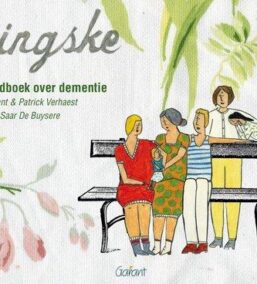
Deze set bevat naast dit beeldboek een Handleiding die vooral is bedoeld voor ondersteuners van mensen met een verstandelijke beperking. De stijgende levensverwachting van personen met een verstandelijke beperking in het algemeen en mensen met downsyndroom in het bijzonder, zorgt voor een sterke stijging van het aantal mensen met dementie. Dementie brengt nieuwe uitdagingen en vragen met zich mee voor de hulpverleners, familieleden en de persoon met een beperking zelf. Om hiermee om te gaan is het belangrijk om in een sfeer van open communicatie inzicht te krijgen in wat er precies aan de hand is en wat de toekomst zal brengen. De Handleiding geeft tips en mogelijkheden om het beeldboek ‘op maat’ van personen met een verstandelijke beperking te gebruiken als instrument om hen over het thema ‘dementie’ te informeren en hierover met hen in dialoog te gaan. Ze kan ook ouders, familieleden, leerkrachten en artsen inspireren om dit beeldboek in te zetten in de communicatie over dementie.
Set: Beeldboek + Handleiding Dingske
Sofie Sergeant is orthopedagoge en educatief medewerker bij Vormingscentrum Handicum.
Patrick Verhaest is psycholoog en wetenschappelijk medewerker bij het Expertisecentrum Dementie Vlaanderen.
Saar De Buysere is beeldend kunstenaar en geeft Beeldende vorming aan personen met een beperking in het deeltijds kunstonderwijs.
Dingske – Set: Beeldboek + Handleiding
Deze set bevat naast dit beeldboek een Handleiding die vooral is bedoeld voor ondersteuners van mensen met een verstandelijke beperking. De stijgende levensverwachting van personen met een verstandelijke beperking in het algemeen en mensen met downsyndroom in het bijzonder, zorgt voor een sterke stijging van het aantal mensen met dementie. Dementie brengt nieuwe uitdagingen en vragen met zich mee voor de hulpverleners, familieleden en de persoon met een beperking zelf. Om hiermee om te gaan is het belangrijk om in een sfeer van open communicatie inzicht te krijgen in wat er precies aan de hand is en wat de toekomst zal brengen. De Handleiding geeft tips en mogelijkheden om het beeldboek ‘op maat’ van personen met een verstandelijke beperking te gebruiken als instrument om hen over het thema ‘dementie’ te informeren en hierover met hen in dialoog te gaan. Ze kan ook ouders, familieleden, leerkrachten en artsen inspireren om dit beeldboek in te zetten in de communicatie over dementie.
Set: Beeldboek + Handleiding Dingske
Sofie Sergeant is orthopedagoge en educatief medewerker bij Vormingscentrum Handicum.
Patrick Verhaest is psycholoog en wetenschappelijk medewerker bij het Expertisecentrum Dementie Vlaanderen.
Saar De Buysere is beeldend kunstenaar en geeft Beeldende vorming aan personen met een beperking in het deeltijds kunstonderwijs.
Learning with a portfolio in clinical workplaces. Practices, pitfalls and perspectives
This book reports on a number of studies aimed at unravelling the clerkship triangle and the role of the portfolio in it. It reveals several processes and conditions that determine the actual meaning of the portfolio for both students’ learning and the supervision. It further argues that the learning portfolio operates as an artefact through which the medical school can be present in the clerkship environment and thus ‘steer from a distance’. Finally the book also explores the conditions for successful use of electronic portfolios.
Ann Deketelaere studied educational sciences at the K.U.Leuven. Over the years she has been professionally active as an educational researcher, curriculum designer, teachereducator and in-service trainer. Since 2002, she has been working as an educational staff member at the Centre for Medical Education of the Faculty of Medicine (K.U.Leuven). Her main areas of interest and expertise are in coaching and mentoring of workplace learning, reflective practice and learning portfolios.
Learning with a portfolio in clinical workplaces. Practices, pitfalls and perspectives
This book reports on a number of studies aimed at unravelling the clerkship triangle and the role of the portfolio in it. It reveals several processes and conditions that determine the actual meaning of the portfolio for both students’ learning and the supervision. It further argues that the learning portfolio operates as an artefact through which the medical school can be present in the clerkship environment and thus ‘steer from a distance’. Finally the book also explores the conditions for successful use of electronic portfolios.
Ann Deketelaere studied educational sciences at the K.U.Leuven. Over the years she has been professionally active as an educational researcher, curriculum designer, teachereducator and in-service trainer. Since 2002, she has been working as an educational staff member at the Centre for Medical Education of the Faculty of Medicine (K.U.Leuven). Her main areas of interest and expertise are in coaching and mentoring of workplace learning, reflective practice and learning portfolios.

Imagine Europe. The search for European Identity and Spirituality (SPES-Cahiers, nr. 3)
All authors share the idea of Europe as a space of unity-in-diversity based on relations of reciprocity and fraternity. They see it as Europe’s mission to enlarge its post-war idea of peace and integration into a global action. As the construction of the European Union started in the sphere of economics, but was from the beginning more than economics, this Cahier calls for a stronger sense of spiritual commitment and moral imagination in Europe. It refers to a new generation of business leaders inspired by the paradigm of spiritcentered entrepreneurship.
Luk Bouckaert is emeritus professor of ethics at the Catholic University of Leuven (Belgium). He is founder and director of the SPES Academy in Leuven and president of the European SPES Forum.
Jochanan Eynikel is coordinator of the SPES Academy. He developed the project Imagine Europe which involves young people in the creation of a future vision on Europe.
Imagine Europe. The search for European Identity and Spirituality (SPES-Cahiers, nr. 3)
All authors share the idea of Europe as a space of unity-in-diversity based on relations of reciprocity and fraternity. They see it as Europe’s mission to enlarge its post-war idea of peace and integration into a global action. As the construction of the European Union started in the sphere of economics, but was from the beginning more than economics, this Cahier calls for a stronger sense of spiritual commitment and moral imagination in Europe. It refers to a new generation of business leaders inspired by the paradigm of spiritcentered entrepreneurship.
Luk Bouckaert is emeritus professor of ethics at the Catholic University of Leuven (Belgium). He is founder and director of the SPES Academy in Leuven and president of the European SPES Forum.
Jochanan Eynikel is coordinator of the SPES Academy. He developed the project Imagine Europe which involves young people in the creation of a future vision on Europe.
Spirituality as a public good (European SPES Cahier 1)
Selected papers from the foundational meeting of the European SPES Forum in Leuven (Belgium) in 2005, explore the fascinating relationship between spirituality, ethics and economics in the context of globalisation.
The first part focuses on the emergence of spirituality within economics and business while the second part elaborates on the influenceofglobalisation on spirituality. It is said that globalisation made the world into a global village, are we heading for a world spirituality?
Spirituality as a public good (European SPES Cahier 1)
Selected papers from the foundational meeting of the European SPES Forum in Leuven (Belgium) in 2005, explore the fascinating relationship between spirituality, ethics and economics in the context of globalisation.
The first part focuses on the emergence of spirituality within economics and business while the second part elaborates on the influenceofglobalisation on spirituality. It is said that globalisation made the world into a global village, are we heading for a world spirituality?