
Filter
Quick View
Toevoegen aan winkelwagenBekijk winkelwagen

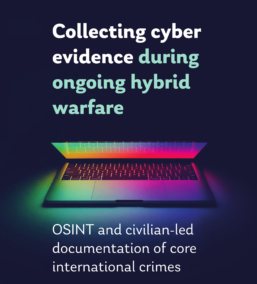
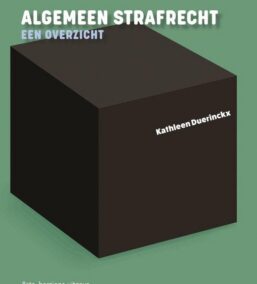
Collecting Cyber Evidence During Ongoing Hybrid Warfare: OSINT and Civilian-led Documentation of Core International Crimes
 49,00
This volume provides a record of the best practices and civic initiatives to collect cyber evidence of core international crimes during ongoing hybrid warfare. A modern hybrid warfare blends conventional military tactics with unconventional methods such as cyberattacks, disinformation, propaganda, and the involvement of organised crime. At the same time, it poses new threats and challenges for evidence collection. Open-Source Intelligence (OSINT), which empowers grassroots initiatives by enabling citizens to actively document and share real-time information, plays a vital role in dynamic situations such as cybercrime and hybrid warfare. Together, cyber evidence and OSINT are essential for addressing international law violations in the digital age, while also fostering citizen-led contributions to justice. This edited book aims to analyse novel models for collecting digital evidence of core international crimes during ongoing hybrid armed conflicts with special focus on the Russia-Ukraine war through the following five topics: 1. The theorisation of grassroots ‘citizen digital initiatives’ (Part 1) 2. The usage of digital evidence in relation to crimes specific to ongoing hybrid warfare (Part 2) 3. The roles of OSINT during the Russia-Ukraine war (Part 3) 4. The challenges of legal compliance in data protection of digital evidence (Part 4) 5. The actual usage of collected digital information in court procedure in Ukraine (Part 5) Link to this book on the Norwegian Research Information Repository Artem Galushko is currently a Marie Skłodowska-Curie Fellow at the Faculty of Law, the Arctic University of Norway (UiT). In 2023, the European Commission supported his research project ‘Hybrid Cyber Warfare and Common Security in Europe’ within the Horizon Europe Research and Innovation Programme. In 2019, he obtained his doctoral degree in international law from the Central European University (CEU) in Budapest, Hungary. Due to the German Academic Exchange Service (DAAD) Scholarship, in 2013, he received an LL.M. degree in European and International Law from the University of Saarland in Germany. He is also a recipient of a research fellowship of the Swedish Institute (2018-2019) and a Global Teaching Fellowship at the University of Yangon, Myanmar (2017). In Ukraine, Artem has worked in several international organisations such as the UN office in Ukraine and the National Democratic Institute for International Affairs. Megumi Ochi currently serves as an associate professor at the Graduate School of International Relations, Ritsumeikan University, Kyoto, Japan. She obtained her PhD in Law from Osaka University, Japan, and an LL.M. from Leiden University in the Netherlands. She has been a senior fellow at Case Matrix Network (CMN) (2016-2025) and an active member of the governing bodies of the International Association of Penal Law (AIDP) (2014-2025). She has published two monographs in Japanese and the English version of her second monograph: The Premises of International Criminal Procedure: Identifying the Principles in International Collaboration (Springer, 2024). She is running an interdisciplinary project titled “Transformative Justice” and organizing a sub-project on “War Crimes Archiving” in cooperation with Kyoto Museum for World Peace.  

Quick View

Collecting Cyber Evidence During Ongoing Hybrid Warfare: OSINT and Civilian-led Documentation of Core International Crimes

 49,00
This volume provides a record of the best practices and civic initiatives to collect cyber evidence of core international crimes during ongoing hybrid warfare. A modern hybrid warfare blends conventional military tactics with unconventional methods such as cyberattacks, disinformation, propaganda, and the involvement of organised crime. At the same time, it poses new threats and challenges for evidence collection. Open-Source Intelligence (OSINT), which empowers grassroots initiatives by enabling citizens to actively document and share real-time information, plays a vital role in dynamic situations such as cybercrime and hybrid warfare. Together, cyber evidence and OSINT are essential for addressing international law violations in the digital age, while also fostering citizen-led contributions to justice. This edited book aims to analyse novel models for collecting digital evidence of core international crimes during ongoing hybrid armed conflicts with special focus on the Russia-Ukraine war through the following five topics: 1. The theorisation of grassroots ‘citizen digital initiatives’ (Part 1) 2. The usage of digital evidence in relation to crimes specific to ongoing hybrid warfare (Part 2) 3. The roles of OSINT during the Russia-Ukraine war (Part 3) 4. The challenges of legal compliance in data protection of digital evidence (Part 4) 5. The actual usage of collected digital information in court procedure in Ukraine (Part 5) Link to this book on the Norwegian Research Information Repository Artem Galushko is currently a Marie Skłodowska-Curie Fellow at the Faculty of Law, the Arctic University of Norway (UiT). In 2023, the European Commission supported his research project ‘Hybrid Cyber Warfare and Common Security in Europe’ within the Horizon Europe Research and Innovation Programme. In 2019, he obtained his doctoral degree in international law from the Central European University (CEU) in Budapest, Hungary. Due to the German Academic Exchange Service (DAAD) Scholarship, in 2013, he received an LL.M. degree in European and International Law from the University of Saarland in Germany. He is also a recipient of a research fellowship of the Swedish Institute (2018-2019) and a Global Teaching Fellowship at the University of Yangon, Myanmar (2017). In Ukraine, Artem has worked in several international organisations such as the UN office in Ukraine and the National Democratic Institute for International Affairs. Megumi Ochi currently serves as an associate professor at the Graduate School of International Relations, Ritsumeikan University, Kyoto, Japan. She obtained her PhD in Law from Osaka University, Japan, and an LL.M. from Leiden University in the Netherlands. She has been a senior fellow at Case Matrix Network (CMN) (2016-2025) and an active member of the governing bodies of the International Association of Penal Law (AIDP) (2014-2025). She has published two monographs in Japanese and the English version of her second monograph: The Premises of International Criminal Procedure: Identifying the Principles in International Collaboration (Springer, 2024). She is running an interdisciplinary project titled “Transformative Justice” and organizing a sub-project on “War Crimes Archiving” in cooperation with Kyoto Museum for World Peace.  

Toevoegen aan winkelwagenBekijk winkelwagen
Algemeen strafrecht  – een overzicht editie – 8ste herziene uitgaveAlgemeen strafrecht  – een overzicht editie – 8ste herziene uitgave
Quick View
Toevoegen aan winkelwagenBekijk winkelwagen

Algemeen strafrecht – een overzicht editie – 8ste herziene uitgave

 35,00

Dit leerboek bevat de basisbeginselen van het algemeen strafrecht. Het is bedoeld voor alle opleidingen waar een basiskennis van het Belgisch strafrecht wordt aangeleerd. Daardoor is het uitermate geschikt voor de opleidingen rechtspraktijk, maar ook onder meer sociale agogiek, veiligheidsopleidingen en in de politieopleidingen.

Aan bod komen de algemene principes van het materieel strafrecht, zoals terug te vinden in het algemeen strafrecht van het Strafwetboek.

Achtereenvolgens worden behandeld: het begrip “strafrecht”, kenmerken van het strafrecht, het toepassingsgebied van de strafwetten, het misdrijf (incl. rechtvaardigingsgronden, schulduitsluitingsgronden, gronden van niet-toerekeningsvatbaarheid en beslissende verschoningsgronden), de strafbare poging en de strafbare deelneming, de strafrechtelijke sancties en de principes van straftoemeting (incl. verzwarende omstandigheden, wettelijke herhaling, verzachtende omstandigheden, strafverminderende verschoningsgronden, samenloop, opschorting en uitstel).

Bijzonder aan deze uitgave is de nadruk op de interactie met de studenten. Met behulp van een aparte docentenhandleiding met niet minder dan 223 concrete voorbeelden en toepassingen bij de leerstof, krijgen de hoorcolleges een praktische invulling.

Bij het schrijven van deze uitgave is het Strafwetboek van 1867 nog volledig in werking, maar werd reeds een nieuw Strafwetboek goedgekeurd, dat evenwel nog niet van kracht is. Als datum van inwerkingtreding van de twee wetten van 29 februari 2024 tot invoering van boek I en boek II van het Strafwetboek werd 8 april 2026 vooropgesteld.

Hoewel de focus in deze uitgave nog voornamelijk ligt op het Strafwetboek van 1867, dat in 2025 nog steeds van toepassing is en ook nog heel wat jaren na de inwerkingtreding van het nieuwe Strafwetboek zal toegepast worden op strafbare gedragingen die gesteld worden onder het oude strafrecht, worden de wijzigingen die in het nieuwe Strafwetboek in het vooruitzicht worden gesteld ook besproken en gevisualiseerd middels een verticale lijn naast de beschreven nieuwe regelgeving.

Kathleen Duerinckx is docent Strafrecht, Criminologie en Wereldburgerschap & maatschappelijk engagement aan hogeschool UCLL te Leuven.

Algemeen strafrecht  – een overzicht editie – 8ste herziene uitgaveAlgemeen strafrecht  – een overzicht editie – 8ste herziene uitgave
Quick View

Algemeen strafrecht – een overzicht editie – 8ste herziene uitgave

 35,00

Dit leerboek bevat de basisbeginselen van het algemeen strafrecht. Het is bedoeld voor alle opleidingen waar een basiskennis van het Belgisch strafrecht wordt aangeleerd. Daardoor is het uitermate geschikt voor de opleidingen rechtspraktijk, maar ook onder meer sociale agogiek, veiligheidsopleidingen en in de politieopleidingen.

Aan bod komen de algemene principes van het materieel strafrecht, zoals terug te vinden in het algemeen strafrecht van het Strafwetboek.

Achtereenvolgens worden behandeld: het begrip “strafrecht”, kenmerken van het strafrecht, het toepassingsgebied van de strafwetten, het misdrijf (incl. rechtvaardigingsgronden, schulduitsluitingsgronden, gronden van niet-toerekeningsvatbaarheid en beslissende verschoningsgronden), de strafbare poging en de strafbare deelneming, de strafrechtelijke sancties en de principes van straftoemeting (incl. verzwarende omstandigheden, wettelijke herhaling, verzachtende omstandigheden, strafverminderende verschoningsgronden, samenloop, opschorting en uitstel).

Bijzonder aan deze uitgave is de nadruk op de interactie met de studenten. Met behulp van een aparte docentenhandleiding met niet minder dan 223 concrete voorbeelden en toepassingen bij de leerstof, krijgen de hoorcolleges een praktische invulling.

Bij het schrijven van deze uitgave is het Strafwetboek van 1867 nog volledig in werking, maar werd reeds een nieuw Strafwetboek goedgekeurd, dat evenwel nog niet van kracht is. Als datum van inwerkingtreding van de twee wetten van 29 februari 2024 tot invoering van boek I en boek II van het Strafwetboek werd 8 april 2026 vooropgesteld.

Hoewel de focus in deze uitgave nog voornamelijk ligt op het Strafwetboek van 1867, dat in 2025 nog steeds van toepassing is en ook nog heel wat jaren na de inwerkingtreding van het nieuwe Strafwetboek zal toegepast worden op strafbare gedragingen die gesteld worden onder het oude strafrecht, worden de wijzigingen die in het nieuwe Strafwetboek in het vooruitzicht worden gesteld ook besproken en gevisualiseerd middels een verticale lijn naast de beschreven nieuwe regelgeving.

Kathleen Duerinckx is docent Strafrecht, Criminologie en Wereldburgerschap & maatschappelijk engagement aan hogeschool UCLL te Leuven.


Toevoegen aan winkelwagenBekijk winkelwagen
    0
    Uw winkelwagen
    Uw winkelwagen is leegVerder winkelen
    ×