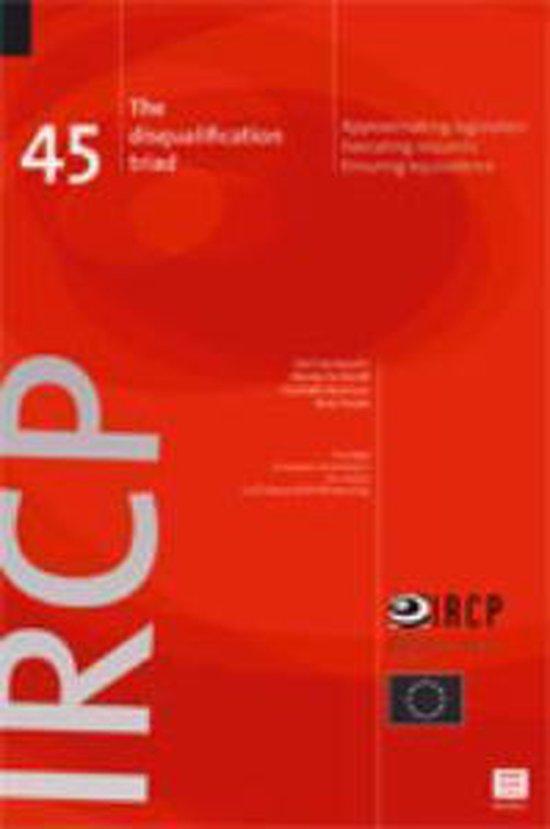
The disqualification triad (IRCP-series, vol. 45)
€ 68,00
In the past decades the EU has made little progress with respect to disqualifications as a sanction mechanism. The complex nature of this specific sanction
mechanism has caused policy initiatives to be postponed time after time.
In answer to … meer
In the past decades the EU has made little progress with respect to disqualifications as a sanction mechanism. The complex nature of this specific sanction
mechanism has caused policy initiatives to be postponed time after time.
In answer to a call from the European Commission, the authors have conducted a
comparative legal analysis in the EU 27 and looked into the practical experiences
with disqualifications from a domestic and a cross-border perspective. To that
end, academics, policy makers and practitioners in the member states have been
consulted.
Analysis reveals a wide variety in the typology of disqualifications as a sanction
measure, persons to whom the disqualifications can be imposed and authorities
involved. Furthermore, there are considerable differences with respect to the
inclusion of disqualifications in the national criminal records databases. Linked
thereto, information on foreign disqualifications is scarce and rarely used in
practice.
To ensure a comprehensive and consistent policy approach, the authors have
come up with a so-called disqualification triad, comprising (1) unified EU-wide
disqualifications, (2) mutual recognition of disqualifications and (3) EU-wide
equivalent effect of disqualifications. The functioning of the disqualification
triad was further elaborated in three case studies, being public procurement
disqualifications, disqualifications from working with children and driving
disqualifications.
This book is essential reading for both EU and national policy makers as well as
for researchers and practitioners involved.
Aanvullende informatie
| Afmetingen | 24 × 16 cm |
|---|
Boek informatie
Gerelateerde producten

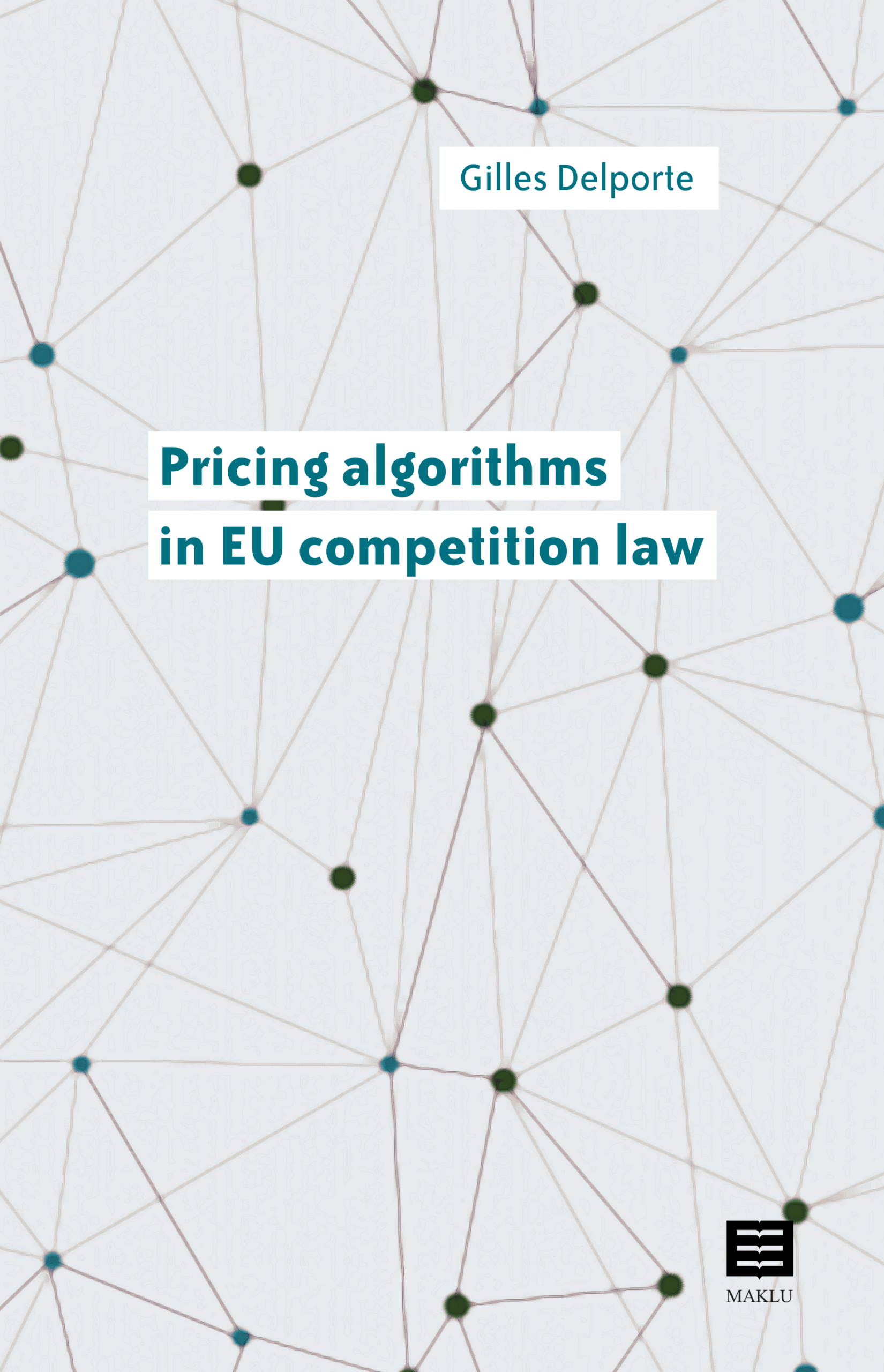
Pricing Algorithms in EU competition law.
This book aims to do just that, using the results of economic research and computer science as the starting point for a legal analysis of these digital cartels. It analyses several forms of algorithmic collusion in decreasing order of human involvement. Indeed, the role of algorithms can range from supporting a cartel to being its sole perpetrator, and each scenario tests current competition law in a different way. This is followed by an overarching perspective on public and private enforcement, as well as a brief discussion of two related issues at the intersection of data protection and competition law: personalised pricing and algorithmic consumers.
Gilles Delporte graduated the KU Leuven and University of Zurich Master of Law double degree program in September 2019, specialising in international and European law. He currently works as a jurist in Luxembourg, where he will be starting the cours complémentaires en droit luxembourgeois (CCDL). He invites comments at gillesdelporte@gmail.com.
Pricing Algorithms in EU competition law.
This book aims to do just that, using the results of economic research and computer science as the starting point for a legal analysis of these digital cartels. It analyses several forms of algorithmic collusion in decreasing order of human involvement. Indeed, the role of algorithms can range from supporting a cartel to being its sole perpetrator, and each scenario tests current competition law in a different way. This is followed by an overarching perspective on public and private enforcement, as well as a brief discussion of two related issues at the intersection of data protection and competition law: personalised pricing and algorithmic consumers.
Gilles Delporte graduated the KU Leuven and University of Zurich Master of Law double degree program in September 2019, specialising in international and European law. He currently works as a jurist in Luxembourg, where he will be starting the cours complémentaires en droit luxembourgeois (CCDL). He invites comments at gillesdelporte@gmail.com.