

Pivot Politics. Changing cultural identities in early state formation processes
€ 17,02
Boek informatie
ISBN 13
9789055890071
Auteur(s)
Martin van Bakel, Renee Hagesteijn, Pieter van de Velde (eds)
NUR
-
Gerelateerde producten
Income and wealth inequality in the Netherlands 16th-20th century
€ 29,50
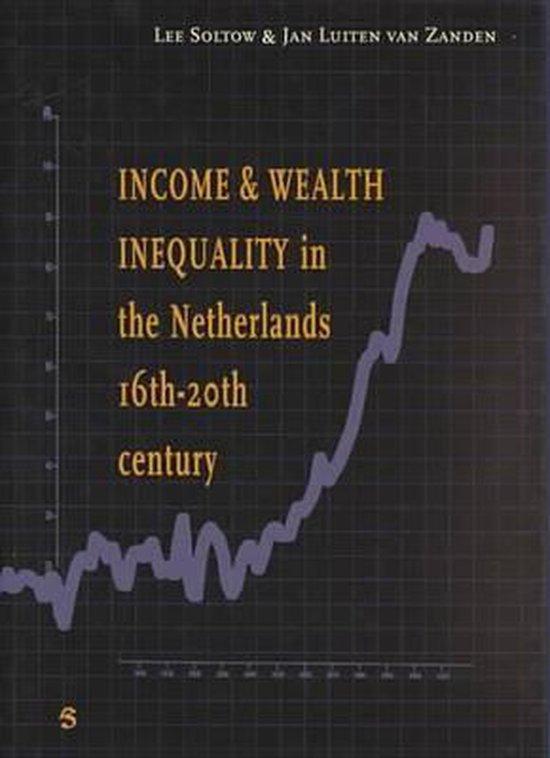
The ''new inequality'' of the 1980''s and 1990''s has recently given rise to a lively debate about the relationship between economic growth and income distribution. This debate is the background of the study by Lee Soltow an Jan Luiten van Zanden, who, staying close to the sources, have mapped in some detail the long-term development of income and wealth inequality in the Netherlands between c. 1500 and the present.
Their starting point is the hypothesis of Simon Kuznets that income inequality increased during the first phase of modern economic growth, but that in the second phase, which begins in most Western countries around the turn of the twentieth century, a marked levelling out of income differences followed. The development of inequality during the Golden Age, when growth resulted in a marked increase in inequality seems to confirm this idea. However, the analysis of the connection between growth and inequality in the nineteenth and twentieth century leads them to question the Kuznets hypothesis.
Lee Soltow is professor of Economics at Ohio University (Athens).
Among his publications on the subject are: ''Distribution of wealth and income in the United States in 1978'' (1989) and ''Men and wealth in the United States 1850-1870'' (1975).
Jan Luiten van Zanden is professor of Economic and Social History at Utrecht University (the Netherlands).
Among his publications on the subject are: ''The economic history of the Netherlands 1914-1955: a small open economy in the ''long'' twentieth century'' (1998). ''The economic development of the Netherlands since 1870'' (1996) and ''The rise and decline of Holland''s economy: merchant capitalism and the labour market'' (1993).
Income and wealth inequality in the Netherlands 16th-20th century
€ 29,50
The ''new inequality'' of the 1980''s and 1990''s has recently given rise to a lively debate about the relationship between economic growth and income distribution. This debate is the background of the study by Lee Soltow an Jan Luiten van Zanden, who, staying close to the sources, have mapped in some detail the long-term development of income and wealth inequality in the Netherlands between c. 1500 and the present.
Their starting point is the hypothesis of Simon Kuznets that income inequality increased during the first phase of modern economic growth, but that in the second phase, which begins in most Western countries around the turn of the twentieth century, a marked levelling out of income differences followed. The development of inequality during the Golden Age, when growth resulted in a marked increase in inequality seems to confirm this idea. However, the analysis of the connection between growth and inequality in the nineteenth and twentieth century leads them to question the Kuznets hypothesis.
Lee Soltow is professor of Economics at Ohio University (Athens).
Among his publications on the subject are: ''Distribution of wealth and income in the United States in 1978'' (1989) and ''Men and wealth in the United States 1850-1870'' (1975).
Jan Luiten van Zanden is professor of Economic and Social History at Utrecht University (the Netherlands).
Among his publications on the subject are: ''The economic history of the Netherlands 1914-1955: a small open economy in the ''long'' twentieth century'' (1998). ''The economic development of the Netherlands since 1870'' (1996) and ''The rise and decline of Holland''s economy: merchant capitalism and the labour market'' (1993).
Geen voorraad

Money be man
€ 12,39
Health care policy should be based on understanding of what takes place at the community level. This study explores how people in a coastal village in Ghana perceive and use modern pharmaceuticals. In this G speaking community, 35 kilometers from the capital, there are no proper health care facilities. Most people purchase their medicines in two drugstores which sell products that they are not supposed to sell according to government rules. The author focuses on local perceptions of anatomy and etiology and on people's health expenditure. His book is a search for- the social and cultural basis of the popularity of pharmaceuticals. "Money be man", an inscription on a local lorry, captures the villagers' main concern: without money one cannot remain healthy.
Geen voorraad
Money be man
€ 12,39
Health care policy should be based on understanding of what takes place at the community level. This study explores how people in a coastal village in Ghana perceive and use modern pharmaceuticals. In this G speaking community, 35 kilometers from the capital, there are no proper health care facilities. Most people purchase their medicines in two drugstores which sell products that they are not supposed to sell according to government rules. The author focuses on local perceptions of anatomy and etiology and on people's health expenditure. His book is a search for- the social and cultural basis of the popularity of pharmaceuticals. "Money be man", an inscription on a local lorry, captures the villagers' main concern: without money one cannot remain healthy.
De kern van de politiek
€ 15,50
Politiek handelen gebeurt op allerlei niveau’s. Op nationaal niveau bij regeringen en parlementen, tussen burgers en partijen, over beleid en de uitkomsten daarvan. Maar politiek handelen bestaat ook in bedrijven, in kerken, in verenigingen en clubs. Politiek handelen gebeurt overal waar voor groepen mensen gemeenschappelijke zaken moeten worden geregeld wanneer er geen overeenstemming is over welke zaken dat zijn of wat er dan precies zou moeten worden afgesproken.
Volgens Cees van der Eijk is conflict en samenwerking de motor van alle politiek handelen. Soms is dat openlijk zichtbaar, maar vaak ook niet.
Aan de hand van een aantal kernvragen en kernbegrippen laat hij zien hoe men inzicht in politiek handelen kan krijgen. Die kernbegrippen en kernvragen zijn in allerlei situaties toepasbaar: voor de politiek in een land, in een bedrijf, in een vakbond, in een sportvereniging, in een milieuorganisatie, of waar dan ook.
In dit boek gaat het dus om de kern, om de essentie van ‘politiek’ en van het ‘politieke’.Dat maakt dit boekje tot verplichte kost voor eenieder die zich met politiek handelen op welk niveau dan ook bezighoudt.
Cees van der Eijk is hoogleraar Algemene Politicologie aan de Faculteit der Maatschappij- en Gedragswetenschappen van de Universiteit van Amsterdam.
De kern van de politiek
€ 15,50
Politiek handelen gebeurt op allerlei niveau’s. Op nationaal niveau bij regeringen en parlementen, tussen burgers en partijen, over beleid en de uitkomsten daarvan. Maar politiek handelen bestaat ook in bedrijven, in kerken, in verenigingen en clubs. Politiek handelen gebeurt overal waar voor groepen mensen gemeenschappelijke zaken moeten worden geregeld wanneer er geen overeenstemming is over welke zaken dat zijn of wat er dan precies zou moeten worden afgesproken.
Volgens Cees van der Eijk is conflict en samenwerking de motor van alle politiek handelen. Soms is dat openlijk zichtbaar, maar vaak ook niet.
Aan de hand van een aantal kernvragen en kernbegrippen laat hij zien hoe men inzicht in politiek handelen kan krijgen. Die kernbegrippen en kernvragen zijn in allerlei situaties toepasbaar: voor de politiek in een land, in een bedrijf, in een vakbond, in een sportvereniging, in een milieuorganisatie, of waar dan ook.
In dit boek gaat het dus om de kern, om de essentie van ‘politiek’ en van het ‘politieke’.Dat maakt dit boekje tot verplichte kost voor eenieder die zich met politiek handelen op welk niveau dan ook bezighoudt.
Cees van der Eijk is hoogleraar Algemene Politicologie aan de Faculteit der Maatschappij- en Gedragswetenschappen van de Universiteit van Amsterdam.
Mass media advertising: information or wallpaper?
€ 17,00
For most consumers, advertising is less important than advertisers might think. Advertising appears to function as ''wallpaper'', something in the background that is hardly noticed. The advertiser, however, wants the consumer to use his advertisement as a piece of information, for example, when standing in front of a shelf thinking what kind of detergent is ''best'' or ''cheapest''. Mass mediated advertising campaigns should therefore at least function as a reminder when making all kinds of choices concerning brands, products or services.
This book describes consumers'' use of advertising. The question to be answered is: "How and why do people use advertising?". Are they searching for information or simply watching commercials because they are funny? Are they avoiding ads because they find them irritating? And to what extent is (claimed) advertising use related to remembering having seen specific ads? The five studies in this book use different methods and research designs for addressing these questions, to understand and explain advertising use. These include: a meta-analysis of more than 50 studies on advertising, several in-depth interviews, a nation-wide telephone survey with follow-up by mail, an experiment, and a face-to-face survey.
Edith Smit is Associate Professor at the University of Amsterdam, Department of Communication, and The Amsterdam School of Communications Research ASCoR. She is also Deputy Director of SWOCC, the Dutch Foundation for Fundamental Research on Commercial Communication.
Mass media advertising: information or wallpaper?
€ 17,00
For most consumers, advertising is less important than advertisers might think. Advertising appears to function as ''wallpaper'', something in the background that is hardly noticed. The advertiser, however, wants the consumer to use his advertisement as a piece of information, for example, when standing in front of a shelf thinking what kind of detergent is ''best'' or ''cheapest''. Mass mediated advertising campaigns should therefore at least function as a reminder when making all kinds of choices concerning brands, products or services.
This book describes consumers'' use of advertising. The question to be answered is: "How and why do people use advertising?". Are they searching for information or simply watching commercials because they are funny? Are they avoiding ads because they find them irritating? And to what extent is (claimed) advertising use related to remembering having seen specific ads? The five studies in this book use different methods and research designs for addressing these questions, to understand and explain advertising use. These include: a meta-analysis of more than 50 studies on advertising, several in-depth interviews, a nation-wide telephone survey with follow-up by mail, an experiment, and a face-to-face survey.
Edith Smit is Associate Professor at the University of Amsterdam, Department of Communication, and The Amsterdam School of Communications Research ASCoR. She is also Deputy Director of SWOCC, the Dutch Foundation for Fundamental Research on Commercial Communication.