

Over/about Loes – Essays for Loes Schenk-Sandbergen at the occasion of her departure from the University of Amsterdam, 11 mei 2007
€ 15,00
Boek informatie
ISBN 13
9789055892907
Auteur(s)
Hans Schenk (Red.)
NUR
-
Gerelateerde producten
Geen voorraad

Geen voorraad
Geen voorraad
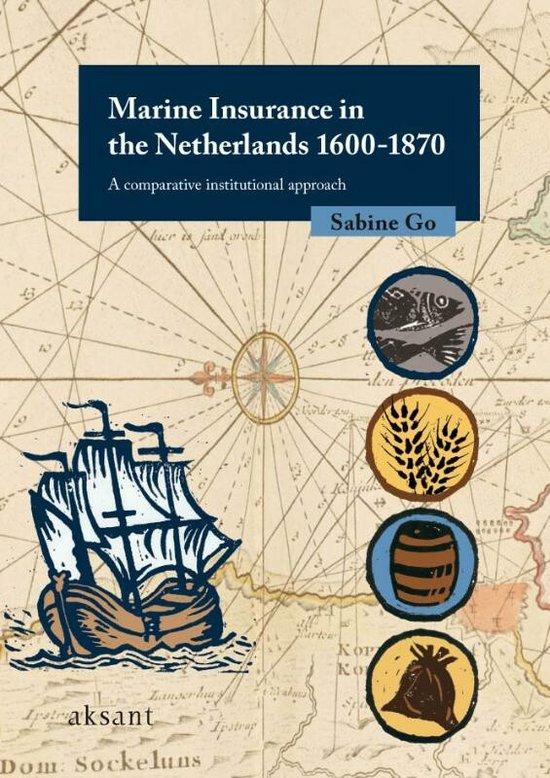
Marine Insurance in the Netherlands 1600-1870. A comparative institutional approach
€ 39,90
Marine insurance has been of great importance to the expansion of long distance trade and economic growth in the early modern period, in particular for seafaring nations such as the Dutch Republic. The Amsterdam market became Europe's leading insurance market and within the Republic other insurance systems also emerged. Little is known about the differing institutional frameworks governing these industries and the interaction between the institutions and the actors in the industry. This study will examine the development of marine insurance in the Netherlands in Amsterdam, Rotterdam and the province of Groningen from c. 1600 to 1870 from an institutional point of view. It will examine how the behaviour of authorities, insurers, underwriters and brokers was affected by the formal and informal constraints of the industry and how in turn their conduct has influenced the institutional framework and induced institutional change. A comparative institutional analysis will be made of three insurance systems in the Netherlands, each with its own distinctive characteristics. The interaction between institutions and actors will be studied in relation to the effects of technological innovations and international geo-political changes. By examining developments over a period of two and half centuries the path of long-term institutional change becomes discernable.
Geen voorraad
Marine Insurance in the Netherlands 1600-1870. A comparative institutional approach
€ 39,90
Marine insurance has been of great importance to the expansion of long distance trade and economic growth in the early modern period, in particular for seafaring nations such as the Dutch Republic. The Amsterdam market became Europe's leading insurance market and within the Republic other insurance systems also emerged. Little is known about the differing institutional frameworks governing these industries and the interaction between the institutions and the actors in the industry. This study will examine the development of marine insurance in the Netherlands in Amsterdam, Rotterdam and the province of Groningen from c. 1600 to 1870 from an institutional point of view. It will examine how the behaviour of authorities, insurers, underwriters and brokers was affected by the formal and informal constraints of the industry and how in turn their conduct has influenced the institutional framework and induced institutional change. A comparative institutional analysis will be made of three insurance systems in the Netherlands, each with its own distinctive characteristics. The interaction between institutions and actors will be studied in relation to the effects of technological innovations and international geo-political changes. By examining developments over a period of two and half centuries the path of long-term institutional change becomes discernable.
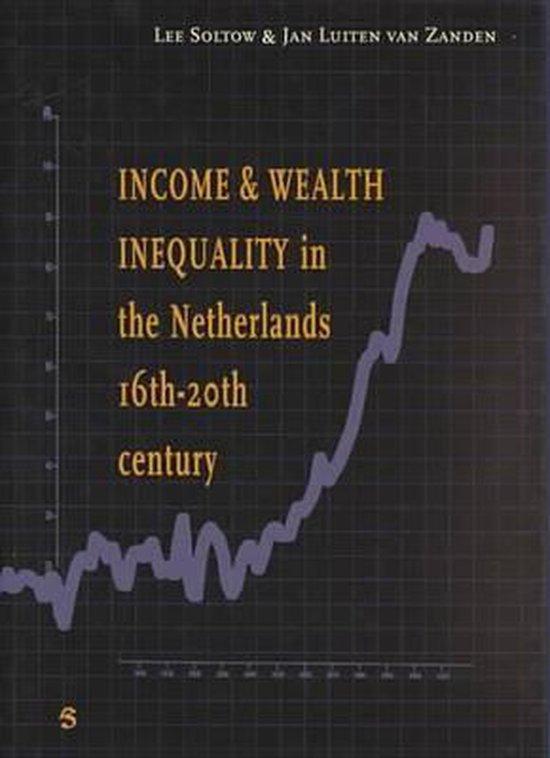
Income and wealth inequality in the Netherlands 16th-20th century
€ 29,50
The ''new inequality'' of the 1980''s and 1990''s has recently given rise to a lively debate about the relationship between economic growth and income distribution. This debate is the background of the study by Lee Soltow an Jan Luiten van Zanden, who, staying close to the sources, have mapped in some detail the long-term development of income and wealth inequality in the Netherlands between c. 1500 and the present.
Their starting point is the hypothesis of Simon Kuznets that income inequality increased during the first phase of modern economic growth, but that in the second phase, which begins in most Western countries around the turn of the twentieth century, a marked levelling out of income differences followed. The development of inequality during the Golden Age, when growth resulted in a marked increase in inequality seems to confirm this idea. However, the analysis of the connection between growth and inequality in the nineteenth and twentieth century leads them to question the Kuznets hypothesis.
Lee Soltow is professor of Economics at Ohio University (Athens).
Among his publications on the subject are: ''Distribution of wealth and income in the United States in 1978'' (1989) and ''Men and wealth in the United States 1850-1870'' (1975).
Jan Luiten van Zanden is professor of Economic and Social History at Utrecht University (the Netherlands).
Among his publications on the subject are: ''The economic history of the Netherlands 1914-1955: a small open economy in the ''long'' twentieth century'' (1998). ''The economic development of the Netherlands since 1870'' (1996) and ''The rise and decline of Holland''s economy: merchant capitalism and the labour market'' (1993).
Income and wealth inequality in the Netherlands 16th-20th century
€ 29,50
The ''new inequality'' of the 1980''s and 1990''s has recently given rise to a lively debate about the relationship between economic growth and income distribution. This debate is the background of the study by Lee Soltow an Jan Luiten van Zanden, who, staying close to the sources, have mapped in some detail the long-term development of income and wealth inequality in the Netherlands between c. 1500 and the present.
Their starting point is the hypothesis of Simon Kuznets that income inequality increased during the first phase of modern economic growth, but that in the second phase, which begins in most Western countries around the turn of the twentieth century, a marked levelling out of income differences followed. The development of inequality during the Golden Age, when growth resulted in a marked increase in inequality seems to confirm this idea. However, the analysis of the connection between growth and inequality in the nineteenth and twentieth century leads them to question the Kuznets hypothesis.
Lee Soltow is professor of Economics at Ohio University (Athens).
Among his publications on the subject are: ''Distribution of wealth and income in the United States in 1978'' (1989) and ''Men and wealth in the United States 1850-1870'' (1975).
Jan Luiten van Zanden is professor of Economic and Social History at Utrecht University (the Netherlands).
Among his publications on the subject are: ''The economic history of the Netherlands 1914-1955: a small open economy in the ''long'' twentieth century'' (1998). ''The economic development of the Netherlands since 1870'' (1996) and ''The rise and decline of Holland''s economy: merchant capitalism and the labour market'' (1993).

Air-conditioned lifestyle. Nieuwe rijken in Jakarta
€ 13,80
Dit boek gaat over de ''Orang Kaya Baru'', de nieuwe rijken van het moderne Jakarta (Indonesië). Zij vormen de bovenste laag van de middenklasse, die in het midden van de jaren zestig is ontstaan na de explosieve economische ontwikkeling, die door Soeharto''s autoritaire ''Orde Baru'' (Nieuwe Orde) in gang is gezet.
Deze snel groeiende middenklasse jogt voor het werk, consumeert afwisselend fastfood en health food en kijkt ''s avonds onderuitgezakt voor de buis naar soaps, waarin joggen, fastfood en moderne relatieperikelen centraal staan. Een ogenschijnlijk universele manier van leven, vol met de voortbrengselen van de moderne massaproductie.
Dit consumptiepatroon is een relatief nieuw fenomeen in deze niet-westerse culturen. Daar zijn het vaak de ''nouveaux riches'' die dit fenomeen het eerst en het hevigst omarmen, want alleen door hun consumptiegedrag kunnen zij zich van de rest van de samenleving onderscheiden; kenmerkend voor de oude elite is immers haar aristocratische afkomst en opstelling. De moderne consumptie is zo een ideale uitdrukking voor de nieuwe sociale status van de zich gestaag uitbreidende middenklasse.
De ''Orang Kaya Baru'' is het meest gebaat bij de stabiliteit en overzichtelijkheid, die door de economische politiek van de ''Orde Baru'' is ontstaan; zij hebben veel te verliezen.
Lizzy van Leeuwen is jurist en antropoloog en thans werkzaam bij de Gemeente Amsterdam.
Air-conditioned lifestyle. Nieuwe rijken in Jakarta
€ 13,80
Dit boek gaat over de ''Orang Kaya Baru'', de nieuwe rijken van het moderne Jakarta (Indonesië). Zij vormen de bovenste laag van de middenklasse, die in het midden van de jaren zestig is ontstaan na de explosieve economische ontwikkeling, die door Soeharto''s autoritaire ''Orde Baru'' (Nieuwe Orde) in gang is gezet.
Deze snel groeiende middenklasse jogt voor het werk, consumeert afwisselend fastfood en health food en kijkt ''s avonds onderuitgezakt voor de buis naar soaps, waarin joggen, fastfood en moderne relatieperikelen centraal staan. Een ogenschijnlijk universele manier van leven, vol met de voortbrengselen van de moderne massaproductie.
Dit consumptiepatroon is een relatief nieuw fenomeen in deze niet-westerse culturen. Daar zijn het vaak de ''nouveaux riches'' die dit fenomeen het eerst en het hevigst omarmen, want alleen door hun consumptiegedrag kunnen zij zich van de rest van de samenleving onderscheiden; kenmerkend voor de oude elite is immers haar aristocratische afkomst en opstelling. De moderne consumptie is zo een ideale uitdrukking voor de nieuwe sociale status van de zich gestaag uitbreidende middenklasse.
De ''Orang Kaya Baru'' is het meest gebaat bij de stabiliteit en overzichtelijkheid, die door de economische politiek van de ''Orde Baru'' is ontstaan; zij hebben veel te verliezen.
Lizzy van Leeuwen is jurist en antropoloog en thans werkzaam bij de Gemeente Amsterdam.