
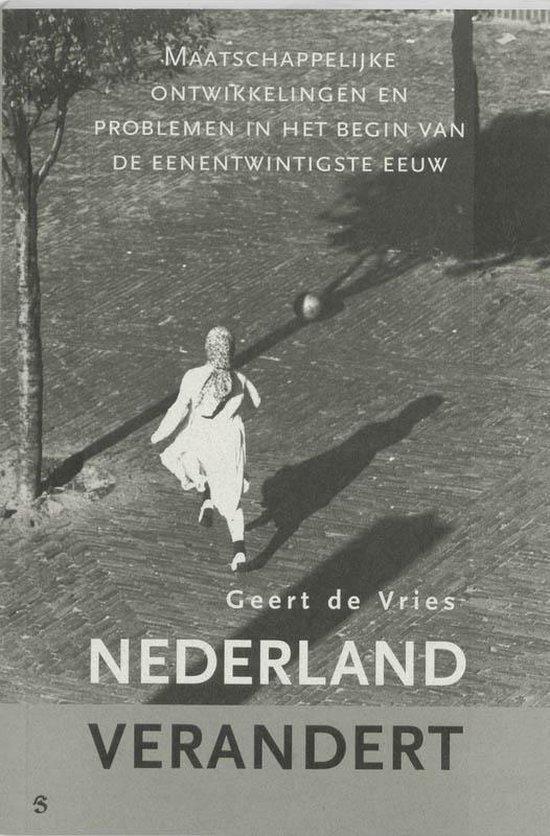
Nederland verandert. Maatschappelijke ontwikkelingen en problemen in het begin van de eenentwintigste eeuw.
€ 14,75
Dit boek is een mozaiek met een kleurige en aansprekende voorstelling van het huidige Nederland. Achter de eenvoud van de presentatie steekt een sterke theoretische gerichtheid. Zo krijgt de lezer haast ongemerkt een staalkaart van de sociologische theorievorming….
Dit boek is een mozaiek met een kleurige en aansprekende voorstelling van het huidige Nederland. Achter de eenvoud van de presentatie steekt een sterke theoretische gerichtheid. Zo krijgt de lezer haast ongemerkt een staalkaart van de sociologische theorievorming.
Boek informatie
ISBN 13
9789055891887
Aantal pagina's
151
Gerelateerde producten
Tekstsociologie. Over de talige constructie van de sociale werkelijkheid
€ 22,50
Wij doen veel met taal. We denken er in, praten er mee en schrijven er in. Maar we doen er nog meer mee. We maken er ook onze wereld mee. We stellen ons de wereld niet alleen in taal voor, we handelen ook naar die voorstelling. Wat we denken dat er is, daarnaar handelen we. Met taal omschrijven we onze sociale werkelijkheid. Met die werkelijkheid houdt de sociologie zich bezig. Dit boek gaat over die wonderlijke combinatie: taal & sociologiebeoefening.
Gerhard Nijhof is hoogleraar Medische Sociologie aan de Universiteit van Amsterdam en o.a de auteur van Ziekenwerk. Een kleine sociologie van alledaags ziekenleven.
Gerhard Nijhof is hoogleraar Medische Sociologie aan de Universiteit van Amsterdam en o.a de auteur van Ziekenwerk. Een kleine sociologie van alledaags ziekenleven.
Tekstsociologie. Over de talige constructie van de sociale werkelijkheid
€ 22,50
Wij doen veel met taal. We denken er in, praten er mee en schrijven er in. Maar we doen er nog meer mee. We maken er ook onze wereld mee. We stellen ons de wereld niet alleen in taal voor, we handelen ook naar die voorstelling. Wat we denken dat er is, daarnaar handelen we. Met taal omschrijven we onze sociale werkelijkheid. Met die werkelijkheid houdt de sociologie zich bezig. Dit boek gaat over die wonderlijke combinatie: taal & sociologiebeoefening.
Gerhard Nijhof is hoogleraar Medische Sociologie aan de Universiteit van Amsterdam en o.a de auteur van Ziekenwerk. Een kleine sociologie van alledaags ziekenleven.
Gerhard Nijhof is hoogleraar Medische Sociologie aan de Universiteit van Amsterdam en o.a de auteur van Ziekenwerk. Een kleine sociologie van alledaags ziekenleven.
Geen voorraad

Geen voorraad
Bridges & Watersheds. A narrative analysis of watermanagement in England, Wales and the Netherlands
€ 22,50
What is good water management, if we take scarcity of water, combined with climate change, the rise of sea level and a growing world population into account? Can water management be privatized? Or should the role and the position of the nation state even be strengthened to protect the environment and the citizens? Dicke has conducted a narrative analysis of water management in England, Wales and the Netherlands. Hundred years ago, water used to be a national public good. The nation state was pivotal in water management. Nowadays, water is considered to be part of a global water system. This view transforms water from a national to a global public good. As a result, the nation state is not the only actor, which has a say in the management of this global public good. This transformation places the public private divide once again at the center of attention.
The present debate about privatization, both in England and in the Netherlands, is incomplete. It does not take all dimensions of the public private divide into account. Dicke suggests that both visibility (transparency) and collectivity (water belongs to us all) should be considered. The issue is not whether water management is provided by a nation state or not. The issue should be whether the dimensions of collectivity and visibility are well balanced. This can only be achieved through a restoration of the link between water and society.
Willemijn Dicke is assistant professor at Delft University of Technology at the Department of Public Management Organisation & Management.
Bridges & Watersheds. A narrative analysis of watermanagement in England, Wales and the Netherlands
€ 22,50
What is good water management, if we take scarcity of water, combined with climate change, the rise of sea level and a growing world population into account? Can water management be privatized? Or should the role and the position of the nation state even be strengthened to protect the environment and the citizens? Dicke has conducted a narrative analysis of water management in England, Wales and the Netherlands. Hundred years ago, water used to be a national public good. The nation state was pivotal in water management. Nowadays, water is considered to be part of a global water system. This view transforms water from a national to a global public good. As a result, the nation state is not the only actor, which has a say in the management of this global public good. This transformation places the public private divide once again at the center of attention.
The present debate about privatization, both in England and in the Netherlands, is incomplete. It does not take all dimensions of the public private divide into account. Dicke suggests that both visibility (transparency) and collectivity (water belongs to us all) should be considered. The issue is not whether water management is provided by a nation state or not. The issue should be whether the dimensions of collectivity and visibility are well balanced. This can only be achieved through a restoration of the link between water and society.
Willemijn Dicke is assistant professor at Delft University of Technology at the Department of Public Management Organisation & Management.
Geen voorraad
Marine Insurance in the Netherlands 1600-1870. A comparative institutional approach
€ 39,90
Marine insurance has been of great importance to the expansion of long distance trade and economic growth in the early modern period, in particular for seafaring nations such as the Dutch Republic. The Amsterdam market became Europe's leading insurance market and within the Republic other insurance systems also emerged. Little is known about the differing institutional frameworks governing these industries and the interaction between the institutions and the actors in the industry. This study will examine the development of marine insurance in the Netherlands in Amsterdam, Rotterdam and the province of Groningen from c. 1600 to 1870 from an institutional point of view. It will examine how the behaviour of authorities, insurers, underwriters and brokers was affected by the formal and informal constraints of the industry and how in turn their conduct has influenced the institutional framework and induced institutional change. A comparative institutional analysis will be made of three insurance systems in the Netherlands, each with its own distinctive characteristics. The interaction between institutions and actors will be studied in relation to the effects of technological innovations and international geo-political changes. By examining developments over a period of two and half centuries the path of long-term institutional change becomes discernable.
Geen voorraad
Marine Insurance in the Netherlands 1600-1870. A comparative institutional approach
€ 39,90
Marine insurance has been of great importance to the expansion of long distance trade and economic growth in the early modern period, in particular for seafaring nations such as the Dutch Republic. The Amsterdam market became Europe's leading insurance market and within the Republic other insurance systems also emerged. Little is known about the differing institutional frameworks governing these industries and the interaction between the institutions and the actors in the industry. This study will examine the development of marine insurance in the Netherlands in Amsterdam, Rotterdam and the province of Groningen from c. 1600 to 1870 from an institutional point of view. It will examine how the behaviour of authorities, insurers, underwriters and brokers was affected by the formal and informal constraints of the industry and how in turn their conduct has influenced the institutional framework and induced institutional change. A comparative institutional analysis will be made of three insurance systems in the Netherlands, each with its own distinctive characteristics. The interaction between institutions and actors will be studied in relation to the effects of technological innovations and international geo-political changes. By examining developments over a period of two and half centuries the path of long-term institutional change becomes discernable.