
Ethnocentrism. Reflections on Medical Anthropology.
€ 17,50
Boek informatie
ISBN 13
9789055892327
Auteur(s)
S. van der Geest, R. Reis
NUR
-
Gerelateerde producten

Bridges & Watersheds. A narrative analysis of watermanagement in England, Wales and the Netherlands
€ 22,50
What is good water management, if we take scarcity of water, combined with climate change, the rise of sea level and a growing world population into account? Can water management be privatized? Or should the role and the position of the nation state even be strengthened to protect the environment and the citizens? Dicke has conducted a narrative analysis of water management in England, Wales and the Netherlands. Hundred years ago, water used to be a national public good. The nation state was pivotal in water management. Nowadays, water is considered to be part of a global water system. This view transforms water from a national to a global public good. As a result, the nation state is not the only actor, which has a say in the management of this global public good. This transformation places the public private divide once again at the center of attention.
The present debate about privatization, both in England and in the Netherlands, is incomplete. It does not take all dimensions of the public private divide into account. Dicke suggests that both visibility (transparency) and collectivity (water belongs to us all) should be considered. The issue is not whether water management is provided by a nation state or not. The issue should be whether the dimensions of collectivity and visibility are well balanced. This can only be achieved through a restoration of the link between water and society.
Willemijn Dicke is assistant professor at Delft University of Technology at the Department of Public Management Organisation & Management.
Bridges & Watersheds. A narrative analysis of watermanagement in England, Wales and the Netherlands
€ 22,50
What is good water management, if we take scarcity of water, combined with climate change, the rise of sea level and a growing world population into account? Can water management be privatized? Or should the role and the position of the nation state even be strengthened to protect the environment and the citizens? Dicke has conducted a narrative analysis of water management in England, Wales and the Netherlands. Hundred years ago, water used to be a national public good. The nation state was pivotal in water management. Nowadays, water is considered to be part of a global water system. This view transforms water from a national to a global public good. As a result, the nation state is not the only actor, which has a say in the management of this global public good. This transformation places the public private divide once again at the center of attention.
The present debate about privatization, both in England and in the Netherlands, is incomplete. It does not take all dimensions of the public private divide into account. Dicke suggests that both visibility (transparency) and collectivity (water belongs to us all) should be considered. The issue is not whether water management is provided by a nation state or not. The issue should be whether the dimensions of collectivity and visibility are well balanced. This can only be achieved through a restoration of the link between water and society.
Willemijn Dicke is assistant professor at Delft University of Technology at the Department of Public Management Organisation & Management.
Geen voorraad
Geen voorraad
Geen voorraad
Facades. Oostenrijkers en het oorlogsverleden
€ 18,50
Ingelijfd bij Duitsland vochten en werkten Oostenrijkers in de Tweede Wereldoorlog samen met de Duitsers op alle fronten, in de vernietigingskampen, in de bezette gebieden, thuis. Samen met de Duitsers verloren ze.
Alle betrokkenen moesten na deze collectieve ervaring van geweld, samen verder, aan welke kant ze ook gestaan hadden. Zoals er steeds opnieuw samenlevingen zijn, die na een oorlog, na etnische zuiveringen, na terreur en verlies met elkaar verder moeten.
Herinneren is niet alleen een psychisch maar ook sociaal fenomeen. We herinneren wat gedeeld wordt met anderen. De herinnering is steeds opnieuw een constructie en tegelijkertijd een reconstructie: ze gaat terug, reageert en borduurt voort op wat er vroeger gebeurd is. Het verleden krijgt vorm en wordt steeds aangepast, becommentarieerd, verdraaid en bestreden.
De herinnering beperkt zich niet tot de taal: ze wordt vastgelegd in allerlei vormen, ze gaat schuil achter allerlei façades, zoals een illustratie, een monument, een foto, een bepaalde melodie, een gebaar, een pijnlijke stilte.
Anne Gevers laat in deze studie zien hoe die herinneringen gestalte hebben gekregen in een Oostenrijkse stad. Ze traceert het complexe samenspel tussen dominante, verborgen en contrasterende interpretaties van dit uiterst omstreden maar niet vergeten verleden.
Anne Gevers (1951) was ten tijde van het onderzoek als antropologe verbonden aan The Amsterdam School for Social Science Research.
Geen voorraad
Facades. Oostenrijkers en het oorlogsverleden
€ 18,50
Ingelijfd bij Duitsland vochten en werkten Oostenrijkers in de Tweede Wereldoorlog samen met de Duitsers op alle fronten, in de vernietigingskampen, in de bezette gebieden, thuis. Samen met de Duitsers verloren ze.
Alle betrokkenen moesten na deze collectieve ervaring van geweld, samen verder, aan welke kant ze ook gestaan hadden. Zoals er steeds opnieuw samenlevingen zijn, die na een oorlog, na etnische zuiveringen, na terreur en verlies met elkaar verder moeten.
Herinneren is niet alleen een psychisch maar ook sociaal fenomeen. We herinneren wat gedeeld wordt met anderen. De herinnering is steeds opnieuw een constructie en tegelijkertijd een reconstructie: ze gaat terug, reageert en borduurt voort op wat er vroeger gebeurd is. Het verleden krijgt vorm en wordt steeds aangepast, becommentarieerd, verdraaid en bestreden.
De herinnering beperkt zich niet tot de taal: ze wordt vastgelegd in allerlei vormen, ze gaat schuil achter allerlei façades, zoals een illustratie, een monument, een foto, een bepaalde melodie, een gebaar, een pijnlijke stilte.
Anne Gevers laat in deze studie zien hoe die herinneringen gestalte hebben gekregen in een Oostenrijkse stad. Ze traceert het complexe samenspel tussen dominante, verborgen en contrasterende interpretaties van dit uiterst omstreden maar niet vergeten verleden.
Anne Gevers (1951) was ten tijde van het onderzoek als antropologe verbonden aan The Amsterdam School for Social Science Research.
Income and wealth inequality in the Netherlands 16th-20th century
€ 29,50
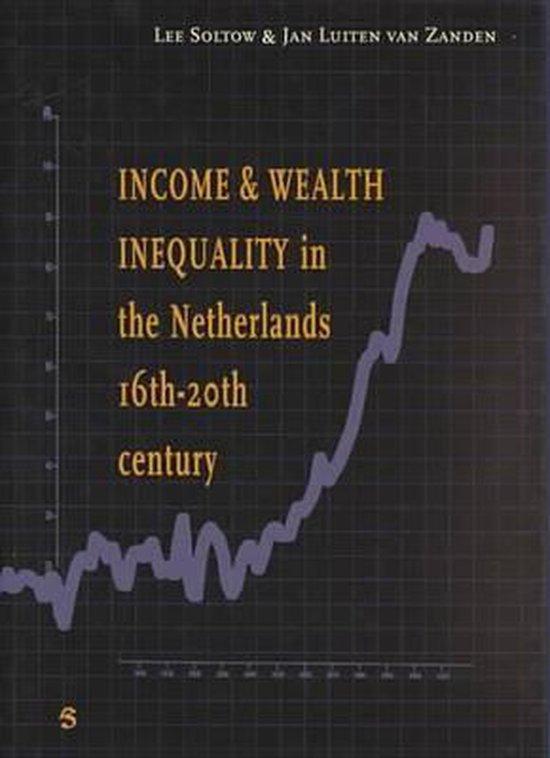
The ''new inequality'' of the 1980''s and 1990''s has recently given rise to a lively debate about the relationship between economic growth and income distribution. This debate is the background of the study by Lee Soltow an Jan Luiten van Zanden, who, staying close to the sources, have mapped in some detail the long-term development of income and wealth inequality in the Netherlands between c. 1500 and the present.
Their starting point is the hypothesis of Simon Kuznets that income inequality increased during the first phase of modern economic growth, but that in the second phase, which begins in most Western countries around the turn of the twentieth century, a marked levelling out of income differences followed. The development of inequality during the Golden Age, when growth resulted in a marked increase in inequality seems to confirm this idea. However, the analysis of the connection between growth and inequality in the nineteenth and twentieth century leads them to question the Kuznets hypothesis.
Lee Soltow is professor of Economics at Ohio University (Athens).
Among his publications on the subject are: ''Distribution of wealth and income in the United States in 1978'' (1989) and ''Men and wealth in the United States 1850-1870'' (1975).
Jan Luiten van Zanden is professor of Economic and Social History at Utrecht University (the Netherlands).
Among his publications on the subject are: ''The economic history of the Netherlands 1914-1955: a small open economy in the ''long'' twentieth century'' (1998). ''The economic development of the Netherlands since 1870'' (1996) and ''The rise and decline of Holland''s economy: merchant capitalism and the labour market'' (1993).
Income and wealth inequality in the Netherlands 16th-20th century
€ 29,50
The ''new inequality'' of the 1980''s and 1990''s has recently given rise to a lively debate about the relationship between economic growth and income distribution. This debate is the background of the study by Lee Soltow an Jan Luiten van Zanden, who, staying close to the sources, have mapped in some detail the long-term development of income and wealth inequality in the Netherlands between c. 1500 and the present.
Their starting point is the hypothesis of Simon Kuznets that income inequality increased during the first phase of modern economic growth, but that in the second phase, which begins in most Western countries around the turn of the twentieth century, a marked levelling out of income differences followed. The development of inequality during the Golden Age, when growth resulted in a marked increase in inequality seems to confirm this idea. However, the analysis of the connection between growth and inequality in the nineteenth and twentieth century leads them to question the Kuznets hypothesis.
Lee Soltow is professor of Economics at Ohio University (Athens).
Among his publications on the subject are: ''Distribution of wealth and income in the United States in 1978'' (1989) and ''Men and wealth in the United States 1850-1870'' (1975).
Jan Luiten van Zanden is professor of Economic and Social History at Utrecht University (the Netherlands).
Among his publications on the subject are: ''The economic history of the Netherlands 1914-1955: a small open economy in the ''long'' twentieth century'' (1998). ''The economic development of the Netherlands since 1870'' (1996) and ''The rise and decline of Holland''s economy: merchant capitalism and the labour market'' (1993).