
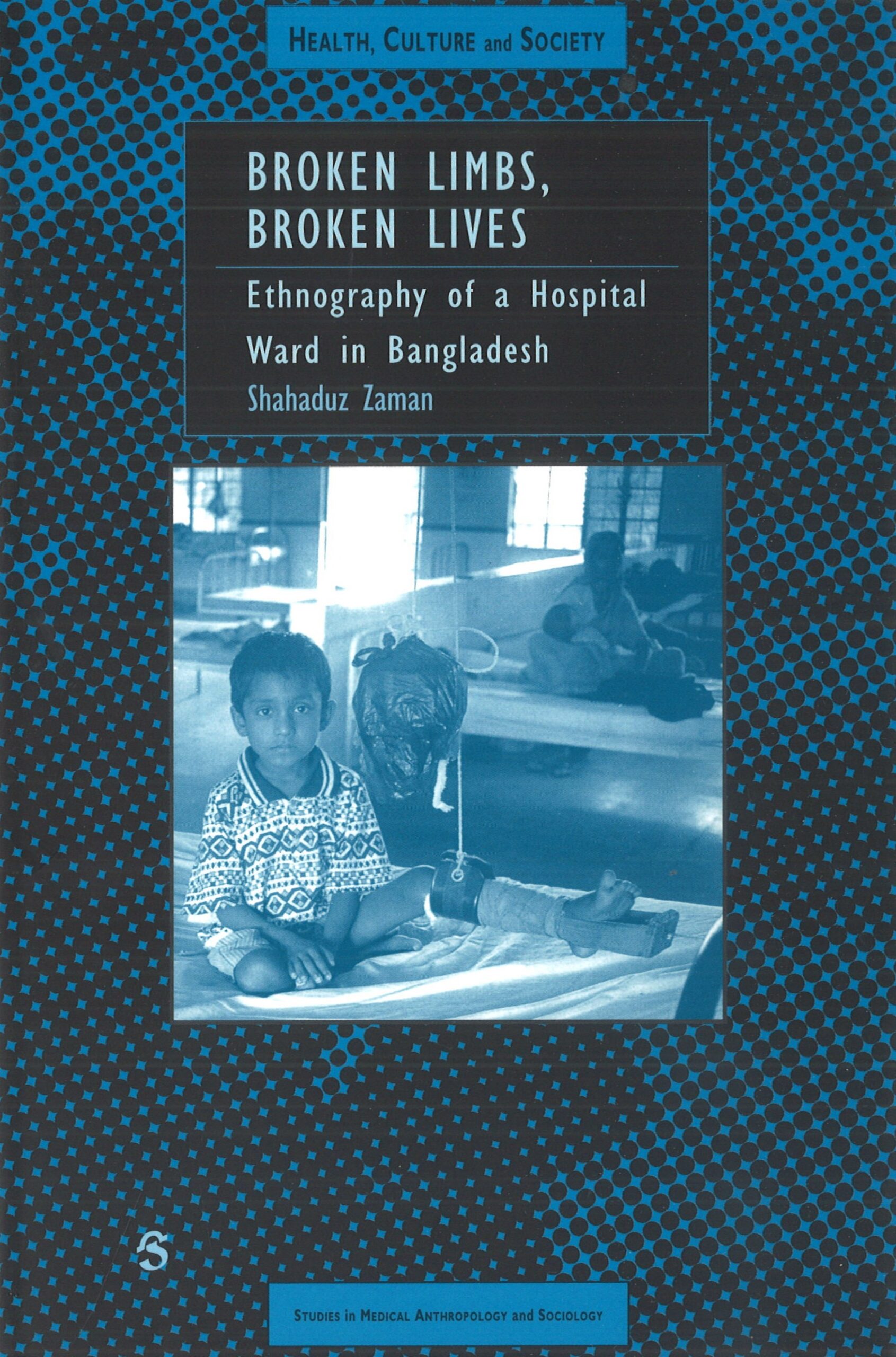
Broken limbs, broken lives. Ethnography of a hospital ward in Bangladesh. (Studes in Medical Anthropology & Sociology, nr. 13)
€ 35,00
This study represents a trend in anthropology to shift its attention to places of modern technology and bureaucracy. Shahaduz Zaman carried out anthropological fieldwork in an orthopaedic ward in a large government teaching hospital of Bangladesh. The stud… meer
Op voorraad
This study represents a trend in anthropology to shift its attention to places of modern technology and bureaucracy. Shahaduz Zaman carried out anthropological fieldwork in an orthopaedic ward in a large government teaching hospital of Bangladesh. The study shows that in contrast to the assumed universalism in biomedicine, biomedical practice is in fact a product of particular social conditions. The hospital reflects the features of its society.
Behind the injuries and broken limbs in the ward are stories of violence, crime and intolerance, occuring in a society where masses of people fight over limited resources. In the ward people interact in an extremely hierarchical manner. The patients, who are mainly from poor economic backgrounds, remain at the bottom of the hierarchy. Doctors and other staff members are often professionally frustrated. Strikes related to various professional demands made by hospital staff members, hamper the regular flow of work in the ward. Family members are engaged in nursing and provide and provide various kinds of support to their hospitalised relatives. Patients give small bribes to ward boys and cleaners to obtain their day-to-day necessities. Patients joke with each other and mock senior doctors. Thus they neutralise their powerlessness and drive away the monotony of their stay.
This shocking and humorous study shows how medical practice takes shape in an under-staffed, under-resourced and under-financed hospital of a low-income country, characterised by daily physical and structural violence.
Shahaduz Zaman is a medical doctor, medical anthropologist and literary writer. He obtained a PhD in social sciences at the University of Amsterdam and now teaches at the James P. Grant School of Public Health at BRAC University in Dhaka, Bangladesh.
—– Vertaling
Deze studie laat zien dat de biomedische praktijk in tegenstelling tot het vermeende universalisme een product is van de lokale sociale condities. In de orthopedische afdeling van een ziekenhuis wordt de omringende samenleving weerspiegeld, omdat achter de verwondingen en de gebroken ledematen de verhalen van geweld, misdaad en intolerantie liggen uit een samenleving waar massa”s mensen vechten om de beperkte hulpbronnen. Deze shockerende maar ook humoristische studie laat zien hoe de dagelijkse medische praktijk is in een ziekenhuis in een ontwikkelingsland dat moet werken met te weinig staf, weinig middelen en bijna geen geld. Shahaduz Zaman is arts, medisch antropoloog en schrijver. Hij promoveerde aan de Universiteit van Amsterdam en geeft nu les aan de James P. Grant School of Public Health at BRAC University in Dhaka, Bangladesh.
Boek informatie
Gerelateerde producten
Ziekenwerk. Een kleine sociologie van alledaags ziekenleven
Ziekenwerk. Een kleine sociologie van alledaags ziekenleven

De kern van de politiek
De kern van de politiek
Antropologische vergezichten. Mondialisering, migratie en multiculturaliteit
De boeken uit de Antropologie Academie hebben een inleidend karakter, zijn toegankelijk geschreven en geschikt voor studenten op BA- en MA-niveau, maar ook voor anderen, zoals reizigers en docenten, die zich afvragen hoe mensen met een verschillende culturele achtergrond in de wereld staan. De reeks Antropologie Academie wordt uitgegeven in samenwerking met de Antropologen Beroepsvereniging (ABv) www.antropologen.nl
Antropologische vergezichten. Mondialisering, migratie en multiculturaliteit
De boeken uit de Antropologie Academie hebben een inleidend karakter, zijn toegankelijk geschreven en geschikt voor studenten op BA- en MA-niveau, maar ook voor anderen, zoals reizigers en docenten, die zich afvragen hoe mensen met een verschillende culturele achtergrond in de wereld staan. De reeks Antropologie Academie wordt uitgegeven in samenwerking met de Antropologen Beroepsvereniging (ABv) www.antropologen.nl

Vietnamese society in transition. (Frans- en Engelstalig) The politics of change and reform.