
Lugubere ‘wiskunde’ Over schedels, moorden en WOII
€ 15,00
Wiskunde schijnt voor velen op zichzelf al luguber, maar hier gaat het over verhalen waarin een verwijzing zit naar wiskunde en schedels, moorden of WOII. Het woord wiskunde staat in de titel tussen aanhalingstekens, niet alleen omdat de vermelde wiskunde voor diehardmathematici geen ‘echte’ wiskunde is, maar ook omdat ze in de besproken voorbeelden al eens fout wordt toegepast.
Elk van de hoofdstukken is, op aanpassingen en uitbreidingen na, gebaseerd op een artikel dat voorheen verscheen in het wetenschapsblad EOS. Ze zijn dus al uitgetest op hun toegankelijkheid voor het ruime publiek. Ze kunnen een inspiratiebron zijn voor hen die de wiskunde willen illustreren met maatschappelijke voorbeelden, met inbegrip van de meest lugubere.
Het voorwoord is van Raf Scheers, Algemeen Hoofdredacteur EOS Wetenschappen.
Dirk Huylebrouck gaf les in Congo, Burundi, Portugal, aan de University of Maryland Global Campus en aan de Faculteit Architectuur van de KU Leuven. Hij schreef al zes boeken: Afrika+ Wiskunde; De Codes van da Vinci, Bach, pi en Co; België + wiskunde; Wiskunst; De Columns van Professor Pi; en, met Emma Grootveld en Rinus Roelofs, de eerste Nederlandse vertaling van de Divina Proportione van Luca Pacioli en Leonardo da Vinci.
Elk van de hoofdstukken is, op aanpassingen en uitbreidingen na, gebaseerd op een artikel dat voorheen verscheen in het wetenschapsblad EOS. Ze zijn dus al uitgetest op hun toegankelijkheid voor het ruime publiek. Ze kunnen een inspiratiebron zijn voor hen die de wiskunde willen illustreren met maatschappelijke voorbeelden, met inbegrip van de meest lugubere.
Het voorwoord is van Raf Scheers, Algemeen Hoofdredacteur EOS Wetenschappen.
Dirk Huylebrouck gaf les in Congo, Burundi, Portugal, aan de University of Maryland Global Campus en aan de Faculteit Architectuur van de KU Leuven. Hij schreef al zes boeken: Afrika+ Wiskunde; De Codes van da Vinci, Bach, pi en Co; België + wiskunde; Wiskunst; De Columns van Professor Pi; en, met Emma Grootveld en Rinus Roelofs, de eerste Nederlandse vertaling van de Divina Proportione van Luca Pacioli en Leonardo da Vinci.
Lugubere ‘wiskunde’ Over schedels, moorden en WOII
€ 15,00
Wiskunde schijnt voor velen op zichzelf al luguber, maar hier gaat het over verhalen waarin een verwijzing zit naar wiskunde en schedels, moorden of WOII. Het woord wiskunde staat in de titel tussen aanhalingstekens, niet alleen omdat de vermelde wiskunde voor diehardmathematici geen ‘echte’ wiskunde is, maar ook omdat ze in de besproken voorbeelden al eens fout wordt toegepast.
Elk van de hoofdstukken is, op aanpassingen en uitbreidingen na, gebaseerd op een artikel dat voorheen verscheen in het wetenschapsblad EOS. Ze zijn dus al uitgetest op hun toegankelijkheid voor het ruime publiek. Ze kunnen een inspiratiebron zijn voor hen die de wiskunde willen illustreren met maatschappelijke voorbeelden, met inbegrip van de meest lugubere.
Het voorwoord is van Raf Scheers, Algemeen Hoofdredacteur EOS Wetenschappen.
Dirk Huylebrouck gaf les in Congo, Burundi, Portugal, aan de University of Maryland Global Campus en aan de Faculteit Architectuur van de KU Leuven. Hij schreef al zes boeken: Afrika+ Wiskunde; De Codes van da Vinci, Bach, pi en Co; België + wiskunde; Wiskunst; De Columns van Professor Pi; en, met Emma Grootveld en Rinus Roelofs, de eerste Nederlandse vertaling van de Divina Proportione van Luca Pacioli en Leonardo da Vinci.
Elk van de hoofdstukken is, op aanpassingen en uitbreidingen na, gebaseerd op een artikel dat voorheen verscheen in het wetenschapsblad EOS. Ze zijn dus al uitgetest op hun toegankelijkheid voor het ruime publiek. Ze kunnen een inspiratiebron zijn voor hen die de wiskunde willen illustreren met maatschappelijke voorbeelden, met inbegrip van de meest lugubere.
Het voorwoord is van Raf Scheers, Algemeen Hoofdredacteur EOS Wetenschappen.
Dirk Huylebrouck gaf les in Congo, Burundi, Portugal, aan de University of Maryland Global Campus en aan de Faculteit Architectuur van de KU Leuven. Hij schreef al zes boeken: Afrika+ Wiskunde; De Codes van da Vinci, Bach, pi en Co; België + wiskunde; Wiskunst; De Columns van Professor Pi; en, met Emma Grootveld en Rinus Roelofs, de eerste Nederlandse vertaling van de Divina Proportione van Luca Pacioli en Leonardo da Vinci.

Brandveiligheid thuis
€ 27,00
Hoeveel rookmelders moet ik hebben? Waar moet ik die hangen? Welke moet
ik kiezen? Hoe werkt een brandblusser precies? Moet ik een blusdeken in huis
halen? Wat moet ik doen als er brand uitbreekt bij mij thuis? Hoe pak ik dit aan
met kinderen?
Vragen, vragen en nog eens vragen. Men weet ondertussen wel dat rookmelders ‘bij wet’ verplicht zijn, maar hoe dit dan precies geïntegreerd moet worden in een woning of hoe men deze brandveiliger kan maken, weet men meestal niet of onvoldoende. Wat te doen als er effectief brand uitbreekt, blijkt al helemaal een probleem.
Ik besloot om de kennis en expertise die ik heb opgedaan als brandweerman, brandpreventieadviseur en instructeur te bundelen in een boek. Dit boek is een leidraad voor iedereen die brandveilig door het leven wil gaan. Zo kunnen we er samen voor zorgen dat het aantal woningbranden en het aantal doden door brand drastisch dalen. Want deze cijfers zijn dramatisch. Gemiddeld sterft er elke 6 dagen iemand door een woningbrand in ons land. Het belang van brandveiligheid in en om je woning of je appartement mag dus niet onderschat worden. 100% brandveiligheid bestaat niet, maar je kan je er wel 100% voor inzetten. Brand kan bij mij en bij jou nu, morgen, overmorgen of hopelijk niet ontstaan. Ik neem je graag mee in mijn verhaal van brandveiligheid bij je thuis zodat we samen kunnen zorgen voor een brandveilige leefwereld. Alleen samen kunnen we zorgen dat België brandveilig wordt!
Full color boek - geïllustreerd met foto's.
Tim Renders, Brandpreventieadviseur -Zelfstandige lesgever opleidingen brandveiligheid op maat vertrekkende van de specifieke behoefte van uw bedrijf
Vragen, vragen en nog eens vragen. Men weet ondertussen wel dat rookmelders ‘bij wet’ verplicht zijn, maar hoe dit dan precies geïntegreerd moet worden in een woning of hoe men deze brandveiliger kan maken, weet men meestal niet of onvoldoende. Wat te doen als er effectief brand uitbreekt, blijkt al helemaal een probleem.
Ik besloot om de kennis en expertise die ik heb opgedaan als brandweerman, brandpreventieadviseur en instructeur te bundelen in een boek. Dit boek is een leidraad voor iedereen die brandveilig door het leven wil gaan. Zo kunnen we er samen voor zorgen dat het aantal woningbranden en het aantal doden door brand drastisch dalen. Want deze cijfers zijn dramatisch. Gemiddeld sterft er elke 6 dagen iemand door een woningbrand in ons land. Het belang van brandveiligheid in en om je woning of je appartement mag dus niet onderschat worden. 100% brandveiligheid bestaat niet, maar je kan je er wel 100% voor inzetten. Brand kan bij mij en bij jou nu, morgen, overmorgen of hopelijk niet ontstaan. Ik neem je graag mee in mijn verhaal van brandveiligheid bij je thuis zodat we samen kunnen zorgen voor een brandveilige leefwereld. Alleen samen kunnen we zorgen dat België brandveilig wordt!
Full color boek - geïllustreerd met foto's.
Tim Renders, Brandpreventieadviseur -Zelfstandige lesgever opleidingen brandveiligheid op maat vertrekkende van de specifieke behoefte van uw bedrijf
Brandveiligheid thuis
€ 27,00
Hoeveel rookmelders moet ik hebben? Waar moet ik die hangen? Welke moet
ik kiezen? Hoe werkt een brandblusser precies? Moet ik een blusdeken in huis
halen? Wat moet ik doen als er brand uitbreekt bij mij thuis? Hoe pak ik dit aan
met kinderen?
Vragen, vragen en nog eens vragen. Men weet ondertussen wel dat rookmelders ‘bij wet’ verplicht zijn, maar hoe dit dan precies geïntegreerd moet worden in een woning of hoe men deze brandveiliger kan maken, weet men meestal niet of onvoldoende. Wat te doen als er effectief brand uitbreekt, blijkt al helemaal een probleem.
Ik besloot om de kennis en expertise die ik heb opgedaan als brandweerman, brandpreventieadviseur en instructeur te bundelen in een boek. Dit boek is een leidraad voor iedereen die brandveilig door het leven wil gaan. Zo kunnen we er samen voor zorgen dat het aantal woningbranden en het aantal doden door brand drastisch dalen. Want deze cijfers zijn dramatisch. Gemiddeld sterft er elke 6 dagen iemand door een woningbrand in ons land. Het belang van brandveiligheid in en om je woning of je appartement mag dus niet onderschat worden. 100% brandveiligheid bestaat niet, maar je kan je er wel 100% voor inzetten. Brand kan bij mij en bij jou nu, morgen, overmorgen of hopelijk niet ontstaan. Ik neem je graag mee in mijn verhaal van brandveiligheid bij je thuis zodat we samen kunnen zorgen voor een brandveilige leefwereld. Alleen samen kunnen we zorgen dat België brandveilig wordt!
Full color boek - geïllustreerd met foto's.
Tim Renders, Brandpreventieadviseur -Zelfstandige lesgever opleidingen brandveiligheid op maat vertrekkende van de specifieke behoefte van uw bedrijf
Vragen, vragen en nog eens vragen. Men weet ondertussen wel dat rookmelders ‘bij wet’ verplicht zijn, maar hoe dit dan precies geïntegreerd moet worden in een woning of hoe men deze brandveiliger kan maken, weet men meestal niet of onvoldoende. Wat te doen als er effectief brand uitbreekt, blijkt al helemaal een probleem.
Ik besloot om de kennis en expertise die ik heb opgedaan als brandweerman, brandpreventieadviseur en instructeur te bundelen in een boek. Dit boek is een leidraad voor iedereen die brandveilig door het leven wil gaan. Zo kunnen we er samen voor zorgen dat het aantal woningbranden en het aantal doden door brand drastisch dalen. Want deze cijfers zijn dramatisch. Gemiddeld sterft er elke 6 dagen iemand door een woningbrand in ons land. Het belang van brandveiligheid in en om je woning of je appartement mag dus niet onderschat worden. 100% brandveiligheid bestaat niet, maar je kan je er wel 100% voor inzetten. Brand kan bij mij en bij jou nu, morgen, overmorgen of hopelijk niet ontstaan. Ik neem je graag mee in mijn verhaal van brandveiligheid bij je thuis zodat we samen kunnen zorgen voor een brandveilige leefwereld. Alleen samen kunnen we zorgen dat België brandveilig wordt!
Full color boek - geïllustreerd met foto's.
Tim Renders, Brandpreventieadviseur -Zelfstandige lesgever opleidingen brandveiligheid op maat vertrekkende van de specifieke behoefte van uw bedrijf
Geen voorraad
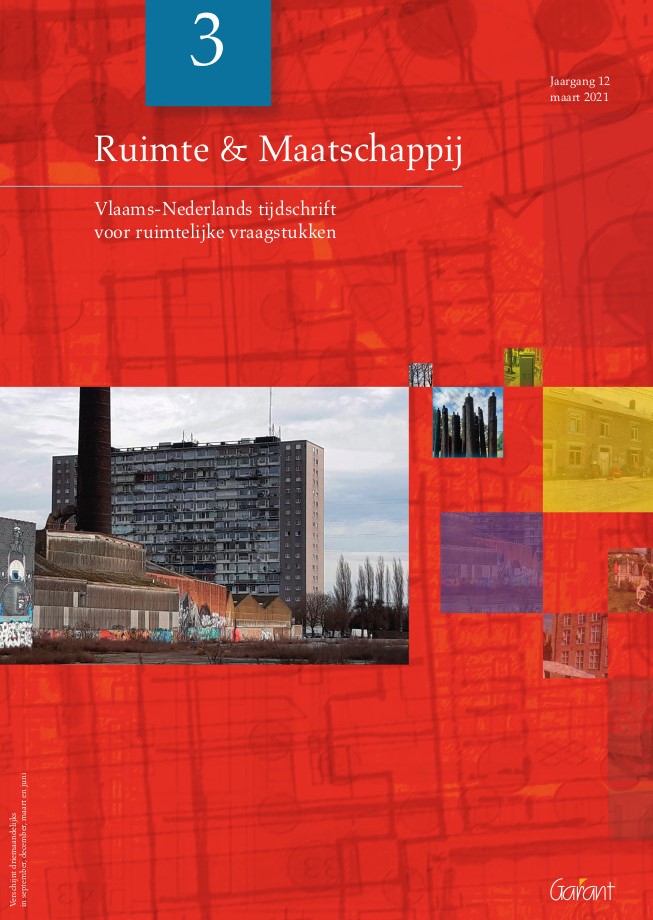
Ruimte & Maatschappij. Vlaams-Nederlands tijdschrift voor ruimtelijke vraagstukken – Jrg. 12 nr. 3
€ 19,00
Blikopener
Pleidooi voor een doordacht ruimtelijk woningrenovatiebeleid als onderdeel van de post-COVID economische relance 1
Michael Ryckewaert, & Lieve Vanderstraeten
Artikels
Verzet de wissel: de internationale trein als duurzame bijdrage aan de bereikbaarheid van stedelijke agglomeraties 6
Tim Zwanikken, Linde Jehee, Barth Donners & Frank Witlox
Hoe hoogwaardige gebiedsontwikkeling slaagt. Ervaringen in reconstructie van stationsomgevingen 28
Terry van Dijk
Verbeter de wereld, begin bij je mobiscore? Collectieve versus individuele verantwoordelijkheid in de ruimtelijke planning 41
Eva Van Eenoo
Essay
De veeleisende stad: over de moeizame relatie tussen gezinnen en stedelijk wonen 64
Lia Karsten
Eenzame vreemdelingen in een ontrafeld land. Het verlangen blijft 70
Ton Notten
Pleidooi voor een doordacht ruimtelijk woningrenovatiebeleid als onderdeel van de post-COVID economische relance 1
Michael Ryckewaert, & Lieve Vanderstraeten
Artikels
Verzet de wissel: de internationale trein als duurzame bijdrage aan de bereikbaarheid van stedelijke agglomeraties 6
Tim Zwanikken, Linde Jehee, Barth Donners & Frank Witlox
Hoe hoogwaardige gebiedsontwikkeling slaagt. Ervaringen in reconstructie van stationsomgevingen 28
Terry van Dijk
Verbeter de wereld, begin bij je mobiscore? Collectieve versus individuele verantwoordelijkheid in de ruimtelijke planning 41
Eva Van Eenoo
Essay
De veeleisende stad: over de moeizame relatie tussen gezinnen en stedelijk wonen 64
Lia Karsten
Eenzame vreemdelingen in een ontrafeld land. Het verlangen blijft 70
Ton Notten
Geen voorraad
Ruimte & Maatschappij. Vlaams-Nederlands tijdschrift voor ruimtelijke vraagstukken – Jrg. 12 nr. 3
€ 19,00
Blikopener
Pleidooi voor een doordacht ruimtelijk woningrenovatiebeleid als onderdeel van de post-COVID economische relance 1
Michael Ryckewaert, & Lieve Vanderstraeten
Artikels
Verzet de wissel: de internationale trein als duurzame bijdrage aan de bereikbaarheid van stedelijke agglomeraties 6
Tim Zwanikken, Linde Jehee, Barth Donners & Frank Witlox
Hoe hoogwaardige gebiedsontwikkeling slaagt. Ervaringen in reconstructie van stationsomgevingen 28
Terry van Dijk
Verbeter de wereld, begin bij je mobiscore? Collectieve versus individuele verantwoordelijkheid in de ruimtelijke planning 41
Eva Van Eenoo
Essay
De veeleisende stad: over de moeizame relatie tussen gezinnen en stedelijk wonen 64
Lia Karsten
Eenzame vreemdelingen in een ontrafeld land. Het verlangen blijft 70
Ton Notten
Pleidooi voor een doordacht ruimtelijk woningrenovatiebeleid als onderdeel van de post-COVID economische relance 1
Michael Ryckewaert, & Lieve Vanderstraeten
Artikels
Verzet de wissel: de internationale trein als duurzame bijdrage aan de bereikbaarheid van stedelijke agglomeraties 6
Tim Zwanikken, Linde Jehee, Barth Donners & Frank Witlox
Hoe hoogwaardige gebiedsontwikkeling slaagt. Ervaringen in reconstructie van stationsomgevingen 28
Terry van Dijk
Verbeter de wereld, begin bij je mobiscore? Collectieve versus individuele verantwoordelijkheid in de ruimtelijke planning 41
Eva Van Eenoo
Essay
De veeleisende stad: over de moeizame relatie tussen gezinnen en stedelijk wonen 64
Lia Karsten
Eenzame vreemdelingen in een ontrafeld land. Het verlangen blijft 70
Ton Notten
Belgisch Belastingrecht in hoofdlijnen, 26ste uitgave – hardcover
€ 195,00
Het Belgisch Belastingrecht in hoofdlijnen wordt met reden hét naslagwerk voor de Belgische fiscaliteit genoemd. De lezer krijgt een overzichtelijke synthese van de huidige fiscale situatie. Naast een volledig overzicht van de Belgische fiscaliteit, biedt het boek bovendien talrijke concrete voorbeelden en schema's.
Achteraan in het boek is een waardevol trefwoordenregister opgenomen. De lezer krijgt een zo geactualiseerd mogelijk beeld van de krachtlijnen van het Belgisch belastingrecht. De structuur van de verschillende fiscale wetboeken wordt gevolgd, wat de praktische bruikbaarheid optimaliseert. Als praktisch referentiewerk hoort dit werk op het bureau van elke fiscalist, accountant, bedrijfsrevisor, fiscale advocaat en notaris.
De materie is bijgewerkt tot het Belgisch Staatsblad van 1 januari 2021.
Jos J. Couturier (†)
Gewoon hoogleraar em. Universiteit Antwerpen
Bruno Peeters
Gewoon hoogleraar Universiteit Antwerpen
met medewerking van:
Sylvie De Raedt
Research manager Universiteit Antwerpen
Gastprofessor Universiteit Gent
Rik Smet
Gastprofessor Universiteit Antwerpen
Achteraan in het boek is een waardevol trefwoordenregister opgenomen. De lezer krijgt een zo geactualiseerd mogelijk beeld van de krachtlijnen van het Belgisch belastingrecht. De structuur van de verschillende fiscale wetboeken wordt gevolgd, wat de praktische bruikbaarheid optimaliseert. Als praktisch referentiewerk hoort dit werk op het bureau van elke fiscalist, accountant, bedrijfsrevisor, fiscale advocaat en notaris.
De materie is bijgewerkt tot het Belgisch Staatsblad van 1 januari 2021.
Jos J. Couturier (†)
Gewoon hoogleraar em. Universiteit Antwerpen
Bruno Peeters
Gewoon hoogleraar Universiteit Antwerpen
met medewerking van:
Sylvie De Raedt
Research manager Universiteit Antwerpen
Gastprofessor Universiteit Gent
Rik Smet
Gastprofessor Universiteit Antwerpen
Belgisch Belastingrecht in hoofdlijnen, 26ste uitgave – hardcover
€ 195,00
Het Belgisch Belastingrecht in hoofdlijnen wordt met reden hét naslagwerk voor de Belgische fiscaliteit genoemd. De lezer krijgt een overzichtelijke synthese van de huidige fiscale situatie. Naast een volledig overzicht van de Belgische fiscaliteit, biedt het boek bovendien talrijke concrete voorbeelden en schema's.
Achteraan in het boek is een waardevol trefwoordenregister opgenomen. De lezer krijgt een zo geactualiseerd mogelijk beeld van de krachtlijnen van het Belgisch belastingrecht. De structuur van de verschillende fiscale wetboeken wordt gevolgd, wat de praktische bruikbaarheid optimaliseert. Als praktisch referentiewerk hoort dit werk op het bureau van elke fiscalist, accountant, bedrijfsrevisor, fiscale advocaat en notaris.
De materie is bijgewerkt tot het Belgisch Staatsblad van 1 januari 2021.
Jos J. Couturier (†)
Gewoon hoogleraar em. Universiteit Antwerpen
Bruno Peeters
Gewoon hoogleraar Universiteit Antwerpen
met medewerking van:
Sylvie De Raedt
Research manager Universiteit Antwerpen
Gastprofessor Universiteit Gent
Rik Smet
Gastprofessor Universiteit Antwerpen
Achteraan in het boek is een waardevol trefwoordenregister opgenomen. De lezer krijgt een zo geactualiseerd mogelijk beeld van de krachtlijnen van het Belgisch belastingrecht. De structuur van de verschillende fiscale wetboeken wordt gevolgd, wat de praktische bruikbaarheid optimaliseert. Als praktisch referentiewerk hoort dit werk op het bureau van elke fiscalist, accountant, bedrijfsrevisor, fiscale advocaat en notaris.
De materie is bijgewerkt tot het Belgisch Staatsblad van 1 januari 2021.
Jos J. Couturier (†)
Gewoon hoogleraar em. Universiteit Antwerpen
Bruno Peeters
Gewoon hoogleraar Universiteit Antwerpen
met medewerking van:
Sylvie De Raedt
Research manager Universiteit Antwerpen
Gastprofessor Universiteit Gent
Rik Smet
Gastprofessor Universiteit Antwerpen
Geen voorraad
RIDP2020 Vol.91 / Subscription – Revue Internationale de Droit Penal / IP-only
€ 180,00
This subscription gives you online acces to the two issues of RIDP 2020 Vol.91 based on your IP-adress (for institutions).
On the first Issue:
In his Encyclical Letter on Care for our Common Home (Laudato Si’), Pope Francis stated that air pollution, deficient waste management, climate change, desertification of soils, deterioration of water quality and loss of biodiversity are some of the main manifestations of the environmental crisis produced by a scheme of technocratic power, characterized by a deviant anthropocentrism. In fact, the growing awareness of the need to protect the environment has been decisive for the recognition of the human right to a healthy environment, the legislative development of legal tools for environmental protection and the conclusion of international agreements on this matter. Criminal law has been part of this regulatory evolution on the assumption that, although it is not able to solve such complex problems alone, nonetheless it should not fail to address the violation of the essential legal interests at stake.
This volume brings together major contributions to the 7th AIDP Symposium for Young Penalists (Rome, 11-12 November 2019), organised by the AIDP Young Penalists Committee in collaboration with the Italian AIDP National Group and Luiss University, Rome. The conclusions of the Symposium were presented during the XXth International Congress of Penal Law in the session dedicated to ‘Corporate Criminal Law and Environmental Protection’.
On the second issue:
This issue puts together the proceedings of the AIDP XX International Congress of Penal Law ‘Criminal Justice and Corporate Business’ held on 13th-16th November 2019, organised by the Italian National Group in collaboration with Luiss Guido Carli University. The Congress was the opportunity for over six hundred representatives of the AIDP national groups from all over the world to convene in Rome, Italy – a place that was last home to this meeting crucial for the life of the Association fifty years ago – to finalise the work of the International Colloquia.
As the title explains, the 2019 International Congress has focused on the relationship between criminal justice and corporate business, reflecting the work of the AIDP over the past five years on individual liability for business involvement in international crimes, food regulation and criminal law, the interplay between administrative and criminal enforcement, the prosecution of corporations for violations of international law and related jurisdictional issues.
The volume is divided into thematic sections and collects the major contributions to the XX International Congress, dealing with issues concerning corruption, financial markets and the role of criminal law; economic crime and the role of new technologies; corporate liability, business integrity and human rights protection; new perspectives related to the criminal justice and corporate business landscape. It also contains the resolutions adopted across the four International Colloquia preceding the XX international Congress.
The articles published in this issue testify to the lively and cross-cutting debate that took place during the numerous plenary and parallel sessions of the Congress and that involved representatives of academia, institutions, governments, the judiciary, and the corporate community.
Manuel Espinoza de los Monteros de la Parra is partner at Worth Street Group and former President of the AIDP Young Penalists Committee.
Antonio Gullo is Full Professor of Criminal Law at Luiss University, Rome and Secretary General of the Italian AIDP National Group.
Francesco Mazzacuva is Researcher in Criminal Law at the University of Parma and President of the AIDP Young Penalists Committee.
If you'd like to subscribe to this publication from abroad please send an email to: info@maklu.be/info@maklu.nl
On the first Issue:
In his Encyclical Letter on Care for our Common Home (Laudato Si’), Pope Francis stated that air pollution, deficient waste management, climate change, desertification of soils, deterioration of water quality and loss of biodiversity are some of the main manifestations of the environmental crisis produced by a scheme of technocratic power, characterized by a deviant anthropocentrism. In fact, the growing awareness of the need to protect the environment has been decisive for the recognition of the human right to a healthy environment, the legislative development of legal tools for environmental protection and the conclusion of international agreements on this matter. Criminal law has been part of this regulatory evolution on the assumption that, although it is not able to solve such complex problems alone, nonetheless it should not fail to address the violation of the essential legal interests at stake.
This volume brings together major contributions to the 7th AIDP Symposium for Young Penalists (Rome, 11-12 November 2019), organised by the AIDP Young Penalists Committee in collaboration with the Italian AIDP National Group and Luiss University, Rome. The conclusions of the Symposium were presented during the XXth International Congress of Penal Law in the session dedicated to ‘Corporate Criminal Law and Environmental Protection’.
On the second issue:
This issue puts together the proceedings of the AIDP XX International Congress of Penal Law ‘Criminal Justice and Corporate Business’ held on 13th-16th November 2019, organised by the Italian National Group in collaboration with Luiss Guido Carli University. The Congress was the opportunity for over six hundred representatives of the AIDP national groups from all over the world to convene in Rome, Italy – a place that was last home to this meeting crucial for the life of the Association fifty years ago – to finalise the work of the International Colloquia.
As the title explains, the 2019 International Congress has focused on the relationship between criminal justice and corporate business, reflecting the work of the AIDP over the past five years on individual liability for business involvement in international crimes, food regulation and criminal law, the interplay between administrative and criminal enforcement, the prosecution of corporations for violations of international law and related jurisdictional issues.
The volume is divided into thematic sections and collects the major contributions to the XX International Congress, dealing with issues concerning corruption, financial markets and the role of criminal law; economic crime and the role of new technologies; corporate liability, business integrity and human rights protection; new perspectives related to the criminal justice and corporate business landscape. It also contains the resolutions adopted across the four International Colloquia preceding the XX international Congress.
The articles published in this issue testify to the lively and cross-cutting debate that took place during the numerous plenary and parallel sessions of the Congress and that involved representatives of academia, institutions, governments, the judiciary, and the corporate community.
Manuel Espinoza de los Monteros de la Parra is partner at Worth Street Group and former President of the AIDP Young Penalists Committee.
Antonio Gullo is Full Professor of Criminal Law at Luiss University, Rome and Secretary General of the Italian AIDP National Group.
Francesco Mazzacuva is Researcher in Criminal Law at the University of Parma and President of the AIDP Young Penalists Committee.
If you'd like to subscribe to this publication from abroad please send an email to: info@maklu.be/info@maklu.nl
Geen voorraad
RIDP2020 Vol.91 / Subscription – Revue Internationale de Droit Penal / IP-only
€ 180,00
This subscription gives you online acces to the two issues of RIDP 2020 Vol.91 based on your IP-adress (for institutions).
On the first Issue:
In his Encyclical Letter on Care for our Common Home (Laudato Si’), Pope Francis stated that air pollution, deficient waste management, climate change, desertification of soils, deterioration of water quality and loss of biodiversity are some of the main manifestations of the environmental crisis produced by a scheme of technocratic power, characterized by a deviant anthropocentrism. In fact, the growing awareness of the need to protect the environment has been decisive for the recognition of the human right to a healthy environment, the legislative development of legal tools for environmental protection and the conclusion of international agreements on this matter. Criminal law has been part of this regulatory evolution on the assumption that, although it is not able to solve such complex problems alone, nonetheless it should not fail to address the violation of the essential legal interests at stake.
This volume brings together major contributions to the 7th AIDP Symposium for Young Penalists (Rome, 11-12 November 2019), organised by the AIDP Young Penalists Committee in collaboration with the Italian AIDP National Group and Luiss University, Rome. The conclusions of the Symposium were presented during the XXth International Congress of Penal Law in the session dedicated to ‘Corporate Criminal Law and Environmental Protection’.
On the second issue:
This issue puts together the proceedings of the AIDP XX International Congress of Penal Law ‘Criminal Justice and Corporate Business’ held on 13th-16th November 2019, organised by the Italian National Group in collaboration with Luiss Guido Carli University. The Congress was the opportunity for over six hundred representatives of the AIDP national groups from all over the world to convene in Rome, Italy – a place that was last home to this meeting crucial for the life of the Association fifty years ago – to finalise the work of the International Colloquia.
As the title explains, the 2019 International Congress has focused on the relationship between criminal justice and corporate business, reflecting the work of the AIDP over the past five years on individual liability for business involvement in international crimes, food regulation and criminal law, the interplay between administrative and criminal enforcement, the prosecution of corporations for violations of international law and related jurisdictional issues.
The volume is divided into thematic sections and collects the major contributions to the XX International Congress, dealing with issues concerning corruption, financial markets and the role of criminal law; economic crime and the role of new technologies; corporate liability, business integrity and human rights protection; new perspectives related to the criminal justice and corporate business landscape. It also contains the resolutions adopted across the four International Colloquia preceding the XX international Congress.
The articles published in this issue testify to the lively and cross-cutting debate that took place during the numerous plenary and parallel sessions of the Congress and that involved representatives of academia, institutions, governments, the judiciary, and the corporate community.
Manuel Espinoza de los Monteros de la Parra is partner at Worth Street Group and former President of the AIDP Young Penalists Committee.
Antonio Gullo is Full Professor of Criminal Law at Luiss University, Rome and Secretary General of the Italian AIDP National Group.
Francesco Mazzacuva is Researcher in Criminal Law at the University of Parma and President of the AIDP Young Penalists Committee.
If you'd like to subscribe to this publication from abroad please send an email to: info@maklu.be/info@maklu.nl
On the first Issue:
In his Encyclical Letter on Care for our Common Home (Laudato Si’), Pope Francis stated that air pollution, deficient waste management, climate change, desertification of soils, deterioration of water quality and loss of biodiversity are some of the main manifestations of the environmental crisis produced by a scheme of technocratic power, characterized by a deviant anthropocentrism. In fact, the growing awareness of the need to protect the environment has been decisive for the recognition of the human right to a healthy environment, the legislative development of legal tools for environmental protection and the conclusion of international agreements on this matter. Criminal law has been part of this regulatory evolution on the assumption that, although it is not able to solve such complex problems alone, nonetheless it should not fail to address the violation of the essential legal interests at stake.
This volume brings together major contributions to the 7th AIDP Symposium for Young Penalists (Rome, 11-12 November 2019), organised by the AIDP Young Penalists Committee in collaboration with the Italian AIDP National Group and Luiss University, Rome. The conclusions of the Symposium were presented during the XXth International Congress of Penal Law in the session dedicated to ‘Corporate Criminal Law and Environmental Protection’.
On the second issue:
This issue puts together the proceedings of the AIDP XX International Congress of Penal Law ‘Criminal Justice and Corporate Business’ held on 13th-16th November 2019, organised by the Italian National Group in collaboration with Luiss Guido Carli University. The Congress was the opportunity for over six hundred representatives of the AIDP national groups from all over the world to convene in Rome, Italy – a place that was last home to this meeting crucial for the life of the Association fifty years ago – to finalise the work of the International Colloquia.
As the title explains, the 2019 International Congress has focused on the relationship between criminal justice and corporate business, reflecting the work of the AIDP over the past five years on individual liability for business involvement in international crimes, food regulation and criminal law, the interplay between administrative and criminal enforcement, the prosecution of corporations for violations of international law and related jurisdictional issues.
The volume is divided into thematic sections and collects the major contributions to the XX International Congress, dealing with issues concerning corruption, financial markets and the role of criminal law; economic crime and the role of new technologies; corporate liability, business integrity and human rights protection; new perspectives related to the criminal justice and corporate business landscape. It also contains the resolutions adopted across the four International Colloquia preceding the XX international Congress.
The articles published in this issue testify to the lively and cross-cutting debate that took place during the numerous plenary and parallel sessions of the Congress and that involved representatives of academia, institutions, governments, the judiciary, and the corporate community.
Manuel Espinoza de los Monteros de la Parra is partner at Worth Street Group and former President of the AIDP Young Penalists Committee.
Antonio Gullo is Full Professor of Criminal Law at Luiss University, Rome and Secretary General of the Italian AIDP National Group.
Francesco Mazzacuva is Researcher in Criminal Law at the University of Parma and President of the AIDP Young Penalists Committee.
If you'd like to subscribe to this publication from abroad please send an email to: info@maklu.be/info@maklu.nl
Lineair programmeren in de bedrijfskunde
€ 19,60
In dit boek wordt de wiskundige techniek van het lineair programmeren zo behandeld dat ook geïnteresseerden met een niet-wiskundige achtergrond er terecht kunnen.
Daardoor kan iedereen bedrijfskundige vraagstukken oplossen waarbij hulpmiddelen van een onderneming op de meest optimale manier moeten worden toegewezen. Voor meer complexe vraagstukken wordt gebruik gemaakt van Oplosser in Excel. Deze tool wordt uitgebreid toegelicht en toegepast.
Het boek bestaat uit vijf hoofdstukken: de eerste drie hoofdstukken bevatten die onderwerpen uit de algebra die vereist zijn om het lineair programmeren te kunnen begrijpen. Het lineair programmeren zelf komt aan bod in het vierde hoofdstuk. In het laatste hoofdstuk wordt de toepassing van het lineair programmeren met Excel op bedrijfkundige vraagstukken uitvoerig gedemonstreerd.
In de bijlagen zijn vraagstukken opgenomen om de opgedane kennis te toetsen.
Jacques Van Der Elst is doctor in business administration (Newport-Ca,State approved university, 1994), master in financieel management van ondernemingen, master in accountancy, gediplomeerde in de boekhoudkundige expertise en gegradueerde in de boekhouding.
Hij bekleedde meerdere financiële directiefuncties in grote ondernemingen en was als accountant gerechtsdeskundige bij diverse Rechtbanken van Koophandel.
Jacques Van Der Elst doceerde zowel op academisch als hogeschoolniveau en gaf vakken zoals statistiek, financiële wiskunde , financieel management, financiële analyse, beleggingsleer, bedrijfseconomie en cost accounting.
De auteur was ook lid van het Instituut van de Accountants en Belastingconsulenten (IAB). Meer dan 20 jaar is hij bij het IAB jurylid geweest van de eindexamencommissies.
Zijn vele publicaties situeren zich in de domeinen van de toegepaste wiskunde, het financieel management, de bedrijfseconomie en de accountancy.
Daardoor kan iedereen bedrijfskundige vraagstukken oplossen waarbij hulpmiddelen van een onderneming op de meest optimale manier moeten worden toegewezen. Voor meer complexe vraagstukken wordt gebruik gemaakt van Oplosser in Excel. Deze tool wordt uitgebreid toegelicht en toegepast.
Het boek bestaat uit vijf hoofdstukken: de eerste drie hoofdstukken bevatten die onderwerpen uit de algebra die vereist zijn om het lineair programmeren te kunnen begrijpen. Het lineair programmeren zelf komt aan bod in het vierde hoofdstuk. In het laatste hoofdstuk wordt de toepassing van het lineair programmeren met Excel op bedrijfkundige vraagstukken uitvoerig gedemonstreerd.
In de bijlagen zijn vraagstukken opgenomen om de opgedane kennis te toetsen.
Jacques Van Der Elst is doctor in business administration (Newport-Ca,State approved university, 1994), master in financieel management van ondernemingen, master in accountancy, gediplomeerde in de boekhoudkundige expertise en gegradueerde in de boekhouding.
Hij bekleedde meerdere financiële directiefuncties in grote ondernemingen en was als accountant gerechtsdeskundige bij diverse Rechtbanken van Koophandel.
Jacques Van Der Elst doceerde zowel op academisch als hogeschoolniveau en gaf vakken zoals statistiek, financiële wiskunde , financieel management, financiële analyse, beleggingsleer, bedrijfseconomie en cost accounting.
De auteur was ook lid van het Instituut van de Accountants en Belastingconsulenten (IAB). Meer dan 20 jaar is hij bij het IAB jurylid geweest van de eindexamencommissies.
Zijn vele publicaties situeren zich in de domeinen van de toegepaste wiskunde, het financieel management, de bedrijfseconomie en de accountancy.
Lineair programmeren in de bedrijfskunde
€ 19,60
In dit boek wordt de wiskundige techniek van het lineair programmeren zo behandeld dat ook geïnteresseerden met een niet-wiskundige achtergrond er terecht kunnen.
Daardoor kan iedereen bedrijfskundige vraagstukken oplossen waarbij hulpmiddelen van een onderneming op de meest optimale manier moeten worden toegewezen. Voor meer complexe vraagstukken wordt gebruik gemaakt van Oplosser in Excel. Deze tool wordt uitgebreid toegelicht en toegepast.
Het boek bestaat uit vijf hoofdstukken: de eerste drie hoofdstukken bevatten die onderwerpen uit de algebra die vereist zijn om het lineair programmeren te kunnen begrijpen. Het lineair programmeren zelf komt aan bod in het vierde hoofdstuk. In het laatste hoofdstuk wordt de toepassing van het lineair programmeren met Excel op bedrijfkundige vraagstukken uitvoerig gedemonstreerd.
In de bijlagen zijn vraagstukken opgenomen om de opgedane kennis te toetsen.
Jacques Van Der Elst is doctor in business administration (Newport-Ca,State approved university, 1994), master in financieel management van ondernemingen, master in accountancy, gediplomeerde in de boekhoudkundige expertise en gegradueerde in de boekhouding.
Hij bekleedde meerdere financiële directiefuncties in grote ondernemingen en was als accountant gerechtsdeskundige bij diverse Rechtbanken van Koophandel.
Jacques Van Der Elst doceerde zowel op academisch als hogeschoolniveau en gaf vakken zoals statistiek, financiële wiskunde , financieel management, financiële analyse, beleggingsleer, bedrijfseconomie en cost accounting.
De auteur was ook lid van het Instituut van de Accountants en Belastingconsulenten (IAB). Meer dan 20 jaar is hij bij het IAB jurylid geweest van de eindexamencommissies.
Zijn vele publicaties situeren zich in de domeinen van de toegepaste wiskunde, het financieel management, de bedrijfseconomie en de accountancy.
Daardoor kan iedereen bedrijfskundige vraagstukken oplossen waarbij hulpmiddelen van een onderneming op de meest optimale manier moeten worden toegewezen. Voor meer complexe vraagstukken wordt gebruik gemaakt van Oplosser in Excel. Deze tool wordt uitgebreid toegelicht en toegepast.
Het boek bestaat uit vijf hoofdstukken: de eerste drie hoofdstukken bevatten die onderwerpen uit de algebra die vereist zijn om het lineair programmeren te kunnen begrijpen. Het lineair programmeren zelf komt aan bod in het vierde hoofdstuk. In het laatste hoofdstuk wordt de toepassing van het lineair programmeren met Excel op bedrijfkundige vraagstukken uitvoerig gedemonstreerd.
In de bijlagen zijn vraagstukken opgenomen om de opgedane kennis te toetsen.
Jacques Van Der Elst is doctor in business administration (Newport-Ca,State approved university, 1994), master in financieel management van ondernemingen, master in accountancy, gediplomeerde in de boekhoudkundige expertise en gegradueerde in de boekhouding.
Hij bekleedde meerdere financiële directiefuncties in grote ondernemingen en was als accountant gerechtsdeskundige bij diverse Rechtbanken van Koophandel.
Jacques Van Der Elst doceerde zowel op academisch als hogeschoolniveau en gaf vakken zoals statistiek, financiële wiskunde , financieel management, financiële analyse, beleggingsleer, bedrijfseconomie en cost accounting.
De auteur was ook lid van het Instituut van de Accountants en Belastingconsulenten (IAB). Meer dan 20 jaar is hij bij het IAB jurylid geweest van de eindexamencommissies.
Zijn vele publicaties situeren zich in de domeinen van de toegepaste wiskunde, het financieel management, de bedrijfseconomie en de accountancy.
Behoud van EU vereist realiteitszin – Beschouwingen en analyses met suggesties voor onderwijs en debat
€ 22,90
Tijdens de coronacrisis kwam de vraag op waarom de Europese Unie (EU) niet actiever ingrijpt. In dit boek wordt dit uit de doeken gedaan. Jammerkreten over ‘te veel EU’ en ‘te weinig EU’ wisselen elkaar af sinds de start van de Europese eenwording. De auteurs nemen duidelijk stelling: de kracht van de EU wordt bepaald door de kracht van de samenstellende delen, dus van de 27 lidstaten, zelfstandig opererende natiestaten, met hun eigen geschiedenis, tradities, taal en cultuur. Tegen die achtergrond worden actuele ontwikkelingen binnen de EU bekritiseerd, met meteen daarop aansluitend een tegengeluid van een andere auteur om de lezer zelf zijn conclusies te laten trekken.
Daarvoor is het noodzakelijk op de hoogte te zijn van de activiteiten die de EU tot een succes maken. Het gaat hierbij vooral om de interne markt en om de euro. De schaduwkanten worden niet weggemoffeld, zoals het profijt dat de maffia heeft van de Europese landbouwsubsidies en de niet ingeloste belofte van welvaartsstijging voor iedereen.
Vervolgens wordt het Europees beleid omtrent klimaatverandering besproken, uitmondend in de Green Deal, nu een beetje op de achtergrond zo lijkt het, maar na de coronapandemie zeker niet meer. Aan de inspanningen van de EU om de lidstaten te ondersteunen bij het bestrijden van deze pandemie is een volgend hoofdstuk gewijd. Onder meer door vaccinontwikkeling in een hogere versnelling te brengen.
Dit boek is een bron van inspiratie voor iedereen met interesse in de relatie tussen de EU en de lidstaten. Voor primair, voortgezet en hoger onderwijs biedt het een uitgelezen kans tot verdieping te komen bij het vormgeven aan Europese en Internationale Oriëntatie (EIO). Het aansprekende, concreet uitgewerkte project waarmee dit boek afsluit, biedt daarvoor alle mogelijkheden. In de bijbehorende online bijlage staan concrete opdrachten en suggesties bij de hoofdstukken die regelmatig worden aangevuld, ideaal voor onderwijs en debatbijeenkomsten.
Daarvoor is het noodzakelijk op de hoogte te zijn van de activiteiten die de EU tot een succes maken. Het gaat hierbij vooral om de interne markt en om de euro. De schaduwkanten worden niet weggemoffeld, zoals het profijt dat de maffia heeft van de Europese landbouwsubsidies en de niet ingeloste belofte van welvaartsstijging voor iedereen.
Vervolgens wordt het Europees beleid omtrent klimaatverandering besproken, uitmondend in de Green Deal, nu een beetje op de achtergrond zo lijkt het, maar na de coronapandemie zeker niet meer. Aan de inspanningen van de EU om de lidstaten te ondersteunen bij het bestrijden van deze pandemie is een volgend hoofdstuk gewijd. Onder meer door vaccinontwikkeling in een hogere versnelling te brengen.
Dit boek is een bron van inspiratie voor iedereen met interesse in de relatie tussen de EU en de lidstaten. Voor primair, voortgezet en hoger onderwijs biedt het een uitgelezen kans tot verdieping te komen bij het vormgeven aan Europese en Internationale Oriëntatie (EIO). Het aansprekende, concreet uitgewerkte project waarmee dit boek afsluit, biedt daarvoor alle mogelijkheden. In de bijbehorende online bijlage staan concrete opdrachten en suggesties bij de hoofdstukken die regelmatig worden aangevuld, ideaal voor onderwijs en debatbijeenkomsten.
Behoud van EU vereist realiteitszin – Beschouwingen en analyses met suggesties voor onderwijs en debat
€ 22,90
Tijdens de coronacrisis kwam de vraag op waarom de Europese Unie (EU) niet actiever ingrijpt. In dit boek wordt dit uit de doeken gedaan. Jammerkreten over ‘te veel EU’ en ‘te weinig EU’ wisselen elkaar af sinds de start van de Europese eenwording. De auteurs nemen duidelijk stelling: de kracht van de EU wordt bepaald door de kracht van de samenstellende delen, dus van de 27 lidstaten, zelfstandig opererende natiestaten, met hun eigen geschiedenis, tradities, taal en cultuur. Tegen die achtergrond worden actuele ontwikkelingen binnen de EU bekritiseerd, met meteen daarop aansluitend een tegengeluid van een andere auteur om de lezer zelf zijn conclusies te laten trekken.
Daarvoor is het noodzakelijk op de hoogte te zijn van de activiteiten die de EU tot een succes maken. Het gaat hierbij vooral om de interne markt en om de euro. De schaduwkanten worden niet weggemoffeld, zoals het profijt dat de maffia heeft van de Europese landbouwsubsidies en de niet ingeloste belofte van welvaartsstijging voor iedereen.
Vervolgens wordt het Europees beleid omtrent klimaatverandering besproken, uitmondend in de Green Deal, nu een beetje op de achtergrond zo lijkt het, maar na de coronapandemie zeker niet meer. Aan de inspanningen van de EU om de lidstaten te ondersteunen bij het bestrijden van deze pandemie is een volgend hoofdstuk gewijd. Onder meer door vaccinontwikkeling in een hogere versnelling te brengen.
Dit boek is een bron van inspiratie voor iedereen met interesse in de relatie tussen de EU en de lidstaten. Voor primair, voortgezet en hoger onderwijs biedt het een uitgelezen kans tot verdieping te komen bij het vormgeven aan Europese en Internationale Oriëntatie (EIO). Het aansprekende, concreet uitgewerkte project waarmee dit boek afsluit, biedt daarvoor alle mogelijkheden. In de bijbehorende online bijlage staan concrete opdrachten en suggesties bij de hoofdstukken die regelmatig worden aangevuld, ideaal voor onderwijs en debatbijeenkomsten.
Daarvoor is het noodzakelijk op de hoogte te zijn van de activiteiten die de EU tot een succes maken. Het gaat hierbij vooral om de interne markt en om de euro. De schaduwkanten worden niet weggemoffeld, zoals het profijt dat de maffia heeft van de Europese landbouwsubsidies en de niet ingeloste belofte van welvaartsstijging voor iedereen.
Vervolgens wordt het Europees beleid omtrent klimaatverandering besproken, uitmondend in de Green Deal, nu een beetje op de achtergrond zo lijkt het, maar na de coronapandemie zeker niet meer. Aan de inspanningen van de EU om de lidstaten te ondersteunen bij het bestrijden van deze pandemie is een volgend hoofdstuk gewijd. Onder meer door vaccinontwikkeling in een hogere versnelling te brengen.
Dit boek is een bron van inspiratie voor iedereen met interesse in de relatie tussen de EU en de lidstaten. Voor primair, voortgezet en hoger onderwijs biedt het een uitgelezen kans tot verdieping te komen bij het vormgeven aan Europese en Internationale Oriëntatie (EIO). Het aansprekende, concreet uitgewerkte project waarmee dit boek afsluit, biedt daarvoor alle mogelijkheden. In de bijbehorende online bijlage staan concrete opdrachten en suggesties bij de hoofdstukken die regelmatig worden aangevuld, ideaal voor onderwijs en debatbijeenkomsten.
Geen voorraad
RIDP2020 Vol.91 / Subscription – Revue Internationale de Droit Penal / 2 Issues + IP
€ 180,00
This subscription gives you the two issues of RIDP 2020 Vol.91 in print and online acces to these issues on IP-address (for institutions).
On the first Issue:
In his Encyclical Letter on Care for our Common Home (Laudato Si’), Pope Francis stated that air pollution, deficient waste management, climate change, desertification of soils, deterioration of water quality and loss of biodiversity are some of the main manifestations of the environmental crisis produced by a scheme of technocratic power, characterized by a deviant anthropocentrism. In fact, the growing awareness of the need to protect the environment has been decisive for the recognition of the human right to a healthy environment, the legislative development of legal tools for environmental protection and the conclusion of international agreements on this matter. Criminal law has been part of this regulatory evolution on the assumption that, although it is not able to solve such complex problems alone, nonetheless it should not fail to address the violation of the essential legal interests at stake.
This volume brings together major contributions to the 7th AIDP Symposium for Young Penalists (Rome, 11-12 November 2019), organised by the AIDP Young Penalists Committee in collaboration with the Italian AIDP National Group and Luiss University, Rome. The conclusions of the Symposium were presented during the XXth International Congress of Penal Law in the session dedicated to ‘Corporate Criminal Law and Environmental Protection’.
On the second Issue:
This issue puts together the proceedings of the AIDP XX International Congress of Penal Law ‘Criminal Justice and Corporate Business’ held on 13th-16th November 2019, organised by the Italian National Group in collaboration with Luiss Guido Carli University. The Congress was the opportunity for over six hundred representatives of the AIDP national groups from all over the world to convene in Rome, Italy – a place that was last home to this meeting crucial for the life of the Association fifty years ago – to finalise the work of the International Colloquia.
As the title explains, the 2019 International Congress has focused on the relationship between criminal justice and corporate business, reflecting the work of the AIDP over the past five years on individual liability for business involvement in international crimes, food regulation and criminal law, the interplay between administrative and criminal enforcement, the prosecution of corporations for violations of international law and related jurisdictional issues.
The volume is divided into thematic sections and collects the major contributions to the XX International Congress, dealing with issues concerning corruption, financial markets and the role of criminal law; economic crime and the role of new technologies; corporate liability, business integrity and human rights protection; new perspectives related to the criminal justice and corporate business landscape. It also contains the resolutions adopted across the four International Colloquia preceding the XX international Congress.
The articles published in this issue testify to the lively and cross-cutting debate that took place during the numerous plenary and parallel sessions of the Congress and that involved representatives of academia, institutions, governments, the judiciary, and the corporate community.
On the second issue:
This issue puts together the proceedings of the AIDP XX International Congress of Penal Law ‘Criminal Justice and Corporate Business’ held on 13th-16th November 2019, organised by the Italian National Group in collaboration with Luiss Guido Carli University. The Congress was the opportunity for over six hundred representatives of the AIDP national groups from all over the world to convene in Rome, Italy – a place that was last home to this meeting crucial for the life of the Association fifty years ago – to finalise the work of the International Colloquia.
As the title explains, the 2019 International Congress has focused on the relationship between criminal justice and corporate business, reflecting the work of the AIDP over the past five years on individual liability for business involvement in international crimes, food regulation and criminal law, the interplay between administrative and criminal enforcement, the prosecution of corporations for violations of international law and related jurisdictional issues.
The volume is divided into thematic sections and collects the major contributions to the XX International Congress, dealing with issues concerning corruption, financial markets and the role of criminal law; economic crime and the role of new technologies; corporate liability, business integrity and human rights protection; new perspectives related to the criminal justice and corporate business landscape. It also contains the resolutions adopted across the four International Colloquia preceding the XX international Congress.
The articles published in this issue testify to the lively and cross-cutting debate that took place during the numerous plenary and parallel sessions of the Congress and that involved representatives of academia, institutions, governments, the judiciary, and the corporate community.
Manuel Espinoza de los Monteros de la Parra is partner at Worth Street Group and former President of the AIDP Young Penalists Committee.
Antonio Gullo is Full Professor of Criminal Law at Luiss University, Rome and Secretary General of the Italian AIDP National Group.
Francesco Mazzacuva is Researcher in Criminal Law at the University of Parma and President of the AIDP Young Penalists Committee.
Paola Severino is Vice President of the AIDP and President of the Italian AIDP National Group; Professor of Criminal Law and Vice President, Luiss University, Rome.
John A. E. Vervaele is President of the AIDP; Professor of economic and European criminal law, Utrecht Law School/ The Netherlands; Professor of European criminal law, College of Europe, Bruges/Belgium.
If you'd like to subscribe to this publication from abroad please send an email to: info@maklu.be/info@maklu.nl
On the first Issue:
In his Encyclical Letter on Care for our Common Home (Laudato Si’), Pope Francis stated that air pollution, deficient waste management, climate change, desertification of soils, deterioration of water quality and loss of biodiversity are some of the main manifestations of the environmental crisis produced by a scheme of technocratic power, characterized by a deviant anthropocentrism. In fact, the growing awareness of the need to protect the environment has been decisive for the recognition of the human right to a healthy environment, the legislative development of legal tools for environmental protection and the conclusion of international agreements on this matter. Criminal law has been part of this regulatory evolution on the assumption that, although it is not able to solve such complex problems alone, nonetheless it should not fail to address the violation of the essential legal interests at stake.
This volume brings together major contributions to the 7th AIDP Symposium for Young Penalists (Rome, 11-12 November 2019), organised by the AIDP Young Penalists Committee in collaboration with the Italian AIDP National Group and Luiss University, Rome. The conclusions of the Symposium were presented during the XXth International Congress of Penal Law in the session dedicated to ‘Corporate Criminal Law and Environmental Protection’.
On the second Issue:
This issue puts together the proceedings of the AIDP XX International Congress of Penal Law ‘Criminal Justice and Corporate Business’ held on 13th-16th November 2019, organised by the Italian National Group in collaboration with Luiss Guido Carli University. The Congress was the opportunity for over six hundred representatives of the AIDP national groups from all over the world to convene in Rome, Italy – a place that was last home to this meeting crucial for the life of the Association fifty years ago – to finalise the work of the International Colloquia.
As the title explains, the 2019 International Congress has focused on the relationship between criminal justice and corporate business, reflecting the work of the AIDP over the past five years on individual liability for business involvement in international crimes, food regulation and criminal law, the interplay between administrative and criminal enforcement, the prosecution of corporations for violations of international law and related jurisdictional issues.
The volume is divided into thematic sections and collects the major contributions to the XX International Congress, dealing with issues concerning corruption, financial markets and the role of criminal law; economic crime and the role of new technologies; corporate liability, business integrity and human rights protection; new perspectives related to the criminal justice and corporate business landscape. It also contains the resolutions adopted across the four International Colloquia preceding the XX international Congress.
The articles published in this issue testify to the lively and cross-cutting debate that took place during the numerous plenary and parallel sessions of the Congress and that involved representatives of academia, institutions, governments, the judiciary, and the corporate community.
On the second issue:
This issue puts together the proceedings of the AIDP XX International Congress of Penal Law ‘Criminal Justice and Corporate Business’ held on 13th-16th November 2019, organised by the Italian National Group in collaboration with Luiss Guido Carli University. The Congress was the opportunity for over six hundred representatives of the AIDP national groups from all over the world to convene in Rome, Italy – a place that was last home to this meeting crucial for the life of the Association fifty years ago – to finalise the work of the International Colloquia.
As the title explains, the 2019 International Congress has focused on the relationship between criminal justice and corporate business, reflecting the work of the AIDP over the past five years on individual liability for business involvement in international crimes, food regulation and criminal law, the interplay between administrative and criminal enforcement, the prosecution of corporations for violations of international law and related jurisdictional issues.
The volume is divided into thematic sections and collects the major contributions to the XX International Congress, dealing with issues concerning corruption, financial markets and the role of criminal law; economic crime and the role of new technologies; corporate liability, business integrity and human rights protection; new perspectives related to the criminal justice and corporate business landscape. It also contains the resolutions adopted across the four International Colloquia preceding the XX international Congress.
The articles published in this issue testify to the lively and cross-cutting debate that took place during the numerous plenary and parallel sessions of the Congress and that involved representatives of academia, institutions, governments, the judiciary, and the corporate community.
Manuel Espinoza de los Monteros de la Parra is partner at Worth Street Group and former President of the AIDP Young Penalists Committee.
Antonio Gullo is Full Professor of Criminal Law at Luiss University, Rome and Secretary General of the Italian AIDP National Group.
Francesco Mazzacuva is Researcher in Criminal Law at the University of Parma and President of the AIDP Young Penalists Committee.
Paola Severino is Vice President of the AIDP and President of the Italian AIDP National Group; Professor of Criminal Law and Vice President, Luiss University, Rome.
John A. E. Vervaele is President of the AIDP; Professor of economic and European criminal law, Utrecht Law School/ The Netherlands; Professor of European criminal law, College of Europe, Bruges/Belgium.
If you'd like to subscribe to this publication from abroad please send an email to: info@maklu.be/info@maklu.nl
Geen voorraad
RIDP2020 Vol.91 / Subscription – Revue Internationale de Droit Penal / 2 Issues + IP
€ 180,00
This subscription gives you the two issues of RIDP 2020 Vol.91 in print and online acces to these issues on IP-address (for institutions).
On the first Issue:
In his Encyclical Letter on Care for our Common Home (Laudato Si’), Pope Francis stated that air pollution, deficient waste management, climate change, desertification of soils, deterioration of water quality and loss of biodiversity are some of the main manifestations of the environmental crisis produced by a scheme of technocratic power, characterized by a deviant anthropocentrism. In fact, the growing awareness of the need to protect the environment has been decisive for the recognition of the human right to a healthy environment, the legislative development of legal tools for environmental protection and the conclusion of international agreements on this matter. Criminal law has been part of this regulatory evolution on the assumption that, although it is not able to solve such complex problems alone, nonetheless it should not fail to address the violation of the essential legal interests at stake.
This volume brings together major contributions to the 7th AIDP Symposium for Young Penalists (Rome, 11-12 November 2019), organised by the AIDP Young Penalists Committee in collaboration with the Italian AIDP National Group and Luiss University, Rome. The conclusions of the Symposium were presented during the XXth International Congress of Penal Law in the session dedicated to ‘Corporate Criminal Law and Environmental Protection’.
On the second Issue:
This issue puts together the proceedings of the AIDP XX International Congress of Penal Law ‘Criminal Justice and Corporate Business’ held on 13th-16th November 2019, organised by the Italian National Group in collaboration with Luiss Guido Carli University. The Congress was the opportunity for over six hundred representatives of the AIDP national groups from all over the world to convene in Rome, Italy – a place that was last home to this meeting crucial for the life of the Association fifty years ago – to finalise the work of the International Colloquia.
As the title explains, the 2019 International Congress has focused on the relationship between criminal justice and corporate business, reflecting the work of the AIDP over the past five years on individual liability for business involvement in international crimes, food regulation and criminal law, the interplay between administrative and criminal enforcement, the prosecution of corporations for violations of international law and related jurisdictional issues.
The volume is divided into thematic sections and collects the major contributions to the XX International Congress, dealing with issues concerning corruption, financial markets and the role of criminal law; economic crime and the role of new technologies; corporate liability, business integrity and human rights protection; new perspectives related to the criminal justice and corporate business landscape. It also contains the resolutions adopted across the four International Colloquia preceding the XX international Congress.
The articles published in this issue testify to the lively and cross-cutting debate that took place during the numerous plenary and parallel sessions of the Congress and that involved representatives of academia, institutions, governments, the judiciary, and the corporate community.
On the second issue:
This issue puts together the proceedings of the AIDP XX International Congress of Penal Law ‘Criminal Justice and Corporate Business’ held on 13th-16th November 2019, organised by the Italian National Group in collaboration with Luiss Guido Carli University. The Congress was the opportunity for over six hundred representatives of the AIDP national groups from all over the world to convene in Rome, Italy – a place that was last home to this meeting crucial for the life of the Association fifty years ago – to finalise the work of the International Colloquia.
As the title explains, the 2019 International Congress has focused on the relationship between criminal justice and corporate business, reflecting the work of the AIDP over the past five years on individual liability for business involvement in international crimes, food regulation and criminal law, the interplay between administrative and criminal enforcement, the prosecution of corporations for violations of international law and related jurisdictional issues.
The volume is divided into thematic sections and collects the major contributions to the XX International Congress, dealing with issues concerning corruption, financial markets and the role of criminal law; economic crime and the role of new technologies; corporate liability, business integrity and human rights protection; new perspectives related to the criminal justice and corporate business landscape. It also contains the resolutions adopted across the four International Colloquia preceding the XX international Congress.
The articles published in this issue testify to the lively and cross-cutting debate that took place during the numerous plenary and parallel sessions of the Congress and that involved representatives of academia, institutions, governments, the judiciary, and the corporate community.
Manuel Espinoza de los Monteros de la Parra is partner at Worth Street Group and former President of the AIDP Young Penalists Committee.
Antonio Gullo is Full Professor of Criminal Law at Luiss University, Rome and Secretary General of the Italian AIDP National Group.
Francesco Mazzacuva is Researcher in Criminal Law at the University of Parma and President of the AIDP Young Penalists Committee.
Paola Severino is Vice President of the AIDP and President of the Italian AIDP National Group; Professor of Criminal Law and Vice President, Luiss University, Rome.
John A. E. Vervaele is President of the AIDP; Professor of economic and European criminal law, Utrecht Law School/ The Netherlands; Professor of European criminal law, College of Europe, Bruges/Belgium.
If you'd like to subscribe to this publication from abroad please send an email to: info@maklu.be/info@maklu.nl
On the first Issue:
In his Encyclical Letter on Care for our Common Home (Laudato Si’), Pope Francis stated that air pollution, deficient waste management, climate change, desertification of soils, deterioration of water quality and loss of biodiversity are some of the main manifestations of the environmental crisis produced by a scheme of technocratic power, characterized by a deviant anthropocentrism. In fact, the growing awareness of the need to protect the environment has been decisive for the recognition of the human right to a healthy environment, the legislative development of legal tools for environmental protection and the conclusion of international agreements on this matter. Criminal law has been part of this regulatory evolution on the assumption that, although it is not able to solve such complex problems alone, nonetheless it should not fail to address the violation of the essential legal interests at stake.
This volume brings together major contributions to the 7th AIDP Symposium for Young Penalists (Rome, 11-12 November 2019), organised by the AIDP Young Penalists Committee in collaboration with the Italian AIDP National Group and Luiss University, Rome. The conclusions of the Symposium were presented during the XXth International Congress of Penal Law in the session dedicated to ‘Corporate Criminal Law and Environmental Protection’.
On the second Issue:
This issue puts together the proceedings of the AIDP XX International Congress of Penal Law ‘Criminal Justice and Corporate Business’ held on 13th-16th November 2019, organised by the Italian National Group in collaboration with Luiss Guido Carli University. The Congress was the opportunity for over six hundred representatives of the AIDP national groups from all over the world to convene in Rome, Italy – a place that was last home to this meeting crucial for the life of the Association fifty years ago – to finalise the work of the International Colloquia.
As the title explains, the 2019 International Congress has focused on the relationship between criminal justice and corporate business, reflecting the work of the AIDP over the past five years on individual liability for business involvement in international crimes, food regulation and criminal law, the interplay between administrative and criminal enforcement, the prosecution of corporations for violations of international law and related jurisdictional issues.
The volume is divided into thematic sections and collects the major contributions to the XX International Congress, dealing with issues concerning corruption, financial markets and the role of criminal law; economic crime and the role of new technologies; corporate liability, business integrity and human rights protection; new perspectives related to the criminal justice and corporate business landscape. It also contains the resolutions adopted across the four International Colloquia preceding the XX international Congress.
The articles published in this issue testify to the lively and cross-cutting debate that took place during the numerous plenary and parallel sessions of the Congress and that involved representatives of academia, institutions, governments, the judiciary, and the corporate community.
On the second issue:
This issue puts together the proceedings of the AIDP XX International Congress of Penal Law ‘Criminal Justice and Corporate Business’ held on 13th-16th November 2019, organised by the Italian National Group in collaboration with Luiss Guido Carli University. The Congress was the opportunity for over six hundred representatives of the AIDP national groups from all over the world to convene in Rome, Italy – a place that was last home to this meeting crucial for the life of the Association fifty years ago – to finalise the work of the International Colloquia.
As the title explains, the 2019 International Congress has focused on the relationship between criminal justice and corporate business, reflecting the work of the AIDP over the past five years on individual liability for business involvement in international crimes, food regulation and criminal law, the interplay between administrative and criminal enforcement, the prosecution of corporations for violations of international law and related jurisdictional issues.
The volume is divided into thematic sections and collects the major contributions to the XX International Congress, dealing with issues concerning corruption, financial markets and the role of criminal law; economic crime and the role of new technologies; corporate liability, business integrity and human rights protection; new perspectives related to the criminal justice and corporate business landscape. It also contains the resolutions adopted across the four International Colloquia preceding the XX international Congress.
The articles published in this issue testify to the lively and cross-cutting debate that took place during the numerous plenary and parallel sessions of the Congress and that involved representatives of academia, institutions, governments, the judiciary, and the corporate community.
Manuel Espinoza de los Monteros de la Parra is partner at Worth Street Group and former President of the AIDP Young Penalists Committee.
Antonio Gullo is Full Professor of Criminal Law at Luiss University, Rome and Secretary General of the Italian AIDP National Group.
Francesco Mazzacuva is Researcher in Criminal Law at the University of Parma and President of the AIDP Young Penalists Committee.
Paola Severino is Vice President of the AIDP and President of the Italian AIDP National Group; Professor of Criminal Law and Vice President, Luiss University, Rome.
John A. E. Vervaele is President of the AIDP; Professor of economic and European criminal law, Utrecht Law School/ The Netherlands; Professor of European criminal law, College of Europe, Bruges/Belgium.
If you'd like to subscribe to this publication from abroad please send an email to: info@maklu.be/info@maklu.nl
Geen voorraad
RIDP2020 Vol.91 / Subscription – Revue Internationale de Droit Penal / 2 Issues + Password
€ 85,00
This subscription gives you the two issues of RIDP 2020 Vol.91 in print and an online acces to these issues with a personal password.
On the first Issue:
In his Encyclical Letter on Care for our Common Home (Laudato Si’), Pope Francis stated that air pollution, deficient waste management, climate change, desertification of soils, deterioration of water quality and loss of biodiversity are some of the main manifestations of the environmental crisis produced by a scheme of technocratic power, characterized by a deviant anthropocentrism. In fact, the growing awareness of the need to protect the environment has been decisive for the recognition of the human right to a healthy environment, the legislative development of legal tools for environmental protection and the conclusion of international agreements on this matter. Criminal law has been part of this regulatory evolution on the assumption that, although it is not able to solve such complex problems alone, nonetheless it should not fail to address the violation of the essential legal interests at stake.
This volume brings together major contributions to the 7th AIDP Symposium for Young Penalists (Rome, 11-12 November 2019), organised by the AIDP Young Penalists Committee in collaboration with the Italian AIDP National Group and Luiss University, Rome. The conclusions of the Symposium were presented during the XXth International Congress of Penal Law in the session dedicated to ‘Corporate Criminal Law and Environmental Protection’.
On the second Issue:
This issue puts together the proceedings of the AIDP XX International Congress of Penal Law ‘Criminal Justice and Corporate Business’ held on 13th-16th November 2019, organised by the Italian National Group in collaboration with Luiss Guido Carli University. The Congress was the opportunity for over six hundred representatives of the AIDP national groups from all over the world to convene in Rome, Italy – a place that was last home to this meeting crucial for the life of the Association fifty years ago – to finalise the work of the International Colloquia.
As the title explains, the 2019 International Congress has focused on the relationship between criminal justice and corporate business, reflecting the work of the AIDP over the past five years on individual liability for business involvement in international crimes, food regulation and criminal law, the interplay between administrative and criminal enforcement, the prosecution of corporations for violations of international law and related jurisdictional issues.
The volume is divided into thematic sections and collects the major contributions to the XX International Congress, dealing with issues concerning corruption, financial markets and the role of criminal law; economic crime and the role of new technologies; corporate liability, business integrity and human rights protection; new perspectives related to the criminal justice and corporate business landscape. It also contains the resolutions adopted across the four International Colloquia preceding the XX international Congress.
The articles published in this issue testify to the lively and cross-cutting debate that took place during the numerous plenary and parallel sessions of the Congress and that involved representatives of academia, institutions, governments, the judiciary, and the corporate community.
Manuel Espinoza de los Monteros de la Parra is partner at Worth Street Group and former President of the AIDP Young Penalists Committee.
Antonio Gullo is Full Professor of Criminal Law at Luiss University, Rome and Secretary General of the Italian AIDP National Group.
Francesco Mazzacuva is Researcher in Criminal Law at the University of Parma and President of the AIDP Young Penalists Committee.
Paola Severino is Vice President of the AIDP and President of the Italian AIDP National Group; Professor of Criminal Law and Vice President, Luiss University, Rome.
John A. E. Vervaele is President of the AIDP; Professor of economic and European criminal law, Utrecht Law School/ The Netherlands; Professor of European criminal law, College of Europe, Bruges/Belgium.
If you'd like to subscribe to this publication from abroad please send an email to: info@maklu.be/info@maklu.nl
On the first Issue:
In his Encyclical Letter on Care for our Common Home (Laudato Si’), Pope Francis stated that air pollution, deficient waste management, climate change, desertification of soils, deterioration of water quality and loss of biodiversity are some of the main manifestations of the environmental crisis produced by a scheme of technocratic power, characterized by a deviant anthropocentrism. In fact, the growing awareness of the need to protect the environment has been decisive for the recognition of the human right to a healthy environment, the legislative development of legal tools for environmental protection and the conclusion of international agreements on this matter. Criminal law has been part of this regulatory evolution on the assumption that, although it is not able to solve such complex problems alone, nonetheless it should not fail to address the violation of the essential legal interests at stake.
This volume brings together major contributions to the 7th AIDP Symposium for Young Penalists (Rome, 11-12 November 2019), organised by the AIDP Young Penalists Committee in collaboration with the Italian AIDP National Group and Luiss University, Rome. The conclusions of the Symposium were presented during the XXth International Congress of Penal Law in the session dedicated to ‘Corporate Criminal Law and Environmental Protection’.
On the second Issue:
This issue puts together the proceedings of the AIDP XX International Congress of Penal Law ‘Criminal Justice and Corporate Business’ held on 13th-16th November 2019, organised by the Italian National Group in collaboration with Luiss Guido Carli University. The Congress was the opportunity for over six hundred representatives of the AIDP national groups from all over the world to convene in Rome, Italy – a place that was last home to this meeting crucial for the life of the Association fifty years ago – to finalise the work of the International Colloquia.
As the title explains, the 2019 International Congress has focused on the relationship between criminal justice and corporate business, reflecting the work of the AIDP over the past five years on individual liability for business involvement in international crimes, food regulation and criminal law, the interplay between administrative and criminal enforcement, the prosecution of corporations for violations of international law and related jurisdictional issues.
The volume is divided into thematic sections and collects the major contributions to the XX International Congress, dealing with issues concerning corruption, financial markets and the role of criminal law; economic crime and the role of new technologies; corporate liability, business integrity and human rights protection; new perspectives related to the criminal justice and corporate business landscape. It also contains the resolutions adopted across the four International Colloquia preceding the XX international Congress.
The articles published in this issue testify to the lively and cross-cutting debate that took place during the numerous plenary and parallel sessions of the Congress and that involved representatives of academia, institutions, governments, the judiciary, and the corporate community.
Manuel Espinoza de los Monteros de la Parra is partner at Worth Street Group and former President of the AIDP Young Penalists Committee.
Antonio Gullo is Full Professor of Criminal Law at Luiss University, Rome and Secretary General of the Italian AIDP National Group.
Francesco Mazzacuva is Researcher in Criminal Law at the University of Parma and President of the AIDP Young Penalists Committee.
Paola Severino is Vice President of the AIDP and President of the Italian AIDP National Group; Professor of Criminal Law and Vice President, Luiss University, Rome.
John A. E. Vervaele is President of the AIDP; Professor of economic and European criminal law, Utrecht Law School/ The Netherlands; Professor of European criminal law, College of Europe, Bruges/Belgium.
If you'd like to subscribe to this publication from abroad please send an email to: info@maklu.be/info@maklu.nl
Geen voorraad
RIDP2020 Vol.91 / Subscription – Revue Internationale de Droit Penal / 2 Issues + Password
€ 85,00
This subscription gives you the two issues of RIDP 2020 Vol.91 in print and an online acces to these issues with a personal password.
On the first Issue:
In his Encyclical Letter on Care for our Common Home (Laudato Si’), Pope Francis stated that air pollution, deficient waste management, climate change, desertification of soils, deterioration of water quality and loss of biodiversity are some of the main manifestations of the environmental crisis produced by a scheme of technocratic power, characterized by a deviant anthropocentrism. In fact, the growing awareness of the need to protect the environment has been decisive for the recognition of the human right to a healthy environment, the legislative development of legal tools for environmental protection and the conclusion of international agreements on this matter. Criminal law has been part of this regulatory evolution on the assumption that, although it is not able to solve such complex problems alone, nonetheless it should not fail to address the violation of the essential legal interests at stake.
This volume brings together major contributions to the 7th AIDP Symposium for Young Penalists (Rome, 11-12 November 2019), organised by the AIDP Young Penalists Committee in collaboration with the Italian AIDP National Group and Luiss University, Rome. The conclusions of the Symposium were presented during the XXth International Congress of Penal Law in the session dedicated to ‘Corporate Criminal Law and Environmental Protection’.
On the second Issue:
This issue puts together the proceedings of the AIDP XX International Congress of Penal Law ‘Criminal Justice and Corporate Business’ held on 13th-16th November 2019, organised by the Italian National Group in collaboration with Luiss Guido Carli University. The Congress was the opportunity for over six hundred representatives of the AIDP national groups from all over the world to convene in Rome, Italy – a place that was last home to this meeting crucial for the life of the Association fifty years ago – to finalise the work of the International Colloquia.
As the title explains, the 2019 International Congress has focused on the relationship between criminal justice and corporate business, reflecting the work of the AIDP over the past five years on individual liability for business involvement in international crimes, food regulation and criminal law, the interplay between administrative and criminal enforcement, the prosecution of corporations for violations of international law and related jurisdictional issues.
The volume is divided into thematic sections and collects the major contributions to the XX International Congress, dealing with issues concerning corruption, financial markets and the role of criminal law; economic crime and the role of new technologies; corporate liability, business integrity and human rights protection; new perspectives related to the criminal justice and corporate business landscape. It also contains the resolutions adopted across the four International Colloquia preceding the XX international Congress.
The articles published in this issue testify to the lively and cross-cutting debate that took place during the numerous plenary and parallel sessions of the Congress and that involved representatives of academia, institutions, governments, the judiciary, and the corporate community.
Manuel Espinoza de los Monteros de la Parra is partner at Worth Street Group and former President of the AIDP Young Penalists Committee.
Antonio Gullo is Full Professor of Criminal Law at Luiss University, Rome and Secretary General of the Italian AIDP National Group.
Francesco Mazzacuva is Researcher in Criminal Law at the University of Parma and President of the AIDP Young Penalists Committee.
Paola Severino is Vice President of the AIDP and President of the Italian AIDP National Group; Professor of Criminal Law and Vice President, Luiss University, Rome.
John A. E. Vervaele is President of the AIDP; Professor of economic and European criminal law, Utrecht Law School/ The Netherlands; Professor of European criminal law, College of Europe, Bruges/Belgium.
If you'd like to subscribe to this publication from abroad please send an email to: info@maklu.be/info@maklu.nl
On the first Issue:
In his Encyclical Letter on Care for our Common Home (Laudato Si’), Pope Francis stated that air pollution, deficient waste management, climate change, desertification of soils, deterioration of water quality and loss of biodiversity are some of the main manifestations of the environmental crisis produced by a scheme of technocratic power, characterized by a deviant anthropocentrism. In fact, the growing awareness of the need to protect the environment has been decisive for the recognition of the human right to a healthy environment, the legislative development of legal tools for environmental protection and the conclusion of international agreements on this matter. Criminal law has been part of this regulatory evolution on the assumption that, although it is not able to solve such complex problems alone, nonetheless it should not fail to address the violation of the essential legal interests at stake.
This volume brings together major contributions to the 7th AIDP Symposium for Young Penalists (Rome, 11-12 November 2019), organised by the AIDP Young Penalists Committee in collaboration with the Italian AIDP National Group and Luiss University, Rome. The conclusions of the Symposium were presented during the XXth International Congress of Penal Law in the session dedicated to ‘Corporate Criminal Law and Environmental Protection’.
On the second Issue:
This issue puts together the proceedings of the AIDP XX International Congress of Penal Law ‘Criminal Justice and Corporate Business’ held on 13th-16th November 2019, organised by the Italian National Group in collaboration with Luiss Guido Carli University. The Congress was the opportunity for over six hundred representatives of the AIDP national groups from all over the world to convene in Rome, Italy – a place that was last home to this meeting crucial for the life of the Association fifty years ago – to finalise the work of the International Colloquia.
As the title explains, the 2019 International Congress has focused on the relationship between criminal justice and corporate business, reflecting the work of the AIDP over the past five years on individual liability for business involvement in international crimes, food regulation and criminal law, the interplay between administrative and criminal enforcement, the prosecution of corporations for violations of international law and related jurisdictional issues.
The volume is divided into thematic sections and collects the major contributions to the XX International Congress, dealing with issues concerning corruption, financial markets and the role of criminal law; economic crime and the role of new technologies; corporate liability, business integrity and human rights protection; new perspectives related to the criminal justice and corporate business landscape. It also contains the resolutions adopted across the four International Colloquia preceding the XX international Congress.
The articles published in this issue testify to the lively and cross-cutting debate that took place during the numerous plenary and parallel sessions of the Congress and that involved representatives of academia, institutions, governments, the judiciary, and the corporate community.
Manuel Espinoza de los Monteros de la Parra is partner at Worth Street Group and former President of the AIDP Young Penalists Committee.
Antonio Gullo is Full Professor of Criminal Law at Luiss University, Rome and Secretary General of the Italian AIDP National Group.
Francesco Mazzacuva is Researcher in Criminal Law at the University of Parma and President of the AIDP Young Penalists Committee.
Paola Severino is Vice President of the AIDP and President of the Italian AIDP National Group; Professor of Criminal Law and Vice President, Luiss University, Rome.
John A. E. Vervaele is President of the AIDP; Professor of economic and European criminal law, Utrecht Law School/ The Netherlands; Professor of European criminal law, College of Europe, Bruges/Belgium.
If you'd like to subscribe to this publication from abroad please send an email to: info@maklu.be/info@maklu.nl
Leven en dood op zee. De Duitse U-bootoorlogen – Inclusief het geheime ‘Handboek van de U-bootkapitein’
€ 31,00
Tijdens de jaren die beide wereldoorlogen voorafgingen, zorgden toenemende internationale spanningen telkens voor de opbouw van de strijdkrachten bij de westerse grootmachten.
En over één zaak was men het daarbij tweemaal roerend eens: bij een eventueel gewapend conflict zouden onderzeeërs slechts een zeer beperkte bijrol kunnen spelen. Grote investeringen in dergelijke schepen waren dus absoluut niet noodzakelijk. Tijdens het interbellum werden de Amerikaanse submarine captains zelfs enkel voor verkenningsopdrachten opgeleid. Onderzeeërs werden niet eens als echte oorlogsschepen beschouwd. Al vrij snel na het uitbreken van de vijandelijkheden bleek dat echter zowel in 1914 als in 1940 een grove misvatting. Vooral de Duitse U-boten speelden in beide wereldoorlogen een sleutelrol.
Waarom? Hoe werd deze moordende strijd gevoerd? Welke tactieken wendde men aan en hoe evolueerden deze naarmate de oorlogen vorderden? Hoe bracht men schepen tot zinken? Welke types U-boten vertrokken op patrouille? Hoe zag de werving en de opleiding van de U-bootbemanningen eruit? Kon men nog ontsnappen uit een gezonken U-boot? Hoe werden dieptebommen ingezet? Wie was de jager en wie was de prooi? Hoe leefden de U-bootbemanningen en hoe kwamen ze om?
Luc Vanhixe werd gevormd aan de Koninklijke Militaire School in Brussel. Gedurende zijn hele loopbaan als officier was hij geboeid door militaire geschiedenis in het algemeen en de wereldoorlogen in het bijzonder. Zodra hij met pensioen was, heeft hij zich voltijds aan deze passie gewijd. Als auteur maakt hij er een erezaak van om de platgetreden paden te verlaten en historische feiten die lang vergeten zijn of niet in de klassieke geschiedschrijving opgenomen werden, opnieuw een plaats te geven.
Waarom? Hoe werd deze moordende strijd gevoerd? Welke tactieken wendde men aan en hoe evolueerden deze naarmate de oorlogen vorderden? Hoe bracht men schepen tot zinken? Welke types U-boten vertrokken op patrouille? Hoe zag de werving en de opleiding van de U-bootbemanningen eruit? Kon men nog ontsnappen uit een gezonken U-boot? Hoe werden dieptebommen ingezet? Wie was de jager en wie was de prooi? Hoe leefden de U-bootbemanningen en hoe kwamen ze om?
Luc Vanhixe werd gevormd aan de Koninklijke Militaire School in Brussel. Gedurende zijn hele loopbaan als officier was hij geboeid door militaire geschiedenis in het algemeen en de wereldoorlogen in het bijzonder. Zodra hij met pensioen was, heeft hij zich voltijds aan deze passie gewijd. Als auteur maakt hij er een erezaak van om de platgetreden paden te verlaten en historische feiten die lang vergeten zijn of niet in de klassieke geschiedschrijving opgenomen werden, opnieuw een plaats te geven.
Leven en dood op zee. De Duitse U-bootoorlogen – Inclusief het geheime ‘Handboek van de U-bootkapitein’
€ 31,00
Tijdens de jaren die beide wereldoorlogen voorafgingen, zorgden toenemende internationale spanningen telkens voor de opbouw van de strijdkrachten bij de westerse grootmachten.
En over één zaak was men het daarbij tweemaal roerend eens: bij een eventueel gewapend conflict zouden onderzeeërs slechts een zeer beperkte bijrol kunnen spelen. Grote investeringen in dergelijke schepen waren dus absoluut niet noodzakelijk. Tijdens het interbellum werden de Amerikaanse submarine captains zelfs enkel voor verkenningsopdrachten opgeleid. Onderzeeërs werden niet eens als echte oorlogsschepen beschouwd. Al vrij snel na het uitbreken van de vijandelijkheden bleek dat echter zowel in 1914 als in 1940 een grove misvatting. Vooral de Duitse U-boten speelden in beide wereldoorlogen een sleutelrol.
Waarom? Hoe werd deze moordende strijd gevoerd? Welke tactieken wendde men aan en hoe evolueerden deze naarmate de oorlogen vorderden? Hoe bracht men schepen tot zinken? Welke types U-boten vertrokken op patrouille? Hoe zag de werving en de opleiding van de U-bootbemanningen eruit? Kon men nog ontsnappen uit een gezonken U-boot? Hoe werden dieptebommen ingezet? Wie was de jager en wie was de prooi? Hoe leefden de U-bootbemanningen en hoe kwamen ze om?
Luc Vanhixe werd gevormd aan de Koninklijke Militaire School in Brussel. Gedurende zijn hele loopbaan als officier was hij geboeid door militaire geschiedenis in het algemeen en de wereldoorlogen in het bijzonder. Zodra hij met pensioen was, heeft hij zich voltijds aan deze passie gewijd. Als auteur maakt hij er een erezaak van om de platgetreden paden te verlaten en historische feiten die lang vergeten zijn of niet in de klassieke geschiedschrijving opgenomen werden, opnieuw een plaats te geven.
Waarom? Hoe werd deze moordende strijd gevoerd? Welke tactieken wendde men aan en hoe evolueerden deze naarmate de oorlogen vorderden? Hoe bracht men schepen tot zinken? Welke types U-boten vertrokken op patrouille? Hoe zag de werving en de opleiding van de U-bootbemanningen eruit? Kon men nog ontsnappen uit een gezonken U-boot? Hoe werden dieptebommen ingezet? Wie was de jager en wie was de prooi? Hoe leefden de U-bootbemanningen en hoe kwamen ze om?
Luc Vanhixe werd gevormd aan de Koninklijke Militaire School in Brussel. Gedurende zijn hele loopbaan als officier was hij geboeid door militaire geschiedenis in het algemeen en de wereldoorlogen in het bijzonder. Zodra hij met pensioen was, heeft hij zich voltijds aan deze passie gewijd. Als auteur maakt hij er een erezaak van om de platgetreden paden te verlaten en historische feiten die lang vergeten zijn of niet in de klassieke geschiedschrijving opgenomen werden, opnieuw een plaats te geven.
Geen voorraad
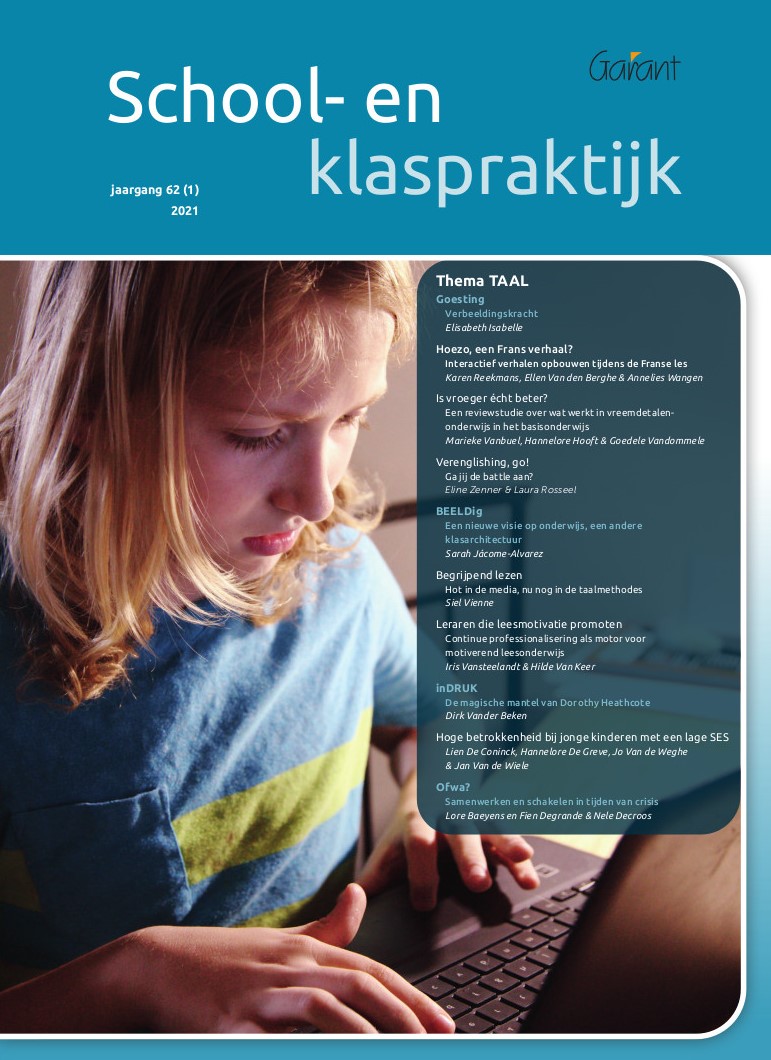
School- en klaspraktijk (SKP) Jrg. 62 nr.1 (2021)
€ 10,75
In dit themanummer staat taal centraal. Taal als middel om dingen voor elkaar te krijgen. Taal als bindmiddel: uitdagende teksten lezen om samen dat ene bijzondere proefje uit te voeren, je eigen verhaal verzinnen of de taal leren van je meertalige vrienden.
In Goesting daagt Elisabeth Isabelle ons uit om op zoek te gaan naar onze eerste taal. Met drie meisjes van negen jaar zoekt ze naar hun innerlijke landschappen, hun wereld, hun verbeeldingskracht. Een ding is duidelijk: het borrelt er van de goesting!
Hoe motiveer je leerlingen om in het Frans een verhaal op te bouwen? In het artikel Hoezo, een verhaal? Interactief verhalen verzinnen tijdens de Franse les maken Karen Reekmans, Ellen Van den Berghe en Annelies Wangen je wegwijs in Teaching Proficiency through Reading and Storytelling (TPRS) en muzisch taalonderwijs.
Vreemde talen leren, daarmee kun je het best maar zo vroeg mogelijk beginnen, toch? Marieke Vanbuel, Hannelore Hooft en Goedele Vandommele gidsen ons in hun artikel Is vroeger écht beter? Een reviewstudie over wat werkt in vreemdetalenonderwijs in het basisonderwijs door het laatste wetenschappelijke onderzoek.
Hoe het komt dat zesjarigen Engelstalige woorden uitroepen, die vraag ligt aan de basis van het onderzoek van Eline Zenner en Laura Rosseel. In hun artikel Verenglishing, go! Ga jij de battle aan? doen ze hun onderzoeksresultaten uit de doeken. Exciting!
In BEELDig neemt Sarah Jácome-Alvarez de proef op de som: hoe ziet de klas eruit in de 21ste eeuw? En wat betekent onderwijs eigenlijk?
In het artikel Begrijpend lezen, hot in de media, nu nog in de taalmethodes doet Siel Vienne uit de doeken hoe sterk begrijpend leesonderwijs eruitziet volgens recente onderzoeken en in welke mate ingrediënten van effectief leesonderwijs terug te vinden zijn in taalmethodes.
Iris Vansteelandt en Hilde Van Keer delen in hun artikel Leraren die leesmotivatie promoten: continue professionalisering voor motiverend leesonderwijs hoe je het leesvuur bij kinderen kunt ontsteken én warm houden. Op naar een gouden leesticket voor alle leerlingen!
Themaverkenning bij jonge kinderen, hoe pak je dat aan? En hoe kun je zorgen voor een sterke taalontwikkeling? In Hoge betrokkenheid creëren bij jonge, kwetsbare kinderen geven Lien De Coninck, Hannelore De Greve, Jo Van de Weghe en Jan Van de Wiele concrete tips. Na dit artikel kun je meteen aan de slag met het sprokkelen van interessante insteken voor jouw klas.
De laatste tijd heeft het onderwijs heel wat veerkracht getoond. We sluiten dit nummer af met een Ofwa? van Lore Baeyens, Fien Degrande en Nele Decroos waarin ze de kracht van een Leuvens netwerk én het platform Begeleiders zonder grenzen toelichten. Wat hen drijft? Snel schakelen en samenwerken voor gelijke onderwijskansen voor alle kinderen.
Carolien Frijns, hoofdredacteur
In Goesting daagt Elisabeth Isabelle ons uit om op zoek te gaan naar onze eerste taal. Met drie meisjes van negen jaar zoekt ze naar hun innerlijke landschappen, hun wereld, hun verbeeldingskracht. Een ding is duidelijk: het borrelt er van de goesting!
Hoe motiveer je leerlingen om in het Frans een verhaal op te bouwen? In het artikel Hoezo, een verhaal? Interactief verhalen verzinnen tijdens de Franse les maken Karen Reekmans, Ellen Van den Berghe en Annelies Wangen je wegwijs in Teaching Proficiency through Reading and Storytelling (TPRS) en muzisch taalonderwijs.
Vreemde talen leren, daarmee kun je het best maar zo vroeg mogelijk beginnen, toch? Marieke Vanbuel, Hannelore Hooft en Goedele Vandommele gidsen ons in hun artikel Is vroeger écht beter? Een reviewstudie over wat werkt in vreemdetalenonderwijs in het basisonderwijs door het laatste wetenschappelijke onderzoek.
Hoe het komt dat zesjarigen Engelstalige woorden uitroepen, die vraag ligt aan de basis van het onderzoek van Eline Zenner en Laura Rosseel. In hun artikel Verenglishing, go! Ga jij de battle aan? doen ze hun onderzoeksresultaten uit de doeken. Exciting!
In BEELDig neemt Sarah Jácome-Alvarez de proef op de som: hoe ziet de klas eruit in de 21ste eeuw? En wat betekent onderwijs eigenlijk?
In het artikel Begrijpend lezen, hot in de media, nu nog in de taalmethodes doet Siel Vienne uit de doeken hoe sterk begrijpend leesonderwijs eruitziet volgens recente onderzoeken en in welke mate ingrediënten van effectief leesonderwijs terug te vinden zijn in taalmethodes.
Iris Vansteelandt en Hilde Van Keer delen in hun artikel Leraren die leesmotivatie promoten: continue professionalisering voor motiverend leesonderwijs hoe je het leesvuur bij kinderen kunt ontsteken én warm houden. Op naar een gouden leesticket voor alle leerlingen!
Themaverkenning bij jonge kinderen, hoe pak je dat aan? En hoe kun je zorgen voor een sterke taalontwikkeling? In Hoge betrokkenheid creëren bij jonge, kwetsbare kinderen geven Lien De Coninck, Hannelore De Greve, Jo Van de Weghe en Jan Van de Wiele concrete tips. Na dit artikel kun je meteen aan de slag met het sprokkelen van interessante insteken voor jouw klas.
De laatste tijd heeft het onderwijs heel wat veerkracht getoond. We sluiten dit nummer af met een Ofwa? van Lore Baeyens, Fien Degrande en Nele Decroos waarin ze de kracht van een Leuvens netwerk én het platform Begeleiders zonder grenzen toelichten. Wat hen drijft? Snel schakelen en samenwerken voor gelijke onderwijskansen voor alle kinderen.
Carolien Frijns, hoofdredacteur
Geen voorraad
School- en klaspraktijk (SKP) Jrg. 62 nr.1 (2021)
€ 10,75
In dit themanummer staat taal centraal. Taal als middel om dingen voor elkaar te krijgen. Taal als bindmiddel: uitdagende teksten lezen om samen dat ene bijzondere proefje uit te voeren, je eigen verhaal verzinnen of de taal leren van je meertalige vrienden.
In Goesting daagt Elisabeth Isabelle ons uit om op zoek te gaan naar onze eerste taal. Met drie meisjes van negen jaar zoekt ze naar hun innerlijke landschappen, hun wereld, hun verbeeldingskracht. Een ding is duidelijk: het borrelt er van de goesting!
Hoe motiveer je leerlingen om in het Frans een verhaal op te bouwen? In het artikel Hoezo, een verhaal? Interactief verhalen verzinnen tijdens de Franse les maken Karen Reekmans, Ellen Van den Berghe en Annelies Wangen je wegwijs in Teaching Proficiency through Reading and Storytelling (TPRS) en muzisch taalonderwijs.
Vreemde talen leren, daarmee kun je het best maar zo vroeg mogelijk beginnen, toch? Marieke Vanbuel, Hannelore Hooft en Goedele Vandommele gidsen ons in hun artikel Is vroeger écht beter? Een reviewstudie over wat werkt in vreemdetalenonderwijs in het basisonderwijs door het laatste wetenschappelijke onderzoek.
Hoe het komt dat zesjarigen Engelstalige woorden uitroepen, die vraag ligt aan de basis van het onderzoek van Eline Zenner en Laura Rosseel. In hun artikel Verenglishing, go! Ga jij de battle aan? doen ze hun onderzoeksresultaten uit de doeken. Exciting!
In BEELDig neemt Sarah Jácome-Alvarez de proef op de som: hoe ziet de klas eruit in de 21ste eeuw? En wat betekent onderwijs eigenlijk?
In het artikel Begrijpend lezen, hot in de media, nu nog in de taalmethodes doet Siel Vienne uit de doeken hoe sterk begrijpend leesonderwijs eruitziet volgens recente onderzoeken en in welke mate ingrediënten van effectief leesonderwijs terug te vinden zijn in taalmethodes.
Iris Vansteelandt en Hilde Van Keer delen in hun artikel Leraren die leesmotivatie promoten: continue professionalisering voor motiverend leesonderwijs hoe je het leesvuur bij kinderen kunt ontsteken én warm houden. Op naar een gouden leesticket voor alle leerlingen!
Themaverkenning bij jonge kinderen, hoe pak je dat aan? En hoe kun je zorgen voor een sterke taalontwikkeling? In Hoge betrokkenheid creëren bij jonge, kwetsbare kinderen geven Lien De Coninck, Hannelore De Greve, Jo Van de Weghe en Jan Van de Wiele concrete tips. Na dit artikel kun je meteen aan de slag met het sprokkelen van interessante insteken voor jouw klas.
De laatste tijd heeft het onderwijs heel wat veerkracht getoond. We sluiten dit nummer af met een Ofwa? van Lore Baeyens, Fien Degrande en Nele Decroos waarin ze de kracht van een Leuvens netwerk én het platform Begeleiders zonder grenzen toelichten. Wat hen drijft? Snel schakelen en samenwerken voor gelijke onderwijskansen voor alle kinderen.
Carolien Frijns, hoofdredacteur
In Goesting daagt Elisabeth Isabelle ons uit om op zoek te gaan naar onze eerste taal. Met drie meisjes van negen jaar zoekt ze naar hun innerlijke landschappen, hun wereld, hun verbeeldingskracht. Een ding is duidelijk: het borrelt er van de goesting!
Hoe motiveer je leerlingen om in het Frans een verhaal op te bouwen? In het artikel Hoezo, een verhaal? Interactief verhalen verzinnen tijdens de Franse les maken Karen Reekmans, Ellen Van den Berghe en Annelies Wangen je wegwijs in Teaching Proficiency through Reading and Storytelling (TPRS) en muzisch taalonderwijs.
Vreemde talen leren, daarmee kun je het best maar zo vroeg mogelijk beginnen, toch? Marieke Vanbuel, Hannelore Hooft en Goedele Vandommele gidsen ons in hun artikel Is vroeger écht beter? Een reviewstudie over wat werkt in vreemdetalenonderwijs in het basisonderwijs door het laatste wetenschappelijke onderzoek.
Hoe het komt dat zesjarigen Engelstalige woorden uitroepen, die vraag ligt aan de basis van het onderzoek van Eline Zenner en Laura Rosseel. In hun artikel Verenglishing, go! Ga jij de battle aan? doen ze hun onderzoeksresultaten uit de doeken. Exciting!
In BEELDig neemt Sarah Jácome-Alvarez de proef op de som: hoe ziet de klas eruit in de 21ste eeuw? En wat betekent onderwijs eigenlijk?
In het artikel Begrijpend lezen, hot in de media, nu nog in de taalmethodes doet Siel Vienne uit de doeken hoe sterk begrijpend leesonderwijs eruitziet volgens recente onderzoeken en in welke mate ingrediënten van effectief leesonderwijs terug te vinden zijn in taalmethodes.
Iris Vansteelandt en Hilde Van Keer delen in hun artikel Leraren die leesmotivatie promoten: continue professionalisering voor motiverend leesonderwijs hoe je het leesvuur bij kinderen kunt ontsteken én warm houden. Op naar een gouden leesticket voor alle leerlingen!
Themaverkenning bij jonge kinderen, hoe pak je dat aan? En hoe kun je zorgen voor een sterke taalontwikkeling? In Hoge betrokkenheid creëren bij jonge, kwetsbare kinderen geven Lien De Coninck, Hannelore De Greve, Jo Van de Weghe en Jan Van de Wiele concrete tips. Na dit artikel kun je meteen aan de slag met het sprokkelen van interessante insteken voor jouw klas.
De laatste tijd heeft het onderwijs heel wat veerkracht getoond. We sluiten dit nummer af met een Ofwa? van Lore Baeyens, Fien Degrande en Nele Decroos waarin ze de kracht van een Leuvens netwerk én het platform Begeleiders zonder grenzen toelichten. Wat hen drijft? Snel schakelen en samenwerken voor gelijke onderwijskansen voor alle kinderen.
Carolien Frijns, hoofdredacteur
Grondbeginselen van de btw – Deel 4: Procedure btw
€ 49,95
Dit boek maakt deel uit van de reeks “Grondbeginselen van de btw” en behandelt de procedure inzake btw.
In een eerste deel worden de bewijsmiddelen inzake btw bestudeerd. In een tweede deel worden de controlemaatregelen besproken.
In deel 3 wordt de verjaring inzake btw geanalyseerd.
Ten slotte wordt in deel 4 het geding behandeld.
Hierbij wordt voornamelijk de administratieve commentaar ter zake weergegeven.
Daarnaast wordt de procedure voor de dienst voorafgaandelijke beslissingen weergegeven en de procedure voor de bemiddelingsdienst.
Stefan Ruysschaert is adviseur bij de FOD Financiën. Hij is o.a. redactielid van Taxwin en het Tijdschrift Huur. Hij doceert het vak btw aan de faculteit Economische Wetenschappen van de UGent en is gastdocent aan de Fiscale Hogeschool (Odisee). Kenmerkend voor zijn boeken en artikelen is de heldere analyse van de btw-vraagstukken.
In een eerste deel worden de bewijsmiddelen inzake btw bestudeerd. In een tweede deel worden de controlemaatregelen besproken.
In deel 3 wordt de verjaring inzake btw geanalyseerd.
Ten slotte wordt in deel 4 het geding behandeld.
Hierbij wordt voornamelijk de administratieve commentaar ter zake weergegeven.
Daarnaast wordt de procedure voor de dienst voorafgaandelijke beslissingen weergegeven en de procedure voor de bemiddelingsdienst.
Stefan Ruysschaert is adviseur bij de FOD Financiën. Hij is o.a. redactielid van Taxwin en het Tijdschrift Huur. Hij doceert het vak btw aan de faculteit Economische Wetenschappen van de UGent en is gastdocent aan de Fiscale Hogeschool (Odisee). Kenmerkend voor zijn boeken en artikelen is de heldere analyse van de btw-vraagstukken.
Grondbeginselen van de btw – Deel 4: Procedure btw
€ 49,95
Dit boek maakt deel uit van de reeks “Grondbeginselen van de btw” en behandelt de procedure inzake btw.
In een eerste deel worden de bewijsmiddelen inzake btw bestudeerd. In een tweede deel worden de controlemaatregelen besproken.
In deel 3 wordt de verjaring inzake btw geanalyseerd.
Ten slotte wordt in deel 4 het geding behandeld.
Hierbij wordt voornamelijk de administratieve commentaar ter zake weergegeven.
Daarnaast wordt de procedure voor de dienst voorafgaandelijke beslissingen weergegeven en de procedure voor de bemiddelingsdienst.
Stefan Ruysschaert is adviseur bij de FOD Financiën. Hij is o.a. redactielid van Taxwin en het Tijdschrift Huur. Hij doceert het vak btw aan de faculteit Economische Wetenschappen van de UGent en is gastdocent aan de Fiscale Hogeschool (Odisee). Kenmerkend voor zijn boeken en artikelen is de heldere analyse van de btw-vraagstukken.
In een eerste deel worden de bewijsmiddelen inzake btw bestudeerd. In een tweede deel worden de controlemaatregelen besproken.
In deel 3 wordt de verjaring inzake btw geanalyseerd.
Ten slotte wordt in deel 4 het geding behandeld.
Hierbij wordt voornamelijk de administratieve commentaar ter zake weergegeven.
Daarnaast wordt de procedure voor de dienst voorafgaandelijke beslissingen weergegeven en de procedure voor de bemiddelingsdienst.
Stefan Ruysschaert is adviseur bij de FOD Financiën. Hij is o.a. redactielid van Taxwin en het Tijdschrift Huur. Hij doceert het vak btw aan de faculteit Economische Wetenschappen van de UGent en is gastdocent aan de Fiscale Hogeschool (Odisee). Kenmerkend voor zijn boeken en artikelen is de heldere analyse van de btw-vraagstukken.