
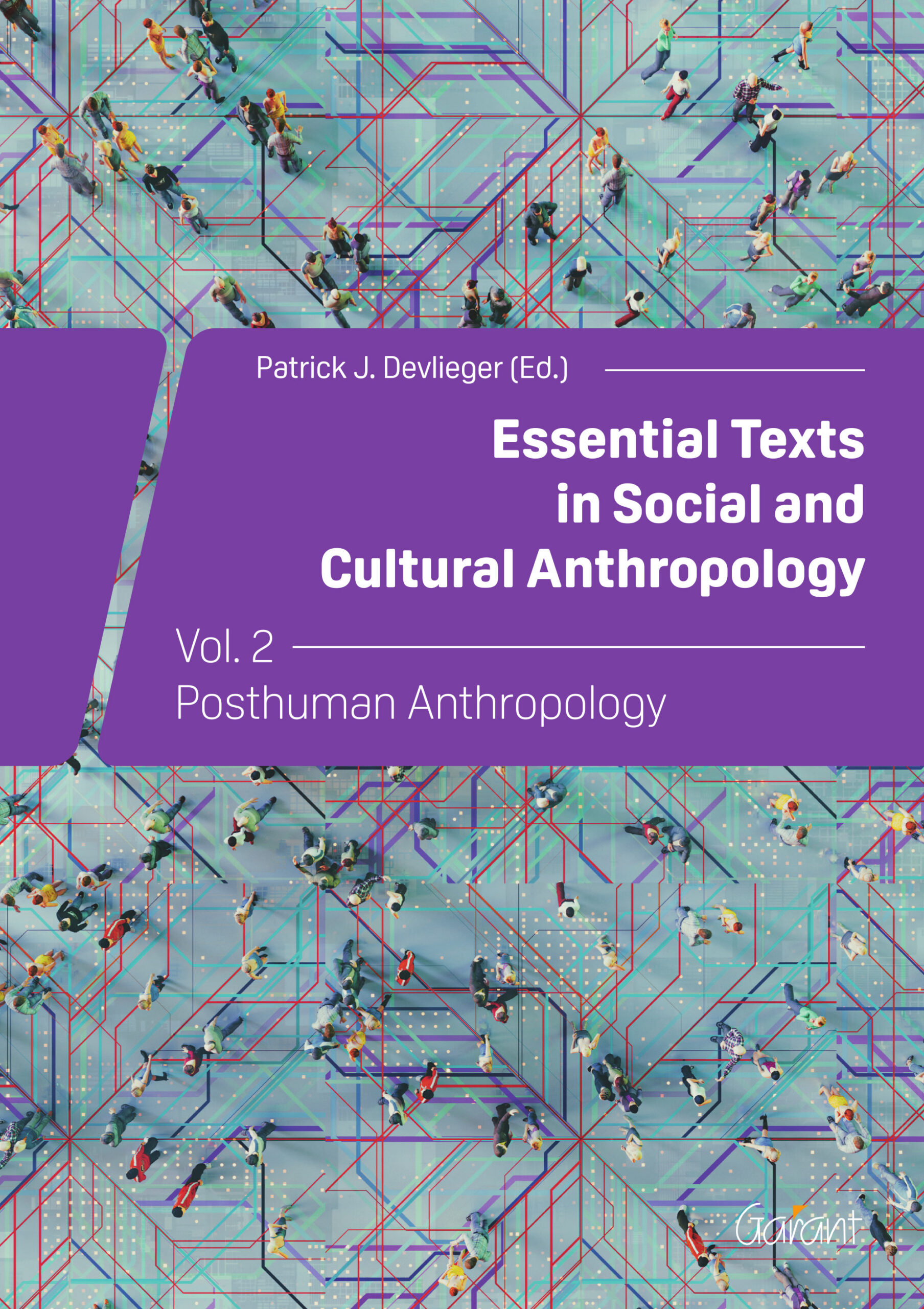
Essential Texts in Social and Cultural Anthropology – Vol. 2 Posthuman Anthropology
In this second volume of essential texts, we leave postmodern/postcolonial theory for new theoretical perspectives. Postmodern theory had the ambition to leave the modern behind but stopped short with an epistemological crisis. Postmodern theory however introduced innovative perspectives in theory that should be retained, such as positionality in research, deterritorialization, the ethnography of imagination, and the rhizomatic.
Posthuman theory builds on a different set of theories, that developed inside and outside of anthropology, most importantly science and technology studies, and philosophical strands including transmodern and transhuman orientations. The term ‘posthuman’ may be misleading as it does not involve the end of the human, but rather the end of the modern human, and the incorporation of the human in a larger perspective and context, making room for nonhuman beings such as animals and technology.
While the introduction of disability was limited in volume 1, it takes on a greater amplitude in this volume. People with disabilities’ experiences are familiar with the way the modern Vitruvian men is bypassed and in engaging with technology and with animals and other nonhuman beings. Rethinking (and re-doing) disability appears to be productive at both a discursive and narrative level, and provides an openings to relating with environments, by pushing for inclusion (in which not only other humans, but also other living and non-living things taking up significant time and space, and thus decenter modern humans). This leads to an ontological turn and a new humanization, somewhere between hope and staying with the trouble, with much attention for the materiality of the body and its prosthetics in future worlds. In four parts, the reader moves from tensions between disability, posthuman, and anthropology. A pragmatic theoretical approach is developed in part 3 with a focus on theory and new materialism, living, moving, and making, and resumes in part 4 with an attention to posthuman words in ‘care’, ‘(re)wilding’, ‘neurodiversity’ and ‘repair’.
Patrick J. Devlieger is a sociocultural anthropologist who was trained at KU Leuven and the University of Illinois. He worked extensively within the anthropology of disability and for the last decade in the history of leprosy sites and settlements. He has researched and taught in participatory fieldwork labs in Belgium, DR Congo, Canada, China, South Africa and New Zealand.
Essential Texts in Social and Cultural Anthropology – Vol. 2 Posthuman Anthropology
In this second volume of essential texts, we leave postmodern/postcolonial theory for new theoretical perspectives. Postmodern theory had the ambition to leave the modern behind but stopped short with an epistemological crisis. Postmodern theory however introduced innovative perspectives in theory that should be retained, such as positionality in research, deterritorialization, the ethnography of imagination, and the rhizomatic.
Posthuman theory builds on a different set of theories, that developed inside and outside of anthropology, most importantly science and technology studies, and philosophical strands including transmodern and transhuman orientations. The term ‘posthuman’ may be misleading as it does not involve the end of the human, but rather the end of the modern human, and the incorporation of the human in a larger perspective and context, making room for nonhuman beings such as animals and technology.
While the introduction of disability was limited in volume 1, it takes on a greater amplitude in this volume. People with disabilities’ experiences are familiar with the way the modern Vitruvian men is bypassed and in engaging with technology and with animals and other nonhuman beings. Rethinking (and re-doing) disability appears to be productive at both a discursive and narrative level, and provides an openings to relating with environments, by pushing for inclusion (in which not only other humans, but also other living and non-living things taking up significant time and space, and thus decenter modern humans). This leads to an ontological turn and a new humanization, somewhere between hope and staying with the trouble, with much attention for the materiality of the body and its prosthetics in future worlds. In four parts, the reader moves from tensions between disability, posthuman, and anthropology. A pragmatic theoretical approach is developed in part 3 with a focus on theory and new materialism, living, moving, and making, and resumes in part 4 with an attention to posthuman words in ‘care’, ‘(re)wilding’, ‘neurodiversity’ and ‘repair’.
Patrick J. Devlieger is a sociocultural anthropologist who was trained at KU Leuven and the University of Illinois. He worked extensively within the anthropology of disability and for the last decade in the history of leprosy sites and settlements. He has researched and taught in participatory fieldwork labs in Belgium, DR Congo, Canada, China, South Africa and New Zealand.
Rethinking Disability – World Perspectives in Culture and Society (second edition)
The act of life is a lived experience, common and unique, that ties each of us to every other lived experience. The fact of disability does not alter this fundamental truth.
In this edition of Rethinking Disability: World Perspectives in Culture and Society, we are presented with a system of thinking that considers the values of disability, as a resource, as a creative source of culture that moves disability out of the realm of victimized people and insurmountable barriers, and provides opportunities to use the experience of disability to enter into networks that recognize strengths of differing abilities. The authors within will intrigue you, will move you, will charm you, but always will challenge your notion of sameness and difference as they confront the construct and (de)construct of disability and ableism.
They present compelling arguments for viewing disABILITY through the multiple lenses of disability culture. They explore themes and issues that transcend past and origins, time and place, nuances of genetics, to experiences of present and becoming, and towards the future and beyond mere human, yet always intrinsically connected to being human. This book is intended for all audiences who dare to confront difference and sameness within themselves and in connection with others; to inspire researchers who wish to explore, and examine disability across social, cultural and economic barriers. It is an invitation to push away the barriers, bring ableism inside to a place where the prosthesis is no longer the elephant in the room.
Gary L. Albrecht is a former fellow of the Royal Belgian Academy of Arts and Sciences, former extraordinary guest professor of Social Sciences, KU Leuven and professor emeritus of Public Health and of Disability and Human Development at the University of Illinois at Chicago.
Sharon Barnartt is professor in the Department of Sociology at Gallaudet University.
Mari Bergen is a part-time editor of research publications and dissertations and an independent scholar in cultural anthropology with a material culture background and a special interest in 'across-cultures' research method.
Maria Berghs is a social and cultural anthropologist who specialises in disability studies.
Sharon V. Betcher is an independent scholar, writer, crip philosopher and would-be farmer living on Whidbey Island, Washington.
Stuart Blume received a D.Phil in chemistry from the University of Oxford, before moving into the field of science and technology studies.
Steven E. Brown is a historian, co-founder of the Institute on Disability Culture (IDC), and is currently located in California.
Fiona Budge is the founder and director of 'To the Point Consultancy'. She is a researcher who works part-time at the Disability Studies Group in the Netherlands DSiN.
Paula Campos Pinto holds a PhD in Sociology from York University, Toronto.
James Charlton helped found Access Living in 1979, one of the first centers for independent living in the U.S.
Maha Damaj is currently the Programme Manager at the UNICEF Oman Country Office.
Jori De Coster is a doctoral candidate in Social and Cultural Anthropology and a research assistant at the Interculturalism, Migrations and Minorities Research Centre at the KU Leuven.
Christine Dedding graduated in Medical Anthropology at the University of Amsterdam in 2002, followed by a Postdoc study about e-health and children.
Michel Desjardins is associate professor of psychology at the University of Saskatchewan.
Patrick Devlieger is associate professor of social and cultural anthropology at KU Leuven, and a guest professor at University of Illinois at Chicago, Stellenbosch University, University of Alberta, and Yunnan University.
Serge Ebersold is sociologist and professor at the Conservatoire des Arts et Métiers (CNAM) where he holds the chair on accessibility.
Dianne L. Ferguson is a recently retired professor and administrator at Chapman University in Orange, California.
Philip M. Ferguson is professor emeritus at Chapman University in Orange, California.
Rosemarie Garland-Thomson is a professor of English and co-director of the Disability Studies Initiative at Emory University.
Ine Gevers is curator, writer and activist.
Gerald L. Gold is a professor emeritus of anthropology at York University in Toronto Canada.
Josephine Hoegaerts is a core research fellow at the Helsinki Collegium for Advanced Studies (Finland).
Mimi Lusli is a doctoral candidate VU-University of Indonesia.
Beatriz Miranda-Galarza currently is the coordinator of the Bridges project regarding sustainability of small organizations of disabled people and people affected by Hansen Disease.
Ingunn Moser is professor of sociology and social studies of science, technology and medicine at Diakonhjemmet University College in Oslo.
Adolfo Ruiz is a graphic designer, illustrator and filmmaker.
Ylva Söderfeldt studied History of Ideas at Stockholm University.
Joshua St. Pierre is a doctoral student in philosophy at the University of Alberta.
Megan Strickfaden is an educator, designer and anthropologist.
Tanya Titchkosky is a professor in the Department of Social Justice Education at the University of Toronto (SJE, OISE, UofT).
Rethinking Disability – World Perspectives in Culture and Society (second edition)
The act of life is a lived experience, common and unique, that ties each of us to every other lived experience. The fact of disability does not alter this fundamental truth.
In this edition of Rethinking Disability: World Perspectives in Culture and Society, we are presented with a system of thinking that considers the values of disability, as a resource, as a creative source of culture that moves disability out of the realm of victimized people and insurmountable barriers, and provides opportunities to use the experience of disability to enter into networks that recognize strengths of differing abilities. The authors within will intrigue you, will move you, will charm you, but always will challenge your notion of sameness and difference as they confront the construct and (de)construct of disability and ableism.
They present compelling arguments for viewing disABILITY through the multiple lenses of disability culture. They explore themes and issues that transcend past and origins, time and place, nuances of genetics, to experiences of present and becoming, and towards the future and beyond mere human, yet always intrinsically connected to being human. This book is intended for all audiences who dare to confront difference and sameness within themselves and in connection with others; to inspire researchers who wish to explore, and examine disability across social, cultural and economic barriers. It is an invitation to push away the barriers, bring ableism inside to a place where the prosthesis is no longer the elephant in the room.
Gary L. Albrecht is a former fellow of the Royal Belgian Academy of Arts and Sciences, former extraordinary guest professor of Social Sciences, KU Leuven and professor emeritus of Public Health and of Disability and Human Development at the University of Illinois at Chicago.
Sharon Barnartt is professor in the Department of Sociology at Gallaudet University.
Mari Bergen is a part-time editor of research publications and dissertations and an independent scholar in cultural anthropology with a material culture background and a special interest in 'across-cultures' research method.
Maria Berghs is a social and cultural anthropologist who specialises in disability studies.
Sharon V. Betcher is an independent scholar, writer, crip philosopher and would-be farmer living on Whidbey Island, Washington.
Stuart Blume received a D.Phil in chemistry from the University of Oxford, before moving into the field of science and technology studies.
Steven E. Brown is a historian, co-founder of the Institute on Disability Culture (IDC), and is currently located in California.
Fiona Budge is the founder and director of 'To the Point Consultancy'. She is a researcher who works part-time at the Disability Studies Group in the Netherlands DSiN.
Paula Campos Pinto holds a PhD in Sociology from York University, Toronto.
James Charlton helped found Access Living in 1979, one of the first centers for independent living in the U.S.
Maha Damaj is currently the Programme Manager at the UNICEF Oman Country Office.
Jori De Coster is a doctoral candidate in Social and Cultural Anthropology and a research assistant at the Interculturalism, Migrations and Minorities Research Centre at the KU Leuven.
Christine Dedding graduated in Medical Anthropology at the University of Amsterdam in 2002, followed by a Postdoc study about e-health and children.
Michel Desjardins is associate professor of psychology at the University of Saskatchewan.
Patrick Devlieger is associate professor of social and cultural anthropology at KU Leuven, and a guest professor at University of Illinois at Chicago, Stellenbosch University, University of Alberta, and Yunnan University.
Serge Ebersold is sociologist and professor at the Conservatoire des Arts et Métiers (CNAM) where he holds the chair on accessibility.
Dianne L. Ferguson is a recently retired professor and administrator at Chapman University in Orange, California.
Philip M. Ferguson is professor emeritus at Chapman University in Orange, California.
Rosemarie Garland-Thomson is a professor of English and co-director of the Disability Studies Initiative at Emory University.
Ine Gevers is curator, writer and activist.
Gerald L. Gold is a professor emeritus of anthropology at York University in Toronto Canada.
Josephine Hoegaerts is a core research fellow at the Helsinki Collegium for Advanced Studies (Finland).
Mimi Lusli is a doctoral candidate VU-University of Indonesia.
Beatriz Miranda-Galarza currently is the coordinator of the Bridges project regarding sustainability of small organizations of disabled people and people affected by Hansen Disease.
Ingunn Moser is professor of sociology and social studies of science, technology and medicine at Diakonhjemmet University College in Oslo.
Adolfo Ruiz is a graphic designer, illustrator and filmmaker.
Ylva Söderfeldt studied History of Ideas at Stockholm University.
Joshua St. Pierre is a doctoral student in philosophy at the University of Alberta.
Megan Strickfaden is an educator, designer and anthropologist.
Tanya Titchkosky is a professor in the Department of Social Justice Education at the University of Toronto (SJE, OISE, UofT).
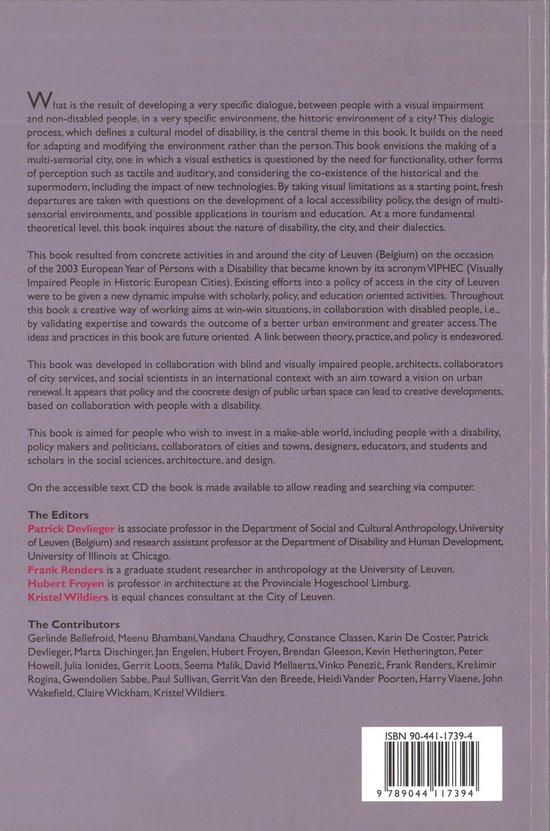
Blindness and the multi-sensorial city (met cd-rom)
Patrick Devlieger is associate professor in the Department of Social and Cultural Anthropology, University of Leuven (Belgium) and research assistant professor at the Department of Disability and Human Development, University of Illinois at Chicago.
Frank Renders is a graduate student researcher in anthropology at the University of Leuven.
Hubert Froyen is professor in architecture at the Provinciale Hogeschool Limburg.
Kristel Wildiers is equal chances consultant at the City of Leuven.
Blindness and the multi-sensorial city (met cd-rom)
Patrick Devlieger is associate professor in the Department of Social and Cultural Anthropology, University of Leuven (Belgium) and research assistant professor at the Department of Disability and Human Development, University of Illinois at Chicago.
Frank Renders is a graduate student researcher in anthropology at the University of Leuven.
Hubert Froyen is professor in architecture at the Provinciale Hogeschool Limburg.
Kristel Wildiers is equal chances consultant at the City of Leuven.