
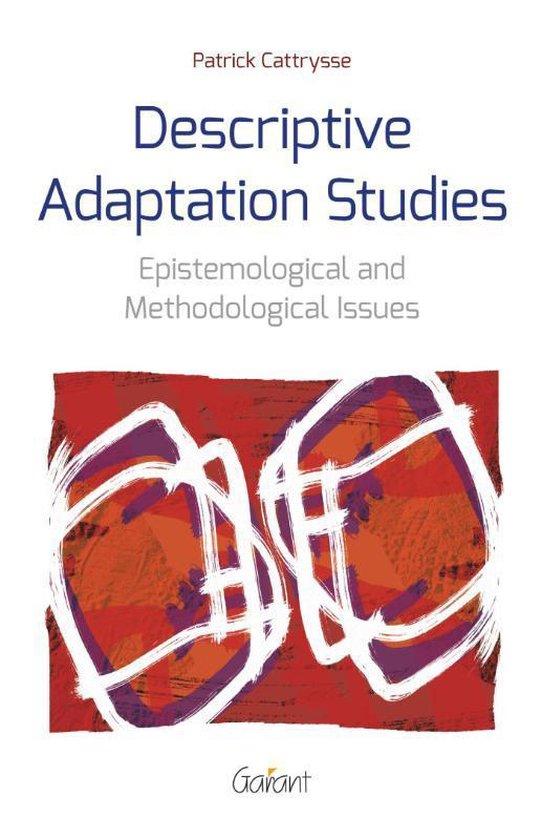
Descriptive Adaptation Studies. Epistemological and Methodological Issues
It is common practice nowadays for adaptation critics to denounce the lack of meta-theoretical thinking in adaptation studies and to plead for a study of ‘adaptation-as-adaptation’; one that eschews value judgments, steps beyond normative fidelity-based discourse, examines adaptation from an intertextual perspective, and abandons the single-source model for a multiple-source model. This study looks into a research program that does all that and more. It was developed in the late 1980s and presented in the early 1990s as a ‘polysystem’ (PS) study of adaptations.
Since then, the PS label has been replaced with ‘descriptive’. This book studies the question of whether and how a PS approach could evolve into a descriptive adaptation studies (DAS) approach. Although not perfect (no method is), DAS offers a number of assets. Apart from dealing with the above-mentioned issues, DAS transcends an Auteurist approach and looks at explanation beyond the level of individual agency (even if contextualized). As an alternative to the endless accumulation of ad hoc case studies, it suggests corpus-based research into wider trends of adaptational behavior and the roles and functions of sets of adaptations. DAS also allows reflection upon its own epistemic values. It sheds new light on some old issues: How can one define adaptation? What does it mean to study adaptation-as-adaptation? Is equivalence still possible and is the concept still relevant? DAS also tackles some deeper epistemological issues: How can phenomena be compared? Why would difference be more real than sameness or change more real than stasis? How does description relate to evaluation, explanation and prediction, etc.?
This book addresses both theory-minded scholars who are interested in epistemological reflection and practice-oriented adaptation students who want to get started. From a theoretical point of view, it discusses arguments that could support the legitimacy of adaptation studies as an academic discipline. From a practical point of view, it explains in general terms ways of conducting an adaptation study.
Patrick Cattrysse’s work is of utmost
importance to Adaptation Studies. As
the first extended attempt to develop a
rigorous methodology which borrows in
very meaningful ways from Adaptation
Studies’ cousin Translation Studies, this
book should be on every Adaptation
scholar’s shelf. While Hutcheons, Sanders
and Leitch, to name but a few, layed the
groundwork which allowed Adaptation
Studies to establish itself as a field of
inquiry in its own right, Cattrysse moves
the field into the next necessary stage: that
of developing conceptual tools which stand
the test of critical investigation and allow
Adaptation Studies to move beyond the
single case-study approach.
(Katja Krebs - University of Bristol)
This book is a bold initiative: it proposes,
and illustrates, a comprehensive new
empirical research programme for film
adaptation studies, inspired by the way
systems theory and norm theory have
expanded Translation Studies. One of
the book’s unusual strengths is the way
the proposal is grounded in a thoughtful
theoretical discussion of conceptual and
methodological issues, dealing with such
notions as theory, descriptivism, definition,
diachrony and explanation. This gives the
work a significance that ranges well beyond
Adaptation Studies alone; it deserves the
attention of scholars in the humanities in
general.
(Andrew Chesterman - University of Helsinki)
This dense and theoretically-informed
study argues forcefully for a descriptive
systems analysis approach to literature/
film adaptation, building on the author’s
earlier corpus-based study of film noir
and adaptation. Providing a wide-ranging
discussion of important critical questions
(including the place of logical positivism
in humanistic studies), this book will give
adaptation schol
Patrick Cattrysse is an independent researcher. He teaches adaptation studies, narrative studies and screenwriting studies at the Université Libre de Bruxelles, Antwerpen Universiteit and Emerson College European Center.
Descriptive Adaptation Studies. Epistemological and Methodological Issues
It is common practice nowadays for adaptation critics to denounce the lack of meta-theoretical thinking in adaptation studies and to plead for a study of ‘adaptation-as-adaptation’; one that eschews value judgments, steps beyond normative fidelity-based discourse, examines adaptation from an intertextual perspective, and abandons the single-source model for a multiple-source model. This study looks into a research program that does all that and more. It was developed in the late 1980s and presented in the early 1990s as a ‘polysystem’ (PS) study of adaptations.
Since then, the PS label has been replaced with ‘descriptive’. This book studies the question of whether and how a PS approach could evolve into a descriptive adaptation studies (DAS) approach. Although not perfect (no method is), DAS offers a number of assets. Apart from dealing with the above-mentioned issues, DAS transcends an Auteurist approach and looks at explanation beyond the level of individual agency (even if contextualized). As an alternative to the endless accumulation of ad hoc case studies, it suggests corpus-based research into wider trends of adaptational behavior and the roles and functions of sets of adaptations. DAS also allows reflection upon its own epistemic values. It sheds new light on some old issues: How can one define adaptation? What does it mean to study adaptation-as-adaptation? Is equivalence still possible and is the concept still relevant? DAS also tackles some deeper epistemological issues: How can phenomena be compared? Why would difference be more real than sameness or change more real than stasis? How does description relate to evaluation, explanation and prediction, etc.?
This book addresses both theory-minded scholars who are interested in epistemological reflection and practice-oriented adaptation students who want to get started. From a theoretical point of view, it discusses arguments that could support the legitimacy of adaptation studies as an academic discipline. From a practical point of view, it explains in general terms ways of conducting an adaptation study.
Patrick Cattrysse’s work is of utmost
importance to Adaptation Studies. As
the first extended attempt to develop a
rigorous methodology which borrows in
very meaningful ways from Adaptation
Studies’ cousin Translation Studies, this
book should be on every Adaptation
scholar’s shelf. While Hutcheons, Sanders
and Leitch, to name but a few, layed the
groundwork which allowed Adaptation
Studies to establish itself as a field of
inquiry in its own right, Cattrysse moves
the field into the next necessary stage: that
of developing conceptual tools which stand
the test of critical investigation and allow
Adaptation Studies to move beyond the
single case-study approach.
(Katja Krebs - University of Bristol)
This book is a bold initiative: it proposes,
and illustrates, a comprehensive new
empirical research programme for film
adaptation studies, inspired by the way
systems theory and norm theory have
expanded Translation Studies. One of
the book’s unusual strengths is the way
the proposal is grounded in a thoughtful
theoretical discussion of conceptual and
methodological issues, dealing with such
notions as theory, descriptivism, definition,
diachrony and explanation. This gives the
work a significance that ranges well beyond
Adaptation Studies alone; it deserves the
attention of scholars in the humanities in
general.
(Andrew Chesterman - University of Helsinki)
This dense and theoretically-informed
study argues forcefully for a descriptive
systems analysis approach to literature/
film adaptation, building on the author’s
earlier corpus-based study of film noir
and adaptation. Providing a wide-ranging
discussion of important critical questions
(including the place of logical positivism
in humanistic studies), this book will give
adaptation schol
Patrick Cattrysse is an independent researcher. He teaches adaptation studies, narrative studies and screenwriting studies at the Université Libre de Bruxelles, Antwerpen Universiteit and Emerson College European Center.
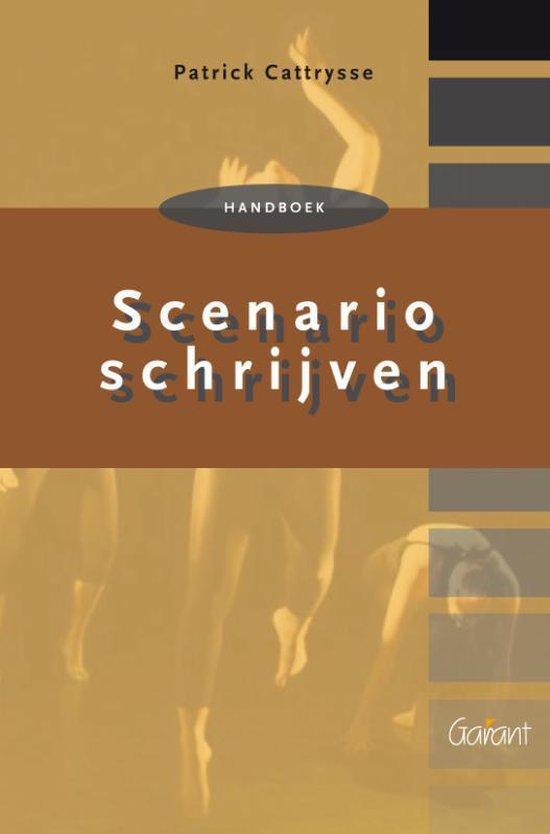
Handboek scenarioschrijven
Doorheen de verschillende hoofdstukken wordt het hele preproductieproces stap voor stap beschreven. Hierbij gaat speciale aandacht naar een aantal specieke structuurprincipes en verteltechnieken, die aan de hand van concrete voorbeelden worden uitgelegd.
Dit handboek bevat de basisinformatie voor eenieder die zich op een praktische manier wil bekwamen in het vaktechnisch schrijven en analyseren van scenario’s. Het behandelt zowel de fictiefilm als de feitenfilm. Ook de bedrijfsfilm en het informatieve tv-programma komen dus uitvoerig aan bod.
Dr. Patrick Cattrysse is hoofddocent aan de Vlaamse Script Academie, v.z.w. te Brussel. Hij is gespecialiseerd op het vlak van de filmische adaptatie, de theorie van de filmgeschiedenis en het scenarioschrijven.
Handboek scenarioschrijven
Doorheen de verschillende hoofdstukken wordt het hele preproductieproces stap voor stap beschreven. Hierbij gaat speciale aandacht naar een aantal specieke structuurprincipes en verteltechnieken, die aan de hand van concrete voorbeelden worden uitgelegd.
Dit handboek bevat de basisinformatie voor eenieder die zich op een praktische manier wil bekwamen in het vaktechnisch schrijven en analyseren van scenario’s. Het behandelt zowel de fictiefilm als de feitenfilm. Ook de bedrijfsfilm en het informatieve tv-programma komen dus uitvoerig aan bod.
Dr. Patrick Cattrysse is hoofddocent aan de Vlaamse Script Academie, v.z.w. te Brussel. Hij is gespecialiseerd op het vlak van de filmische adaptatie, de theorie van de filmgeschiedenis en het scenarioschrijven.