

Mastering Mediation Education
Mediation education nowadays is implemented at all levels in society. From kindergarten and primary school education (‘peer mediation’), to university and post-graduate master programs. The length and intensity varies tremendously: from two days courses, to two years programs. In this respect, mediation is comparable to sports or fine arts: you can practice this intuitively, and with basic training at grass roots level, and you can develop this into professional level , and become a Master in Mediation.
This professionalization is an essential step for mediation as a
respected part in the judicial process and the mediator as a respected
full partner in the process of conflict management and dispute
resolution. The mediator should be recognized as an expert, with
specific knowledge and skills to assist as a third party.
To achieve
this, high quality education in mediation is essential. Otherwise,
mediation will always be seen, particularly by other professions and
professionals as a ‘soft skills’, and second order servicing.
- How should this professional education be developed?
- What roles do universities and should universities play in mediation education?
- What trends are there and what are the necessary steps to take, to further develop this young profession, into evidence based practices?
Martin Euwema is full professor Organisational Psychology at KU Leuven. He is the president of the International Association for Conflict Management and co-director of the Leuven Center for Collaborative Management.
Fred Schonewille runs a private mediation practice, is a teacher and researcher on the field of mediation and law and is a part time judge.
Mastering Mediation Education
Mediation education nowadays is implemented at all levels in society. From kindergarten and primary school education (‘peer mediation’), to university and post-graduate master programs. The length and intensity varies tremendously: from two days courses, to two years programs. In this respect, mediation is comparable to sports or fine arts: you can practice this intuitively, and with basic training at grass roots level, and you can develop this into professional level , and become a Master in Mediation.
This professionalization is an essential step for mediation as a
respected part in the judicial process and the mediator as a respected
full partner in the process of conflict management and dispute
resolution. The mediator should be recognized as an expert, with
specific knowledge and skills to assist as a third party.
To achieve
this, high quality education in mediation is essential. Otherwise,
mediation will always be seen, particularly by other professions and
professionals as a ‘soft skills’, and second order servicing.
- How should this professional education be developed?
- What roles do universities and should universities play in mediation education?
- What trends are there and what are the necessary steps to take, to further develop this young profession, into evidence based practices?
Martin Euwema is full professor Organisational Psychology at KU Leuven. He is the president of the International Association for Conflict Management and co-director of the Leuven Center for Collaborative Management.
Fred Schonewille runs a private mediation practice, is a teacher and researcher on the field of mediation and law and is a part time judge.
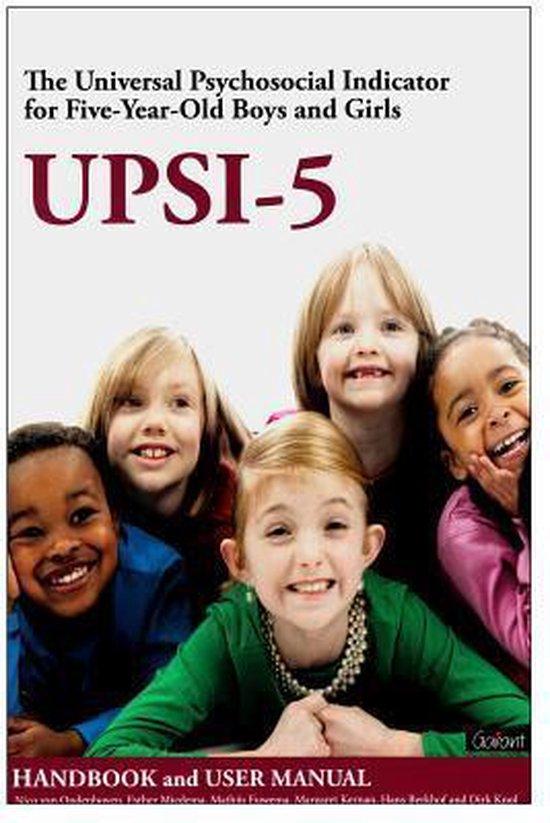
Universal Psychosocial Indicator for Five-Year-Old Boys and Girls (UPSI-5) Handbook and User Manual
The UPSI-5 provides an urgently needed counterpart to the strictly physical indicators and mortality indicators commonly used to measure young children''s wellbeing and survival. It is an easy to use global screening device that can assess the psychosocial wellbeing of large populations of 5-year-children. ICDI designed it to serve three main purposes:
UPSI-5 is primarily meant for governmental, non-governmental and UN agencies concerned about the well-being and development of young children, who work with large numbers of them and would benefit from obtaining overall impressions about their psychosocial status. The UPSI-5 is not an instrument to be used for individual diagnostic purposes. It should, therefore, only be interpreted as a first indication that further professional attention may need to be sought.
This book consists of two parts. Part One makes a plea to take more seriously children''s mental and emotional status, and the ways in which they relate to other children, their families, caregivers, communities and their broader environment. It also presents the rationale for introducing the UPSI-5 in programmes and policies benefiting children. Part Two explains in detail how to make best use of the UPSI-5.
Universal Psychosocial Indicator for Five-Year-Old Boys and Girls (UPSI-5) Handbook and User Manual
The UPSI-5 provides an urgently needed counterpart to the strictly physical indicators and mortality indicators commonly used to measure young children''s wellbeing and survival. It is an easy to use global screening device that can assess the psychosocial wellbeing of large populations of 5-year-children. ICDI designed it to serve three main purposes:
UPSI-5 is primarily meant for governmental, non-governmental and UN agencies concerned about the well-being and development of young children, who work with large numbers of them and would benefit from obtaining overall impressions about their psychosocial status. The UPSI-5 is not an instrument to be used for individual diagnostic purposes. It should, therefore, only be interpreted as a first indication that further professional attention may need to be sought.
This book consists of two parts. Part One makes a plea to take more seriously children''s mental and emotional status, and the ways in which they relate to other children, their families, caregivers, communities and their broader environment. It also presents the rationale for introducing the UPSI-5 in programmes and policies benefiting children. Part Two explains in detail how to make best use of the UPSI-5.