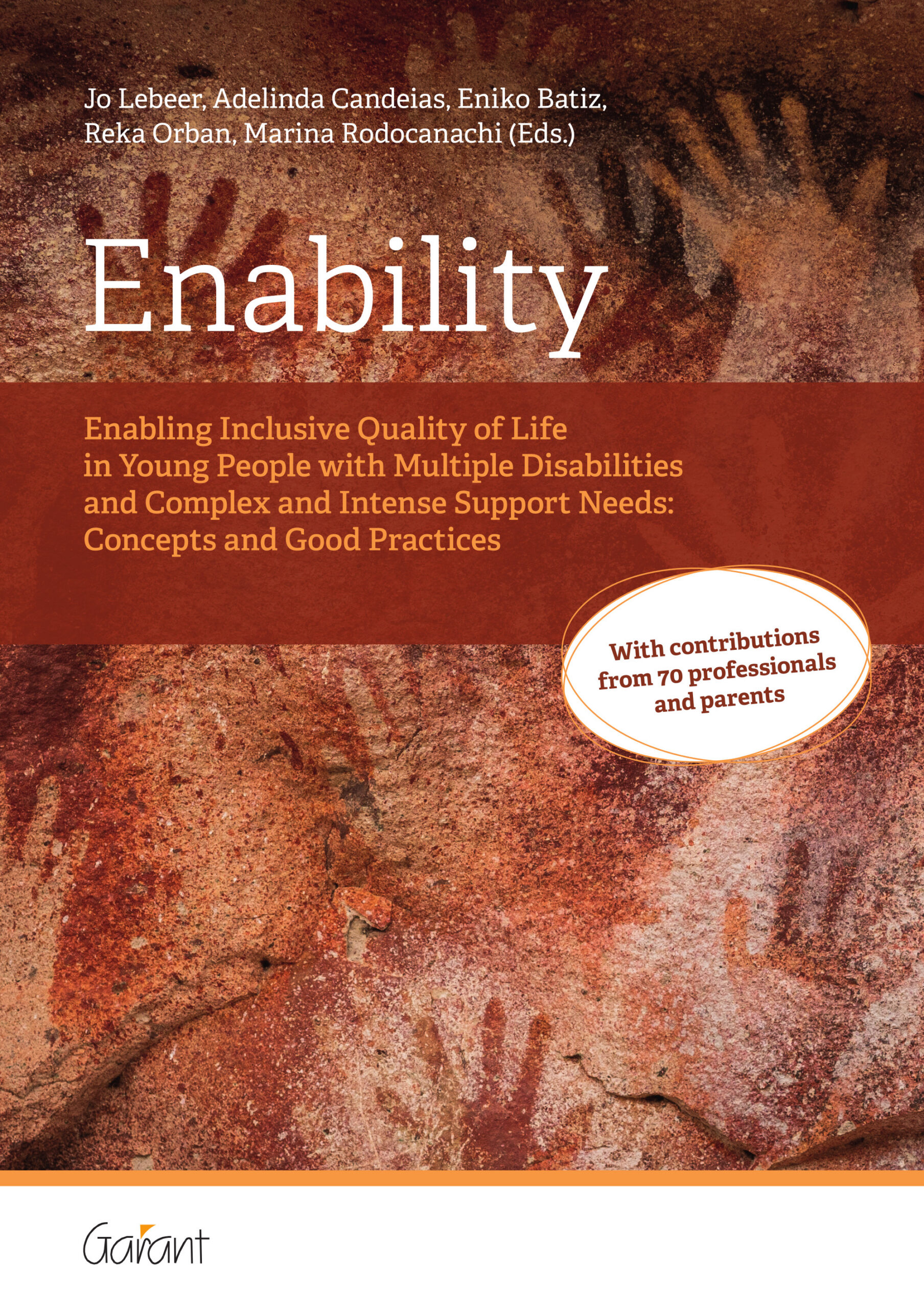
Enability – Enabling Inclusive Quality of Life in Young People with Multiple Disabilities and Complex and Intense Support Needs: Concepts & Good Practices
In 2013 we created a European project “Enablin+” to develop an innovative interprofessional in-service training programme, to improve inclusion and quality of life for children with the most complex disabilities, who are in need of intensive and continuous support.
The name ENABLIN + has three aspects. “Enabling” is the opposite of disability; it means to enable the person to function; the IN stands for “inclusion”; and the “+” stands for “multiple disabilities” or “extraordinary multiple needs”, in learning, communicating, mobility, often also in eating and other aspects of self-care or behavioural challenges..
This book contains the most important results of the project. A first part is about research on needs assessment and quality of life. A second part gives an overview of continuous support systems in the partners’ countries. Then a new interprofessional training programme is outlined. A fourth part describes various projects of “good practice” and results of pilot projects in inclusive education, enhancing activity and participation in various life areas, communication and integrated support.
This book is aimed at those who are responsible for training the various professionals working in the field of children and youngsters with complex and intensive support needs – educators, auxiliaries, teachers, therapists, doctors, etc., as well as volunteers and parents.
Jo Lebeer is a medical doctor and emeritus professor in Disability Studies at the University of Antwerp (Belgium). Adelinda Candeias is professor of Psychology at the School of Health and Human Development at the University of Évora (Portugal). Eniko Batiz is Head of the Department and Reka Orban is a lecturer in Special Education at the Department of Applied Psychology of the Babes Bolyai University in Cluj-Napoca (Romania). Marina Rodocanachi is a medical doctor specialized in Neurology and Rehabilitation Medicine at the Don Gnocchi Foundation in Milan (Italy)
Enability – Enabling Inclusive Quality of Life in Young People with Multiple Disabilities and Complex and Intense Support Needs: Concepts & Good Practices
In 2013 we created a European project “Enablin+” to develop an innovative interprofessional in-service training programme, to improve inclusion and quality of life for children with the most complex disabilities, who are in need of intensive and continuous support.
The name ENABLIN + has three aspects. “Enabling” is the opposite of disability; it means to enable the person to function; the IN stands for “inclusion”; and the “+” stands for “multiple disabilities” or “extraordinary multiple needs”, in learning, communicating, mobility, often also in eating and other aspects of self-care or behavioural challenges..
This book contains the most important results of the project. A first part is about research on needs assessment and quality of life. A second part gives an overview of continuous support systems in the partners’ countries. Then a new interprofessional training programme is outlined. A fourth part describes various projects of “good practice” and results of pilot projects in inclusive education, enhancing activity and participation in various life areas, communication and integrated support.
This book is aimed at those who are responsible for training the various professionals working in the field of children and youngsters with complex and intensive support needs – educators, auxiliaries, teachers, therapists, doctors, etc., as well as volunteers and parents.
Jo Lebeer is a medical doctor and emeritus professor in Disability Studies at the University of Antwerp (Belgium). Adelinda Candeias is professor of Psychology at the School of Health and Human Development at the University of Évora (Portugal). Eniko Batiz is Head of the Department and Reka Orban is a lecturer in Special Education at the Department of Applied Psychology of the Babes Bolyai University in Cluj-Napoca (Romania). Marina Rodocanachi is a medical doctor specialized in Neurology and Rehabilitation Medicine at the Don Gnocchi Foundation in Milan (Italy)
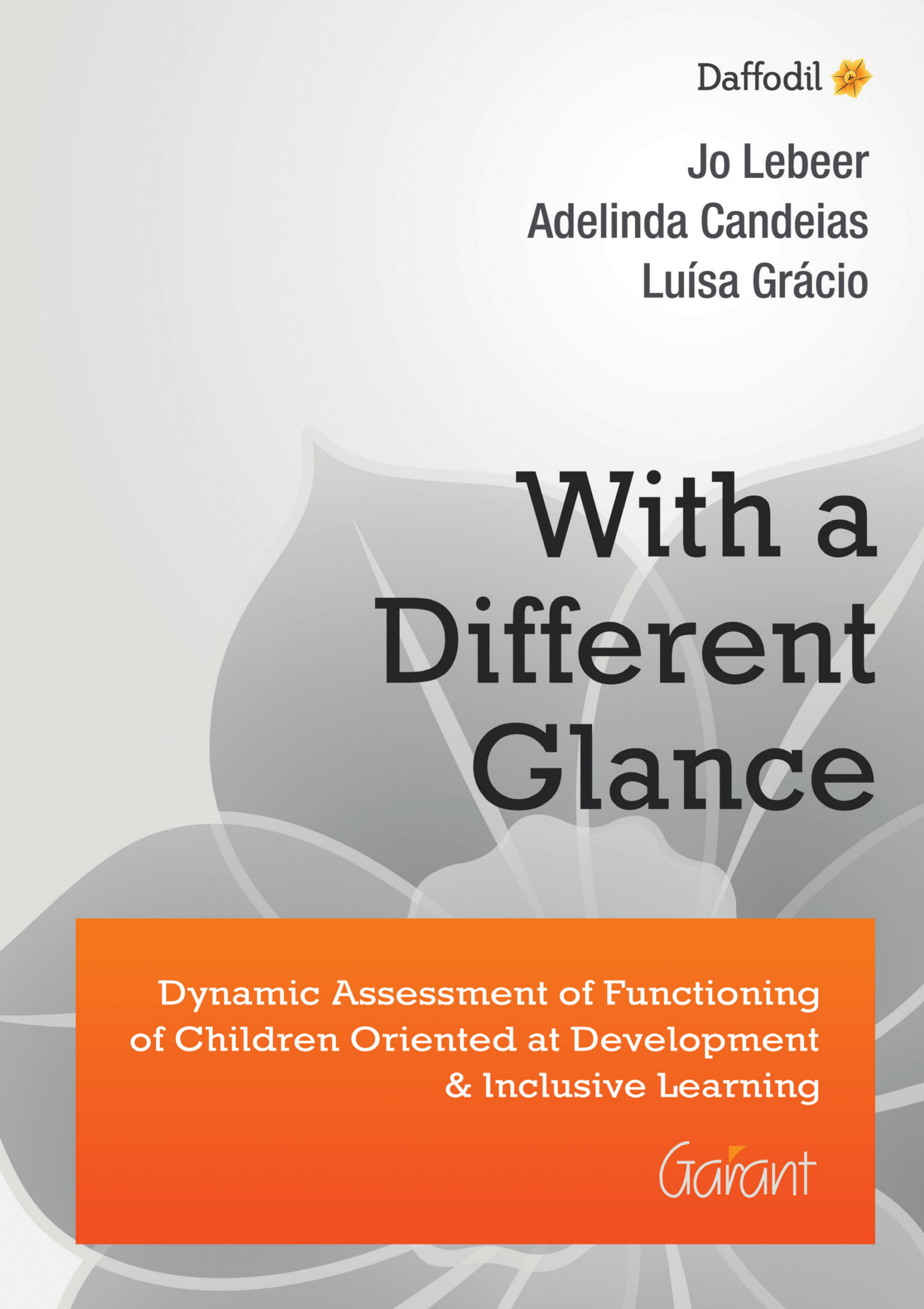
With a different glance. Dynamic assessment of functioning of children oriented at development & inclusive learning
Current functional assessment is too much deficiency oriented and tends to ''blame'' the child. If schools have to become ''inclusive schools for all'', as is laid down in the UN Convention on the Rights of People with disabilities, then the assessment & coaching system needs a thorough reform.
This book wants to propose some alternatives: next to finding out about a child''s functional difficulties, assessment methods also need to look at a child''s learning potential, responsiveness to teaching, and learning context (teachers, parents). The objective of assessment should be to adequately plan and monitor a challenging educational intervention, allowing the child to be maximally included.
Models of ''good practice'' have been collected within the context of the European Comenius DAFFODIL project.
The book wants to make school psychologists and other assessors of special needs, aware of the need and possibility to look at children with a different glance: in a more inclusion-oriented and development-oriented way.
Jo Lebeer is associate professor of disability studies at the University of Antwerp, Belgium. Adelinda Candeias and Luísa Grácio are professors of educational psychology at the University of Evora, Portugal.
With a different glance. Dynamic assessment of functioning of children oriented at development & inclusive learning
Current functional assessment is too much deficiency oriented and tends to ''blame'' the child. If schools have to become ''inclusive schools for all'', as is laid down in the UN Convention on the Rights of People with disabilities, then the assessment & coaching system needs a thorough reform.
This book wants to propose some alternatives: next to finding out about a child''s functional difficulties, assessment methods also need to look at a child''s learning potential, responsiveness to teaching, and learning context (teachers, parents). The objective of assessment should be to adequately plan and monitor a challenging educational intervention, allowing the child to be maximally included.
Models of ''good practice'' have been collected within the context of the European Comenius DAFFODIL project.
The book wants to make school psychologists and other assessors of special needs, aware of the need and possibility to look at children with a different glance: in a more inclusion-oriented and development-oriented way.
Jo Lebeer is associate professor of disability studies at the University of Antwerp, Belgium. Adelinda Candeias and Luísa Grácio are professors of educational psychology at the University of Evora, Portugal.