

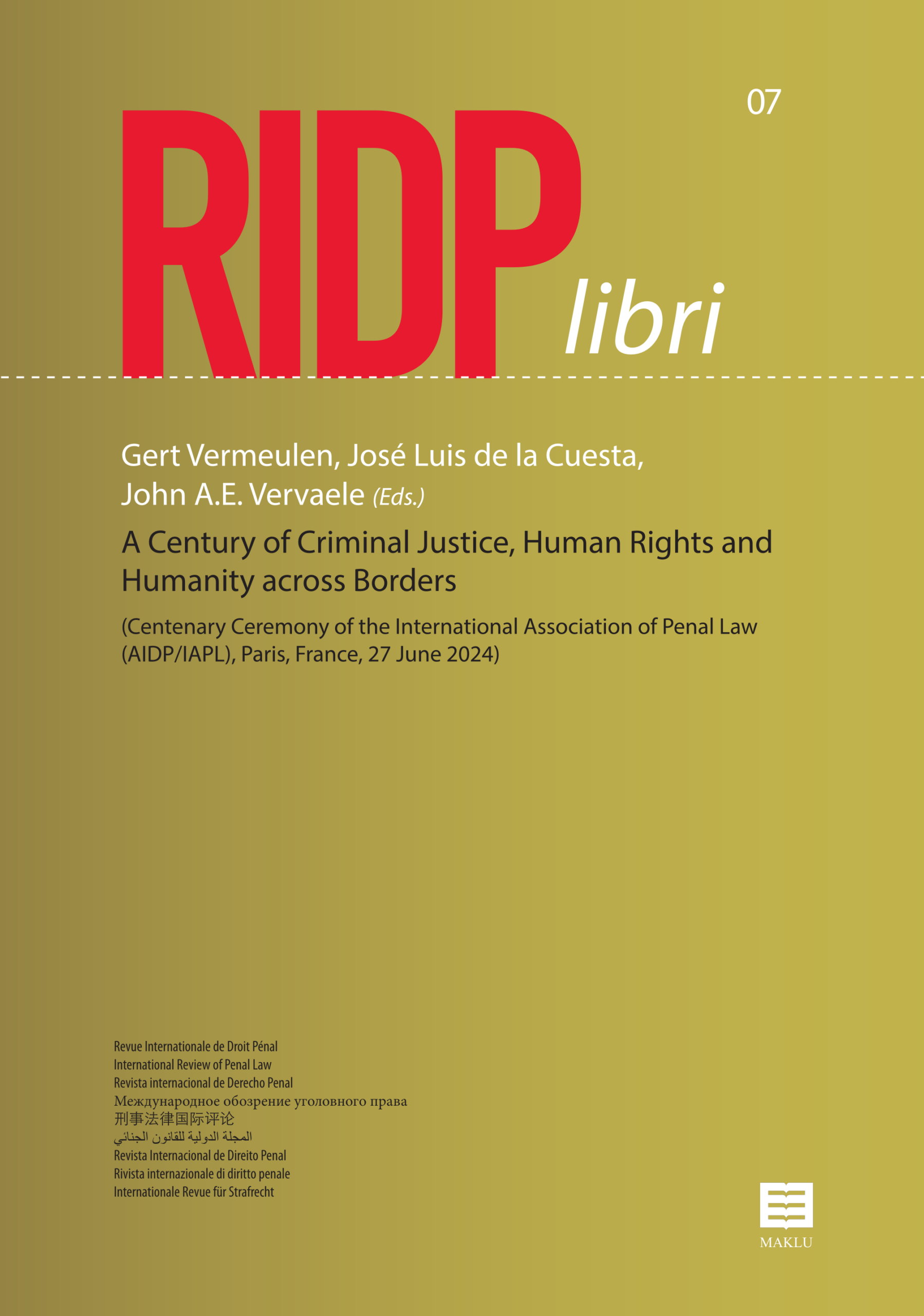

A Century of Criminal Justice, Human Rights and Humanity across Borders. (Centenary Ceremony of the International Association of Penal Law (AIDP/IAPL)) RIDP Libri 07
Gert Vermeulen is General Director Publications of the AIDP/IAPL, Editor-in-chief of the RIDP, and Senior Full Professor of European and international criminal law, sexual criminal law, and data protection law at Ghent University, Belgium. José Luis de la Cuesta is Honorary President of the AIDP/IAPL and Professor of Criminal Law at the University of the Basque Country, San Sebastian, Spain. John A.E. Vervaele is Honorary President of the AIDP/AIPL, Emeritus Professor at Utrecht University, The Netherlands, and Professor in European Criminal Law at the College of Europe, Bruges, Belgium.
A Century of Criminal Justice, Human Rights and Humanity across Borders. (Centenary Ceremony of the International Association of Penal Law (AIDP/IAPL)) RIDP Libri 07
Gert Vermeulen is General Director Publications of the AIDP/IAPL, Editor-in-chief of the RIDP, and Senior Full Professor of European and international criminal law, sexual criminal law, and data protection law at Ghent University, Belgium. José Luis de la Cuesta is Honorary President of the AIDP/IAPL and Professor of Criminal Law at the University of the Basque Country, San Sebastian, Spain. John A.E. Vervaele is Honorary President of the AIDP/AIPL, Emeritus Professor at Utrecht University, The Netherlands, and Professor in European Criminal Law at the College of Europe, Bruges, Belgium.
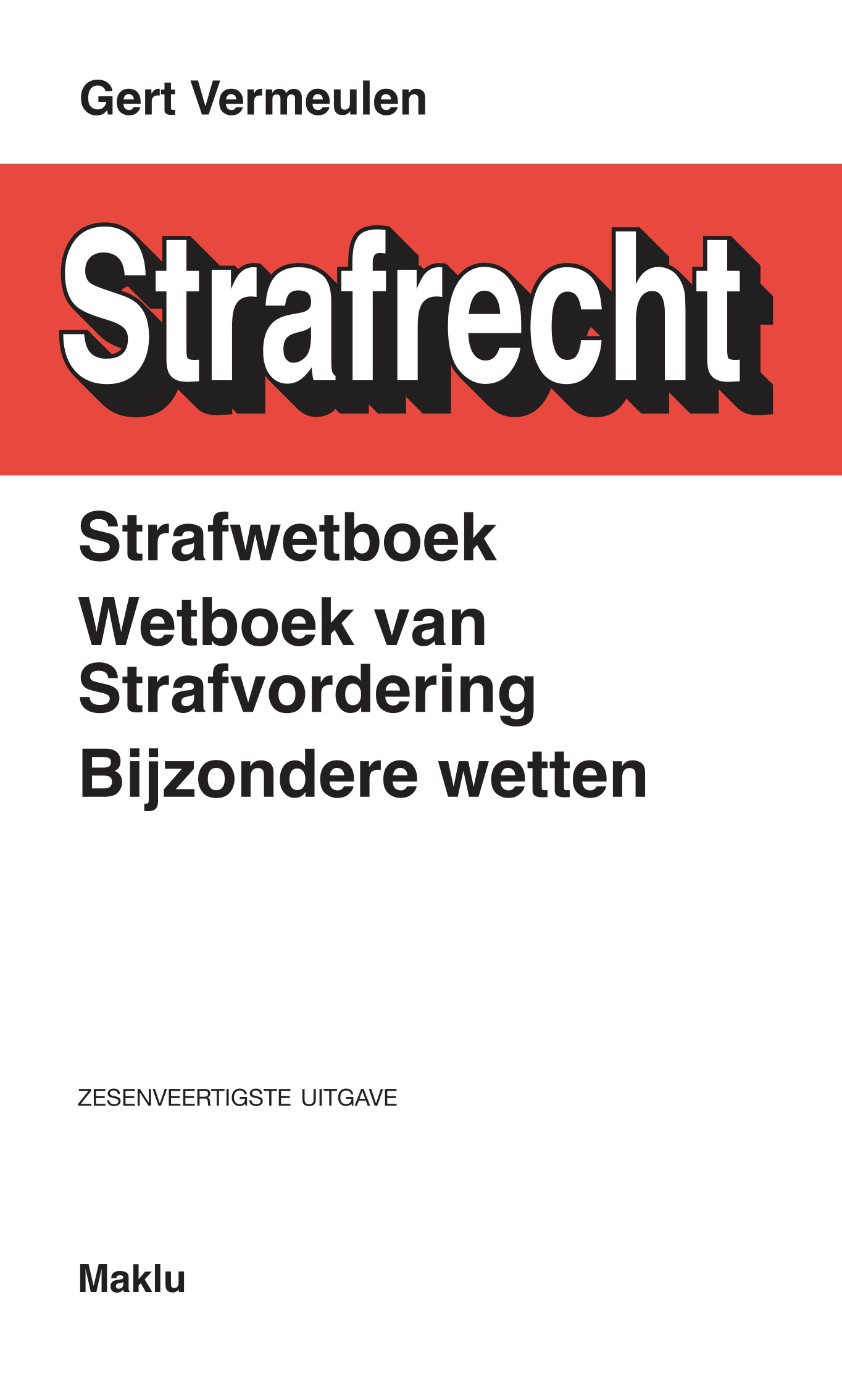
Wetboek Strafrecht – Strafwetboek, Wetboek van Strafvordering, Bijzondere wetten 46e dr. (bijgewerkt tot 1 augustus 2025)
Deze 46ste uitgave van de pocket Strafrecht bundelt naast het Strafwetboek en het Wetboek van Strafvordering, ook een aantal uittreksels uit de Grondwet, het Gerechtelijk Wetboek en het Europees Verdrag tot bescherming van de rechten van de mens en de fundamentele vrijheden. Bovendien bevat dit zakwetboekje tevens, chronologisch geordend, de bijzondere wetten die een algemeen belang hebben voor het strafrecht of voor de strafvordering. Zowel studenten als rechtspractici (politieambtenaren, magistraten, advocaten, ...) beschikken met dit zakwetboekje over een accurate, zeer recente en voordelige tekstuitgave.
Een uitgebreid herwerkt alfabetisch trefwoordenregister maakt het geheel bovendien erg gebruiksvriendelijk. Alle teksten zijn bijgewerkt tot 1 augustus 2025.
Gert Vermeulen is gewoon hoogleraar (internationaal en Europees) strafrecht aan de Universiteit Gent en directeur van het Institute for International Research on Criminal Policy (IRCP) en van het Knowledge and Research Platform Privacy, Information Exchange, Law Enforcement and Surveillance (PIXLES). Hij voert internationaal relevant wetenschappelijk onderzoek op het brede terrein van het strafrechtelijk beleid.
Wetboek Strafrecht – Strafwetboek, Wetboek van Strafvordering, Bijzondere wetten 46e dr. (bijgewerkt tot 1 augustus 2025)
Deze 46ste uitgave van de pocket Strafrecht bundelt naast het Strafwetboek en het Wetboek van Strafvordering, ook een aantal uittreksels uit de Grondwet, het Gerechtelijk Wetboek en het Europees Verdrag tot bescherming van de rechten van de mens en de fundamentele vrijheden. Bovendien bevat dit zakwetboekje tevens, chronologisch geordend, de bijzondere wetten die een algemeen belang hebben voor het strafrecht of voor de strafvordering. Zowel studenten als rechtspractici (politieambtenaren, magistraten, advocaten, ...) beschikken met dit zakwetboekje over een accurate, zeer recente en voordelige tekstuitgave.
Een uitgebreid herwerkt alfabetisch trefwoordenregister maakt het geheel bovendien erg gebruiksvriendelijk. Alle teksten zijn bijgewerkt tot 1 augustus 2025.
Gert Vermeulen is gewoon hoogleraar (internationaal en Europees) strafrecht aan de Universiteit Gent en directeur van het Institute for International Research on Criminal Policy (IRCP) en van het Knowledge and Research Platform Privacy, Information Exchange, Law Enforcement and Surveillance (PIXLES). Hij voert internationaal relevant wetenschappelijk onderzoek op het brede terrein van het strafrechtelijk beleid.
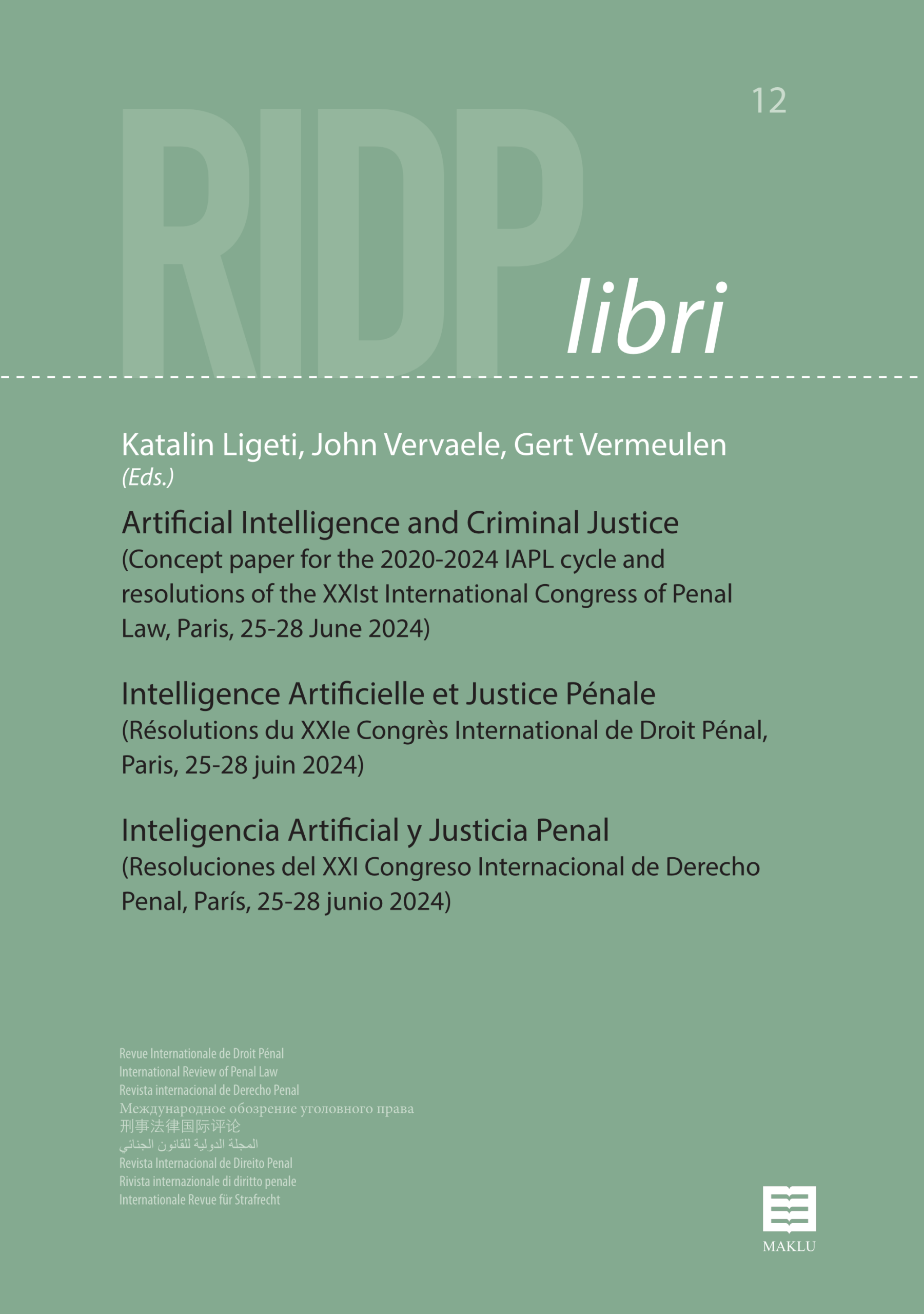
Artificial intelligence and criminal justice (Concept paper for the 2020-2024 IAPL cycle and resolutions of the XXIst International Congress of Penal Law, Paris, 25 – RIDP libri 12
Recognizing the profound impact of AI on criminal justice, the IAPL devoted its 2020-2024 scientific cycle and its concluding XXIst Congress to examining the transformative effects of AI and the legal challenges it poses for both substantive and procedural criminal law. The topic was prepared through a concept paper and explored through four international colloquia, each culminating in the adoption of a set of resolutions addressing a distinct aspect of the criminal justice system. This issue wraps up the cycle, presenting the concept paper (in English) and the trilingual version of the four sets of resolutions.
Au vu de l’impact profond de l’IA sur la justice pénale, l’AIDP a consacré son cycle scientifique 2020-2024 et son XXIe Congrès à l’étude des effets transformateurs de l’IA et des défis juridiques qu’elle pose dans le cadre du droit pénal et de la procédure pénale. Le sujet a été abordé grâce à un document de réflexion initiale et exploré par la suite lors de quatre colloques internationaux, chacun aboutissant à l’adoption d’une série de résolutions portant sur un aspect distinct du système de justice pénale. Ce numéro conclut ce cycle scientifique par la publication du document de réflexion (en anglais) et la version trilingue des quatre séries de résolutions.
Dado el profundo impacto de la IA en la justicia penal, la AIDP dedicó su ciclo científico 2020-2024 y su XXIo Congreso a examinar los efectos transformadores de la IA y los retos jurídicos que plantea tanto para el derecho penal sustantivo como para el procesal. El tema se inició con un documento conceptual y se exploró a través de cuatro coloquios internacionales, cada uno de los cuales culminó con la adopción de un conjunto de resoluciones que abordaban un aspecto distinto del sistema de justicia penal. Este número cierra este ciclo, presentando el documento conceptual (en inglés) y la versión trilingüe de los cuatro conjuntos de resoluciones.
Katalin Ligeti is President of the AIDP/IAPL and Dean of the Faculty of Law, Economics and Finance and Professor of European and International Criminal Law at the University of Luxembourg.
John A.E. Vervaele is Honorary President of the AIDP/IAPL, Emeritus Professor at Utrecht University, The Netherlands, and Professor in European Criminal Law and Human Rights at the College of Europe, Bruges, Belgium
Gert Vermeulen is General Director Publications of the AIDP/IAPL, Editor-in-chief of the RIDP, and Senior Full Professor of European and international criminal law, sexual criminal law, and data protection law at Ghent University, Belgium.
Artificial intelligence and criminal justice (Concept paper for the 2020-2024 IAPL cycle and resolutions of the XXIst International Congress of Penal Law, Paris, 25 – RIDP libri 12
Recognizing the profound impact of AI on criminal justice, the IAPL devoted its 2020-2024 scientific cycle and its concluding XXIst Congress to examining the transformative effects of AI and the legal challenges it poses for both substantive and procedural criminal law. The topic was prepared through a concept paper and explored through four international colloquia, each culminating in the adoption of a set of resolutions addressing a distinct aspect of the criminal justice system. This issue wraps up the cycle, presenting the concept paper (in English) and the trilingual version of the four sets of resolutions.
Au vu de l’impact profond de l’IA sur la justice pénale, l’AIDP a consacré son cycle scientifique 2020-2024 et son XXIe Congrès à l’étude des effets transformateurs de l’IA et des défis juridiques qu’elle pose dans le cadre du droit pénal et de la procédure pénale. Le sujet a été abordé grâce à un document de réflexion initiale et exploré par la suite lors de quatre colloques internationaux, chacun aboutissant à l’adoption d’une série de résolutions portant sur un aspect distinct du système de justice pénale. Ce numéro conclut ce cycle scientifique par la publication du document de réflexion (en anglais) et la version trilingue des quatre séries de résolutions.
Dado el profundo impacto de la IA en la justicia penal, la AIDP dedicó su ciclo científico 2020-2024 y su XXIo Congreso a examinar los efectos transformadores de la IA y los retos jurídicos que plantea tanto para el derecho penal sustantivo como para el procesal. El tema se inició con un documento conceptual y se exploró a través de cuatro coloquios internacionales, cada uno de los cuales culminó con la adopción de un conjunto de resoluciones que abordaban un aspecto distinto del sistema de justicia penal. Este número cierra este ciclo, presentando el documento conceptual (en inglés) y la versión trilingüe de los cuatro conjuntos de resoluciones.
Katalin Ligeti is President of the AIDP/IAPL and Dean of the Faculty of Law, Economics and Finance and Professor of European and International Criminal Law at the University of Luxembourg.
John A.E. Vervaele is Honorary President of the AIDP/IAPL, Emeritus Professor at Utrecht University, The Netherlands, and Professor in European Criminal Law and Human Rights at the College of Europe, Bruges, Belgium
Gert Vermeulen is General Director Publications of the AIDP/IAPL, Editor-in-chief of the RIDP, and Senior Full Professor of European and international criminal law, sexual criminal law, and data protection law at Ghent University, Belgium.
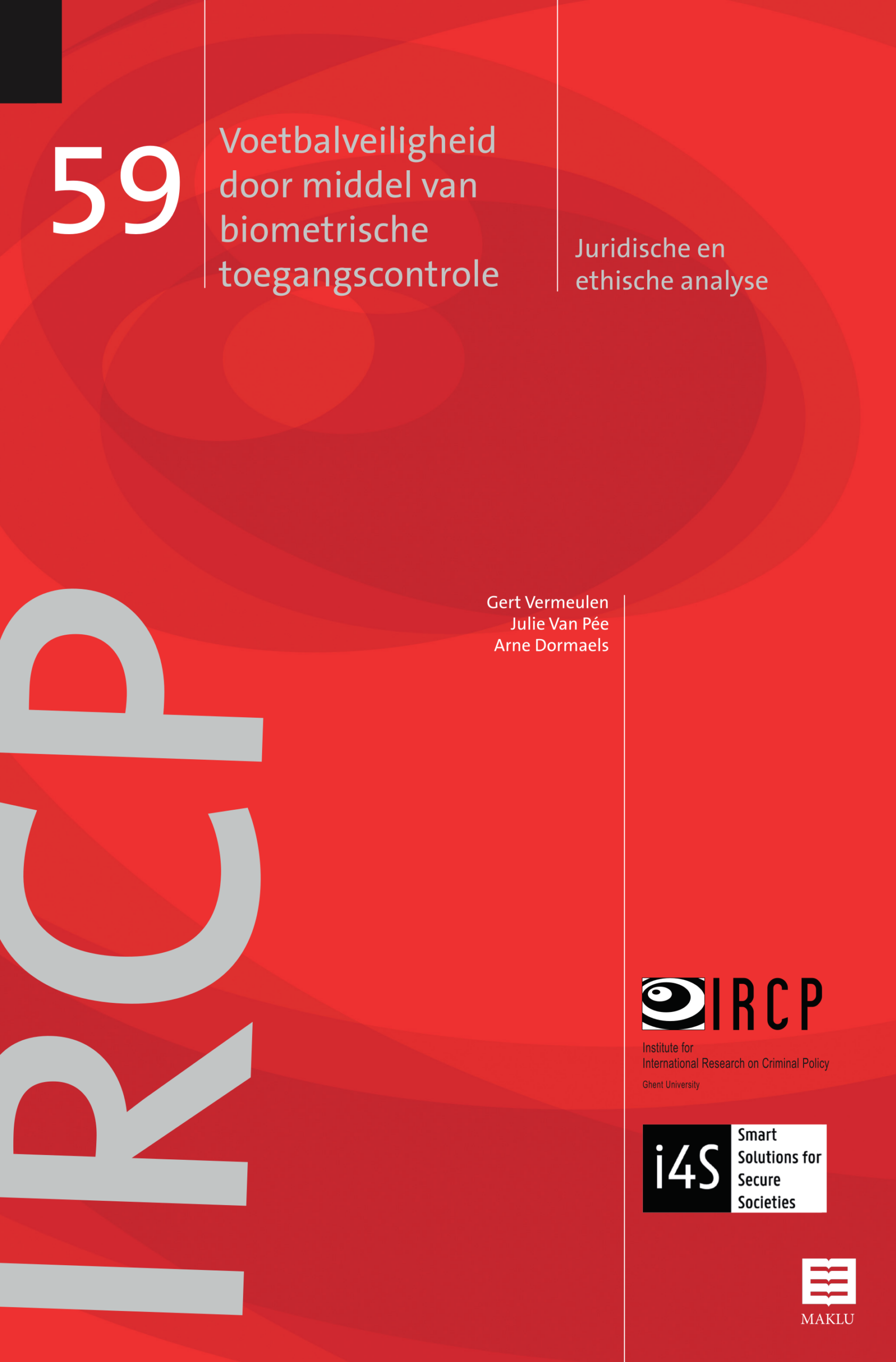
Voetbalveiligheid door middel van biometrische toegangscontrole (Reeks IRCP nr. 59)
Het actieplan ‘Samen voor Veilig Voetbal’ van de Algemene Directie Veiligheids- en Preventiebeleid van de Federale Overheidsdienst Binnenlandse Zaken (BeSafe) zet in op strengere maatregelen om stadionverboden te handhaven. Recent werd daarom de Voetbalwet van 1998 aangepast: stewards, veiligheidsverantwoordelijken en bewakingsagenten kregen een cruciale verantwoordelijkheid voor het identificeren en weigeren van personen met een verbod. Voetbalclubs signaleren echter aanzienlijke technische en organisatorische uitdagingen bij de uitvoering van de nieuwe regeling.
Biometrische verificatie, bijvoorbeeld via aderpatroon- of vingerafdrukherkenning, kunnen de vereiste toegangscontrole sneller en nauwkeuriger maken. De invoering hiervan stuit vandaag op juridische en ethische moeilijkheden, in het bijzonder vanuit gegevensbeschermingsperspectief. Het huidig wettelijk kader voorziet niet in een machtiging voor voetbalclubs om biometrische gegevens te verwerken, waardoor dat alleen kan voor bezoekers die daar uitdrukkelijk in hebben toegestemd.
Dit onderzoek identificeert, na nauw overleg met BeSafe, Pro League en een aantal voetbalclubs, de juridische, ethische en praktische belemmeringen en mogelijkheden met betrekking tot het gebruik van biometrische toegangscontrole onder de huidige voetbal- en gegevensbeschermingswetgeving. De auteurs schuiven concrete aanbevelingen naar voor om een wettelijke basis te creëren die voetbalclubs verplicht of toelaat om biometrische toegangscontrole in het kader van voetbalveiligheid te organiseren.
Gert Vermeulen is gewoon hoogleraar Europees en internationaal strafrecht en gegevensbeschermingsrecht, directeur van het Institute for International Research on Criminal Policy (IRCP), en promotor-woordvoerder van het IOF-valorisatieplatform i4S (Smart Solutions for Secure Societies), Universiteit Gent.
Julie Van Pée is doctoraatsonderzoeker en academisch assistent aan het Institute for International Research on Criminal Policy (IRCP) en bij i4S (Smart Solutions for Secure Societies), Universiteit Gent.
Arne Dormaels is business developer bij i4S (Smart Solutions for Secure Societies), Universiteit Gent.
Voetbalveiligheid door middel van biometrische toegangscontrole (Reeks IRCP nr. 59)
Het actieplan ‘Samen voor Veilig Voetbal’ van de Algemene Directie Veiligheids- en Preventiebeleid van de Federale Overheidsdienst Binnenlandse Zaken (BeSafe) zet in op strengere maatregelen om stadionverboden te handhaven. Recent werd daarom de Voetbalwet van 1998 aangepast: stewards, veiligheidsverantwoordelijken en bewakingsagenten kregen een cruciale verantwoordelijkheid voor het identificeren en weigeren van personen met een verbod. Voetbalclubs signaleren echter aanzienlijke technische en organisatorische uitdagingen bij de uitvoering van de nieuwe regeling.
Biometrische verificatie, bijvoorbeeld via aderpatroon- of vingerafdrukherkenning, kunnen de vereiste toegangscontrole sneller en nauwkeuriger maken. De invoering hiervan stuit vandaag op juridische en ethische moeilijkheden, in het bijzonder vanuit gegevensbeschermingsperspectief. Het huidig wettelijk kader voorziet niet in een machtiging voor voetbalclubs om biometrische gegevens te verwerken, waardoor dat alleen kan voor bezoekers die daar uitdrukkelijk in hebben toegestemd.
Dit onderzoek identificeert, na nauw overleg met BeSafe, Pro League en een aantal voetbalclubs, de juridische, ethische en praktische belemmeringen en mogelijkheden met betrekking tot het gebruik van biometrische toegangscontrole onder de huidige voetbal- en gegevensbeschermingswetgeving. De auteurs schuiven concrete aanbevelingen naar voor om een wettelijke basis te creëren die voetbalclubs verplicht of toelaat om biometrische toegangscontrole in het kader van voetbalveiligheid te organiseren.
Gert Vermeulen is gewoon hoogleraar Europees en internationaal strafrecht en gegevensbeschermingsrecht, directeur van het Institute for International Research on Criminal Policy (IRCP), en promotor-woordvoerder van het IOF-valorisatieplatform i4S (Smart Solutions for Secure Societies), Universiteit Gent.
Julie Van Pée is doctoraatsonderzoeker en academisch assistent aan het Institute for International Research on Criminal Policy (IRCP) en bij i4S (Smart Solutions for Secure Societies), Universiteit Gent.
Arne Dormaels is business developer bij i4S (Smart Solutions for Secure Societies), Universiteit Gent.
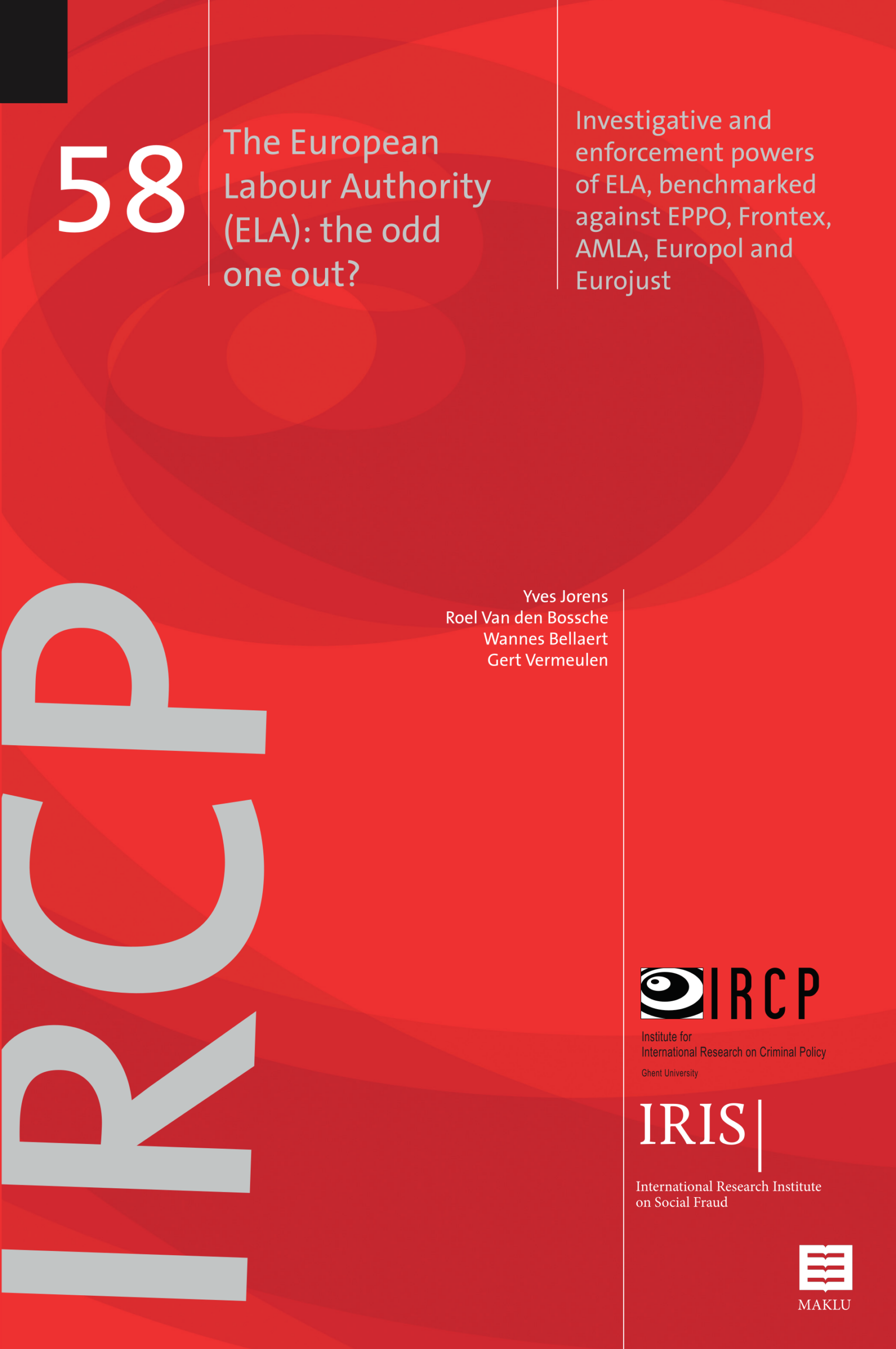
The European Labour Authority (ELA): the odd one out? Investigative and enforcement powers of ELA, benchmarked against EPPO, Frontex, AMLA, Europol and Eurojust – IRCP research 58
As the European Labour Authority (ELA) reaches its five-year mark, the question arises as to whether its investigative and enforcement powers suffice to effectively address problems of a cross-border nature and to adequately support the Member States. In view of a possible revision of its mandate, this book benchmarks ELA against a selection of other EU enforcement agencies, i.e. EPPO, Frontex, AMLA, Europol and Eurojust. What are the similarities and differences?
Compared with the operations-related and information-related capabilities of the latter, ELA’s current ability to support Member States in combating fraud and abuse in a cross border context proves to be fairly limited, not to say almost non-existent. Clearly, ELA’s potential is underused. The book formulates some proposals to strengthen the mandate of ELA, granting it a more active role.
Yves Jorens is senior full professor, Faculty of Law and Criminology, Ghent university, promotor of the SIOD Chair ‘Reducing Social Fraud and Social dumping’.
Roel Van den Bossche is academic assistant, Faculty of Law and Criminology, Ghent university.
Wannes Bellaert is PhD researcher and academic assistant, Institute for International Research on Criminal Policy (IRCP), Ghent university.
Gert Vermeulen is senior full professor of European and international criminal law and data protection law, and director of the Institute for International Research on Criminal Policy (IRCP), Ghent University
The European Labour Authority (ELA): the odd one out? Investigative and enforcement powers of ELA, benchmarked against EPPO, Frontex, AMLA, Europol and Eurojust – IRCP research 58
As the European Labour Authority (ELA) reaches its five-year mark, the question arises as to whether its investigative and enforcement powers suffice to effectively address problems of a cross-border nature and to adequately support the Member States. In view of a possible revision of its mandate, this book benchmarks ELA against a selection of other EU enforcement agencies, i.e. EPPO, Frontex, AMLA, Europol and Eurojust. What are the similarities and differences?
Compared with the operations-related and information-related capabilities of the latter, ELA’s current ability to support Member States in combating fraud and abuse in a cross border context proves to be fairly limited, not to say almost non-existent. Clearly, ELA’s potential is underused. The book formulates some proposals to strengthen the mandate of ELA, granting it a more active role.
Yves Jorens is senior full professor, Faculty of Law and Criminology, Ghent university, promotor of the SIOD Chair ‘Reducing Social Fraud and Social dumping’.
Roel Van den Bossche is academic assistant, Faculty of Law and Criminology, Ghent university.
Wannes Bellaert is PhD researcher and academic assistant, Institute for International Research on Criminal Policy (IRCP), Ghent university.
Gert Vermeulen is senior full professor of European and international criminal law and data protection law, and director of the Institute for International Research on Criminal Policy (IRCP), Ghent University
Wetboek Strafrecht – Strafwetboek, Wetboek van Strafvordering, Bijzondere wetten 44ste bijgewerkte druk (Volledig bijgewerkt tot 1 augustus 2023)
Een uitgebreid herwerkt alfabetisch trefwoordenregister maakt het geheel bovendien erg gebruiksvriendelijk. Alle teksten zijn bijgewerkt tot 1 augustus 2023.
Gert Vermeulen is gewoon hoogleraar (internationaal en Europees) strafrecht aan de Universiteit Gent en directeur van het Institute for International Research on Criminal Policy (IRCP) en van het Knowledge and Research Platform Privacy, Information Exchange, Law Enforcement and Surveillance(PIXLES). Hij voert internationaal relevant wetenschappelijk onderzoek op het brede terrein van het strafrechtelijk beleid.
Wetboek Strafrecht – Strafwetboek, Wetboek van Strafvordering, Bijzondere wetten 44ste bijgewerkte druk (Volledig bijgewerkt tot 1 augustus 2023)
Een uitgebreid herwerkt alfabetisch trefwoordenregister maakt het geheel bovendien erg gebruiksvriendelijk. Alle teksten zijn bijgewerkt tot 1 augustus 2023.
Gert Vermeulen is gewoon hoogleraar (internationaal en Europees) strafrecht aan de Universiteit Gent en directeur van het Institute for International Research on Criminal Policy (IRCP) en van het Knowledge and Research Platform Privacy, Information Exchange, Law Enforcement and Surveillance(PIXLES). Hij voert internationaal relevant wetenschappelijk onderzoek op het brede terrein van het strafrechtelijk beleid.
Justice, Home Affairs and Security – 4th, revised edition
The chapter structure is identical for all cooperation levels addressed, discussing their actual policies after sketching their historical development and institutional structure and functioning.
For students and professionals in criminology, law and political science and for everyone interested in European and international criminal policy making this book will prove relevant or insightful.
Justice, Home Affairs and Security – 4th, revised edition
The chapter structure is identical for all cooperation levels addressed, discussing their actual policies after sketching their historical development and institutional structure and functioning.
For students and professionals in criminology, law and political science and for everyone interested in European and international criminal policy making this book will prove relevant or insightful.
Wetboek Strafrecht – 43ste, herziene uitgave / bijgewerkt tot 1 augustus 2022
Een uitgebreid herwerkt alfabetisch trefwoordenregister maakt het geheel bovendien erg gebruiksvriendelijk.
Alle teksten zijn bijgewerkt tot 1 augustus 2022.
Gert Vermeulen is gewoon hoogleraar (internationaal en Europees) strafrecht aan de Universiteit Gent en directeur van het Institute for International Research on Criminal Policy (IRCP) en van het Knowledge and Research Platform Privacy, Information Exchange, Law Enforcement and Surveillance (PIXLES). Hij voert internationaal relevant wetenschappelijk onderzoek op het brede terrein van het strafrechtelijk beleid.
Wetboek Strafrecht – 43ste, herziene uitgave / bijgewerkt tot 1 augustus 2022
Een uitgebreid herwerkt alfabetisch trefwoordenregister maakt het geheel bovendien erg gebruiksvriendelijk.
Alle teksten zijn bijgewerkt tot 1 augustus 2022.
Gert Vermeulen is gewoon hoogleraar (internationaal en Europees) strafrecht aan de Universiteit Gent en directeur van het Institute for International Research on Criminal Policy (IRCP) en van het Knowledge and Research Platform Privacy, Information Exchange, Law Enforcement and Surveillance (PIXLES). Hij voert internationaal relevant wetenschappelijk onderzoek op het brede terrein van het strafrechtelijk beleid.
RIDP 2021.2 – EU criminal policy: advances and challenges
No time for stand-still, though. Since 2020, the European Commission has launched a tsunami of new legislative proposals, including in the sphere of EU criminal law, strongly framed in its new EU Security Union Strategy.
This special issue on ‘EU criminal policy. Advances and challenges’ discusses and assesses some of the newest developments, both in an overarching fashion and in focused papers, relating to key 2022 novelties for Europol (ie the competence to conduct AI-based pre-analysis in (big) data sets, and extended cooperation with private parties), the sensitive debate since 2020 on criminalising (LGBTIQ) hate speech and hate crime at EU level, the 2022 Cybersecurity Directive, the potential of the 2020 Conditionality Regulation to address rule of law issues undermining the trustworthiness of Member States when issuing European Arrest Warrants, and concerns about free speech limitation by the 2021 Terrorist Content Online Regulation.
Gert Vermeulen is Senior Full Professor of European and international Criminal Law and Data Protection Law, Director of the Institute for International Research on Criminal Policy (IRCP), of the Knowledge and Research Platform on Privacy, Information Exchange, Law Enforcement and Surveillance (PIXLES) and of the Smart Solutions for Secure Societies (i4S) business development center, all at Ghent University, Belgium. He is also General Director Publications of the AIDP and Editor-in-Chief of the RIDP.
Wannes Bellaert is PhD Researcher and Academic Assistant at the Institute for International Research on Criminal Policy (IRCP), Ghent University.
RIDP 2021.2 – EU criminal policy: advances and challenges
No time for stand-still, though. Since 2020, the European Commission has launched a tsunami of new legislative proposals, including in the sphere of EU criminal law, strongly framed in its new EU Security Union Strategy.
This special issue on ‘EU criminal policy. Advances and challenges’ discusses and assesses some of the newest developments, both in an overarching fashion and in focused papers, relating to key 2022 novelties for Europol (ie the competence to conduct AI-based pre-analysis in (big) data sets, and extended cooperation with private parties), the sensitive debate since 2020 on criminalising (LGBTIQ) hate speech and hate crime at EU level, the 2022 Cybersecurity Directive, the potential of the 2020 Conditionality Regulation to address rule of law issues undermining the trustworthiness of Member States when issuing European Arrest Warrants, and concerns about free speech limitation by the 2021 Terrorist Content Online Regulation.
Gert Vermeulen is Senior Full Professor of European and international Criminal Law and Data Protection Law, Director of the Institute for International Research on Criminal Policy (IRCP), of the Knowledge and Research Platform on Privacy, Information Exchange, Law Enforcement and Surveillance (PIXLES) and of the Smart Solutions for Secure Societies (i4S) business development center, all at Ghent University, Belgium. He is also General Director Publications of the AIDP and Editor-in-Chief of the RIDP.
Wannes Bellaert is PhD Researcher and Academic Assistant at the Institute for International Research on Criminal Policy (IRCP), Ghent University.
RIDP 2021.1 Artificial intelligence, big data and automated decision-making in criminal justice
This special issue on ‘Artificial intelligence, big data and automated decision-making in criminal justice’ comprises topical and innovative papers on the above issues, centred around AI and big data in predictive detection and policing, liability issues and jurisdictional challenges prompted by crimes involving AI, and AI-assisted and automated actuarial justice or adjudication of criminal cases.
Gert Vermeulen is Senior Full Professor of European and international Criminal Law and Data Protection Law, Director of the Institute for International Research on Criminal Policy (IRCP), Di-rector of the Knowledge and Research Platform on Privacy, Information Exchange, Law Enforcement and Surveillance (PIXLES) and Director of the Smart Solutions for Secure Societies (i4S) business development center, all at Ghent University, Belgium. He is also General Director Publications of the AIDP and Editor-in-Chief of the RIDP.
Nina Peršak is Scientific Director and Senior Research Fellow, Institute for Criminal-Law Ethics and Criminology (Ljubljana), Advanced Academia Fellow (CAS Sofia), Member of the European Commission’s Expert Group on EU Criminal Policy, Independent Ethics Adviser, and Co-Editor-in-Chief of the RIDP.
Nicola Recchia is Postdoc Researcher in Criminal Law at the Goethe-University Frankfurt, Germany. He is also member of the Young Penalists Committee and of the Scientific Committee of the AIDP.
RIDP 2021.1 Artificial intelligence, big data and automated decision-making in criminal justice
This special issue on ‘Artificial intelligence, big data and automated decision-making in criminal justice’ comprises topical and innovative papers on the above issues, centred around AI and big data in predictive detection and policing, liability issues and jurisdictional challenges prompted by crimes involving AI, and AI-assisted and automated actuarial justice or adjudication of criminal cases.
Gert Vermeulen is Senior Full Professor of European and international Criminal Law and Data Protection Law, Director of the Institute for International Research on Criminal Policy (IRCP), Di-rector of the Knowledge and Research Platform on Privacy, Information Exchange, Law Enforcement and Surveillance (PIXLES) and Director of the Smart Solutions for Secure Societies (i4S) business development center, all at Ghent University, Belgium. He is also General Director Publications of the AIDP and Editor-in-Chief of the RIDP.
Nina Peršak is Scientific Director and Senior Research Fellow, Institute for Criminal-Law Ethics and Criminology (Ljubljana), Advanced Academia Fellow (CAS Sofia), Member of the European Commission’s Expert Group on EU Criminal Policy, Independent Ethics Adviser, and Co-Editor-in-Chief of the RIDP.
Nicola Recchia is Postdoc Researcher in Criminal Law at the Goethe-University Frankfurt, Germany. He is also member of the Young Penalists Committee and of the Scientific Committee of the AIDP.
RIDP2021 Vol.92 / Subscription – Revue Internationale de Droit Penal / IP-only
On the first issue:
Artificial intelligence (AI) is impacting our everyday lives in a myriad of ways. The use of algorithms, AI agents and big data techniques also creates unprecedented opportunities for the prevention, investigation, detection or prosecution of criminal offences and the efficiency of the criminal justice system. Equally, however, the rapid increase of AI and big data in criminal justice raises a plethora of criminological, ethical, legal and technological questions and concerns, eg about enhanced surveillance and control in a pre-crime society and the risk of bias or even manipulation in (automated) decision-making. In view of the stakes involved, the need for regulation of AI and its alignment with human rights, democracy and the rule of law standards has been amply recognised, both globally and regionally. The lawfulness, social acceptance and overall legitimacy of AI, big data and automated decision-making in criminal justice will depend on a range of factors, including (algorithmic) transparency, trustworthiness, non-discrimination, accountability, responsibility, effective over-sight, data protection, due process, fair trial, access to justice, effective redress and remedy. Addressing these issues and raising awareness on AI systems’ capabilities and limitations within criminal justice is needed to be better prepared for the future that is now upon us.
This special issue on ‘Artificial intelligence, big data and automated decision-making in criminal justice’ comprises topical and innovative papers on the above issues, centred around AI and big data in predictive detection and policing, liability issues and jurisdictional challenges prompted by crimes involving AI, and AI-assisted and automated actuarial justice or adjudication of criminal cases.
On the second Issue:
To be published
If you'd like to subscribe to this publication from abroad please send an email to: info@maklu.be/info@maklu.nl
RIDP2021 Vol.92 / Subscription – Revue Internationale de Droit Penal / IP-only
On the first issue:
Artificial intelligence (AI) is impacting our everyday lives in a myriad of ways. The use of algorithms, AI agents and big data techniques also creates unprecedented opportunities for the prevention, investigation, detection or prosecution of criminal offences and the efficiency of the criminal justice system. Equally, however, the rapid increase of AI and big data in criminal justice raises a plethora of criminological, ethical, legal and technological questions and concerns, eg about enhanced surveillance and control in a pre-crime society and the risk of bias or even manipulation in (automated) decision-making. In view of the stakes involved, the need for regulation of AI and its alignment with human rights, democracy and the rule of law standards has been amply recognised, both globally and regionally. The lawfulness, social acceptance and overall legitimacy of AI, big data and automated decision-making in criminal justice will depend on a range of factors, including (algorithmic) transparency, trustworthiness, non-discrimination, accountability, responsibility, effective over-sight, data protection, due process, fair trial, access to justice, effective redress and remedy. Addressing these issues and raising awareness on AI systems’ capabilities and limitations within criminal justice is needed to be better prepared for the future that is now upon us.
This special issue on ‘Artificial intelligence, big data and automated decision-making in criminal justice’ comprises topical and innovative papers on the above issues, centred around AI and big data in predictive detection and policing, liability issues and jurisdictional challenges prompted by crimes involving AI, and AI-assisted and automated actuarial justice or adjudication of criminal cases.
On the second Issue:
To be published
If you'd like to subscribe to this publication from abroad please send an email to: info@maklu.be/info@maklu.nl