
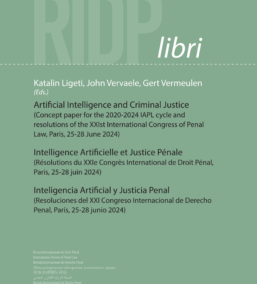
Artificial intelligence and criminal justice (Concept paper for the 2020-2024 IAPL cycle and resolutions of the XXIst International Congress of Penal Law, Paris, 25 – RIDP libri 12
Recognizing the profound impact of AI on criminal justice, the IAPL devoted its 2020-2024 scientific cycle and its concluding XXIst Congress to examining the transformative effects of AI and the legal challenges it poses for both substantive and procedural criminal law. The topic was prepared through a concept paper and explored through four international colloquia, each culminating in the adoption of a set of resolutions addressing a distinct aspect of the criminal justice system. This issue wraps up the cycle, presenting the concept paper (in English) and the trilingual version of the four sets of resolutions.
Au vu de l’impact profond de l’IA sur la justice pénale, l’AIDP a consacré son cycle scientifique 2020-2024 et son XXIe Congrès à l’étude des effets transformateurs de l’IA et des défis juridiques qu’elle pose dans le cadre du droit pénal et de la procédure pénale. Le sujet a été abordé grâce à un document de réflexion initiale et exploré par la suite lors de quatre colloques internationaux, chacun aboutissant à l’adoption d’une série de résolutions portant sur un aspect distinct du système de justice pénale. Ce numéro conclut ce cycle scientifique par la publication du document de réflexion (en anglais) et la version trilingue des quatre séries de résolutions.
Dado el profundo impacto de la IA en la justicia penal, la AIDP dedicó su ciclo científico 2020-2024 y su XXIo Congreso a examinar los efectos transformadores de la IA y los retos jurídicos que plantea tanto para el derecho penal sustantivo como para el procesal. El tema se inició con un documento conceptual y se exploró a través de cuatro coloquios internacionales, cada uno de los cuales culminó con la adopción de un conjunto de resoluciones que abordaban un aspecto distinto del sistema de justicia penal. Este número cierra este ciclo, presentando el documento conceptual (en inglés) y la versión trilingüe de los cuatro conjuntos de resoluciones.
Katalin Ligeti is President of the AIDP/IAPL and Dean of the Faculty of Law, Economics and Finance and Professor of European and International Criminal Law at the University of Luxembourg.
John A.E. Vervaele is Honorary President of the AIDP/IAPL, Emeritus Professor at Utrecht University, The Netherlands, and Professor in European Criminal Law and Human Rights at the College of Europe, Bruges, Belgium
Gert Vermeulen is General Director Publications of the AIDP/IAPL, Editor-in-chief of the RIDP, and Senior Full Professor of European and international criminal law, sexual criminal law, and data protection law at Ghent University, Belgium.
Artificial intelligence and criminal justice (Concept paper for the 2020-2024 IAPL cycle and resolutions of the XXIst International Congress of Penal Law, Paris, 25 – RIDP libri 12
Recognizing the profound impact of AI on criminal justice, the IAPL devoted its 2020-2024 scientific cycle and its concluding XXIst Congress to examining the transformative effects of AI and the legal challenges it poses for both substantive and procedural criminal law. The topic was prepared through a concept paper and explored through four international colloquia, each culminating in the adoption of a set of resolutions addressing a distinct aspect of the criminal justice system. This issue wraps up the cycle, presenting the concept paper (in English) and the trilingual version of the four sets of resolutions.
Au vu de l’impact profond de l’IA sur la justice pénale, l’AIDP a consacré son cycle scientifique 2020-2024 et son XXIe Congrès à l’étude des effets transformateurs de l’IA et des défis juridiques qu’elle pose dans le cadre du droit pénal et de la procédure pénale. Le sujet a été abordé grâce à un document de réflexion initiale et exploré par la suite lors de quatre colloques internationaux, chacun aboutissant à l’adoption d’une série de résolutions portant sur un aspect distinct du système de justice pénale. Ce numéro conclut ce cycle scientifique par la publication du document de réflexion (en anglais) et la version trilingue des quatre séries de résolutions.
Dado el profundo impacto de la IA en la justicia penal, la AIDP dedicó su ciclo científico 2020-2024 y su XXIo Congreso a examinar los efectos transformadores de la IA y los retos jurídicos que plantea tanto para el derecho penal sustantivo como para el procesal. El tema se inició con un documento conceptual y se exploró a través de cuatro coloquios internacionales, cada uno de los cuales culminó con la adopción de un conjunto de resoluciones que abordaban un aspecto distinto del sistema de justicia penal. Este número cierra este ciclo, presentando el documento conceptual (en inglés) y la versión trilingüe de los cuatro conjuntos de resoluciones.
Katalin Ligeti is President of the AIDP/IAPL and Dean of the Faculty of Law, Economics and Finance and Professor of European and International Criminal Law at the University of Luxembourg.
John A.E. Vervaele is Honorary President of the AIDP/IAPL, Emeritus Professor at Utrecht University, The Netherlands, and Professor in European Criminal Law and Human Rights at the College of Europe, Bruges, Belgium
Gert Vermeulen is General Director Publications of the AIDP/IAPL, Editor-in-chief of the RIDP, and Senior Full Professor of European and international criminal law, sexual criminal law, and data protection law at Ghent University, Belgium.
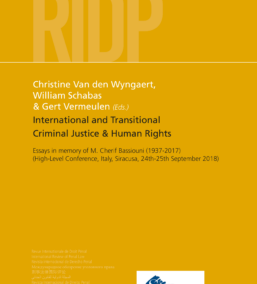
RIDP2018Vol89/issue2- International and Transitional Criminal Justice & Human Rights Essays
Cherif Bassiouni was at the centre of this process from its beginning until his passing, in September 2017, and has been absolutely instrumental in its origins. From the beginning of his career, he brought oxygen to the embers of the post-Second World War initiatives. He linked them to more contemporary issues, such as the struggle against apartheid in South Africa and the campaign for new standards and instruments to address issues such as torture. Through the International Institute for Higher Studies in Criminal Sciences, now renamed the Siracusa International Institute for Criminal Justice and Human Rights, Cherif Bassiouni regularly assembled experts, practitioners, international officials and public intellectuals in the promotion of law and policy. He was also President of the International Association of Penal Law (IAPL-AIDP) for fifteen years.
In September 2018, colleagues and friends of Cherif Bassiouni assembled for a high-level academic conference in Siracusa, organised around themes central in his massive oeuvre: international and transitional criminal justice and human rights. The chapters in this humble volume provide a written record of the conference, in recognition, honour and memory of his legacy.
RIDP2018Vol89/issue2- International and Transitional Criminal Justice & Human Rights Essays
Cherif Bassiouni was at the centre of this process from its beginning until his passing, in September 2017, and has been absolutely instrumental in its origins. From the beginning of his career, he brought oxygen to the embers of the post-Second World War initiatives. He linked them to more contemporary issues, such as the struggle against apartheid in South Africa and the campaign for new standards and instruments to address issues such as torture. Through the International Institute for Higher Studies in Criminal Sciences, now renamed the Siracusa International Institute for Criminal Justice and Human Rights, Cherif Bassiouni regularly assembled experts, practitioners, international officials and public intellectuals in the promotion of law and policy. He was also President of the International Association of Penal Law (IAPL-AIDP) for fifteen years.
In September 2018, colleagues and friends of Cherif Bassiouni assembled for a high-level academic conference in Siracusa, organised around themes central in his massive oeuvre: international and transitional criminal justice and human rights. The chapters in this humble volume provide a written record of the conference, in recognition, honour and memory of his legacy.
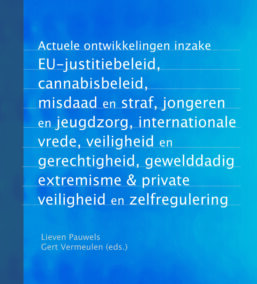
Actuele ontwikkelingen inzake EU-justitiebeleid, cannabisbeleid, misdaad en straf, jongeren en jeugdzorg, internationale vrede, veiligheid en gerechtigheid, gewelddadig extremisme & private veiligheid en zelfregulering
Deze publicatie bevat de bijdragen uit de vormingssessies van de7de Postuniversitaire Vormingscyclus Update in de Criminologie.
Centraal staan diverse actuele thema''s binnen het domein vanhet strafrecht en de criminologie. Lesgevers en onderzoekersvan de vakgroep Strafrecht en Criminologie van de Universiteit Gentbehandelen hierin empirische en theoretische evoluties binnenhun specialisatiegebied.
Actuele ontwikkelingen inzake EU-justitiebeleid, cannabisbeleid, misdaad en straf, jongeren en jeugdzorg, internationale vrede, veiligheid en gerechtigheid, gewelddadig extremisme & private veiligheid en zelfregulering
Deze publicatie bevat de bijdragen uit de vormingssessies van de7de Postuniversitaire Vormingscyclus Update in de Criminologie.
Centraal staan diverse actuele thema''s binnen het domein vanhet strafrecht en de criminologie. Lesgevers en onderzoekersvan de vakgroep Strafrecht en Criminologie van de Universiteit Gentbehandelen hierin empirische en theoretische evoluties binnenhun specialisatiegebied.
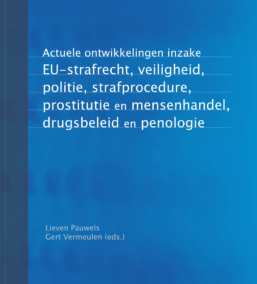
Update in de criminologie VI. Actuele ontwikkelingen inzake EU-strafrecht, veiligheid, politie, strafprocedure, prostitutie en mensenhandel, … (Gandaius Publicaties, VI)
Deze publicatie bevat de bijdragen uit de vormingssessies van de6de Postuniversitaire Vormingscyclus Update in de Criminologie.
Centraal staan diverse actuele thema''s binnen het domein vanhet strafrecht en de criminologie. Lesgevers en onderzoekersvan vakgroep Strafrecht en Criminologie van de Universiteit Gentbehandelen hierin empirische en theoretische evoluties binnenhun specialisatiegebied.
Update in de criminologie VI. Actuele ontwikkelingen inzake EU-strafrecht, veiligheid, politie, strafprocedure, prostitutie en mensenhandel, … (Gandaius Publicaties, VI)
Deze publicatie bevat de bijdragen uit de vormingssessies van de6de Postuniversitaire Vormingscyclus Update in de Criminologie.
Centraal staan diverse actuele thema''s binnen het domein vanhet strafrecht en de criminologie. Lesgevers en onderzoekersvan vakgroep Strafrecht en Criminologie van de Universiteit Gentbehandelen hierin empirische en theoretische evoluties binnenhun specialisatiegebied.
Actualia Strafrecht en Criminologie. Update in de criminologie V (Gandaius Publicaties, V)