
Internationaal huispersoneel in België./Le personnel domestique international en Belgique (IRCP-reeks)
Internationaal huispersoneel in België./Le personnel domestique international en Belgique (IRCP-reeks)
Scénarios pour une nouvelle procédure pénale belge. Etude pratique des problèmes rencontrés (IRCP-reeks, nr. 50)
Sur le livre:
La nécessité de procéder à une réforme globale et à une modernisation de la procédure pénale fait consensus depuis longtemps déjà. Après l’arrêt final des travaux de la Commission Franchimont, le débat a connu un second souffle avec l’accord de gouvernement fédéral de 2011, qui réitérait l’intention de rédiger un Code d’instruction criminelle modernisé. En réponse à la note de politique générale du ministre de la Justice, le service de la Politique criminelle a rédigé fin 2012 un cahier de charges pour une « Étude pratique des points d’achoppement dans l’actuelle procédure pénale belge en vue de la rédaction d’une nouvelle procédure pénale ». Cette étude a été confiée à une équipe de recherche de l’université de Gand à l’été 2013 et finalisée à l’automne 2014. Le présent livre regroupe les résultats de l’étude. Entre-temps, le moment de réaliser une réforme de la procédure pénale – l’accord de gouvernement fédéral du 9 octobre 2014 en a encore souligné l’importance – est plus propice que jamais.
Cet ouvrage ne fait pas que relever les nombreux problèmes qui se posent dans le cadre de la procédure pénale actuelle, tels que les ressentent des acteurs comme les magistrats, les avocats et la police. L’analyse des chercheurs établit clairement qu’une réforme globale de la procédure pénale nécessite en réalité un choix politique fondamental concernant la direction de l’instruction préparatoire et le degré de participation des parties dans cette instruction préparatoire. Dès que ce choix politique sera fait, d’autres choix s’imposeront pour aborder les divers autres problèmes. C’est la raison pour laquelle les chercheurs ont développé dans ce livre quatre scénarios différents qui présentent chacun, en fonction des choix fondamentaux à opérer, une proposition globale cohérente en vue d’une procédure pénale plus efficiente.
Ce livre apporte une contribution objective et neutre au futur débat sur la réforme et constitue une lecture recommandée pour toutes les personnes qui s’intéressent pour des raisons professionnelles ou autres à l’avenir de la procédure pénale belge.
GPRC – guaranteed peer reviewed content
Bon de commande
Sur le contenu:
Contenu
Avant-Propos
Scénarios pour une nouvelle procédure pénale belge. Etude pratique des problèmes rencontrés (IRCP-reeks, nr. 50)
Sur le livre:
La nécessité de procéder à une réforme globale et à une modernisation de la procédure pénale fait consensus depuis longtemps déjà. Après l’arrêt final des travaux de la Commission Franchimont, le débat a connu un second souffle avec l’accord de gouvernement fédéral de 2011, qui réitérait l’intention de rédiger un Code d’instruction criminelle modernisé. En réponse à la note de politique générale du ministre de la Justice, le service de la Politique criminelle a rédigé fin 2012 un cahier de charges pour une « Étude pratique des points d’achoppement dans l’actuelle procédure pénale belge en vue de la rédaction d’une nouvelle procédure pénale ». Cette étude a été confiée à une équipe de recherche de l’université de Gand à l’été 2013 et finalisée à l’automne 2014. Le présent livre regroupe les résultats de l’étude. Entre-temps, le moment de réaliser une réforme de la procédure pénale – l’accord de gouvernement fédéral du 9 octobre 2014 en a encore souligné l’importance – est plus propice que jamais.
Cet ouvrage ne fait pas que relever les nombreux problèmes qui se posent dans le cadre de la procédure pénale actuelle, tels que les ressentent des acteurs comme les magistrats, les avocats et la police. L’analyse des chercheurs établit clairement qu’une réforme globale de la procédure pénale nécessite en réalité un choix politique fondamental concernant la direction de l’instruction préparatoire et le degré de participation des parties dans cette instruction préparatoire. Dès que ce choix politique sera fait, d’autres choix s’imposeront pour aborder les divers autres problèmes. C’est la raison pour laquelle les chercheurs ont développé dans ce livre quatre scénarios différents qui présentent chacun, en fonction des choix fondamentaux à opérer, une proposition globale cohérente en vue d’une procédure pénale plus efficiente.
Ce livre apporte une contribution objective et neutre au futur débat sur la réforme et constitue une lecture recommandée pour toutes les personnes qui s’intéressent pour des raisons professionnelles ou autres à l’avenir de la procédure pénale belge.
GPRC – guaranteed peer reviewed content
Bon de commande
Sur le contenu:
Contenu
Avant-Propos
Scenario’s voor een nieuwe Belgische strafprocedure. Een praktijkgericht knelpuntenonderzoek (IRCP-reeks, nr. 49)
Dit boek brengt niet alleen de talrijke knelpunten binnen de huidige strafprocedure in kaart zoals ze worden ervaren door actoren als magistraten, advocaten en politie. De analyse van de onderzoekers maakt duidelijk dat een globale hervorming van de strafprocedure in essentie een basisbeleidskeuze vergt i.v.m. de leiding van het vooronderzoek respectievelijk de mate van participatie vanwege partijen daarin. Eens die politieke keuze gemaakt, dringen verdere keuzes zich om op de diverse andere knelpunten aan te pakken. De onderzoekers hebben daarom in het boek vier verschillende scenario’s uitgewerkt die elk – afhankelijk van de te maken basiskeuzes – een coherent totaalvoorstel inhouden voor een efficiëntere strafprocedure.
Het boek levert een objectieve en neutrale bijdrage aan het komende hervormingsdebat en vormt aanbevolen lectuur voor eenieder die professioneel of anderszins geïnteresseerd is in de toekomst van de Belgische strafprocedure.
GPRC – guaranteed peer reviewed content
Scenario’s voor een nieuwe Belgische strafprocedure. Een praktijkgericht knelpuntenonderzoek (IRCP-reeks, nr. 49)
Dit boek brengt niet alleen de talrijke knelpunten binnen de huidige strafprocedure in kaart zoals ze worden ervaren door actoren als magistraten, advocaten en politie. De analyse van de onderzoekers maakt duidelijk dat een globale hervorming van de strafprocedure in essentie een basisbeleidskeuze vergt i.v.m. de leiding van het vooronderzoek respectievelijk de mate van participatie vanwege partijen daarin. Eens die politieke keuze gemaakt, dringen verdere keuzes zich om op de diverse andere knelpunten aan te pakken. De onderzoekers hebben daarom in het boek vier verschillende scenario’s uitgewerkt die elk – afhankelijk van de te maken basiskeuzes – een coherent totaalvoorstel inhouden voor een efficiëntere strafprocedure.
Het boek levert een objectieve en neutrale bijdrage aan het komende hervormingsdebat en vormt aanbevolen lectuur voor eenieder die professioneel of anderszins geïnteresseerd is in de toekomst van de Belgische strafprocedure.
GPRC – guaranteed peer reviewed content
Prosecuting Corporations for Violations of International Criminal Law: Jurisdictional Issues – RIDP 2017 Vol. 88 Issue 2
This issue is the third milestone on the way to the 20th AIDP World Congress
dedicated to ‘Criminal Justice and Corporate Business’. It covers the General
Report based on all Country Reports submitted for the International Colloquium
Section IV at the University of Basel on 2-4 June 2017: The volume contains a
special report on Corporate Criminal Responsibility for Human Rights Violations.
Jurisdiction and Reparations’ and national reports of Australia, Finland, France,
Germany, Italy, the Netherlands, Russia, Switzerland and the United States. It also
includes the resolution adopted by the participants of the Basel colloquium. Other
national reports (Austria, Brazil, China, Spain, Sweden) that have been submitted
for the Section IV are published in the eRIDP.
This volume offers a detailed synopsis of jurisdictional problems and possible
solutions for viable corporate criminal liability. It illustrates the broad challenges
raised by targeting corporations for allegedly causing harm in third countries
with regard to territory and sovereignty in the age of globalisation. As the UN
Guiding Principles on Business and Human Rights of 2011 oblige countries to
establish a legal framework ensuring that corporations respect internationally
protected legal interests and basic human rights when doing business abroad, it
will have consequences for jurisdictional rules. States shall provide a remedy for
victims of alleged human rights violations by corporate groups, as well as crimes
alleged to have occurred in their supply chains if certain conditions are met. Of
particular interest is the establishment of the link between substantive law and
the application of territorial jurisdiction. Also addressed is the need for potential
enhancement of traditional jurisdictional rules.
Sabine Gless holds a Chair for Criminal Law and Criminal Procedure at the
University of Basel (Switzerland).
Sylwia Broniszewska-Emdin is a legal counsel and a PhD candidate at the
University of Basel, Faculty of Law.
Prosecuting Corporations for Violations of International Criminal Law: Jurisdictional Issues – RIDP 2017 Vol. 88 Issue 2
This issue is the third milestone on the way to the 20th AIDP World Congress
dedicated to ‘Criminal Justice and Corporate Business’. It covers the General
Report based on all Country Reports submitted for the International Colloquium
Section IV at the University of Basel on 2-4 June 2017: The volume contains a
special report on Corporate Criminal Responsibility for Human Rights Violations.
Jurisdiction and Reparations’ and national reports of Australia, Finland, France,
Germany, Italy, the Netherlands, Russia, Switzerland and the United States. It also
includes the resolution adopted by the participants of the Basel colloquium. Other
national reports (Austria, Brazil, China, Spain, Sweden) that have been submitted
for the Section IV are published in the eRIDP.
This volume offers a detailed synopsis of jurisdictional problems and possible
solutions for viable corporate criminal liability. It illustrates the broad challenges
raised by targeting corporations for allegedly causing harm in third countries
with regard to territory and sovereignty in the age of globalisation. As the UN
Guiding Principles on Business and Human Rights of 2011 oblige countries to
establish a legal framework ensuring that corporations respect internationally
protected legal interests and basic human rights when doing business abroad, it
will have consequences for jurisdictional rules. States shall provide a remedy for
victims of alleged human rights violations by corporate groups, as well as crimes
alleged to have occurred in their supply chains if certain conditions are met. Of
particular interest is the establishment of the link between substantive law and
the application of territorial jurisdiction. Also addressed is the need for potential
enhancement of traditional jurisdictional rules.
Sabine Gless holds a Chair for Criminal Law and Criminal Procedure at the
University of Basel (Switzerland).
Sylwia Broniszewska-Emdin is a legal counsel and a PhD candidate at the
University of Basel, Faculty of Law.

Essential texts on international and European criminal law (9th edition)
This volume comprises the principal policy documents and multilateral legal instruments on international and European criminal law, with a special focus on Europol and Eurojust as well as on initiatives aimed at combating international or organized crime or terrorism. The texts have been ordered according to the multilateral co-operation level within which they were drawn up: either Prüm, the European Union (comprising also Schengen-related texts), the Council of Europe or the United Nations.
It is meant to provide students as well as practitioners (judicial and law enforcement authorities, lawyers, researchers, ...) throughout Europe with an accurate, up-to-date edition of essential texts on these matters.
Gert Vermeulen is professor of Criminal Law and director at the Institute for International Research on Criminal Policy (IRCP) Ghent University, Belgium.
Essential texts on international and European criminal law (9th edition)
This volume comprises the principal policy documents and multilateral legal instruments on international and European criminal law, with a special focus on Europol and Eurojust as well as on initiatives aimed at combating international or organized crime or terrorism. The texts have been ordered according to the multilateral co-operation level within which they were drawn up: either Prüm, the European Union (comprising also Schengen-related texts), the Council of Europe or the United Nations.
It is meant to provide students as well as practitioners (judicial and law enforcement authorities, lawyers, researchers, ...) throughout Europe with an accurate, up-to-date edition of essential texts on these matters.
Gert Vermeulen is professor of Criminal Law and director at the Institute for International Research on Criminal Policy (IRCP) Ghent University, Belgium.
RIDP2016Vol87/issue1 – The Protection of the environment through criminal Law
It brings together key proceedings of the Second AIDP World Conference on the Protection of the Environment through Criminal Law (Bucharest, May 18-20, 2016) organised by the International Association of Penal Law (AIDP) in collaboration with the Romanian Association of Penal Sciences, the Legal Research Institute of the Romanian Academy of Sciences and the Ecological University of Bucharest.
José Luis de La Cuesta is honorary president of the AIDP and director of the Basque Institute of Criminology (University of the Basque Country, Spain).
Ligeia Quackelbeen is the editorial secretary of the RIDP and academic assistant (PhD researcher) at the Institute for International Research on Criminal Policy (IRCP) (Ghent University, Belgium).
Nina Peršak is an editor in the RIDP Editorial Board and a professor at Ghent University, Department of Criminology, Criminal Law and Social Law (IRCP).
Gert Vermeulen is editor-in-chief of the RIDP, general director of publications of the AIDP, president of the Belgium-Luxembourg Union for Criminal Law and professor of (European and international) criminal law and director of the Institute for International Research on Criminal Policy (IRCP) (Ghent University, Belgium).
RIDP2016Vol87/issue1 – The Protection of the environment through criminal Law
It brings together key proceedings of the Second AIDP World Conference on the Protection of the Environment through Criminal Law (Bucharest, May 18-20, 2016) organised by the International Association of Penal Law (AIDP) in collaboration with the Romanian Association of Penal Sciences, the Legal Research Institute of the Romanian Academy of Sciences and the Ecological University of Bucharest.
José Luis de La Cuesta is honorary president of the AIDP and director of the Basque Institute of Criminology (University of the Basque Country, Spain).
Ligeia Quackelbeen is the editorial secretary of the RIDP and academic assistant (PhD researcher) at the Institute for International Research on Criminal Policy (IRCP) (Ghent University, Belgium).
Nina Peršak is an editor in the RIDP Editorial Board and a professor at Ghent University, Department of Criminology, Criminal Law and Social Law (IRCP).
Gert Vermeulen is editor-in-chief of the RIDP, general director of publications of the AIDP, president of the Belgium-Luxembourg Union for Criminal Law and professor of (European and international) criminal law and director of the Institute for International Research on Criminal Policy (IRCP) (Ghent University, Belgium).
Missing and sexually exploited children in the EU (Childoscope-series, I)
Missing and sexually exploited children in the EU (Childoscope-series, I)
Het profiel van de pedoseksueel. Een sociologische benadering (IRCP-reeks)
Aan de hand van een analyse van Child Focus-dossiers en gerechtelijke dossiers in de vijf grootste gerechtelijke arrondissementen van het land, aangevuld met interviews en rondetafelgesprekken met bevoorrechte getuigen en literatuuronderzoek, schetsen de onderzoekers een zo adequaat mogelijk beeld van pedoseksuele misdrijfplegers in België. Zij pretenderen daarbij niet een representatief profiel te kunnen aanreiken van de pedoseksueel. Individuele verschillen tussen mensen blijven bestaan. Wel hebben de onderzoekers ernaar gestreefd een aantal gemeenschappelijke karakteristieken in kaart te brengen die niet noodzakelijk exclusief, maar alleszins ook voorkomen bij daders van pedoseksueel misbruik.
Vast staat alvast dat deze – voor België vooralsnog unieke - sociologische profielstudie, indien ze tenminste op behoedzame wijze wordt gehanteerd, de waakzaamheid voor en bescherming van de veiligheid en integriteit van kinderen alleen maar ten goede kan komen.
Het onderzoek waarvan dit boek de neerslag vormt, werd uitgevoerd door het Institute for International Research on Criminal Policy (IRCP) en de Onderzoeksgroep Sociale Veiligheidsanalyse (SVA) van de Universiteit Gent, in opdracht van Child Focus.
Het profiel van de pedoseksueel. Een sociologische benadering (IRCP-reeks)
Aan de hand van een analyse van Child Focus-dossiers en gerechtelijke dossiers in de vijf grootste gerechtelijke arrondissementen van het land, aangevuld met interviews en rondetafelgesprekken met bevoorrechte getuigen en literatuuronderzoek, schetsen de onderzoekers een zo adequaat mogelijk beeld van pedoseksuele misdrijfplegers in België. Zij pretenderen daarbij niet een representatief profiel te kunnen aanreiken van de pedoseksueel. Individuele verschillen tussen mensen blijven bestaan. Wel hebben de onderzoekers ernaar gestreefd een aantal gemeenschappelijke karakteristieken in kaart te brengen die niet noodzakelijk exclusief, maar alleszins ook voorkomen bij daders van pedoseksueel misbruik.
Vast staat alvast dat deze – voor België vooralsnog unieke - sociologische profielstudie, indien ze tenminste op behoedzame wijze wordt gehanteerd, de waakzaamheid voor en bescherming van de veiligheid en integriteit van kinderen alleen maar ten goede kan komen.
Het onderzoek waarvan dit boek de neerslag vormt, werd uitgevoerd door het Institute for International Research on Criminal Policy (IRCP) en de Onderzoeksgroep Sociale Veiligheidsanalyse (SVA) van de Universiteit Gent, in opdracht van Child Focus.
Finding the best place for prosecution. European study on jurisdiction criteria
Finding the best place for prosecution. European study on jurisdiction criteria
Reframing Prostitution. From Discourse to Description, From Moralisation to Normalisation?
With contributions across social science disciplines, this international collection presents
a valuable discussion on the importance of empirical studies in various segments
of prostitution, highlights social contexts around it and challenges regulatory responses
that frame our thinking about prostitution, promoting fresh debate about future policy
directions in this area.
Prof. dr. Gert Vermeulen is full professor of international and European criminal law and department chair criminal law and criminology at Ghent University, director of the Institute for International Research on Criminal Policy (IRCP) and extraordinary professor of evidence at Maastricht University.
Nina Peršak is research professor in the area of criminology and sociology of law, Institute for International Research on Criminal Policy (IRCP), Faculty of Law, Ghent University.
Reframing Prostitution. From Discourse to Description, From Moralisation to Normalisation?
With contributions across social science disciplines, this international collection presents
a valuable discussion on the importance of empirical studies in various segments
of prostitution, highlights social contexts around it and challenges regulatory responses
that frame our thinking about prostitution, promoting fresh debate about future policy
directions in this area.
Prof. dr. Gert Vermeulen is full professor of international and European criminal law and department chair criminal law and criminology at Ghent University, director of the Institute for International Research on Criminal Policy (IRCP) and extraordinary professor of evidence at Maastricht University.
Nina Peršak is research professor in the area of criminology and sociology of law, Institute for International Research on Criminal Policy (IRCP), Faculty of Law, Ghent University.
EU Justice and Home Affairs: Institutional and policy development
Students and professionals in law, political science and criminology, and every one interested in European criminal policy making may find this book relevant or insightful.
Prof. dr. Gert Vermeulen is full professor of international and European criminal law and department chair criminal law and criminology at Ghent University, director of the Institute for International Research on Criminal Policy (IRCP) and extraordinary professor of evidence at Maastricht University.
Wendy De Bondt holds a master’s degree in law (2006) and criminology (2007) and a PhD in law (2012). She has been a member of the Institute for International Research on Criminal Policy affiliated to the Department of Penal Law and Criminology of Ghent University since 2007.
EU Justice and Home Affairs: Institutional and policy development
Students and professionals in law, political science and criminology, and every one interested in European criminal policy making may find this book relevant or insightful.
Prof. dr. Gert Vermeulen is full professor of international and European criminal law and department chair criminal law and criminology at Ghent University, director of the Institute for International Research on Criminal Policy (IRCP) and extraordinary professor of evidence at Maastricht University.
Wendy De Bondt holds a master’s degree in law (2006) and criminology (2007) and a PhD in law (2012). She has been a member of the Institute for International Research on Criminal Policy affiliated to the Department of Penal Law and Criminology of Ghent University since 2007.
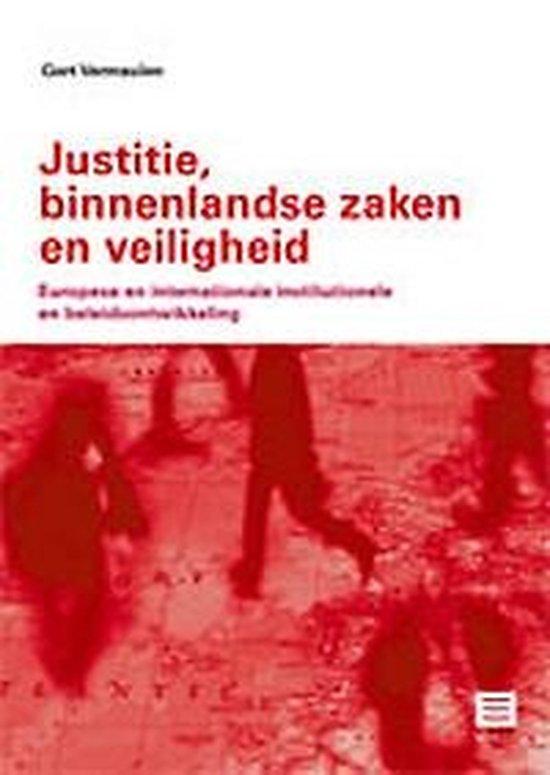
Justitie, binnenlandse zaken en veiligheid: Europese en internationale institutionele en beleidsontwikkeling
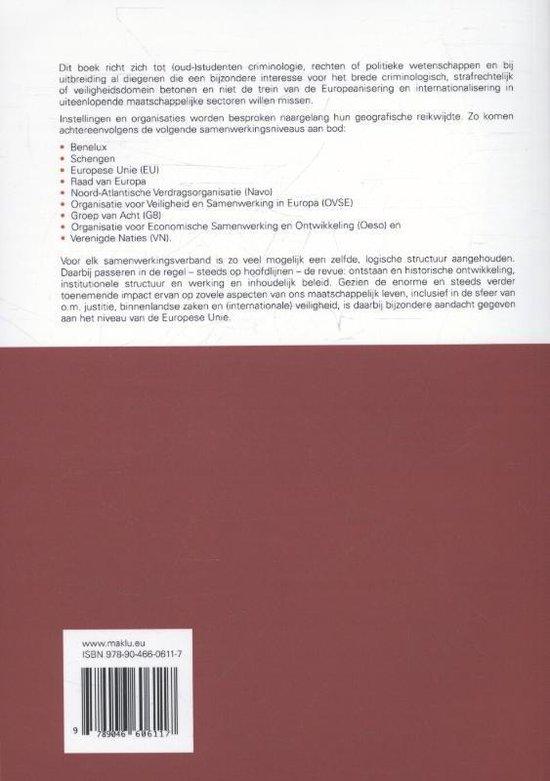
Instellingen en organisaties worden besproken naargelang hun geografische reikwijdte. Zo komen achtereenvolgens de volgende samenwerkingsniveaus aan bod:
- Benelux
- Schengen
- Europese Unie (EU)
- Raad van Europa
- Noord-Atlantische Verdragsorganisatie (Navo)
- Organisatie voor Veiligheid en Samenwerking in Europa (OVSE)
- Groep van Acht (G8)
- Organisatie voor Economische Samenwerking en Ontwikkeling (Oeso) en
- Verenigde Naties (VN).
Prof. dr. Gert Vermeulen doceert onder meer strafrecht aan de opleidingen rechten en criminologie van de Universiteit Gent. Hij is directeur van het Institute for International Research on Criminal Policy (IRCP) en voert internationaal relevant wetenschappelijk onderzoek op het brede terrein van het strafrechtelijk beleid.
Justitie, binnenlandse zaken en veiligheid: Europese en internationale institutionele en beleidsontwikkeling
Instellingen en organisaties worden besproken naargelang hun geografische reikwijdte. Zo komen achtereenvolgens de volgende samenwerkingsniveaus aan bod:
- Benelux
- Schengen
- Europese Unie (EU)
- Raad van Europa
- Noord-Atlantische Verdragsorganisatie (Navo)
- Organisatie voor Veiligheid en Samenwerking in Europa (OVSE)
- Groep van Acht (G8)
- Organisatie voor Economische Samenwerking en Ontwikkeling (Oeso) en
- Verenigde Naties (VN).
Prof. dr. Gert Vermeulen doceert onder meer strafrecht aan de opleidingen rechten en criminologie van de Universiteit Gent. Hij is directeur van het Institute for International Research on Criminal Policy (IRCP) en voert internationaal relevant wetenschappelijk onderzoek op het brede terrein van het strafrechtelijk beleid.