
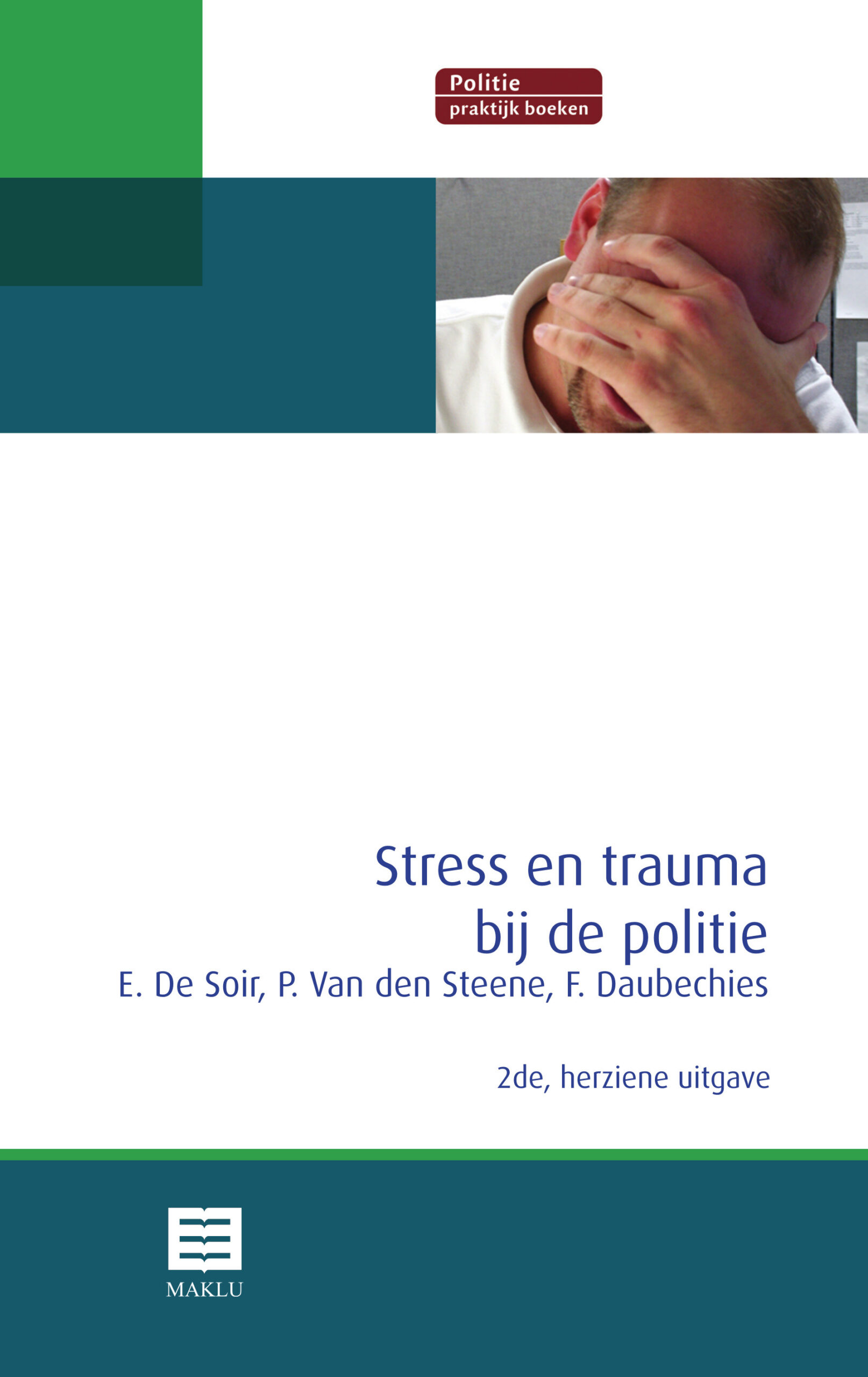
Stress en trauma bij de politie (Reeks Politie Praktijk Boeken)
De laatste jaren kwam er gelukkig steeds meer aandacht voor het psychosociaal welzijn van o.m. militairen, luchtverkeersleiders, gevangenisbewakers, geldkoeriers, personeel uit de verzorgings- en/of ziekenhuissector maar ook de leden van brandweer- en politiediensten.
Dit boek geeft een overzicht van de literatuur over stress en trauma – zowel algemeenheden als de meer specifieke stress in politionele middens – om zich nadien te richten op het domein van de psychotraumatologie en de principes van de eerste psychologische ondersteuning. Een apart deel richt zich op de gesprekstechnieken en interventies, op zowel het individuele als het collectieve niveau, na confrontatie met emotioneel-schokkende en potentieel traumatische gebeurtenissen. Vervolgens wordt ook de rol van het sociale weefsel rond elke politiebeambte besproken om dan tenslotte dieper in te gaan op een preventiemodel voor de aanpak en nazorg van traumatogene gebeurtenissen bij de politie.
Het boek richt tot politieagenten maar is evenzeer toegankelijk voor "niet ingewijden" of leden van andere organisaties die geconfronteerd worden met ingrijpende ervaringen. Het kan worden aangewend voor persoonlijke doeleinden maar dient ook als leidraad van eenieder die binnen de eigen organisatie of setting aan preventie, aanpak of nazorg van traumatogene stress wil doen.
Er is ook een Franstalige versie beschikbaar.
Stress en trauma bij de politie (Reeks Politie Praktijk Boeken)
De laatste jaren kwam er gelukkig steeds meer aandacht voor het psychosociaal welzijn van o.m. militairen, luchtverkeersleiders, gevangenisbewakers, geldkoeriers, personeel uit de verzorgings- en/of ziekenhuissector maar ook de leden van brandweer- en politiediensten.
Dit boek geeft een overzicht van de literatuur over stress en trauma – zowel algemeenheden als de meer specifieke stress in politionele middens – om zich nadien te richten op het domein van de psychotraumatologie en de principes van de eerste psychologische ondersteuning. Een apart deel richt zich op de gesprekstechnieken en interventies, op zowel het individuele als het collectieve niveau, na confrontatie met emotioneel-schokkende en potentieel traumatische gebeurtenissen. Vervolgens wordt ook de rol van het sociale weefsel rond elke politiebeambte besproken om dan tenslotte dieper in te gaan op een preventiemodel voor de aanpak en nazorg van traumatogene gebeurtenissen bij de politie.
Het boek richt tot politieagenten maar is evenzeer toegankelijk voor "niet ingewijden" of leden van andere organisaties die geconfronteerd worden met ingrijpende ervaringen. Het kan worden aangewend voor persoonlijke doeleinden maar dient ook als leidraad van eenieder die binnen de eigen organisatie of setting aan preventie, aanpak of nazorg van traumatogene stress wil doen.
Er is ook een Franstalige versie beschikbaar.
Trauma and Mental Health in the Wake of a Technological Disaster. The Ghislenghien Gas Explosion
This book aims at clarifying the impact of a technological disaster, both phenomenologically and empirically. It also wishes to enhance the understanding of the challenges for psychological help in the wake of technological disaster.
On the phenomenological side, the experiences of a disaster survivor are used to set the stage for a discussion on the conceptual differences between mainstream (Anglo-Saxon) trauma theories and the more classical (French) psychodynamic theories. Three chapters provide contextual information on the trauma inflicted by a massive explosion.
On the empirical side, the focus is on the prevalence of posttraumatic stress symptoms in adult and child survivors of a massive gas explosion, in their family members as well as in family members of deceased victims. Four chapters provide a quantitative approach of trauma-related mental health disturbances in adults and children after a technological disaster.
The results clearly indicate the influence of the degree of exposure, peritraumatic dissociation and dissatisfaction with social support on the development of posttraumatic stress symptoms. The risk for the development of four types of mental health disturbances (somatization, depression, anxiety and sleeping disturbances) was much higher in direct witnesses who have seen human damage. The epilogue discusses possible future developments for early psychophysiological stabilization of disaster victims.
Corrigendum p. 141
Erik De Soir
is a psychologist and psychotherapist affiliated with
the Royal Higher Institute of Defence and a senior
lecturer in crisis psychology at the Department of
Behavioral Sciences at the Royal Military Academy
in Brussels (Belgium). He is also a trauma therapist
and consultant at De Weg Wijzer – Center for Trauma Treatment in Leopoldsburg
and an operational fire psychologist in Noord Limburg. He completed his Ph.D. on
trauma and mental health in the wake of a technological disaster in 2015.
Trauma and Mental Health in the Wake of a Technological Disaster. The Ghislenghien Gas Explosion
This book aims at clarifying the impact of a technological disaster, both phenomenologically and empirically. It also wishes to enhance the understanding of the challenges for psychological help in the wake of technological disaster.
On the phenomenological side, the experiences of a disaster survivor are used to set the stage for a discussion on the conceptual differences between mainstream (Anglo-Saxon) trauma theories and the more classical (French) psychodynamic theories. Three chapters provide contextual information on the trauma inflicted by a massive explosion.
On the empirical side, the focus is on the prevalence of posttraumatic stress symptoms in adult and child survivors of a massive gas explosion, in their family members as well as in family members of deceased victims. Four chapters provide a quantitative approach of trauma-related mental health disturbances in adults and children after a technological disaster.
The results clearly indicate the influence of the degree of exposure, peritraumatic dissociation and dissatisfaction with social support on the development of posttraumatic stress symptoms. The risk for the development of four types of mental health disturbances (somatization, depression, anxiety and sleeping disturbances) was much higher in direct witnesses who have seen human damage. The epilogue discusses possible future developments for early psychophysiological stabilization of disaster victims.
Corrigendum p. 141
Erik De Soir
is a psychologist and psychotherapist affiliated with
the Royal Higher Institute of Defence and a senior
lecturer in crisis psychology at the Department of
Behavioral Sciences at the Royal Military Academy
in Brussels (Belgium). He is also a trauma therapist
and consultant at De Weg Wijzer – Center for Trauma Treatment in Leopoldsburg
and an operational fire psychologist in Noord Limburg. He completed his Ph.D. on
trauma and mental health in the wake of a technological disaster in 2015.
Les debriefings psychologiques en question
Dans nos pays, il ne s''agit plus uniquement de se pencher sur les combattants engagés dans des conflits, mais aussi de mettre en place des approches amenées à répondre aux besoins des popumations civiles confrontées aux aléas de la vie quotidienne. Ce souci se manifeste à deux niveaux: curatif et préventif. La présentations de projets thérapeutiques et d''initiatives préventives font légions dans les publications scientifiques et dans les congrès internationaux.
"Les debriefings psychologiques en question…" se situe en plein dans ce débat comme étant un ouvrage collectif rassemblant une multitude d''experts européens qui interrogent et partagent des pratiques à partir de contextes déterminés (l''armée, les sapeurs-pompiers, les intervenants humanitaires, e.a.). Dans le champ particulier d''intervention qu''est le debriefing psychologique, l''élaboration théorique des traumatismes psychiques et la contextualisation des pratiques sont des éléments qui permettront d''éviter l''uniformisation des interventions telle qu''elle a eu lieu dans le monde anglo-saxon autour du "critical incident stress debriefing".
Ce livre pointe un élément fondamental: l''aide aux personnes victimes d''événements traumatogènes se nourrit de l''expérience de l''intervenant. Dans un champ d''intervention encore tellement traversé par des a prioris théoriquo-clinique de la psychotraumatologie et de ses interventions.
Erik De Soir est psychologue et psychothérapeute d'orientation familiale, conjugale et systémique. Depuis une dizaine d'années il est rattaché au Département des sciences du Comportement (Centre pour l'Etude du Stress et du Trauma) de l'Ecole Royal Militaire. Il est confronté journalièrement à la prévention et le traitement de traumatismes psychiques, à plusieurs niveaux; e.a. en tant que sapeur-pompier et ambulancier volontaire.
Etienne Vermeiren est psychologue, criminologue et psychothérapeute d'orientation familiale, conjugale et systémique. Depuis plusieurs années, il travaille au Service de Psychopathologie des Cliniques Universitaires Saint-Luc à Bruxelles. Spécialisé dans le domaine du stress et du traumatisme psychique, il porte un regard particulier au processus de sons qui articule l'urgence, le post-immédiat et le long cours; mais aussi au vécu des équipes soignantes au quotidien et dans les situations d'exceptions.
Les debriefings psychologiques en question
Dans nos pays, il ne s''agit plus uniquement de se pencher sur les combattants engagés dans des conflits, mais aussi de mettre en place des approches amenées à répondre aux besoins des popumations civiles confrontées aux aléas de la vie quotidienne. Ce souci se manifeste à deux niveaux: curatif et préventif. La présentations de projets thérapeutiques et d''initiatives préventives font légions dans les publications scientifiques et dans les congrès internationaux.
"Les debriefings psychologiques en question…" se situe en plein dans ce débat comme étant un ouvrage collectif rassemblant une multitude d''experts européens qui interrogent et partagent des pratiques à partir de contextes déterminés (l''armée, les sapeurs-pompiers, les intervenants humanitaires, e.a.). Dans le champ particulier d''intervention qu''est le debriefing psychologique, l''élaboration théorique des traumatismes psychiques et la contextualisation des pratiques sont des éléments qui permettront d''éviter l''uniformisation des interventions telle qu''elle a eu lieu dans le monde anglo-saxon autour du "critical incident stress debriefing".
Ce livre pointe un élément fondamental: l''aide aux personnes victimes d''événements traumatogènes se nourrit de l''expérience de l''intervenant. Dans un champ d''intervention encore tellement traversé par des a prioris théoriquo-clinique de la psychotraumatologie et de ses interventions.
Erik De Soir est psychologue et psychothérapeute d'orientation familiale, conjugale et systémique. Depuis une dizaine d'années il est rattaché au Département des sciences du Comportement (Centre pour l'Etude du Stress et du Trauma) de l'Ecole Royal Militaire. Il est confronté journalièrement à la prévention et le traitement de traumatismes psychiques, à plusieurs niveaux; e.a. en tant que sapeur-pompier et ambulancier volontaire.
Etienne Vermeiren est psychologue, criminologue et psychothérapeute d'orientation familiale, conjugale et systémique. Depuis plusieurs années, il travaille au Service de Psychopathologie des Cliniques Universitaires Saint-Luc à Bruxelles. Spécialisé dans le domaine du stress et du traumatisme psychique, il porte un regard particulier au processus de sons qui articule l'urgence, le post-immédiat et le long cours; mais aussi au vécu des équipes soignantes au quotidien et dans les situations d'exceptions.