
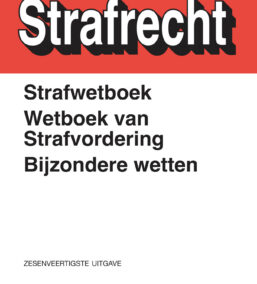
Wetboek Strafrecht – Strafwetboek, Wetboek van Strafvordering, Bijzondere wetten 46e dr. (bijgewerkt tot 1 augustus 2025)
Deze 46ste uitgave van de pocket Strafrecht bundelt naast het Strafwetboek en het Wetboek van Strafvordering, ook een aantal uittreksels uit de Grondwet, het Gerechtelijk Wetboek en het Europees Verdrag tot bescherming van de rechten van de mens en de fundamentele vrijheden. Bovendien bevat dit zakwetboekje tevens, chronologisch geordend, de bijzondere wetten die een algemeen belang hebben voor het strafrecht of voor de strafvordering. Zowel studenten als rechtspractici (politieambtenaren, magistraten, advocaten, ...) beschikken met dit zakwetboekje over een accurate, zeer recente en voordelige tekstuitgave.
Een uitgebreid herwerkt alfabetisch trefwoordenregister maakt het geheel bovendien erg gebruiksvriendelijk. Alle teksten zijn bijgewerkt tot 1 augustus 2025.
Gert Vermeulen is gewoon hoogleraar (internationaal en Europees) strafrecht aan de Universiteit Gent en directeur van het Institute for International Research on Criminal Policy (IRCP) en van het Knowledge and Research Platform Privacy, Information Exchange, Law Enforcement and Surveillance (PIXLES). Hij voert internationaal relevant wetenschappelijk onderzoek op het brede terrein van het strafrechtelijk beleid.
Wetboek Strafrecht – Strafwetboek, Wetboek van Strafvordering, Bijzondere wetten 46e dr. (bijgewerkt tot 1 augustus 2025)
Deze 46ste uitgave van de pocket Strafrecht bundelt naast het Strafwetboek en het Wetboek van Strafvordering, ook een aantal uittreksels uit de Grondwet, het Gerechtelijk Wetboek en het Europees Verdrag tot bescherming van de rechten van de mens en de fundamentele vrijheden. Bovendien bevat dit zakwetboekje tevens, chronologisch geordend, de bijzondere wetten die een algemeen belang hebben voor het strafrecht of voor de strafvordering. Zowel studenten als rechtspractici (politieambtenaren, magistraten, advocaten, ...) beschikken met dit zakwetboekje over een accurate, zeer recente en voordelige tekstuitgave.
Een uitgebreid herwerkt alfabetisch trefwoordenregister maakt het geheel bovendien erg gebruiksvriendelijk. Alle teksten zijn bijgewerkt tot 1 augustus 2025.
Gert Vermeulen is gewoon hoogleraar (internationaal en Europees) strafrecht aan de Universiteit Gent en directeur van het Institute for International Research on Criminal Policy (IRCP) en van het Knowledge and Research Platform Privacy, Information Exchange, Law Enforcement and Surveillance (PIXLES). Hij voert internationaal relevant wetenschappelijk onderzoek op het brede terrein van het strafrechtelijk beleid.
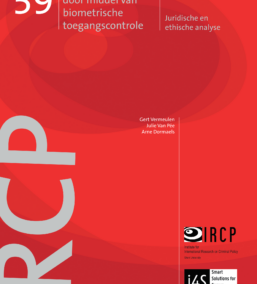
Voetbalveiligheid door middel van biometrische toegangscontrole (Reeks IRCP nr. 59)
Het actieplan ‘Samen voor Veilig Voetbal’ van de Algemene Directie Veiligheids- en Preventiebeleid van de Federale Overheidsdienst Binnenlandse Zaken (BeSafe) zet in op strengere maatregelen om stadionverboden te handhaven. Recent werd daarom de Voetbalwet van 1998 aangepast: stewards, veiligheidsverantwoordelijken en bewakingsagenten kregen een cruciale verantwoordelijkheid voor het identificeren en weigeren van personen met een verbod. Voetbalclubs signaleren echter aanzienlijke technische en organisatorische uitdagingen bij de uitvoering van de nieuwe regeling.
Biometrische verificatie, bijvoorbeeld via aderpatroon- of vingerafdrukherkenning, kunnen de vereiste toegangscontrole sneller en nauwkeuriger maken. De invoering hiervan stuit vandaag op juridische en ethische moeilijkheden, in het bijzonder vanuit gegevensbeschermingsperspectief. Het huidig wettelijk kader voorziet niet in een machtiging voor voetbalclubs om biometrische gegevens te verwerken, waardoor dat alleen kan voor bezoekers die daar uitdrukkelijk in hebben toegestemd.
Dit onderzoek identificeert, na nauw overleg met BeSafe, Pro League en een aantal voetbalclubs, de juridische, ethische en praktische belemmeringen en mogelijkheden met betrekking tot het gebruik van biometrische toegangscontrole onder de huidige voetbal- en gegevensbeschermingswetgeving. De auteurs schuiven concrete aanbevelingen naar voor om een wettelijke basis te creëren die voetbalclubs verplicht of toelaat om biometrische toegangscontrole in het kader van voetbalveiligheid te organiseren.
Gert Vermeulen is gewoon hoogleraar Europees en internationaal strafrecht en gegevensbeschermingsrecht, directeur van het Institute for International Research on Criminal Policy (IRCP), en promotor-woordvoerder van het IOF-valorisatieplatform i4S (Smart Solutions for Secure Societies), Universiteit Gent.
Julie Van Pée is doctoraatsonderzoeker en academisch assistent aan het Institute for International Research on Criminal Policy (IRCP) en bij i4S (Smart Solutions for Secure Societies), Universiteit Gent.
Arne Dormaels is business developer bij i4S (Smart Solutions for Secure Societies), Universiteit Gent.
Voetbalveiligheid door middel van biometrische toegangscontrole (Reeks IRCP nr. 59)
Het actieplan ‘Samen voor Veilig Voetbal’ van de Algemene Directie Veiligheids- en Preventiebeleid van de Federale Overheidsdienst Binnenlandse Zaken (BeSafe) zet in op strengere maatregelen om stadionverboden te handhaven. Recent werd daarom de Voetbalwet van 1998 aangepast: stewards, veiligheidsverantwoordelijken en bewakingsagenten kregen een cruciale verantwoordelijkheid voor het identificeren en weigeren van personen met een verbod. Voetbalclubs signaleren echter aanzienlijke technische en organisatorische uitdagingen bij de uitvoering van de nieuwe regeling.
Biometrische verificatie, bijvoorbeeld via aderpatroon- of vingerafdrukherkenning, kunnen de vereiste toegangscontrole sneller en nauwkeuriger maken. De invoering hiervan stuit vandaag op juridische en ethische moeilijkheden, in het bijzonder vanuit gegevensbeschermingsperspectief. Het huidig wettelijk kader voorziet niet in een machtiging voor voetbalclubs om biometrische gegevens te verwerken, waardoor dat alleen kan voor bezoekers die daar uitdrukkelijk in hebben toegestemd.
Dit onderzoek identificeert, na nauw overleg met BeSafe, Pro League en een aantal voetbalclubs, de juridische, ethische en praktische belemmeringen en mogelijkheden met betrekking tot het gebruik van biometrische toegangscontrole onder de huidige voetbal- en gegevensbeschermingswetgeving. De auteurs schuiven concrete aanbevelingen naar voor om een wettelijke basis te creëren die voetbalclubs verplicht of toelaat om biometrische toegangscontrole in het kader van voetbalveiligheid te organiseren.
Gert Vermeulen is gewoon hoogleraar Europees en internationaal strafrecht en gegevensbeschermingsrecht, directeur van het Institute for International Research on Criminal Policy (IRCP), en promotor-woordvoerder van het IOF-valorisatieplatform i4S (Smart Solutions for Secure Societies), Universiteit Gent.
Julie Van Pée is doctoraatsonderzoeker en academisch assistent aan het Institute for International Research on Criminal Policy (IRCP) en bij i4S (Smart Solutions for Secure Societies), Universiteit Gent.
Arne Dormaels is business developer bij i4S (Smart Solutions for Secure Societies), Universiteit Gent.

The European Labour Authority (ELA): the odd one out? Investigative and enforcement powers of ELA, benchmarked against EPPO, Frontex, AMLA, Europol and Eurojust – IRCP research 58
As the European Labour Authority (ELA) reaches its five-year mark, the question arises as to whether its investigative and enforcement powers suffice to effectively address problems of a cross-border nature and to adequately support the Member States. In view of a possible revision of its mandate, this book benchmarks ELA against a selection of other EU enforcement agencies, i.e. EPPO, Frontex, AMLA, Europol and Eurojust. What are the similarities and differences?
Compared with the operations-related and information-related capabilities of the latter, ELA’s current ability to support Member States in combating fraud and abuse in a cross border context proves to be fairly limited, not to say almost non-existent. Clearly, ELA’s potential is underused. The book formulates some proposals to strengthen the mandate of ELA, granting it a more active role.
Yves Jorens is senior full professor, Faculty of Law and Criminology, Ghent university, promotor of the SIOD Chair ‘Reducing Social Fraud and Social dumping’.
Roel Van den Bossche is academic assistant, Faculty of Law and Criminology, Ghent university.
Wannes Bellaert is PhD researcher and academic assistant, Institute for International Research on Criminal Policy (IRCP), Ghent university.
Gert Vermeulen is senior full professor of European and international criminal law and data protection law, and director of the Institute for International Research on Criminal Policy (IRCP), Ghent University
The European Labour Authority (ELA): the odd one out? Investigative and enforcement powers of ELA, benchmarked against EPPO, Frontex, AMLA, Europol and Eurojust – IRCP research 58
As the European Labour Authority (ELA) reaches its five-year mark, the question arises as to whether its investigative and enforcement powers suffice to effectively address problems of a cross-border nature and to adequately support the Member States. In view of a possible revision of its mandate, this book benchmarks ELA against a selection of other EU enforcement agencies, i.e. EPPO, Frontex, AMLA, Europol and Eurojust. What are the similarities and differences?
Compared with the operations-related and information-related capabilities of the latter, ELA’s current ability to support Member States in combating fraud and abuse in a cross border context proves to be fairly limited, not to say almost non-existent. Clearly, ELA’s potential is underused. The book formulates some proposals to strengthen the mandate of ELA, granting it a more active role.
Yves Jorens is senior full professor, Faculty of Law and Criminology, Ghent university, promotor of the SIOD Chair ‘Reducing Social Fraud and Social dumping’.
Roel Van den Bossche is academic assistant, Faculty of Law and Criminology, Ghent university.
Wannes Bellaert is PhD researcher and academic assistant, Institute for International Research on Criminal Policy (IRCP), Ghent university.
Gert Vermeulen is senior full professor of European and international criminal law and data protection law, and director of the Institute for International Research on Criminal Policy (IRCP), Ghent University
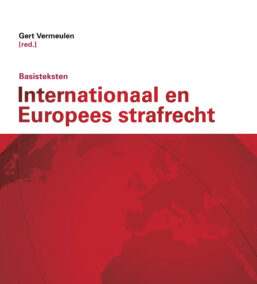
Basisteksten internationaal en Europees Strafrecht – 10de herziene uitgave – Bijgewerkt tot 1 januari 2018 (Reeks Maklu Wetteksten België & Nederland)
Deze uitgave bundelt de voornaamste, voor België relevante beleidsdocumenten en nationale
en multilaterale regelgeving inzake internationaal en Europees strafrecht. Bijzondere aandacht
is gegeven aan initiatieven gericht op de aanpak van internationale of georganiseerde
criminaliteit en terrorisme.
Het nationale deel bevat, naast essentiële uittreksels uit het Strafwetboek, de Voorafgaande
Titel van het Wetboek van Strafvordering en het Gerechtelijk Wetboek, alle wetteksten die
specifiek betrekking hebben op aspecten van internationale samenwerking in strafzaken.
Wat het multilaterale niveau betreft, is een onderscheid gemaakt naargelang het internationaal
samenwerkingsverband waarbinnen de teksten tot stand zijn gekomen: Benelux, Prüm,
Europese Unie (m.i.v. Schengen), Raad van Europa of Verenigde Naties.
Zowel studenten, rechtspractici (magistraten, advocaten, politieambtenaren, ...) als
beleidsmakers beschikken met dit zakwetboekje over een accurate, zeer recente en voordelige
tekstuitgave van de elementaire bronnen ter zake.
Alle teksten zijn bijgewerkt tot 1 januari 2018.
Prof. dr. Gert Vermeulen doceert onder meer strafrecht aan de opleidingen rechten en criminologie van de Universiteit Gent. Hij is directeur van het Institute for International Research on Criminal Policy (IRCP) en voert internationaal relevant wetenschappelijk onderzoek op het brede terrein van het strafrechtelijk beleid.
Basisteksten internationaal en Europees Strafrecht – 10de herziene uitgave – Bijgewerkt tot 1 januari 2018 (Reeks Maklu Wetteksten België & Nederland)
Deze uitgave bundelt de voornaamste, voor België relevante beleidsdocumenten en nationale
en multilaterale regelgeving inzake internationaal en Europees strafrecht. Bijzondere aandacht
is gegeven aan initiatieven gericht op de aanpak van internationale of georganiseerde
criminaliteit en terrorisme.
Het nationale deel bevat, naast essentiële uittreksels uit het Strafwetboek, de Voorafgaande
Titel van het Wetboek van Strafvordering en het Gerechtelijk Wetboek, alle wetteksten die
specifiek betrekking hebben op aspecten van internationale samenwerking in strafzaken.
Wat het multilaterale niveau betreft, is een onderscheid gemaakt naargelang het internationaal
samenwerkingsverband waarbinnen de teksten tot stand zijn gekomen: Benelux, Prüm,
Europese Unie (m.i.v. Schengen), Raad van Europa of Verenigde Naties.
Zowel studenten, rechtspractici (magistraten, advocaten, politieambtenaren, ...) als
beleidsmakers beschikken met dit zakwetboekje over een accurate, zeer recente en voordelige
tekstuitgave van de elementaire bronnen ter zake.
Alle teksten zijn bijgewerkt tot 1 januari 2018.
Prof. dr. Gert Vermeulen doceert onder meer strafrecht aan de opleidingen rechten en criminologie van de Universiteit Gent. Hij is directeur van het Institute for International Research on Criminal Policy (IRCP) en voert internationaal relevant wetenschappelijk onderzoek op het brede terrein van het strafrechtelijk beleid.
Mensenrechten en opsporing, terrorisme en migratie. Update in de criminologie VII (Gandaius Publicaties, VIII)
In dit boek wordt het thema mensenrechten gelinkt aan drie domeinen
in volle evolutie: opsporing, terreurbestrijding en migratie.
De gebundelde bijdragen zijn actuele onderzoeksartikelen, van
de hand van auteurs binnen de vakgroep Criminologie, Strafrecht
en Sociaal Recht van de UGent.
Inzake opsporing worden de nieuwe wet inzake internet- en
informaticarecherche en de herziening van de private opsporing
aan een grondrechtelijke analyse onderworpen. Legitimiteits- en
legaliteitsvragen in de sfeer van terreurbestrijding focussen op
aanzetten tot terrorisme respectievelijk reizen met terroristisch
oogmerk. Inzake migratie volgen een mensenrechtelijke toets
van het Europese asieldetentiebeleid en kritische reflecties
inzake slachtofferschap en het EU-beleid inzake mensensmokkel
en -handel.
Mensenrechten en opsporing, terrorisme en migratie. Update in de criminologie VII (Gandaius Publicaties, VIII)
In dit boek wordt het thema mensenrechten gelinkt aan drie domeinen
in volle evolutie: opsporing, terreurbestrijding en migratie.
De gebundelde bijdragen zijn actuele onderzoeksartikelen, van
de hand van auteurs binnen de vakgroep Criminologie, Strafrecht
en Sociaal Recht van de UGent.
Inzake opsporing worden de nieuwe wet inzake internet- en
informaticarecherche en de herziening van de private opsporing
aan een grondrechtelijke analyse onderworpen. Legitimiteits- en
legaliteitsvragen in de sfeer van terreurbestrijding focussen op
aanzetten tot terrorisme respectievelijk reizen met terroristisch
oogmerk. Inzake migratie volgen een mensenrechtelijke toets
van het Europese asieldetentiebeleid en kritische reflecties
inzake slachtofferschap en het EU-beleid inzake mensensmokkel
en -handel.
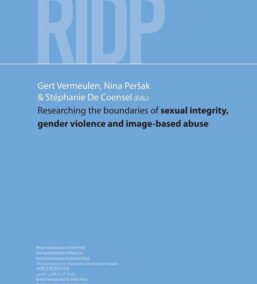
RIDP 95.2 (2024) | Researching the boundaries of sexual integrity, gender violence and image-based abuse
This special issue brings together nineteen topical and innovative papers, researching the boundaries of sexual integrity and affirmative sexual consent, gender violence, and image-based or online sexual abuse, including child sexual abuse material and non-consensual sexual deepfakes. It offers an original and nuanced approach to understanding the important legal elements, various agents and harms of topic-related deviant conduct as well as legislative processes aimed at tackling it. In light of recent societal developments, including changes in societal sensibilities, and recent or on-going legislative amendments at national and supranational levels, research on these topics is timely and much needed.
Gert Vermeulen is Senior Full Professor of European and international criminal law, sexual criminal law and data protection law, Department Chair Criminology, Criminal Law and Social Law, and Director of the Institute for International Research on Criminal Policy (IRCP), all at Ghent University. He is also General Director Publications of the AIDP, and Editor-in-chief of the RIDP.
Nina Peršak is Scientific Director and Senior Research Fellow, Institute for Criminal-Law Ethics and Criminology (Ljubljana), Full Professor of Law, University of Maribor (habilitation), Academic Consultant at the Institute for International Research on Criminal Policy (IRCP), Ghent University, and Co-Editor-in-Chief of the RIDP.
Stéphanie De Coensel is an FWO Postdoctoral Researcher and Visiting Professor in Advanced Criminal Law at the Institute for International Research on Criminal Policy (IRCP), Ghent University, and Editorial Secretary of the RIDP.
RIDP 95.2 (2024) | Researching the boundaries of sexual integrity, gender violence and image-based abuse
This special issue brings together nineteen topical and innovative papers, researching the boundaries of sexual integrity and affirmative sexual consent, gender violence, and image-based or online sexual abuse, including child sexual abuse material and non-consensual sexual deepfakes. It offers an original and nuanced approach to understanding the important legal elements, various agents and harms of topic-related deviant conduct as well as legislative processes aimed at tackling it. In light of recent societal developments, including changes in societal sensibilities, and recent or on-going legislative amendments at national and supranational levels, research on these topics is timely and much needed.
Gert Vermeulen is Senior Full Professor of European and international criminal law, sexual criminal law and data protection law, Department Chair Criminology, Criminal Law and Social Law, and Director of the Institute for International Research on Criminal Policy (IRCP), all at Ghent University. He is also General Director Publications of the AIDP, and Editor-in-chief of the RIDP.
Nina Peršak is Scientific Director and Senior Research Fellow, Institute for Criminal-Law Ethics and Criminology (Ljubljana), Full Professor of Law, University of Maribor (habilitation), Academic Consultant at the Institute for International Research on Criminal Policy (IRCP), Ghent University, and Co-Editor-in-Chief of the RIDP.
Stéphanie De Coensel is an FWO Postdoctoral Researcher and Visiting Professor in Advanced Criminal Law at the Institute for International Research on Criminal Policy (IRCP), Ghent University, and Editorial Secretary of the RIDP.
Liability of legal persons for offences in the EU (IRCP-series, vol. 44)
Based on comparative legal analysis in the EU27, recommendations are formulated relating to the EU approximation policy (amongst others to reconsider the concept of a ‘legal person’ and to look into the need for specific ‘legal person’-offences), the functioning of mutual recognition (amongst others to extend the current mutual recognition instrumentarium), the exchange of information (amongst others to develop a criminal records policy) and procedural safeguards (amongst others to secure equivalent protection outside a criminal liability context).
In other words, a helicopter view is taken to ensure consistent EU policy making.
This book is essential reading for both EU and national policy makers as well as for researchers and practitioners involved.
Liability of legal persons for offences in the EU (IRCP-series, vol. 44)
Based on comparative legal analysis in the EU27, recommendations are formulated relating to the EU approximation policy (amongst others to reconsider the concept of a ‘legal person’ and to look into the need for specific ‘legal person’-offences), the functioning of mutual recognition (amongst others to extend the current mutual recognition instrumentarium), the exchange of information (amongst others to develop a criminal records policy) and procedural safeguards (amongst others to secure equivalent protection outside a criminal liability context).
In other words, a helicopter view is taken to ensure consistent EU policy making.
This book is essential reading for both EU and national policy makers as well as for researchers and practitioners involved.
Material detention conditions, execution of custodial sentences and prisoner transfer in the EU Member States (IRCP-series, vol. 41)
Transferring detained people back to their respective Member State of residence and/or nationality within the mutual recognition framework is somewhat precarious in light of the often substantial variety of Member States’ legal and prison systems. In this context, and following a call for tender by the European Commission, the authors conducted the biggest study to date on Member States’ material detention conditions, early/conditional release provisions and sentence execution modalities. In addition to exploring the diversity of legal frameworks, the study also assessed practitioners’ views on cross border execution of custodial sentences in the EU.
This book contains the individual Member State reports resulting from the legal and practitioners’ analyses, backed by additional information drawn from monitoring and evaluation conducted at Council of Europe (Committee for the Prevention of Torture) and United Nation levels.
This is essential reading for EU policy makers, judicial and law enforcement authorities and for defence lawyers throughout the Union. Undoubtedly, this book will be an asset to everyone who is involved in or taking an interest in detention issues and cross border execution of judgements involving deprivation of liberty in the EU.
Material detention conditions, execution of custodial sentences and prisoner transfer in the EU Member States (IRCP-series, vol. 41)
Transferring detained people back to their respective Member State of residence and/or nationality within the mutual recognition framework is somewhat precarious in light of the often substantial variety of Member States’ legal and prison systems. In this context, and following a call for tender by the European Commission, the authors conducted the biggest study to date on Member States’ material detention conditions, early/conditional release provisions and sentence execution modalities. In addition to exploring the diversity of legal frameworks, the study also assessed practitioners’ views on cross border execution of custodial sentences in the EU.
This book contains the individual Member State reports resulting from the legal and practitioners’ analyses, backed by additional information drawn from monitoring and evaluation conducted at Council of Europe (Committee for the Prevention of Torture) and United Nation levels.
This is essential reading for EU policy makers, judicial and law enforcement authorities and for defence lawyers throughout the Union. Undoubtedly, this book will be an asset to everyone who is involved in or taking an interest in detention issues and cross border execution of judgements involving deprivation of liberty in the EU.

EU cross-border gathering and use of evidence in criminal matters (IRCP-reeks, nr. 37)
As part of this program, the European Commission awarded a contract to the Institute of International Research on Criminal Policy to conduct the study this book comprises the results of.
The initial aim of the study was to obtain up to date information on the national laws of the EU member states on the gathering and handling of evidence and to analyse that information in the light of recent developments in legislation governing cross-border transmission of evidence, in particular the 2008 European Evidence Warrant. In addition, it was the intention of the European Commission to initiate preparatory work on a legal instrument that would expand the scope of application of the European Evidence Warrant in order to further replace the existing regime of mutual legal assistance within the EU by a mechanism based on the mutual recognition principle. As a result, the study was broadened as to also assess whether or not a mutual recognition-based EU mutual legal assistance regime is desirable and feasible.
Whereas the Green Paper on obtaining evidence in criminal matters (issued in 2009 by the European Commission) raises general questions on the matter, this book provides an in-depth and full-scale overview of the current situation relating to cross-border gathering, obtaining and admissibility of evidence in criminal matters between the EU member states, as well as clear-cut future legal and policy options.
This book is essential reading for EU policy makers, judicial and law enforcement authorities throughout the EU and from a broader international context. It will be particularly appealing also to the research community and anyone involved in or taking an interest in criminal policy initiatives in the EU.
EU cross-border gathering and use of evidence in criminal matters (IRCP-reeks, nr. 37)
As part of this program, the European Commission awarded a contract to the Institute of International Research on Criminal Policy to conduct the study this book comprises the results of.
The initial aim of the study was to obtain up to date information on the national laws of the EU member states on the gathering and handling of evidence and to analyse that information in the light of recent developments in legislation governing cross-border transmission of evidence, in particular the 2008 European Evidence Warrant. In addition, it was the intention of the European Commission to initiate preparatory work on a legal instrument that would expand the scope of application of the European Evidence Warrant in order to further replace the existing regime of mutual legal assistance within the EU by a mechanism based on the mutual recognition principle. As a result, the study was broadened as to also assess whether or not a mutual recognition-based EU mutual legal assistance regime is desirable and feasible.
Whereas the Green Paper on obtaining evidence in criminal matters (issued in 2009 by the European Commission) raises general questions on the matter, this book provides an in-depth and full-scale overview of the current situation relating to cross-border gathering, obtaining and admissibility of evidence in criminal matters between the EU member states, as well as clear-cut future legal and policy options.
This book is essential reading for EU policy makers, judicial and law enforcement authorities throughout the EU and from a broader international context. It will be particularly appealing also to the research community and anyone involved in or taking an interest in criminal policy initiatives in the EU.