Antoinette Verhage
Quick View
Toevoegen aan winkelwagenBekijk winkelwagen

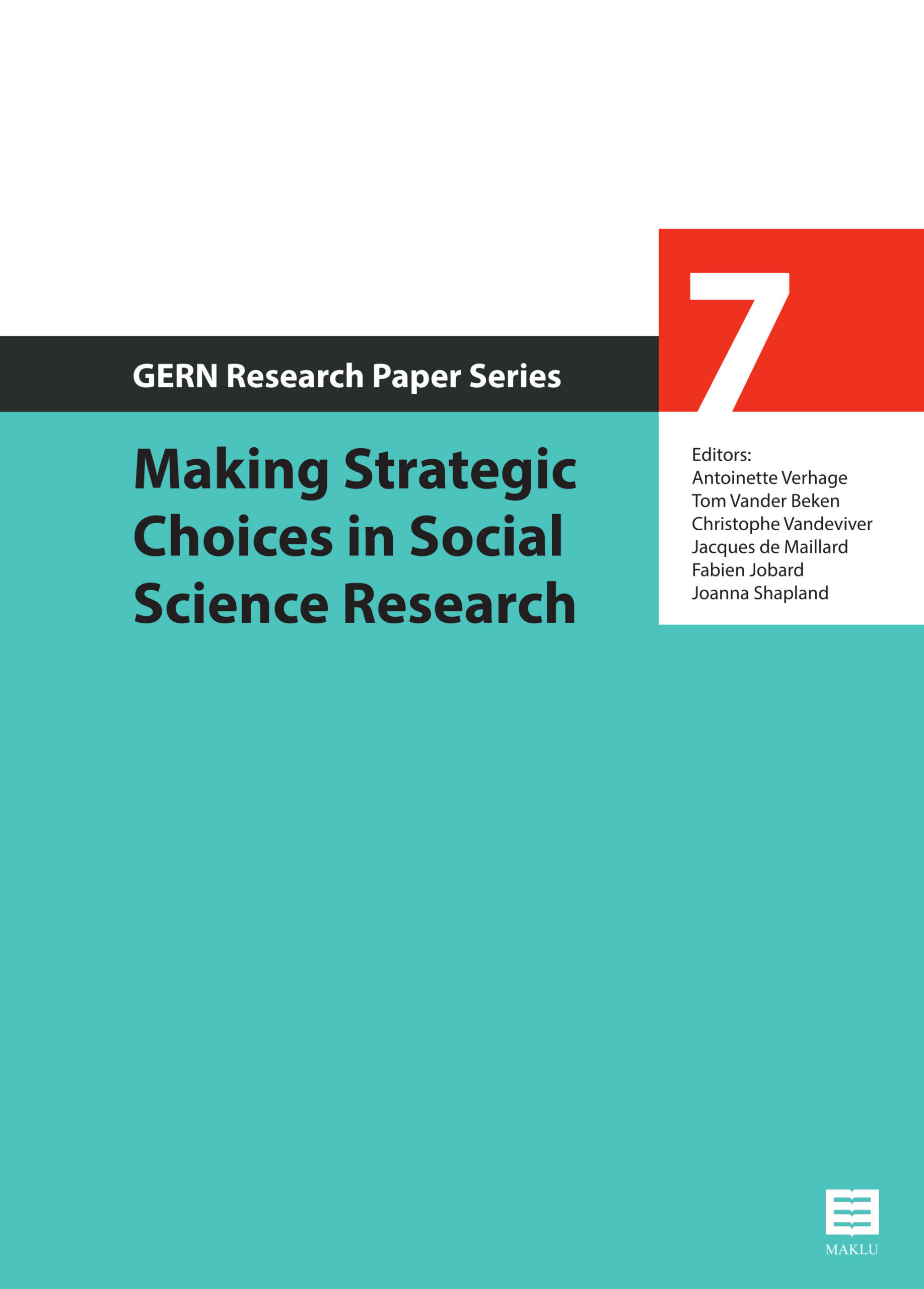
Making Strategic Choices in Social Science Research (GERN Research Paper Series – nr 7)
 60,00
GERN (Groupement Européen de Recherches sur les Normativités) is a large consortium of scientific researchers in the domain of deviance and social control, more precisely studying delinquency, penal institutions, public policies of security and the importance of penal questions in society. Today the GERN is a scientific network present in ten European countries and abroad, uniting researchers of different disciplines. Each year the GERN organizes a doctoral summer school, giving PhD students from the consortium the opportunity to present and discuss their ongoing projects and research results as well as meet young and senior researchers.With the inauguration of this Research Paper Series, the GERN intends to monitor and disseminate cutting-edge studies into European security issues, reflecting the design and result of doctoral research in the framework of the GERN. The series provides an excellent platform from which to survey key emergent topics in the field. With this series, the editors and authors are contributing to a better understanding of contemporary questions, presenting recent research results and scientific reflection, by devising new approaches and by re-evaluating the heritage of social sciences in this domain. It implies openness concerning other disciplines and to the normative questions arising from the constructions of deviance and crime, the commission of criminal acts, its consequences and its development, as well as the application of deviance categories and the social or formal reaction to it by actors in the criminal justice system and beyond.This edited publication is the 7th volume of the GERN Research Paper Series stemming from the annual doctoral summer school that took place in Ghent (Belgium) in 2022 and was co-organized by the GERN and the Institute for International Research on Criminal Policy, Ghent University. Its topic was “Making Strategic Choices in Social Science Research”.This volume also includes two contributions from the GERN Summer School that took place in Porto (Portugal) in 2019, co-organized by GERN and the University of Porto, which topic was “Emerging Trends in Criminology”.
Quick View

Making Strategic Choices in Social Science Research (GERN Research Paper Series – nr 7)

 60,00
GERN (Groupement Européen de Recherches sur les Normativités) is a large consortium of scientific researchers in the domain of deviance and social control, more precisely studying delinquency, penal institutions, public policies of security and the importance of penal questions in society. Today the GERN is a scientific network present in ten European countries and abroad, uniting researchers of different disciplines. Each year the GERN organizes a doctoral summer school, giving PhD students from the consortium the opportunity to present and discuss their ongoing projects and research results as well as meet young and senior researchers.With the inauguration of this Research Paper Series, the GERN intends to monitor and disseminate cutting-edge studies into European security issues, reflecting the design and result of doctoral research in the framework of the GERN. The series provides an excellent platform from which to survey key emergent topics in the field. With this series, the editors and authors are contributing to a better understanding of contemporary questions, presenting recent research results and scientific reflection, by devising new approaches and by re-evaluating the heritage of social sciences in this domain. It implies openness concerning other disciplines and to the normative questions arising from the constructions of deviance and crime, the commission of criminal acts, its consequences and its development, as well as the application of deviance categories and the social or formal reaction to it by actors in the criminal justice system and beyond.This edited publication is the 7th volume of the GERN Research Paper Series stemming from the annual doctoral summer school that took place in Ghent (Belgium) in 2022 and was co-organized by the GERN and the Institute for International Research on Criminal Policy, Ghent University. Its topic was “Making Strategic Choices in Social Science Research”.This volume also includes two contributions from the GERN Summer School that took place in Porto (Portugal) in 2019, co-organized by GERN and the University of Porto, which topic was “Emerging Trends in Criminology”.
Toevoegen aan winkelwagenBekijk winkelwagen
Quick View
Toevoegen aan winkelwagenBekijk winkelwagen

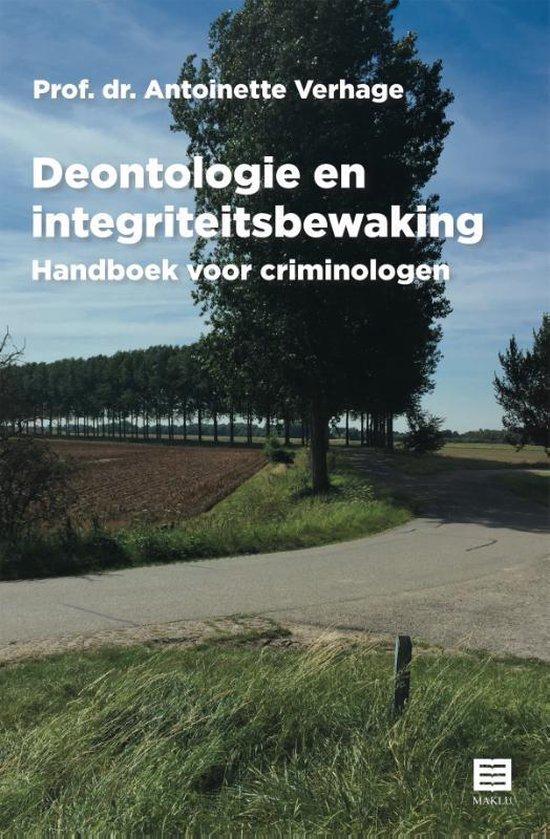
Deontologie en integriteitsbewaking voor criminologen

 30,80

Criminologen werken vaak in sectoren waarbij integer optreden essentieel is, en veelal ook de kern uitmaakt van hun functie. Morele dilemma’s liggen in hun beroepspraktijk voor het oprapen. Bij elke beslissing staan professionele en persoonlijke standaarden centraal. Hoe bijvoorbeeld te handelen in zaken als:

  • het al dan niet aanvaarden van geschenken als ambtenaar,
  • het afwegen van beroepsgeheim en informatieplicht als hulpverlener,
  • het omgaan met informatie als politieman of magistraat,
  • het weergeven van onderzoeksresultaten of het omgaan met de druk om commerciële doeleinden te bereiken,… ?

In dit handboek komen deskundigen aan het woord over integriteit en deontologie, en de dilemma’s in hun praktijk. Zes grote criminologisch relevante sectoren worden behandeld: politie, justitie, de sociale sector, onderzoek, overheid/beleid en de private sector. In een apart deel wordt ingegaan op de melding van integriteitsschendingen.

Dit handboek geeft aan criminologen (in spe) handvatten om met dilemma’s om te gaan.


Prof. dr. Antoinette Verhage is verbonden aan de vakgroep Criminologie, Strafrecht en Sociaal Recht, IRCP, Universiteit Gent. Ze doceert er, naast de politiegerelateerde vakken, het vak Deontologie en Integriteitsbewaking.

Met bijdragen van Antoinette Verhage, Ann Lukowiak, Freya Vander Laenen, Tom Van den Broeck, Agnes Verbruggen, Hilde Vlaeminck, Kris Stas, Kristel Wouters, Kim Loyens, Jeroen Maesschalck, Annelies De Schrijver, Kristien Verbraeken, David Lagrou, Gudrun Vande Walle en Bernard Hubeau.
Quick View

Deontologie en integriteitsbewaking voor criminologen

 30,80

Criminologen werken vaak in sectoren waarbij integer optreden essentieel is, en veelal ook de kern uitmaakt van hun functie. Morele dilemma’s liggen in hun beroepspraktijk voor het oprapen. Bij elke beslissing staan professionele en persoonlijke standaarden centraal. Hoe bijvoorbeeld te handelen in zaken als:

  • het al dan niet aanvaarden van geschenken als ambtenaar,
  • het afwegen van beroepsgeheim en informatieplicht als hulpverlener,
  • het omgaan met informatie als politieman of magistraat,
  • het weergeven van onderzoeksresultaten of het omgaan met de druk om commerciële doeleinden te bereiken,… ?

In dit handboek komen deskundigen aan het woord over integriteit en deontologie, en de dilemma’s in hun praktijk. Zes grote criminologisch relevante sectoren worden behandeld: politie, justitie, de sociale sector, onderzoek, overheid/beleid en de private sector. In een apart deel wordt ingegaan op de melding van integriteitsschendingen.

Dit handboek geeft aan criminologen (in spe) handvatten om met dilemma’s om te gaan.


Prof. dr. Antoinette Verhage is verbonden aan de vakgroep Criminologie, Strafrecht en Sociaal Recht, IRCP, Universiteit Gent. Ze doceert er, naast de politiegerelateerde vakken, het vak Deontologie en Integriteitsbewaking.

Met bijdragen van Antoinette Verhage, Ann Lukowiak, Freya Vander Laenen, Tom Van den Broeck, Agnes Verbruggen, Hilde Vlaeminck, Kris Stas, Kristel Wouters, Kim Loyens, Jeroen Maesschalck, Annelies De Schrijver, Kristien Verbraeken, David Lagrou, Gudrun Vande Walle en Bernard Hubeau.

Toevoegen aan winkelwagenBekijk winkelwagen
Quick View
Toevoegen aan winkelwagenBekijk winkelwagen

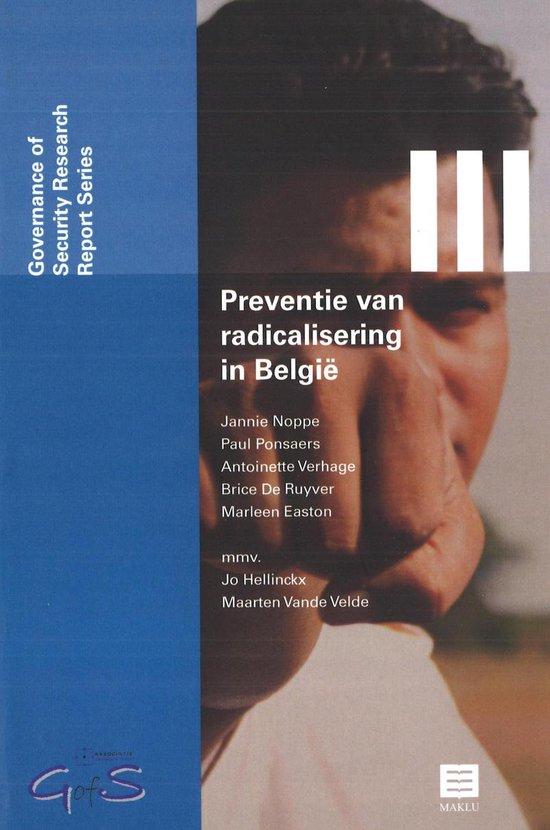
Preventie van radicalisering in België (Governance of Security Research Report Series Vol. III)

 32,00
Radicalisering wordt omschreven als een procesmatig fenomeen; personen die dit proces doormaken, kunnen hierbij verschillende stadia doorlopen, gaande van radicalisme over extremisme tot terrorisme. Natuurlijk mondt het proces slechts in uitzonderlijke gevallen uit in terroristische daden. Dit betekent echter niet dat preventief ingrijpen in de eerste fasen van dit radicaliseringsproces niet van het grootste belang is. Dit ingrijpen veronderstelt echter dat we deze fasen ook kunnen herkennen en identificeren.

In opdracht van de FOD Binnenlandse Zaken voerde de onderzoeksgroep Governance of Security (UGent/ Hogent) dan ook een onderzoek naar signalen en triggers die vroegtijdig kunnen wijzen op een proces van radicalisering.

In dit boek worden de resultaten weergegeven van dit onderzoek, dat als één van de eerste empirische onderzoeken in België ingaat op het fenomeen radicalisering en de processen en mechanismen die hiermee gepaard gaan.

Quick View

Preventie van radicalisering in België (Governance of Security Research Report Series Vol. III)

 32,00
Radicalisering wordt omschreven als een procesmatig fenomeen; personen die dit proces doormaken, kunnen hierbij verschillende stadia doorlopen, gaande van radicalisme over extremisme tot terrorisme. Natuurlijk mondt het proces slechts in uitzonderlijke gevallen uit in terroristische daden. Dit betekent echter niet dat preventief ingrijpen in de eerste fasen van dit radicaliseringsproces niet van het grootste belang is. Dit ingrijpen veronderstelt echter dat we deze fasen ook kunnen herkennen en identificeren.

In opdracht van de FOD Binnenlandse Zaken voerde de onderzoeksgroep Governance of Security (UGent/ Hogent) dan ook een onderzoek naar signalen en triggers die vroegtijdig kunnen wijzen op een proces van radicalisering.

In dit boek worden de resultaten weergegeven van dit onderzoek, dat als één van de eerste empirische onderzoeken in België ingaat op het fenomeen radicalisering en de processen en mechanismen die hiermee gepaard gaan.

Toevoegen aan winkelwagenBekijk winkelwagen
Policing in Europe (CPS 2010 – 3, nr. 16)Policing in Europe (CPS 2010 – 3, nr. 16)
Quick View
Toevoegen aan winkelwagenBekijk winkelwagen

Policing in Europe (CPS 2010 – 3, nr. 16)

 54,50
For the past few decades the so-called transnationalisation of the police in Europe has evolved rapidly. The resulting cooperation between national police organisations is often motivated by referring to the inevitable need of a war against the increasingly internationally operating organised crime and (especially since 2001) international terrorism. As a result, an amalgam of cooperation, information-exchange and informal relations was established between national police organisations. Europe also tried to stimulate developments of and within the police. As was often noticed before it may be difficult to get a realistic view on these important developments in the transnationalisation of the police in Europe. Moreover, it may be difficult to get detailed and reliable information about the impact of European, transnational developments on the member states’ police services.

Taking these observations into account, and in view of the Belgian Presidency of the Council of Europe that will start during the second part of 2010, the editorial board of the Journal of Police Studies decided that the time was ripe to present a theme issue on ‘Policing in Europe’. This volume is therefore based on two main questions. Firstly, what are the developments of the police and police cooperation in Europe at a supranational level? And secondly, what are the different reactions of police organisations in individual European countries to the process of European transnationalisation in terms of the design of and philosophy within their police organisation?

Policing in Europe (CPS 2010 – 3, nr. 16)Policing in Europe (CPS 2010 – 3, nr. 16)
Quick View

Policing in Europe (CPS 2010 – 3, nr. 16)

 54,50
For the past few decades the so-called transnationalisation of the police in Europe has evolved rapidly. The resulting cooperation between national police organisations is often motivated by referring to the inevitable need of a war against the increasingly internationally operating organised crime and (especially since 2001) international terrorism. As a result, an amalgam of cooperation, information-exchange and informal relations was established between national police organisations. Europe also tried to stimulate developments of and within the police. As was often noticed before it may be difficult to get a realistic view on these important developments in the transnationalisation of the police in Europe. Moreover, it may be difficult to get detailed and reliable information about the impact of European, transnational developments on the member states’ police services.

Taking these observations into account, and in view of the Belgian Presidency of the Council of Europe that will start during the second part of 2010, the editorial board of the Journal of Police Studies decided that the time was ripe to present a theme issue on ‘Policing in Europe’. This volume is therefore based on two main questions. Firstly, what are the developments of the police and police cooperation in Europe at a supranational level? And secondly, what are the different reactions of police organisations in individual European countries to the process of European transnationalisation in terms of the design of and philosophy within their police organisation?

Toevoegen aan winkelwagenBekijk winkelwagen
    0
    Uw winkelwagen
    Uw winkelwagen is leegVerder winkelen
    ×