
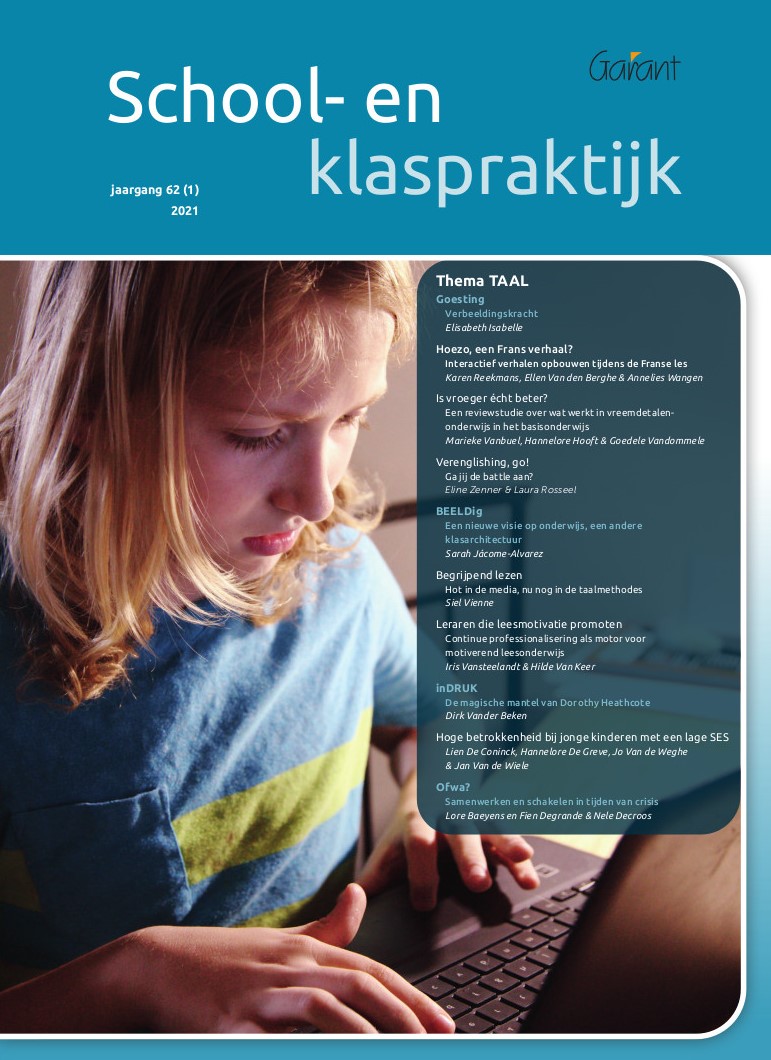
School- en klaspraktijk (SKP) Jrg. 62 nr.1 (2021)
In Goesting daagt Elisabeth Isabelle ons uit om op zoek te gaan naar onze eerste taal. Met drie meisjes van negen jaar zoekt ze naar hun innerlijke landschappen, hun wereld, hun verbeeldingskracht. Een ding is duidelijk: het borrelt er van de goesting!
Hoe motiveer je leerlingen om in het Frans een verhaal op te bouwen? In het artikel Hoezo, een verhaal? Interactief verhalen verzinnen tijdens de Franse les maken Karen Reekmans, Ellen Van den Berghe en Annelies Wangen je wegwijs in Teaching Proficiency through Reading and Storytelling (TPRS) en muzisch taalonderwijs.
Vreemde talen leren, daarmee kun je het best maar zo vroeg mogelijk beginnen, toch? Marieke Vanbuel, Hannelore Hooft en Goedele Vandommele gidsen ons in hun artikel Is vroeger écht beter? Een reviewstudie over wat werkt in vreemdetalenonderwijs in het basisonderwijs door het laatste wetenschappelijke onderzoek.
Hoe het komt dat zesjarigen Engelstalige woorden uitroepen, die vraag ligt aan de basis van het onderzoek van Eline Zenner en Laura Rosseel. In hun artikel Verenglishing, go! Ga jij de battle aan? doen ze hun onderzoeksresultaten uit de doeken. Exciting!
In BEELDig neemt Sarah Jácome-Alvarez de proef op de som: hoe ziet de klas eruit in de 21ste eeuw? En wat betekent onderwijs eigenlijk?
In het artikel Begrijpend lezen, hot in de media, nu nog in de taalmethodes doet Siel Vienne uit de doeken hoe sterk begrijpend leesonderwijs eruitziet volgens recente onderzoeken en in welke mate ingrediënten van effectief leesonderwijs terug te vinden zijn in taalmethodes.
Iris Vansteelandt en Hilde Van Keer delen in hun artikel Leraren die leesmotivatie promoten: continue professionalisering voor motiverend leesonderwijs hoe je het leesvuur bij kinderen kunt ontsteken én warm houden. Op naar een gouden leesticket voor alle leerlingen!
Themaverkenning bij jonge kinderen, hoe pak je dat aan? En hoe kun je zorgen voor een sterke taalontwikkeling? In Hoge betrokkenheid creëren bij jonge, kwetsbare kinderen geven Lien De Coninck, Hannelore De Greve, Jo Van de Weghe en Jan Van de Wiele concrete tips. Na dit artikel kun je meteen aan de slag met het sprokkelen van interessante insteken voor jouw klas.
De laatste tijd heeft het onderwijs heel wat veerkracht getoond. We sluiten dit nummer af met een Ofwa? van Lore Baeyens, Fien Degrande en Nele Decroos waarin ze de kracht van een Leuvens netwerk én het platform Begeleiders zonder grenzen toelichten. Wat hen drijft? Snel schakelen en samenwerken voor gelijke onderwijskansen voor alle kinderen.
Carolien Frijns, hoofdredacteur
School- en klaspraktijk (SKP) Jrg. 62 nr.1 (2021)
In Goesting daagt Elisabeth Isabelle ons uit om op zoek te gaan naar onze eerste taal. Met drie meisjes van negen jaar zoekt ze naar hun innerlijke landschappen, hun wereld, hun verbeeldingskracht. Een ding is duidelijk: het borrelt er van de goesting!
Hoe motiveer je leerlingen om in het Frans een verhaal op te bouwen? In het artikel Hoezo, een verhaal? Interactief verhalen verzinnen tijdens de Franse les maken Karen Reekmans, Ellen Van den Berghe en Annelies Wangen je wegwijs in Teaching Proficiency through Reading and Storytelling (TPRS) en muzisch taalonderwijs.
Vreemde talen leren, daarmee kun je het best maar zo vroeg mogelijk beginnen, toch? Marieke Vanbuel, Hannelore Hooft en Goedele Vandommele gidsen ons in hun artikel Is vroeger écht beter? Een reviewstudie over wat werkt in vreemdetalenonderwijs in het basisonderwijs door het laatste wetenschappelijke onderzoek.
Hoe het komt dat zesjarigen Engelstalige woorden uitroepen, die vraag ligt aan de basis van het onderzoek van Eline Zenner en Laura Rosseel. In hun artikel Verenglishing, go! Ga jij de battle aan? doen ze hun onderzoeksresultaten uit de doeken. Exciting!
In BEELDig neemt Sarah Jácome-Alvarez de proef op de som: hoe ziet de klas eruit in de 21ste eeuw? En wat betekent onderwijs eigenlijk?
In het artikel Begrijpend lezen, hot in de media, nu nog in de taalmethodes doet Siel Vienne uit de doeken hoe sterk begrijpend leesonderwijs eruitziet volgens recente onderzoeken en in welke mate ingrediënten van effectief leesonderwijs terug te vinden zijn in taalmethodes.
Iris Vansteelandt en Hilde Van Keer delen in hun artikel Leraren die leesmotivatie promoten: continue professionalisering voor motiverend leesonderwijs hoe je het leesvuur bij kinderen kunt ontsteken én warm houden. Op naar een gouden leesticket voor alle leerlingen!
Themaverkenning bij jonge kinderen, hoe pak je dat aan? En hoe kun je zorgen voor een sterke taalontwikkeling? In Hoge betrokkenheid creëren bij jonge, kwetsbare kinderen geven Lien De Coninck, Hannelore De Greve, Jo Van de Weghe en Jan Van de Wiele concrete tips. Na dit artikel kun je meteen aan de slag met het sprokkelen van interessante insteken voor jouw klas.
De laatste tijd heeft het onderwijs heel wat veerkracht getoond. We sluiten dit nummer af met een Ofwa? van Lore Baeyens, Fien Degrande en Nele Decroos waarin ze de kracht van een Leuvens netwerk én het platform Begeleiders zonder grenzen toelichten. Wat hen drijft? Snel schakelen en samenwerken voor gelijke onderwijskansen voor alle kinderen.
Carolien Frijns, hoofdredacteur

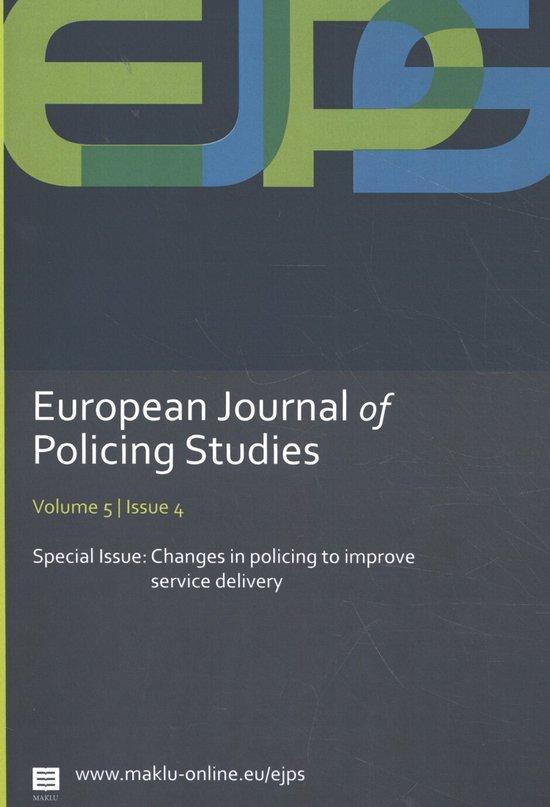
European Journal of Policing Studies – Jaargang – 5/4 (2017)- Changes in policing to improve service delivery
Contents:
Introduction
Antoinette Verhage, Lieselot Bisschop and Wim Hardyns
br>
Articles
How to Police a Porous Fortress?
Monica den Boer (1)
Abstract
The purpose of this article is to provide an overview of the way in which the European Union has gradually but steadily built a security architecture based on the control of mobility and borders. Different logics of policing are interwoven in several projects, which are strongly interdependent with technological innovation. Furthermore, the European policing of mobility is primarily performed by mounting surveillance – both inside and beyond European borders – by means of which all forms of movement (transactions, travelling, etc.) are subjected to intensive monitoring by multiple actors who are interlinked through strategies and systems. The main finding is that border policing is shifting in a fundamental way from fixed to fluid, from territorial to virtual, and from physical to technological. Hence, paradoxically, though mobility is strongly promoted as one of the main virtues of the European Union, Europe’s precautionary protection may be at ill-ease with the free movement of people. The article seeks to stimulate the knowledge and debate about deeper shifts in Europe’s security apparatus and develops this from a law enforcement perspective.
Keywords: Europe; borders; security; mobility; technology
(1) Academic Dean at the Police Academy of The Netherlands, Member of the Committee on European Integration of the Advisory Council on International Affairs and Visiting Professor at the College of Europe in Bruges.
Police Science in Germany: History and New Perspectives
Joachim Kersten (1) and Ansgar Burchard (2)
Abstract
In the German speaking academic world Police Science (Polizeiwissenschaft) is a fairly new and little known area of social science. Accordingly, the academic status of police science is anything but firmly established but rather at a ‘hybrid’ stage of development. The very combination of policing and academic study/research seems to remain largely incompatible not only to police managers but also to main stream sociology. German police science differs substantially from the Anglo-American-Australian approach. One main difference pertains to legal traditions, others are due to historical and cultural developments that will be taken up in this descriptive essay. However, Anglo-American-Australian police theories have a lot to offer to German and European police scientists and this will be demonstrated. For a future common approach to an evolving European police science similar descriptions will be required from other European countries to establish a comparative foundation of joint EU police studies. Some of the principal dimensions of such a comparison will be sketched in this essay. It concludes with a presentation of empirically based police studies carried out by instructors and Master students at the newly founded German Police University in Münster. Topics are media coverage of clashes between police and demonstrators, a typology of third party intervention in cases of assault in public places and COREPOL (EU FP7), a comparative security research project aiming at an improvement of police-minority relations through means of restorative justice programs.
Keywords: Police Science in Germany; accountability; YouTube; public relations; Facebook; civil courage; violent assaults
(1) Professor and Head of Department of the Department of Police Science at the German Police University (Germany), DAAD Professor at Northwestern University, and guest professor in Maastricht/NL, in Sydney/Australia, and in Tokyo/Japan.
(2) Senior Researcher for ‘COREPOL’ (EU FP7).
European Journal of Policing Studies – Jaargang – 5/4 (2017)- Changes in policing to improve service delivery
Contents:
Introduction
Antoinette Verhage, Lieselot Bisschop and Wim Hardyns
br>
Articles
How to Police a Porous Fortress?
Monica den Boer (1)
Abstract
The purpose of this article is to provide an overview of the way in which the European Union has gradually but steadily built a security architecture based on the control of mobility and borders. Different logics of policing are interwoven in several projects, which are strongly interdependent with technological innovation. Furthermore, the European policing of mobility is primarily performed by mounting surveillance – both inside and beyond European borders – by means of which all forms of movement (transactions, travelling, etc.) are subjected to intensive monitoring by multiple actors who are interlinked through strategies and systems. The main finding is that border policing is shifting in a fundamental way from fixed to fluid, from territorial to virtual, and from physical to technological. Hence, paradoxically, though mobility is strongly promoted as one of the main virtues of the European Union, Europe’s precautionary protection may be at ill-ease with the free movement of people. The article seeks to stimulate the knowledge and debate about deeper shifts in Europe’s security apparatus and develops this from a law enforcement perspective.
Keywords: Europe; borders; security; mobility; technology
(1) Academic Dean at the Police Academy of The Netherlands, Member of the Committee on European Integration of the Advisory Council on International Affairs and Visiting Professor at the College of Europe in Bruges.
Police Science in Germany: History and New Perspectives
Joachim Kersten (1) and Ansgar Burchard (2)
Abstract
In the German speaking academic world Police Science (Polizeiwissenschaft) is a fairly new and little known area of social science. Accordingly, the academic status of police science is anything but firmly established but rather at a ‘hybrid’ stage of development. The very combination of policing and academic study/research seems to remain largely incompatible not only to police managers but also to main stream sociology. German police science differs substantially from the Anglo-American-Australian approach. One main difference pertains to legal traditions, others are due to historical and cultural developments that will be taken up in this descriptive essay. However, Anglo-American-Australian police theories have a lot to offer to German and European police scientists and this will be demonstrated. For a future common approach to an evolving European police science similar descriptions will be required from other European countries to establish a comparative foundation of joint EU police studies. Some of the principal dimensions of such a comparison will be sketched in this essay. It concludes with a presentation of empirically based police studies carried out by instructors and Master students at the newly founded German Police University in Münster. Topics are media coverage of clashes between police and demonstrators, a typology of third party intervention in cases of assault in public places and COREPOL (EU FP7), a comparative security research project aiming at an improvement of police-minority relations through means of restorative justice programs.
Keywords: Police Science in Germany; accountability; YouTube; public relations; Facebook; civil courage; violent assaults
(1) Professor and Head of Department of the Department of Police Science at the German Police University (Germany), DAAD Professor at Northwestern University, and guest professor in Maastricht/NL, in Sydney/Australia, and in Tokyo/Japan.
(2) Senior Researcher for ‘COREPOL’ (EU FP7).