
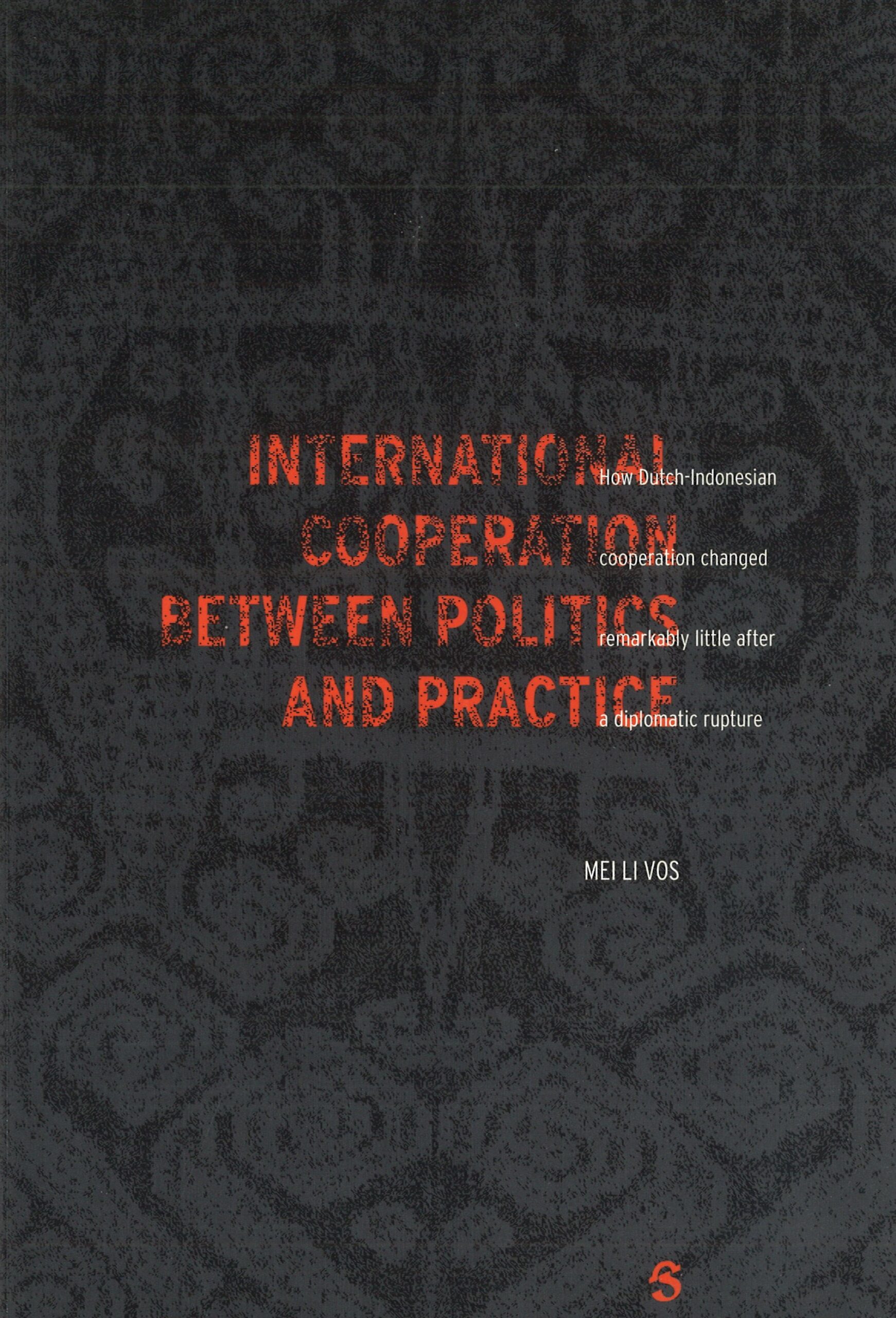
International cooperation between politics and practice. How Dutch-Indonesian cooperation changed remarkably little after a diplomatic rupture
€ 29,50
This study questions how political decisions concerning foreign policy are actually implemented. Bilateral policy between Indonesia and the Netherlands provides the empirical data for the study. Mei Li Vos suggests that non-governmental actors have an infl… meer
Op voorraad
This study questions how political decisions concerning foreign policy are actually implemented. Bilateral policy between Indonesia and the Netherlands provides the empirical data for the study. Mei Li Vos suggests that non-governmental actors have an influential role in the policy process, putting new ideas on the political agenda or removing some objectives that should not have been on the agenda at all. The fact that the shopfloor of the policy process has an initiating role does not necessarily lead to anarchy or undesired political effects.
In this case of bilateral cooperation between the Netherlands and Indonesia, policy did reflect the aspirations of citizens. These aspirations were not realized because government included them into policy objectives, but because there were opportunities in the policy process for the non-government actors to realise their own aspirations. Foreign policy, despite its hierarchic and state-centric connotations, is herein presented within the context of a bottom-up approach to policy making.
This book contains a thorough analysis of ‘sub-politics in practice’, which contributes to a rethinking on state-society relations and the structure of foreign policymaking.
This book is therefore of interest for academics in political science, public administration, development studies, and those involved in foreign policy.
Mei Li Vos is a political scientist and a lecturer at the Faculty of Social and Behavioural Sciences at the University of Amsterdam. She is currently engaged in research on ‘Good Governance’. She is also assigned to Infodrome, the government thinktank for the study on the implications of ICT for society and government.
Boek informatie
Gerelateerde producten
Stad en land. Over bewoners en woonmilieus.
Stad en land. Over bewoners en woonmilieus.

Multiculturalisme in Canada, Australië en de Verenigde Staten. Ideologie en beleid, 1950-2000.
Hans Vermeulen en Boris Slijper zijn beiden verbonden aan het Instituut voor Migratie- en Etnische Sudies (IMES) van de Universiteit van Amsterdam.
Multiculturalisme in Canada, Australië en de Verenigde Staten. Ideologie en beleid, 1950-2000.
Hans Vermeulen en Boris Slijper zijn beiden verbonden aan het Instituut voor Migratie- en Etnische Sudies (IMES) van de Universiteit van Amsterdam.
Wat is journalistiek?
Wat is journalistiek?

Facades. Oostenrijkers en het oorlogsverleden