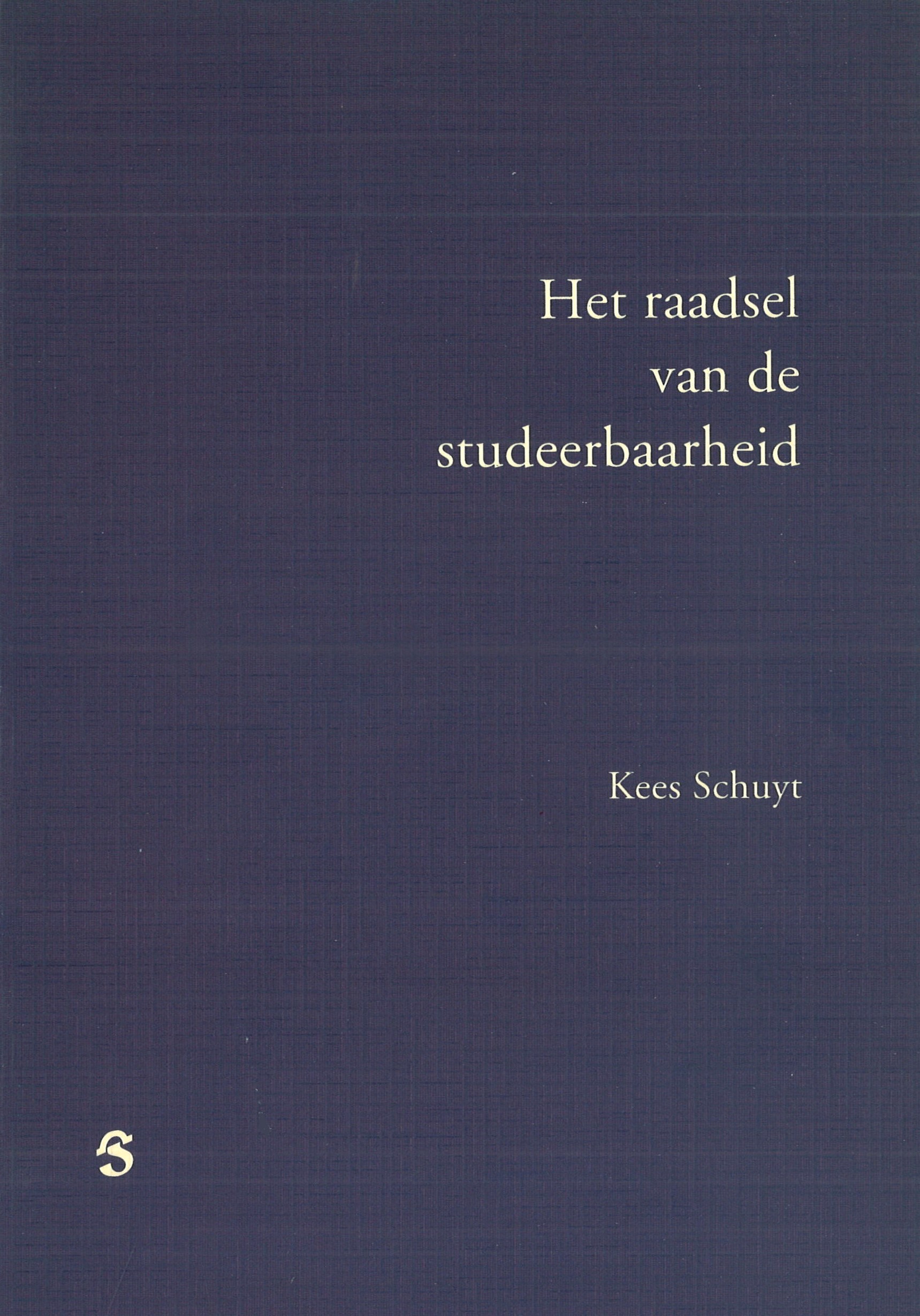
Het raadsel van de studeerbaarheid
€ 7,44
RAADSEL VAN DE STUDEERBAARHEID
Op voorraad
RAADSEL VAN DE STUDEERBAARHEID
Boek informatie
ISBN 13
9789055890859
Aantal pagina's
49
Auteur(s)
Kees Schuyt
NUR
100 - Educatieve uitgaven algemeen
Gerelateerde producten
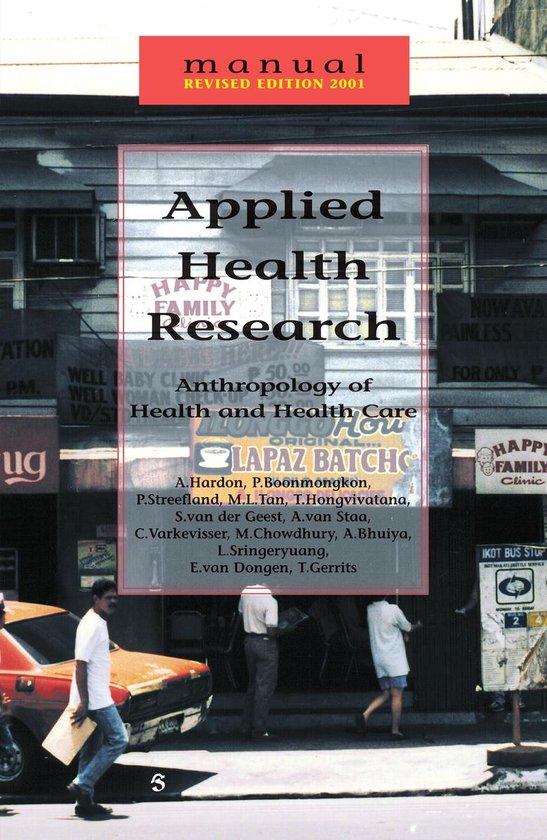
Applied Health Research. Anthropology of Health Care
€ 28,00
There is increasing recognition that socio-economic and cultural factors are prime determinants of health and health care. What factors contribute to the acceptance of community health financing or a vaccination program? What are the needs of the growing group of elderly people or psychatric patients? What social and cultural factors should be taken into account to operationalize all ambitious plans to improve reproductive health care? These are only some of the questions health professionals and health planners are confronted with.
Anthropological research can be a tremendous support to health programmes, by giving insights in the perspective of recipients and providers of health programmes and health care, and also by providing managers and implementors of these programmes with mechanisms and strategies that could lead to a reorientation of health care programmes and policies towards the actual needs of the target group.
The need for training in anthropology of health and health care has been expressed by social scientists involved in multi-disciplinary health research projects, and public health staff at different levels, who are involved in providing health education and primary health care and who - in implementing the health programmes - are confronted with difficulties related to the socio-cultural context in which they work.
It is for this reason that the International Course in Anthropology of Health and Health Care has been developed. This course has been designed for research officers of public health institutes, coordinators of community health care programmes, project staff, responsible for the implementation of various health programmes, public health professionals, social science lecturers at universities, and junior social scientists, who intend to specialize in Anthropology of Health and Health Care.
The course takes a multi-disciplinary approach and focuses on a number of important problem areas and issues, such as vaccination, reproductive health and AIDS, equity and community health financing, self-care and the use and distribution of pharmaceuticals.
The manual in its earlier editions has been used since years for teaching in the field of applied medical anthropology and public health in academic institutions worldwide.
Applied Health Research. Anthropology of Health Care
€ 28,00
There is increasing recognition that socio-economic and cultural factors are prime determinants of health and health care. What factors contribute to the acceptance of community health financing or a vaccination program? What are the needs of the growing group of elderly people or psychatric patients? What social and cultural factors should be taken into account to operationalize all ambitious plans to improve reproductive health care? These are only some of the questions health professionals and health planners are confronted with.
Anthropological research can be a tremendous support to health programmes, by giving insights in the perspective of recipients and providers of health programmes and health care, and also by providing managers and implementors of these programmes with mechanisms and strategies that could lead to a reorientation of health care programmes and policies towards the actual needs of the target group.
The need for training in anthropology of health and health care has been expressed by social scientists involved in multi-disciplinary health research projects, and public health staff at different levels, who are involved in providing health education and primary health care and who - in implementing the health programmes - are confronted with difficulties related to the socio-cultural context in which they work.
It is for this reason that the International Course in Anthropology of Health and Health Care has been developed. This course has been designed for research officers of public health institutes, coordinators of community health care programmes, project staff, responsible for the implementation of various health programmes, public health professionals, social science lecturers at universities, and junior social scientists, who intend to specialize in Anthropology of Health and Health Care.
The course takes a multi-disciplinary approach and focuses on a number of important problem areas and issues, such as vaccination, reproductive health and AIDS, equity and community health financing, self-care and the use and distribution of pharmaceuticals.
The manual in its earlier editions has been used since years for teaching in the field of applied medical anthropology and public health in academic institutions worldwide.
Geen voorraad

Facades. Oostenrijkers en het oorlogsverleden
€ 18,50
Ingelijfd bij Duitsland vochten en werkten Oostenrijkers in de Tweede Wereldoorlog samen met de Duitsers op alle fronten, in de vernietigingskampen, in de bezette gebieden, thuis. Samen met de Duitsers verloren ze.
Alle betrokkenen moesten na deze collectieve ervaring van geweld, samen verder, aan welke kant ze ook gestaan hadden. Zoals er steeds opnieuw samenlevingen zijn, die na een oorlog, na etnische zuiveringen, na terreur en verlies met elkaar verder moeten.
Herinneren is niet alleen een psychisch maar ook sociaal fenomeen. We herinneren wat gedeeld wordt met anderen. De herinnering is steeds opnieuw een constructie en tegelijkertijd een reconstructie: ze gaat terug, reageert en borduurt voort op wat er vroeger gebeurd is. Het verleden krijgt vorm en wordt steeds aangepast, becommentarieerd, verdraaid en bestreden.
De herinnering beperkt zich niet tot de taal: ze wordt vastgelegd in allerlei vormen, ze gaat schuil achter allerlei façades, zoals een illustratie, een monument, een foto, een bepaalde melodie, een gebaar, een pijnlijke stilte.
Anne Gevers laat in deze studie zien hoe die herinneringen gestalte hebben gekregen in een Oostenrijkse stad. Ze traceert het complexe samenspel tussen dominante, verborgen en contrasterende interpretaties van dit uiterst omstreden maar niet vergeten verleden.
Anne Gevers (1951) was ten tijde van het onderzoek als antropologe verbonden aan The Amsterdam School for Social Science Research.
Geen voorraad
Facades. Oostenrijkers en het oorlogsverleden
€ 18,50
Ingelijfd bij Duitsland vochten en werkten Oostenrijkers in de Tweede Wereldoorlog samen met de Duitsers op alle fronten, in de vernietigingskampen, in de bezette gebieden, thuis. Samen met de Duitsers verloren ze.
Alle betrokkenen moesten na deze collectieve ervaring van geweld, samen verder, aan welke kant ze ook gestaan hadden. Zoals er steeds opnieuw samenlevingen zijn, die na een oorlog, na etnische zuiveringen, na terreur en verlies met elkaar verder moeten.
Herinneren is niet alleen een psychisch maar ook sociaal fenomeen. We herinneren wat gedeeld wordt met anderen. De herinnering is steeds opnieuw een constructie en tegelijkertijd een reconstructie: ze gaat terug, reageert en borduurt voort op wat er vroeger gebeurd is. Het verleden krijgt vorm en wordt steeds aangepast, becommentarieerd, verdraaid en bestreden.
De herinnering beperkt zich niet tot de taal: ze wordt vastgelegd in allerlei vormen, ze gaat schuil achter allerlei façades, zoals een illustratie, een monument, een foto, een bepaalde melodie, een gebaar, een pijnlijke stilte.
Anne Gevers laat in deze studie zien hoe die herinneringen gestalte hebben gekregen in een Oostenrijkse stad. Ze traceert het complexe samenspel tussen dominante, verborgen en contrasterende interpretaties van dit uiterst omstreden maar niet vergeten verleden.
Anne Gevers (1951) was ten tijde van het onderzoek als antropologe verbonden aan The Amsterdam School for Social Science Research.
Bridges & Watersheds. A narrative analysis of watermanagement in England, Wales and the Netherlands
€ 22,50
What is good water management, if we take scarcity of water, combined with climate change, the rise of sea level and a growing world population into account? Can water management be privatized? Or should the role and the position of the nation state even be strengthened to protect the environment and the citizens? Dicke has conducted a narrative analysis of water management in England, Wales and the Netherlands. Hundred years ago, water used to be a national public good. The nation state was pivotal in water management. Nowadays, water is considered to be part of a global water system. This view transforms water from a national to a global public good. As a result, the nation state is not the only actor, which has a say in the management of this global public good. This transformation places the public private divide once again at the center of attention.
The present debate about privatization, both in England and in the Netherlands, is incomplete. It does not take all dimensions of the public private divide into account. Dicke suggests that both visibility (transparency) and collectivity (water belongs to us all) should be considered. The issue is not whether water management is provided by a nation state or not. The issue should be whether the dimensions of collectivity and visibility are well balanced. This can only be achieved through a restoration of the link between water and society.
Willemijn Dicke is assistant professor at Delft University of Technology at the Department of Public Management Organisation & Management.
Bridges & Watersheds. A narrative analysis of watermanagement in England, Wales and the Netherlands
€ 22,50
What is good water management, if we take scarcity of water, combined with climate change, the rise of sea level and a growing world population into account? Can water management be privatized? Or should the role and the position of the nation state even be strengthened to protect the environment and the citizens? Dicke has conducted a narrative analysis of water management in England, Wales and the Netherlands. Hundred years ago, water used to be a national public good. The nation state was pivotal in water management. Nowadays, water is considered to be part of a global water system. This view transforms water from a national to a global public good. As a result, the nation state is not the only actor, which has a say in the management of this global public good. This transformation places the public private divide once again at the center of attention.
The present debate about privatization, both in England and in the Netherlands, is incomplete. It does not take all dimensions of the public private divide into account. Dicke suggests that both visibility (transparency) and collectivity (water belongs to us all) should be considered. The issue is not whether water management is provided by a nation state or not. The issue should be whether the dimensions of collectivity and visibility are well balanced. This can only be achieved through a restoration of the link between water and society.
Willemijn Dicke is assistant professor at Delft University of Technology at the Department of Public Management Organisation & Management.
Geen voorraad
Nachtzwervers in Amsterdam 2003
€ 7,50
Dit rapport gaat over de nachtzwervers, daklozen die de nacht op straat doorbrengen. Hoeveel nachtzwervers zijn er in Amsterdam en over wat voor groep hebben we het? Om deze vragen te beantwoorden stroopten tachtig onderzoekers van de Universiteit van Amsterdam de straten af om de ‘echte’ daklozen te vinden en te enquêteren. Het resultaat van deze nachtelijke activiteit is een nuchter overzicht van feiten over een stedelijk verschijnsel dat nogal eens wordt omgeven met emoties. Dit onderzoek is de vijfde in een reeks vanaf 1995. Trends en trendbreuken tekenen zich af. Voor het eerst sinds 1999 is er weer een toename te zien van het aantal nachtzwervers, een groep die steeds verder veroudert en internationaliseert, een groep die steeds minder gebruik maakt van zorg en steun en een groep waarin verslaving aan harddrugs een grote rol speelt.
Léon Deben en Peter Rensen zijn socioloog en verbonden aan de Sectie Stadssociologie van de Universiteit van Amsterdam en aan het Amsterdam Study Centre for Metropolitan Environment (AME). Robert Duiveman studeert Stadssociologie aan de Universiteit van Amsterdam.
Geen voorraad
Nachtzwervers in Amsterdam 2003
€ 7,50
Dit rapport gaat over de nachtzwervers, daklozen die de nacht op straat doorbrengen. Hoeveel nachtzwervers zijn er in Amsterdam en over wat voor groep hebben we het? Om deze vragen te beantwoorden stroopten tachtig onderzoekers van de Universiteit van Amsterdam de straten af om de ‘echte’ daklozen te vinden en te enquêteren. Het resultaat van deze nachtelijke activiteit is een nuchter overzicht van feiten over een stedelijk verschijnsel dat nogal eens wordt omgeven met emoties. Dit onderzoek is de vijfde in een reeks vanaf 1995. Trends en trendbreuken tekenen zich af. Voor het eerst sinds 1999 is er weer een toename te zien van het aantal nachtzwervers, een groep die steeds verder veroudert en internationaliseert, een groep die steeds minder gebruik maakt van zorg en steun en een groep waarin verslaving aan harddrugs een grote rol speelt.
Léon Deben en Peter Rensen zijn socioloog en verbonden aan de Sectie Stadssociologie van de Universiteit van Amsterdam en aan het Amsterdam Study Centre for Metropolitan Environment (AME). Robert Duiveman studeert Stadssociologie aan de Universiteit van Amsterdam.