

Over/about Loes – Essays for Loes Schenk-Sandbergen at the occasion of her departure from the University of Amsterdam, 11 mei 2007
€ 15,00
Boek informatie
ISBN 13
9789055892907
Auteur(s)
Hans Schenk (Red.)
NUR
-
Gerelateerde producten
Income and wealth inequality in the Netherlands 16th-20th century
€ 29,50
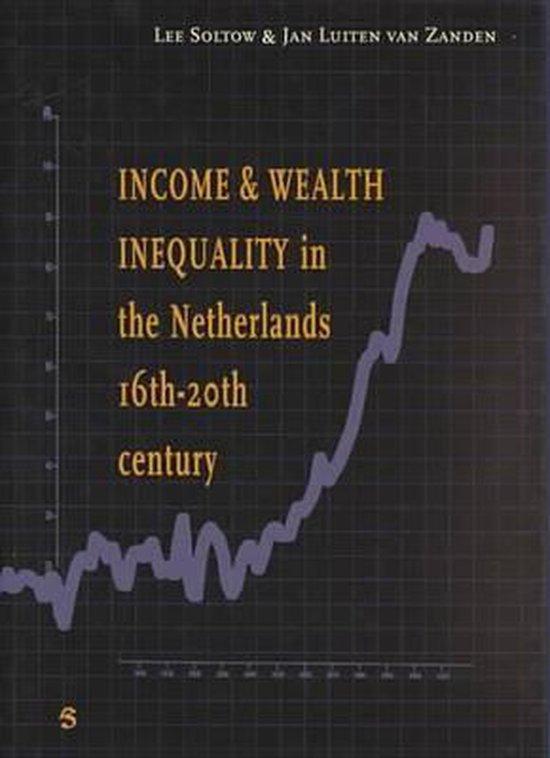
The ''new inequality'' of the 1980''s and 1990''s has recently given rise to a lively debate about the relationship between economic growth and income distribution. This debate is the background of the study by Lee Soltow an Jan Luiten van Zanden, who, staying close to the sources, have mapped in some detail the long-term development of income and wealth inequality in the Netherlands between c. 1500 and the present.
Their starting point is the hypothesis of Simon Kuznets that income inequality increased during the first phase of modern economic growth, but that in the second phase, which begins in most Western countries around the turn of the twentieth century, a marked levelling out of income differences followed. The development of inequality during the Golden Age, when growth resulted in a marked increase in inequality seems to confirm this idea. However, the analysis of the connection between growth and inequality in the nineteenth and twentieth century leads them to question the Kuznets hypothesis.
Lee Soltow is professor of Economics at Ohio University (Athens).
Among his publications on the subject are: ''Distribution of wealth and income in the United States in 1978'' (1989) and ''Men and wealth in the United States 1850-1870'' (1975).
Jan Luiten van Zanden is professor of Economic and Social History at Utrecht University (the Netherlands).
Among his publications on the subject are: ''The economic history of the Netherlands 1914-1955: a small open economy in the ''long'' twentieth century'' (1998). ''The economic development of the Netherlands since 1870'' (1996) and ''The rise and decline of Holland''s economy: merchant capitalism and the labour market'' (1993).
Income and wealth inequality in the Netherlands 16th-20th century
€ 29,50
The ''new inequality'' of the 1980''s and 1990''s has recently given rise to a lively debate about the relationship between economic growth and income distribution. This debate is the background of the study by Lee Soltow an Jan Luiten van Zanden, who, staying close to the sources, have mapped in some detail the long-term development of income and wealth inequality in the Netherlands between c. 1500 and the present.
Their starting point is the hypothesis of Simon Kuznets that income inequality increased during the first phase of modern economic growth, but that in the second phase, which begins in most Western countries around the turn of the twentieth century, a marked levelling out of income differences followed. The development of inequality during the Golden Age, when growth resulted in a marked increase in inequality seems to confirm this idea. However, the analysis of the connection between growth and inequality in the nineteenth and twentieth century leads them to question the Kuznets hypothesis.
Lee Soltow is professor of Economics at Ohio University (Athens).
Among his publications on the subject are: ''Distribution of wealth and income in the United States in 1978'' (1989) and ''Men and wealth in the United States 1850-1870'' (1975).
Jan Luiten van Zanden is professor of Economic and Social History at Utrecht University (the Netherlands).
Among his publications on the subject are: ''The economic history of the Netherlands 1914-1955: a small open economy in the ''long'' twentieth century'' (1998). ''The economic development of the Netherlands since 1870'' (1996) and ''The rise and decline of Holland''s economy: merchant capitalism and the labour market'' (1993).
Air-conditioned lifestyle. Nieuwe rijken in Jakarta
€ 13,80
Dit boek gaat over de ''Orang Kaya Baru'', de nieuwe rijken van het moderne Jakarta (Indonesië). Zij vormen de bovenste laag van de middenklasse, die in het midden van de jaren zestig is ontstaan na de explosieve economische ontwikkeling, die door Soeharto''s autoritaire ''Orde Baru'' (Nieuwe Orde) in gang is gezet.
Deze snel groeiende middenklasse jogt voor het werk, consumeert afwisselend fastfood en health food en kijkt ''s avonds onderuitgezakt voor de buis naar soaps, waarin joggen, fastfood en moderne relatieperikelen centraal staan. Een ogenschijnlijk universele manier van leven, vol met de voortbrengselen van de moderne massaproductie.
Dit consumptiepatroon is een relatief nieuw fenomeen in deze niet-westerse culturen. Daar zijn het vaak de ''nouveaux riches'' die dit fenomeen het eerst en het hevigst omarmen, want alleen door hun consumptiegedrag kunnen zij zich van de rest van de samenleving onderscheiden; kenmerkend voor de oude elite is immers haar aristocratische afkomst en opstelling. De moderne consumptie is zo een ideale uitdrukking voor de nieuwe sociale status van de zich gestaag uitbreidende middenklasse.
De ''Orang Kaya Baru'' is het meest gebaat bij de stabiliteit en overzichtelijkheid, die door de economische politiek van de ''Orde Baru'' is ontstaan; zij hebben veel te verliezen.
Lizzy van Leeuwen is jurist en antropoloog en thans werkzaam bij de Gemeente Amsterdam.
Air-conditioned lifestyle. Nieuwe rijken in Jakarta
€ 13,80
Dit boek gaat over de ''Orang Kaya Baru'', de nieuwe rijken van het moderne Jakarta (Indonesië). Zij vormen de bovenste laag van de middenklasse, die in het midden van de jaren zestig is ontstaan na de explosieve economische ontwikkeling, die door Soeharto''s autoritaire ''Orde Baru'' (Nieuwe Orde) in gang is gezet.
Deze snel groeiende middenklasse jogt voor het werk, consumeert afwisselend fastfood en health food en kijkt ''s avonds onderuitgezakt voor de buis naar soaps, waarin joggen, fastfood en moderne relatieperikelen centraal staan. Een ogenschijnlijk universele manier van leven, vol met de voortbrengselen van de moderne massaproductie.
Dit consumptiepatroon is een relatief nieuw fenomeen in deze niet-westerse culturen. Daar zijn het vaak de ''nouveaux riches'' die dit fenomeen het eerst en het hevigst omarmen, want alleen door hun consumptiegedrag kunnen zij zich van de rest van de samenleving onderscheiden; kenmerkend voor de oude elite is immers haar aristocratische afkomst en opstelling. De moderne consumptie is zo een ideale uitdrukking voor de nieuwe sociale status van de zich gestaag uitbreidende middenklasse.
De ''Orang Kaya Baru'' is het meest gebaat bij de stabiliteit en overzichtelijkheid, die door de economische politiek van de ''Orde Baru'' is ontstaan; zij hebben veel te verliezen.
Lizzy van Leeuwen is jurist en antropoloog en thans werkzaam bij de Gemeente Amsterdam.
De kern van de politiek
€ 15,50
Politiek handelen gebeurt op allerlei niveau’s. Op nationaal niveau bij regeringen en parlementen, tussen burgers en partijen, over beleid en de uitkomsten daarvan. Maar politiek handelen bestaat ook in bedrijven, in kerken, in verenigingen en clubs. Politiek handelen gebeurt overal waar voor groepen mensen gemeenschappelijke zaken moeten worden geregeld wanneer er geen overeenstemming is over welke zaken dat zijn of wat er dan precies zou moeten worden afgesproken.
Volgens Cees van der Eijk is conflict en samenwerking de motor van alle politiek handelen. Soms is dat openlijk zichtbaar, maar vaak ook niet.
Aan de hand van een aantal kernvragen en kernbegrippen laat hij zien hoe men inzicht in politiek handelen kan krijgen. Die kernbegrippen en kernvragen zijn in allerlei situaties toepasbaar: voor de politiek in een land, in een bedrijf, in een vakbond, in een sportvereniging, in een milieuorganisatie, of waar dan ook.
In dit boek gaat het dus om de kern, om de essentie van ‘politiek’ en van het ‘politieke’.Dat maakt dit boekje tot verplichte kost voor eenieder die zich met politiek handelen op welk niveau dan ook bezighoudt.
Cees van der Eijk is hoogleraar Algemene Politicologie aan de Faculteit der Maatschappij- en Gedragswetenschappen van de Universiteit van Amsterdam.
De kern van de politiek
€ 15,50
Politiek handelen gebeurt op allerlei niveau’s. Op nationaal niveau bij regeringen en parlementen, tussen burgers en partijen, over beleid en de uitkomsten daarvan. Maar politiek handelen bestaat ook in bedrijven, in kerken, in verenigingen en clubs. Politiek handelen gebeurt overal waar voor groepen mensen gemeenschappelijke zaken moeten worden geregeld wanneer er geen overeenstemming is over welke zaken dat zijn of wat er dan precies zou moeten worden afgesproken.
Volgens Cees van der Eijk is conflict en samenwerking de motor van alle politiek handelen. Soms is dat openlijk zichtbaar, maar vaak ook niet.
Aan de hand van een aantal kernvragen en kernbegrippen laat hij zien hoe men inzicht in politiek handelen kan krijgen. Die kernbegrippen en kernvragen zijn in allerlei situaties toepasbaar: voor de politiek in een land, in een bedrijf, in een vakbond, in een sportvereniging, in een milieuorganisatie, of waar dan ook.
In dit boek gaat het dus om de kern, om de essentie van ‘politiek’ en van het ‘politieke’.Dat maakt dit boekje tot verplichte kost voor eenieder die zich met politiek handelen op welk niveau dan ook bezighoudt.
Cees van der Eijk is hoogleraar Algemene Politicologie aan de Faculteit der Maatschappij- en Gedragswetenschappen van de Universiteit van Amsterdam.

Bridges & Watersheds. A narrative analysis of watermanagement in England, Wales and the Netherlands
€ 22,50
What is good water management, if we take scarcity of water, combined with climate change, the rise of sea level and a growing world population into account? Can water management be privatized? Or should the role and the position of the nation state even be strengthened to protect the environment and the citizens? Dicke has conducted a narrative analysis of water management in England, Wales and the Netherlands. Hundred years ago, water used to be a national public good. The nation state was pivotal in water management. Nowadays, water is considered to be part of a global water system. This view transforms water from a national to a global public good. As a result, the nation state is not the only actor, which has a say in the management of this global public good. This transformation places the public private divide once again at the center of attention.
The present debate about privatization, both in England and in the Netherlands, is incomplete. It does not take all dimensions of the public private divide into account. Dicke suggests that both visibility (transparency) and collectivity (water belongs to us all) should be considered. The issue is not whether water management is provided by a nation state or not. The issue should be whether the dimensions of collectivity and visibility are well balanced. This can only be achieved through a restoration of the link between water and society.
Willemijn Dicke is assistant professor at Delft University of Technology at the Department of Public Management Organisation & Management.
Bridges & Watersheds. A narrative analysis of watermanagement in England, Wales and the Netherlands
€ 22,50
What is good water management, if we take scarcity of water, combined with climate change, the rise of sea level and a growing world population into account? Can water management be privatized? Or should the role and the position of the nation state even be strengthened to protect the environment and the citizens? Dicke has conducted a narrative analysis of water management in England, Wales and the Netherlands. Hundred years ago, water used to be a national public good. The nation state was pivotal in water management. Nowadays, water is considered to be part of a global water system. This view transforms water from a national to a global public good. As a result, the nation state is not the only actor, which has a say in the management of this global public good. This transformation places the public private divide once again at the center of attention.
The present debate about privatization, both in England and in the Netherlands, is incomplete. It does not take all dimensions of the public private divide into account. Dicke suggests that both visibility (transparency) and collectivity (water belongs to us all) should be considered. The issue is not whether water management is provided by a nation state or not. The issue should be whether the dimensions of collectivity and visibility are well balanced. This can only be achieved through a restoration of the link between water and society.
Willemijn Dicke is assistant professor at Delft University of Technology at the Department of Public Management Organisation & Management.