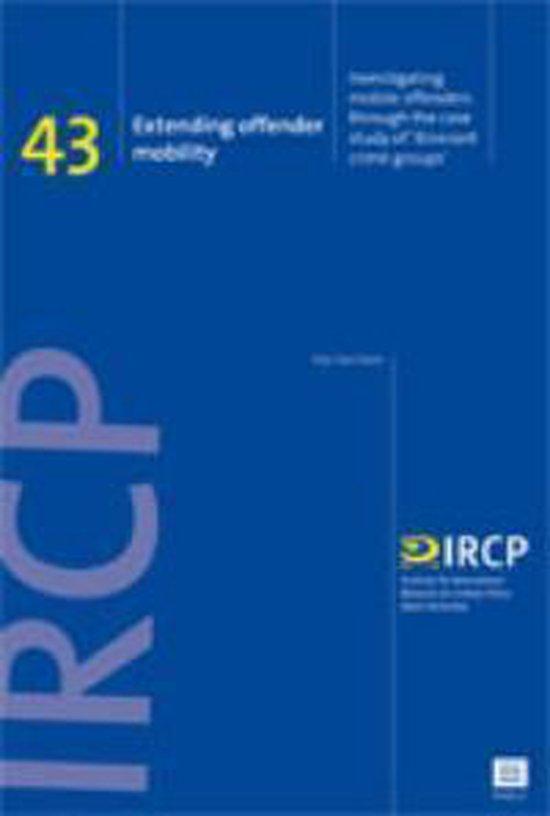
Extending offender mobility (IRCP-series, vol. 43)
€ 39,00
Environmental criminology brings together a range of theories and areas for study. One of
these domains is the study of offender mobility: how offenders move to (and sometimes
from) crime sites, how they select their targets, where they start, the distan… meer
Op voorraad
Environmental criminology brings together a range of theories and areas for study. One of
these domains is the study of offender mobility: how offenders move to (and sometimes
from) crime sites, how they select their targets, where they start, the distance they
cover and the direction they move in. Inspired by routine activity theory, rational choice
perspectives and pattern theory, but also by principles of human ecology and foraging
behaviour, offender mobility studies have come to a number of recurrent findings.
However, most of these studies use similar data samples and settings, as they deal with
local offenders operating in urban neighbourhoods.
This book aims at extending this line of research by examining another sample in
another setting. Through the study of so-called ‘itinerant crime groups’ in Belgium, the
mobility of a sample of foreign offenders is investigated in a nation-wide setting. Mobility
patterns of these offenders are studied through a variety of methods and techniques,
including quantitative and qualitative analyses of crime statistics, case files and offender
interviews.
The result is a multi-method study, suiting the tastes of several groups of readers:
criminologists interested in offender mobility, policy makers dealing with these itinerant
crime groups, enthusiasts of figures and those who are more interested in the offenders’
personal story.
Aanvullende informatie
| Afmetingen | 24 × 16 cm |
|---|